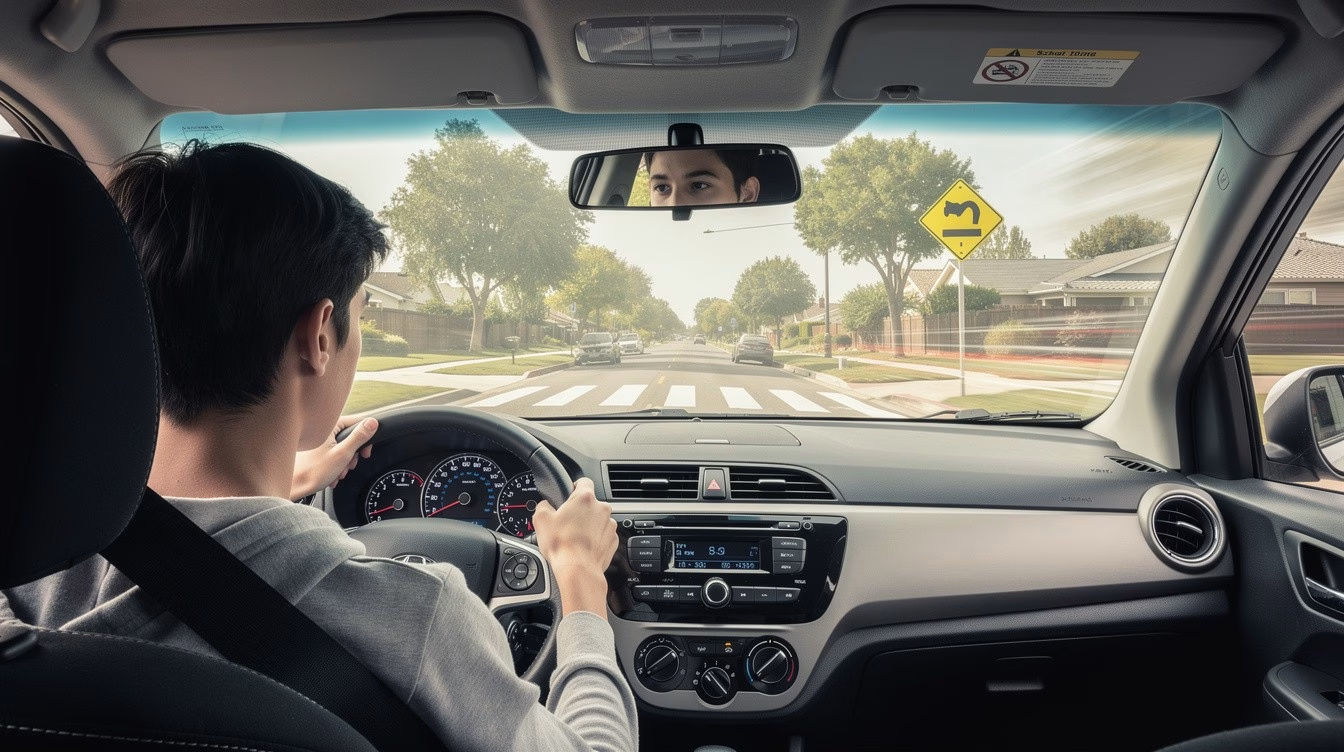
Teen drivers face real dangers on the road. Statistics show that drivers aged 16�19 have crash rates three times higher than drivers aged 20 and older, according to the CDC.
We at floridadetscourse.com know that driving safety for teens starts with preparation and smart decision-making. This guide covers everything new drivers need to know to stay safe behind the wheel.
Pre-Driving Preparation and Vehicle Familiarity
Inspect Your Vehicle Before Every Drive
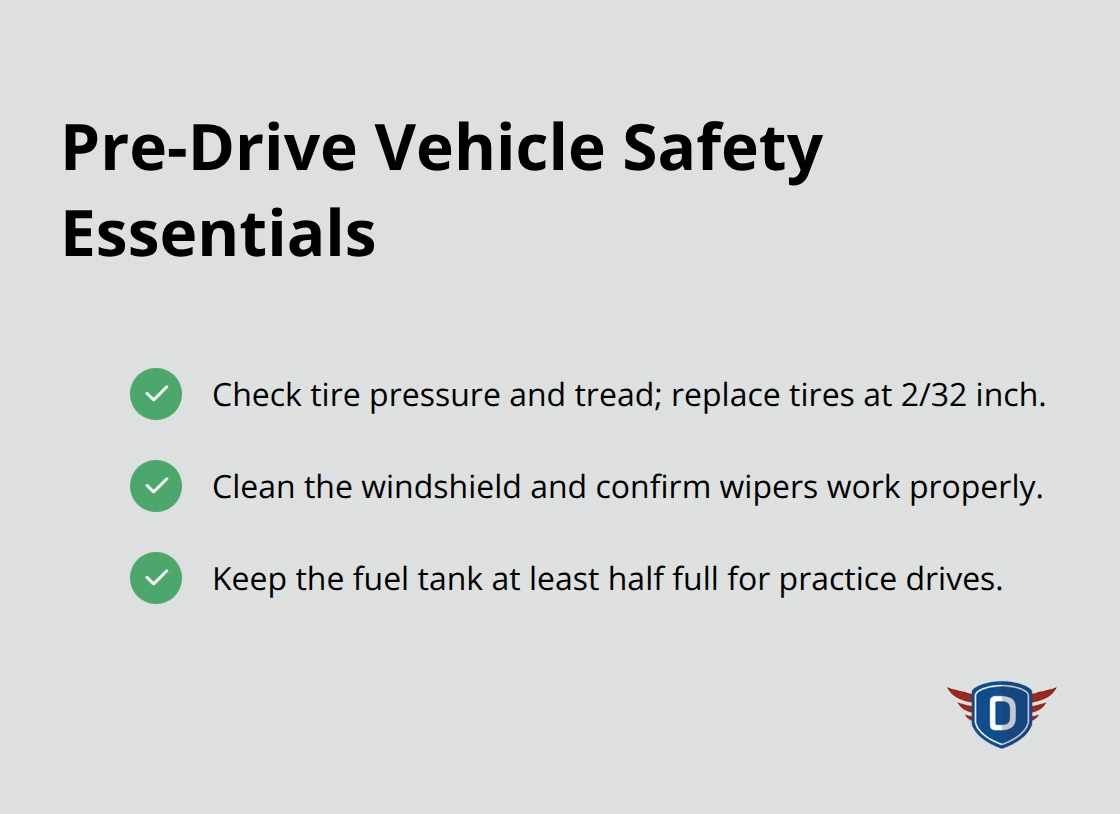
Before turning the key, inspect your vehicle thoroughly because mechanical failures cause preventable crashes. Check your tire pressure and tread depth first-tires should be replaced when tread is worn down to 2/32 of an inch, and low pressure reduces handling control. Next, clean your windshield completely and verify your wipers work properly; visibility matters more for new drivers who need extra reaction time. Fill your fuel tank to at least half capacity so you never run out during practice drives.
Adjust Your Seat and Headrest Correctly
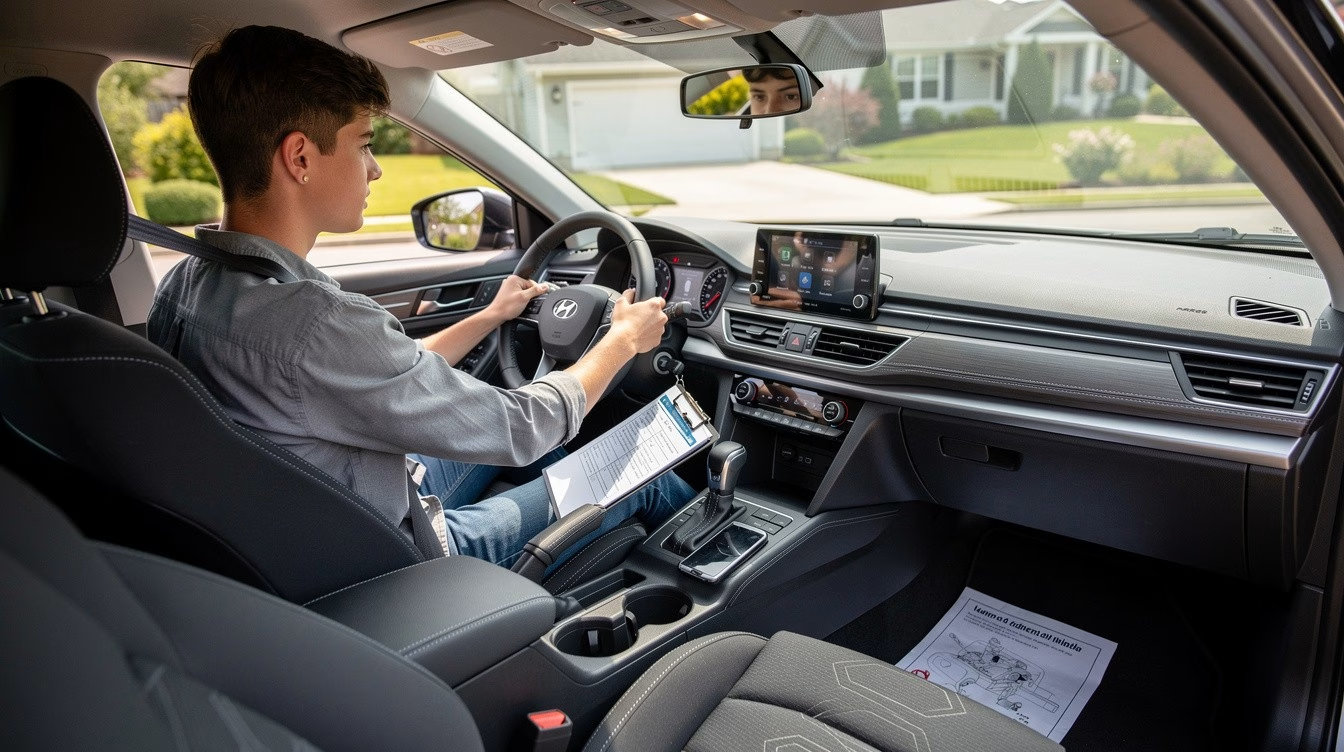
Adjust your seat so your back contacts the seat, your arms reach the steering wheel with a slight bend at the elbows, and your foot operates the pedals comfortably. Position your headrest directly behind your head at eye level-this reduces whiplash injury if you’re hit from behind. Many teens ignore headrest positioning, but it’s a critical safety feature that costs nothing to adjust correctly.
Master Your Mirrors and Eliminate Blind Spots
Adjust your blind spot positioning and mirror adjustment by rotating the outside mirrors outward to look into the blind zones instead of along the sides of the car. The IIHS recommends this aggressive positioning because it eliminates the area where another car can hide. Tilt your rearview mirror slightly downward and check it frequently-glance at mirrors every five to eight seconds while driving.
Understand that your vehicle has a blind spot directly behind you that mirrors won’t show; never assume you can see everything. Turn your head to physically verify blind spots before changing lanes or backing up. Many teen crashes happen because drivers rely only on mirrors and miss vehicles in these dangerous zones.
Learn Your Vehicle’s Dimensions
Learn your vehicle’s dimensions by parking in tight spaces during supervised practice-know how much clearance you have on each side. Practice three-point turns and parallel parking with a parent present, focusing on how your car’s length and width affect your positioning. This hands-on experience builds the spatial awareness you need to handle your vehicle confidently in real traffic.
Understand Your Dashboard Instruments
Familiarize yourself with dashboard instruments before driving: locate your speedometer, fuel gauge, temperature warning light, and check engine light. Know what each warning light means so you can respond immediately if something goes wrong while driving. A vehicle that’s properly maintained and understood sets the foundation for safe decision-making on the road-and that’s where defensive driving techniques come into play.
Critical Defensive Driving Techniques for Teen Drivers
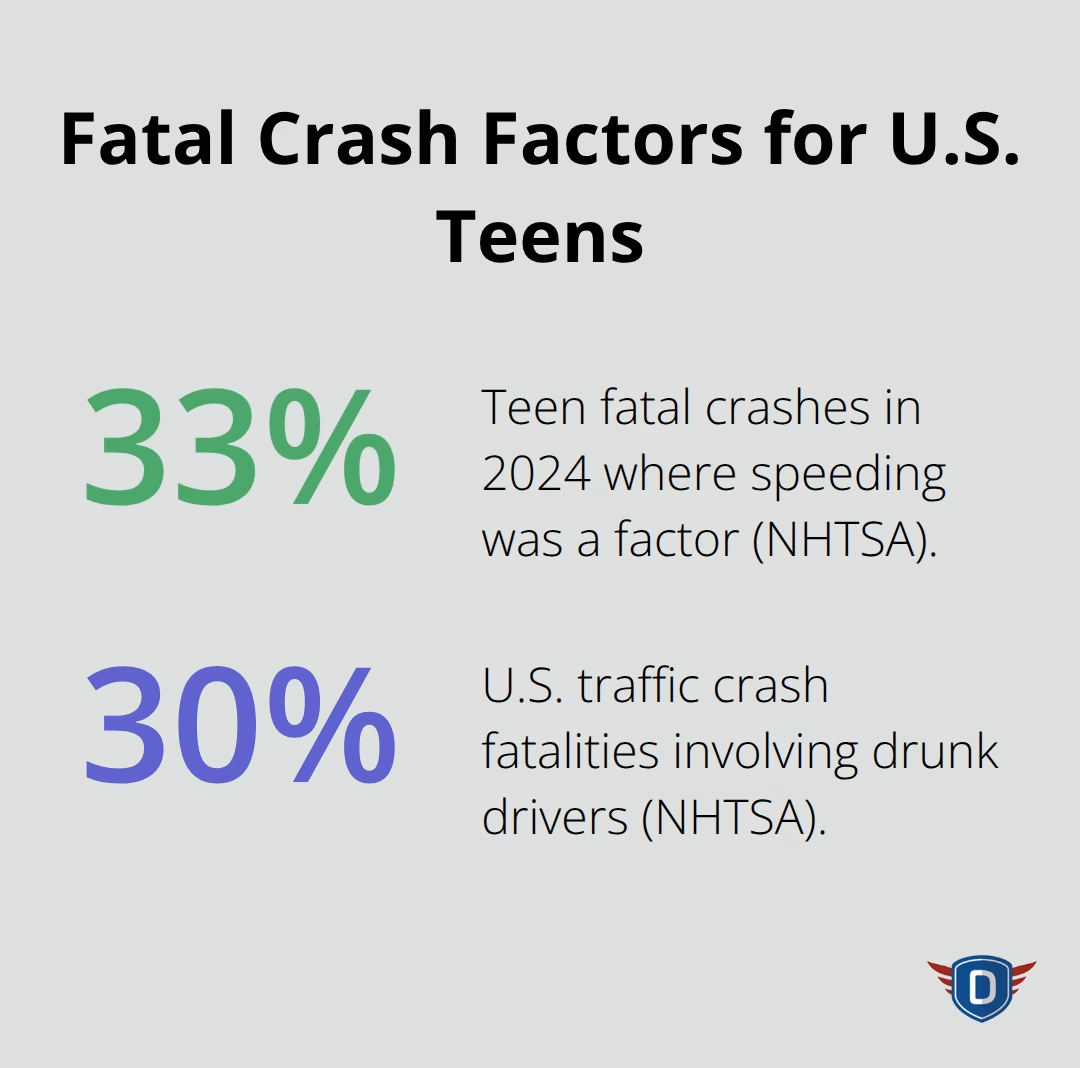
Defensive driving means anticipating what other drivers will do before they do it, and this skill separates safe teen drivers from those who end up in crashes. According to the NHTSA, speeding was a factor in 33% of teen fatal crashes in 2024-these numbers tell you exactly where teens are failing. The good news is that defensive techniques are learnable, and they start with one simple rule: assume every other driver on the road will make a mistake. Your job is to spot that mistake coming and avoid it.
Maintain Safe Following Distance and Speed Control
The most practical defensive technique is maintaining a three-second following distance behind the car ahead of you, which gives your brain time to process what’s happening and your foot time to brake. Count one-one-thousand, two-one-thousand, three-one-thousand after the car in front passes a fixed point like a mailbox or sign, and your car should pass that same point when you finish counting. In rain or darkness, increase this to four or five seconds because your tires have less grip and your visibility shrinks.
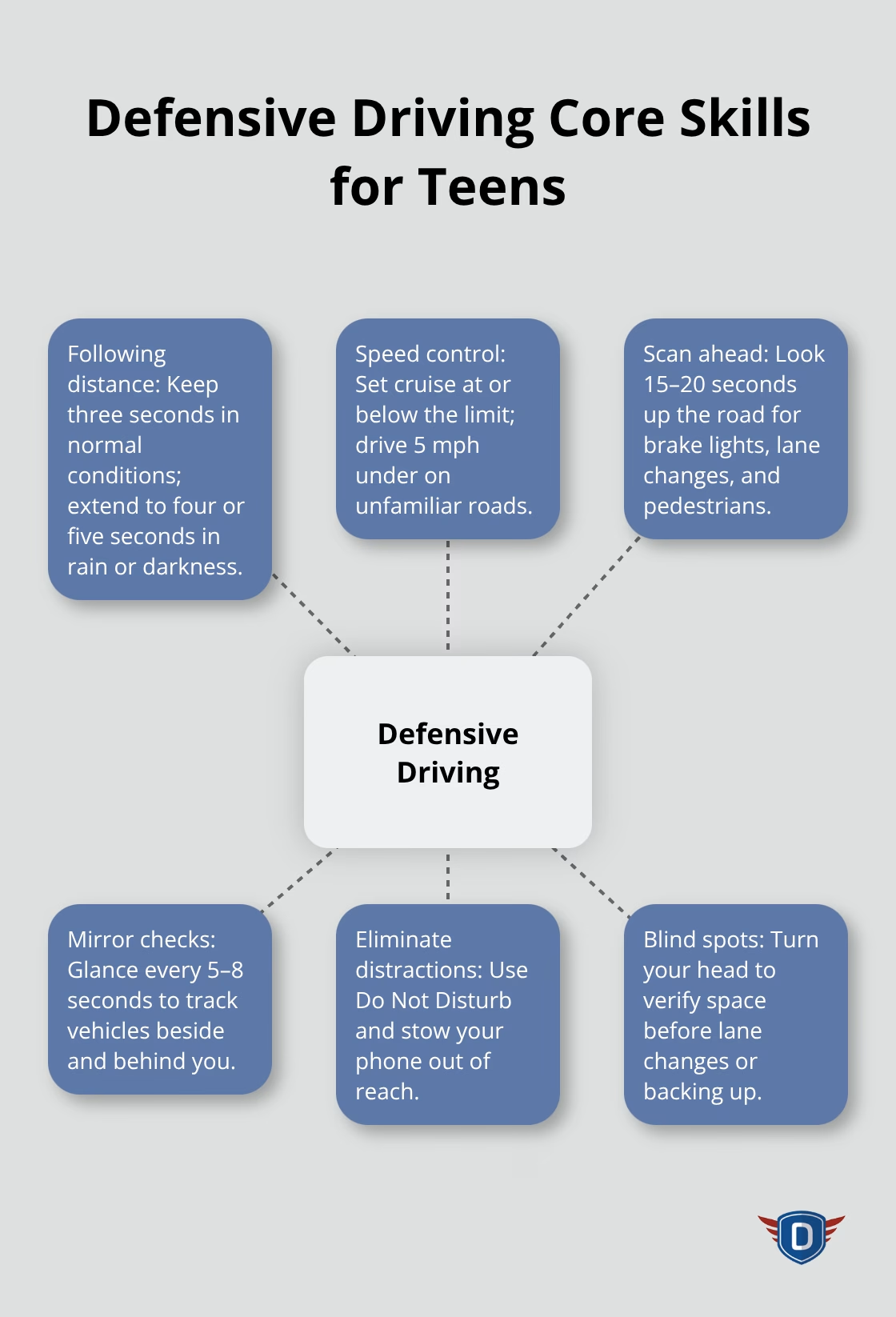
Speed control is inseparable from following distance-the faster you drive, the longer your stopping distance becomes. At 45 mph your car needs roughly 128 feet to stop compared to 65 feet at 30 mph. Teen drivers consistently drive too fast for their skill level because they underestimate how quickly a situation can become dangerous. Set your cruise control at or below the speed limit on highways and drive 5 mph below the limit on unfamiliar roads where you haven’t learned the curves and sight lines yet.
Recognize High-Risk Situations Before They Develop
High-risk situations appear suddenly: a child running into the street from between parked cars, a driver drifting out of their lane, wet pavement around a curve, or an intersection where multiple drivers are turning at once. Scan ahead 15 to 20 seconds instead of staring at the car directly in front of you-this means looking through the windshield at what’s happening two or three car lengths ahead and watching for brake lights, sudden lane changes, or pedestrians near the roadway.
Check your mirrors every five to eight seconds so you know what’s behind and beside you before you need to change lanes or turn. Never trust that you can see everything in your mirrors and blind spots; turn your head physically to verify the space is clear before moving over.
Eliminate Distractions and Stay Focused
Distractions kill teen drivers, and the data is unforgiving. Activate the Do Not Disturb While Driving feature on your phone before you start the engine, and put your phone in the glove compartment or back seat where you can’t reach it.
Talking to passengers is also a distraction-studies show that one teen passenger increases risky driving behaviors 2.5 times-so establish a rule with your parents that conversation stays light during your first 50 hours of driving and critical moments like heavy traffic or bad weather require silence. Eating, adjusting the radio, or looking at a GPS screen while moving steal the attention you need to stay alive. Your only job while driving is to drive, and this focus becomes even more important when you encounter the common mistakes that trip up most new drivers.
Common Mistakes Teen Drivers Make and How to Avoid Them
Overconfidence Leads to Crashes
Teen drivers overestimate their abilities and underestimate danger, which is why crash rates spike the moment they get behind the wheel alone. The CDC reports that drivers aged 16�19 have crash rates three times higher than drivers aged 20 and older, and overconfidence is the root cause. A teen who has completed 50 hours of supervised driving often feels ready to handle any situation, but that confidence doesn’t match reality.
The NHTSA found that in 2024, speeding was a factor in 33% of teen fatal crashes, and most of those crashes happened because teens accelerated into situations they couldn’t control. You feel confident at 45 mph until you hit a curve that requires 30 mph, but by then your car is already sliding. Drive slower than you think you need to on unfamiliar roads, maintain your three-second following distance even when traffic feels slow, and never assume you can handle a situation just because you’ve handled similar ones before. Overconfidence kills because it stops you from using the defensive techniques that actually work.
Distracted Driving Raises Crash Risk 23-Fold
Distracted driving kills teen drivers at alarming rates. The NHTSA data shows that about one in three teen drivers who text have texted while driving, and texting raises crash risk 23-fold compared to focused driving. That’s not a small increase-it’s catastrophic. Your phone becomes a weapon when you pick it up behind the wheel.
Activate Do Not Disturb While Driving on your phone before you leave the parking lot, put the phone in the back seat, and tell your parents if a friend tries to pressure you into checking a message. Talking to passengers also steals your attention (one teen passenger increases risky driving behaviors 2.5 times), so establish a rule with your parents that conversation stays light during your first 50 hours of driving. Your only job while driving is to drive.
Impaired Driving Is Illegal and Fatal
Alcohol is worse than distraction. About 30% of all traffic crash fatalities in the United States involve drunk drivers, according to the NHTSA, and zero-tolerance laws exist because teenage brains and alcohol don’t mix behind the wheel. You cannot drink and drive, period.
If someone offers you alcohol or drugs before driving, your answer is no, and if they’re already impaired, you call a parent or rideshare instead of getting in the car. These aren’t suggestions-they’re the difference between walking away from a drive and being carried away in an ambulance.
Emergency Situations Require Practice, Not Panic
Poor decision-making in emergencies happens because teens freeze or overcorrect when something unexpected occurs. If a child runs into the street, slamming the brakes hard is correct, but swerving into oncoming traffic is not. If your car starts to skid on wet pavement, your instinct is to panic and jerk the wheel, but the correct response is to ease off the gas and steer gently in the direction you want the front of the car to go.
These emergency responses require practice, and that’s why supervised driving hours matter. Spend time in wet conditions, practice emergency stops in empty parking lots with a parent, and talk through what you’ll do if your brakes fail or a tire blows. The NHTSA recommends at least 70 hours of supervised practice before full licensure, and many of those hours should include challenging conditions so your brain knows what to do when panic sets in.
Final Thoughts
Safe driving for teens comes down to three things: preparation, practice, and persistence. You’ve learned how to inspect your vehicle, adjust your mirrors, maintain safe following distances, and recognize high-risk situations before they develop. You understand that speeding caused 33% of teen fatal crashes in 2024 and that distracted driving raises crash risk 23-fold. This knowledge matters only if you apply it every single time you drive, not just when conditions feel dangerous.
Your brain needs repetition to turn defensive techniques into automatic responses, which is why the NHTSA recommends 70 hours of supervised practice before full licensure. When you practice emergency stops in empty parking lots, drive in rain with a parent present, and navigate heavy traffic on familiar roads, you train your nervous system to stay calm when unexpected situations occur. Overconfidence kills because it stops you from using these techniques, so drive slower than you think you need to on unfamiliar roads and maintain your three-second following distance even when traffic feels slow.
Your parents model safe driving behavior, enforce rules about passengers and phone use, and provide the supervised hours that actually reduce crash risk. We at floridadetscourse.com provide comprehensive driver education programs designed to help you master safe driving skills and adopt lifelong safe habits through certified instructors who offer personalized guidance in a supportive learning environment. Driving safety for teens isn’t about perfection-it’s about making smart decisions consistently until safe driving becomes automatic.