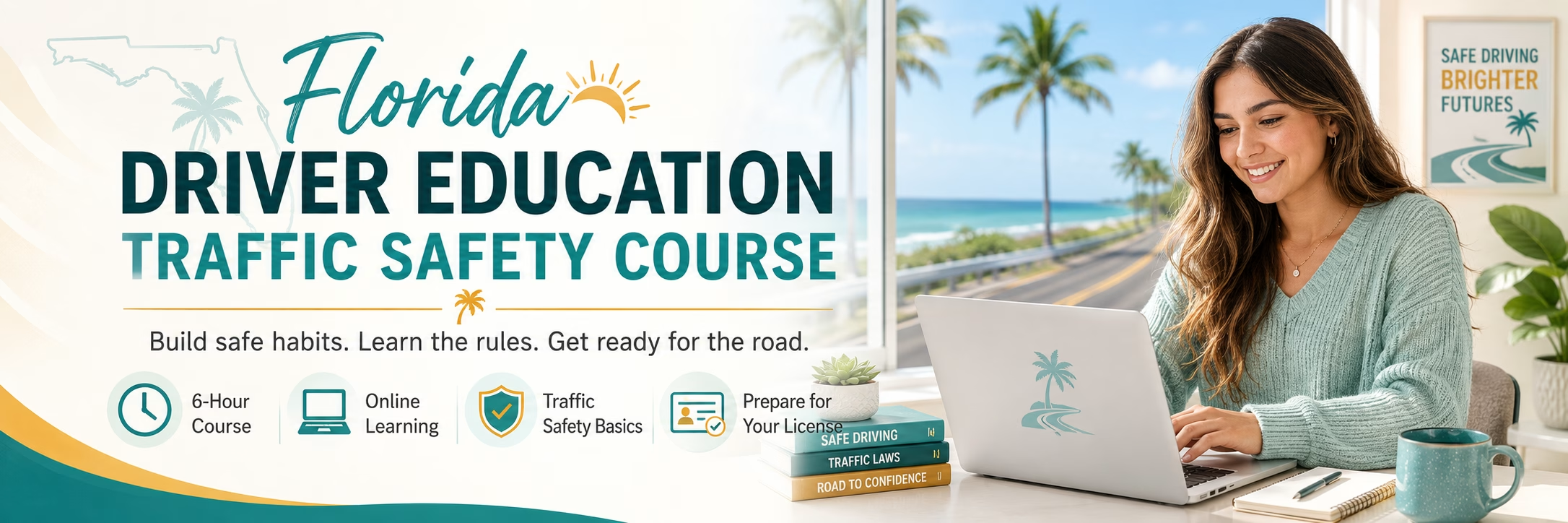
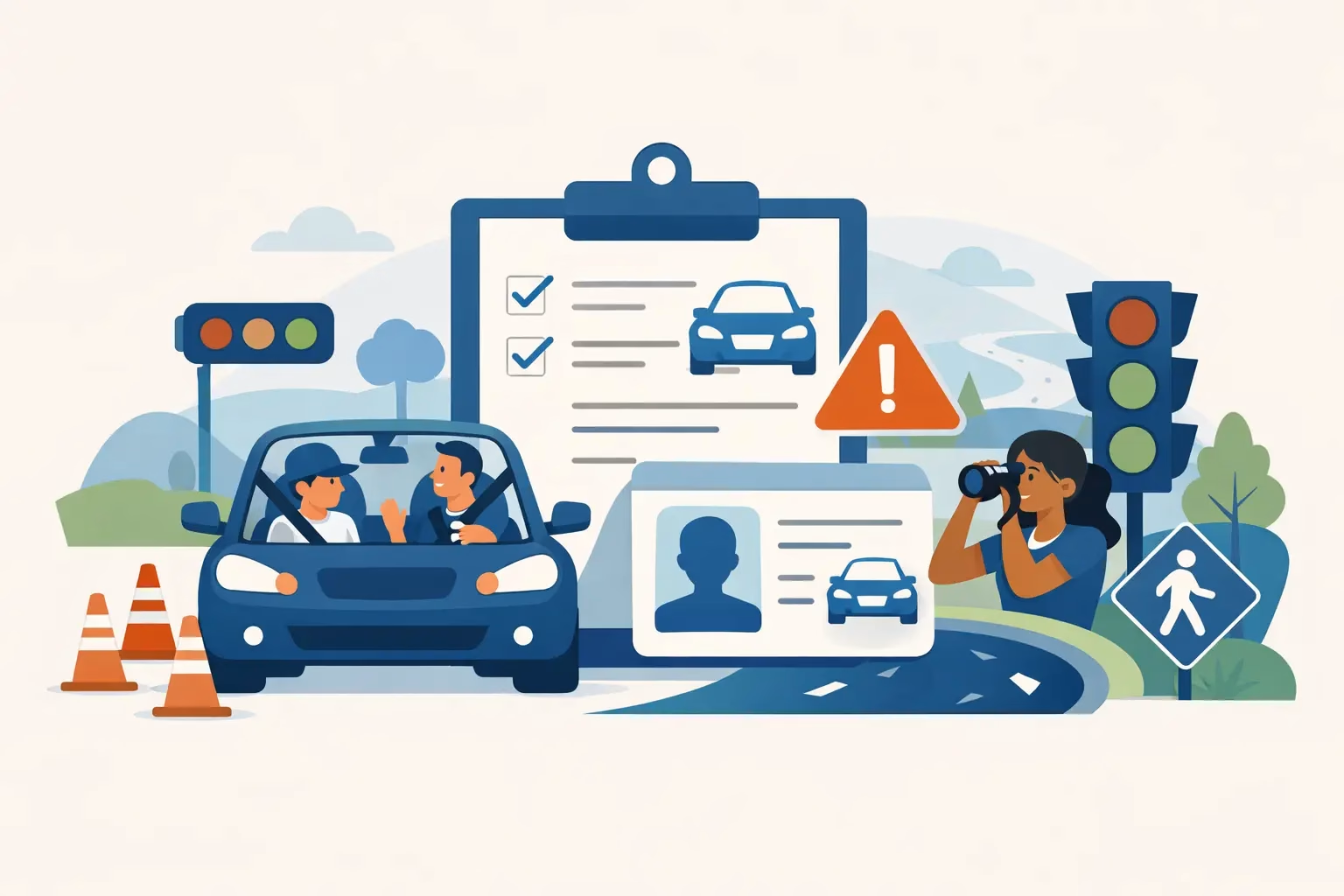
Florida teens who need to complete the mandatory six-hour requirement can enroll in our Florida Driver Education Traffic Safety (DETS) course online, available in English, Spanish, and Portuguese.
A missed deadline on a licensing requirement can delay everything – a learner’s permit, a road test, a court deadline, or even an insurance-related benefit. That is why choosing the right driver education traffic safety course matters. The right course does more than check a box. It helps you meet a state, court, or licensing requirement in a format that fits real life.
For many drivers, the challenge is not understanding why safety education matters. The challenge is figuring out which course applies, whether it is approved, and how to complete it without wasting time or money. That is where a clear, practical approach helps.
What a driver education traffic safety course actually is
A driver education traffic safety course is a structured program designed to teach safe driving habits, traffic laws, risk awareness, and responsible decision-making behind the wheel.
In Florida, this is a required enrollment for all first time drivers under the age of 18 years.
The Florida course content and duration is determined by law. It focus on beginner topics such as signs, signals, right-of-way rules, and defensive driving basics. Others cover consequences of risky driving, substance-related impairment, distracted driving, crash prevention, and legal responsibilities.
A pre-licensing course for a teen is not the same as a court-approved driver improvement class for an adult. If you enroll in the wrong one, you may still have to start over with the correct course.
Who may need a driver education traffic safety course
First-time drivers under the age of 18 years in Florida need it before obtaining a permit or license, as Florida requires� this formal instruction. Adults may take a different one called TLSAE – Traffic Laws and Substance Abuse Education.
What to look for before you enroll
Approval status comes first. If a course is not approved for your state or your specific requirement, convenience does not matter. You should verify whether the provider is authorized to offer the course where you live and whether completion records or certificates are accepted by the agency that requested it.
After approval, format matters. Many people need a course that works around work hours, family responsibilities, or school schedules. A self-paced online program is often the simplest option because it removes the need for classroom attendance and lets you complete lessons when your schedule allows.
Device access also matters more than people expect. A course may say it is online, but that does not always mean it works well on a phone or tablet. If you plan to study on multiple devices, make sure the course is mobile-friendly and easy to resume without losing progress.
Pricing should be clear from the beginning. Some providers advertise a low price and then add extra certificate, reporting, or processing fees later. Transparent pricing and refund protection reduce that risk and make the enrollment decision easier.
Driver education traffic safety course online vs. classroom
For most drivers, online learning is the more practical choice. It allows you to move at your own pace, log in at any hour, and complete the course from home. That flexibility is especially useful when the course is one part of a larger deadline, such as permit preparation or court compliance.
Classroom learning can still help some students. A new driver who wants more structure or someone who learns better with live instruction may prefer an in-person format. The trade-off is less flexibility and, in many cases, more scheduling friction.
Online courses work best when the platform is simple, the instructions are clear, and the provider explains exactly what happens after completion. That includes whether your certificate is available instantly, mailed later, or reported directly to the state or court.
What a good course should teach
A quality course should do more than repeat obvious traffic rules. It should explain how crashes happen, why certain driving habits create risk, and how to make safer decisions under pressure. Good instruction helps students recognize patterns such as following too closely, reacting late, using a phone while driving, or misjudging speed and stopping distance.
It should also connect legal rules to everyday driving. Drivers are more likely to remember right-of-way, lane use, and speed management when the material shows how those rules apply in actual traffic situations.
For first-time drivers, confidence is another important outcome. For experienced drivers, the value often comes from correction – updating outdated habits, understanding newer safety laws, and reducing future violations.
Common mistakes people make when choosing a course
The biggest mistake is assuming all courses are interchangeable. They are not. A state-approved pre-licensing course, a court-ordered traffic school, and a mature driver discount course may all involve safety education, but they serve different legal and administrative purposes.
Another common mistake is waiting too long. People often delay enrollment because the course seems simple, then run into reporting delays, certificate delivery issues, or time limits they did not expect. Starting early gives you room to finish properly and fix problems if any agency requires additional documentation.
Some drivers also focus only on cost. Price matters, but a cheaper course is not a better value if it lacks approval, has poor usability, or creates extra hassle. Time, certainty, and compliance are part of the value too.
How the completion process usually works
Most online programs follow a straightforward process. You enroll, complete the required lessons, pass any quizzes or final assessment if one is required, and then receive proof of completion. In some cases, the provider sends records directly to the proper agency. In others, you submit your certificate yourself.
The details depend on the state and the course type. Some jurisdictions require identity checks, minimum time rules, or chapter-based progress requirements. Others are simpler and focus mainly on successful completion.
This is why reading the provider’s process before purchase matters. A dependable provider explains the timeline, completion requirements, certificate method, and any state-specific steps clearly. floridadetscourse.com, for example, centers that kind of clarity because customers usually need a recognized course without extra confusion.
How to know if the course is right for your situation
Start with the exact requirement you need to satisfy. If your goal is permit eligibility, choose a course built for new drivers in your state. If your goal is ticket dismissal or court compliance, confirm that the course is approved for that court or state program. If your goal is insurance savings, check that your insurer accepts the course type.
Then look at practical fit. Can you complete it on your schedule? Is the cost clearly stated? Will you get support if you have a question? A course should reduce stress, not add more of it.
The best option is usually the one that combines approval, convenience, and clear next steps. Those three factors matter more than flashy promises.
FAQs
What is a driver education traffic safety course?
It is a course that teaches safe driving, traffic laws, and risk reduction. It may be required for licensing, court compliance, or driver improvement.
Is a driver education traffic safety course required in every state?
No. Requirements vary by state and by purpose. Some states require it for first-time drivers, while others require it only in certain legal or administrative situations.
Can I take a driver education traffic safety course online?
Yes. Many approved providers offer self-paced online courses that let you complete the material from home.
How do I know if a course is approved?
Check the provider’s approval information for your state and course type. The course website should clearly confirm that it does have the approval requirements.
How long does the course take?
The Florida DETS – Driver Education Traffic Safety course is 6 hour long as mandated by law.
Will I get a certificate after completion?
Yes. Some providers issue a certificate directly to you, while others report completion to the state, court, or another agency.
Can the wrong course delay my requirement?
Yes. If the course does not match your state, court, or licensing need, you may have to retake the correct one.
What matters most when choosing a course?
Approval matters most. After that, look for clear pricing, flexible access, mobile usability, and straightforward completion steps.
When a driving requirement is tied to a deadline, the smartest move is not just signing up fast. It is choosing a course that is approved, easy to complete, and clear about what happens next.
Frequently Asked Questions
What is a driver education traffic safety course?
It is a course that teaches safe driving, traffic laws, and risk reduction. It may be required for licensing, court compliance, or driver improvement.
Is a driver education traffic safety course required in every state?
No. Requirements vary by state and by purpose. Some states require it for first-time drivers, while others require it only in certain legal or administrative situations.
Can I take a driver education traffic safety course online?
Yes. Many approved providers offer self-paced online courses that let you complete the material from home.
How do I know if a course is approved?
Check the provider’s approval information for your state and course type. The course website should clearly confirm that it does have the approval requirements.
How long does the course take?
The Florida DETS – Driver Education Traffic Safety course is 6 hour long as mandated by law.
Will I get a certificate after completion?
Yes. Some providers issue a certificate directly to you, while others report completion to the state, court, or another agency. We do both, providing a certificate directly to you and also reporting your completion to the state.
Can the wrong course delay my requirement?
Yes. If the course does not match your state, court, or licensing need, you may have to retake the correct one.
Will taking this DETS course give my parents an auto insurance discount?
Because this specific 6-hour DETS course is a mandatory state requirement for teens under 18 to obtain their very first learner’s permit, it does not typically qualify for additional voluntary insurance discounts. However, completing this requirement ensures you are legally compliant, safely trained, and fully prepared to get behind the wheel to avoid expensive tickets later.
What matters most when choosing a course?
Approval matters most. After that, look for clear pricing, flexible access, mobile usability, and straightforward completion steps.
When a driving requirement is tied to a deadline, the smartest move is not just signing up fast. It is choosing a course that is approved, easy to complete, and clear about what happens next.