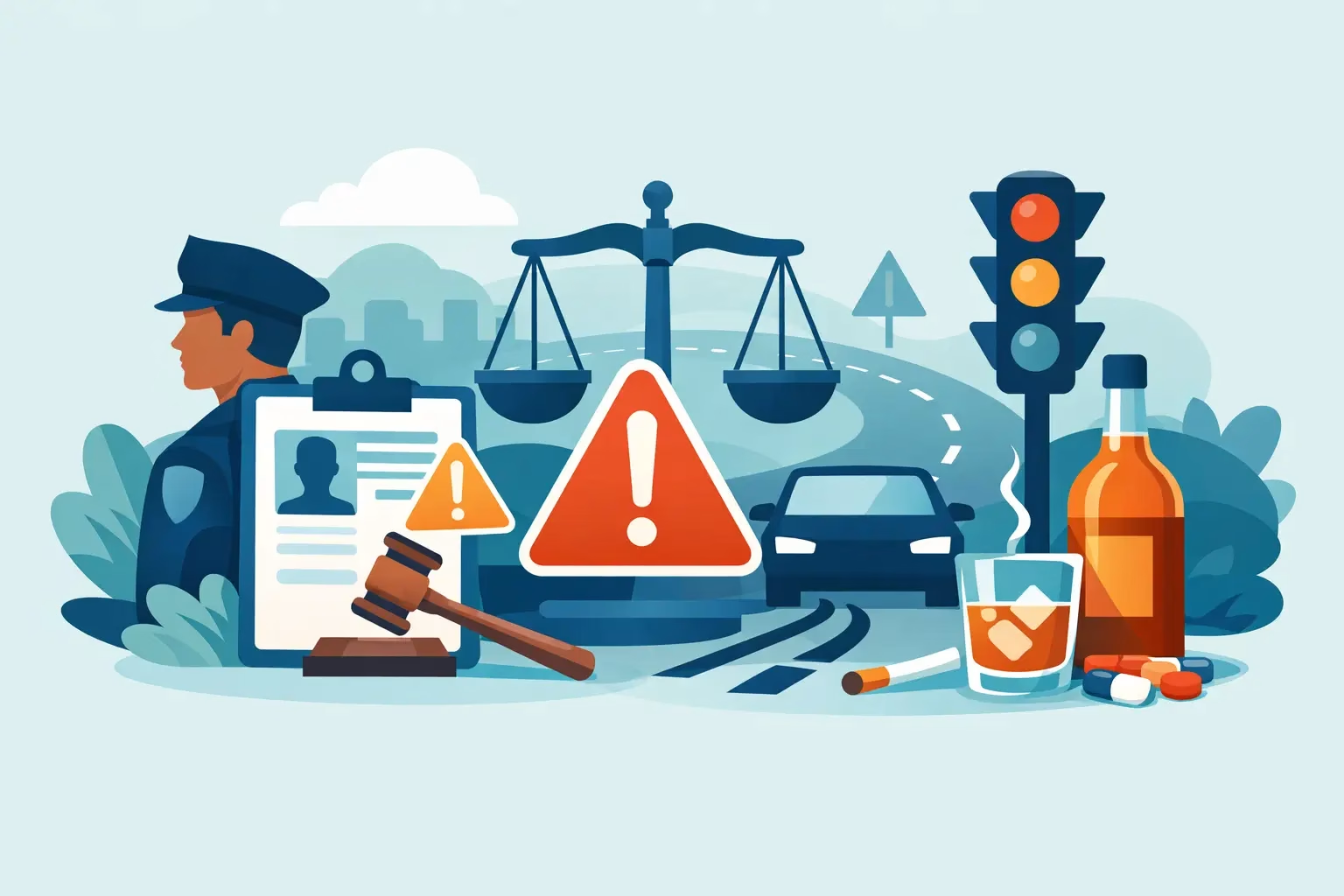
If you are trying to get your first Florida license, the traffic law and substance abuse course is often the first requirement that trips people up. The name sounds technical, but the purpose is simple: help new drivers understand state traffic laws, the risks of alcohol and drugs, and the decisions that prevent crashes, citations, and license delays.
For most students, this is not a course they take because they are curious about traffic policy. They take it because they need an approved class that satisfies a licensing requirement, fits a busy schedule, and does not create extra stress. That is exactly how it should be approached – as a practical step toward legal compliance and safer driving.
What a traffic law and substance abuse course is
A traffic law and substance abuse course, often called TLSAE, is a state-required driver education course for first-time Florida drivers. It introduces the rules of the road, explains how alcohol and controlled substances affect driving ability, and covers the legal and personal consequences of impaired driving.
This course is not the same as behind-the-wheel instruction, and it is not the same as a court-ordered defensive driving class. It is a pre-licensing education requirement. If you are applying for your first learner’s permit or driver’s license in Florida, this is usually one of the earliest boxes you need to check.
The course exists for a reason. New drivers do not just need help operating a vehicle. They also need a clear understanding of judgment, responsibility, and how quickly poor choices can turn into injuries, arrests, suspensions, or worse.
Who needs a traffic law and substance abuse course
In most cases, first-time Florida drivers must complete a traffic law and substance abuse course before they can receive a learner’s license. Adults getting a first Florida license may also need it, depending on their licensing situation.
That last part matters because people often assume this course is only for teenagers. It is not. A 16-year-old applying for a permit, a college student who delayed getting licensed, or an adult who has never held a Florida license may all need the same requirement.
If you are transferring an existing valid out-of-state license, the requirement may not apply. If you are not sure, the safest move is to verify your eligibility before enrolling. Taking the wrong course wastes time, and most people looking for licensing help want the fastest approved path, not extra coursework.
What the course covers
The content is designed to be practical rather than abstract. You can expect instruction on Florida traffic laws, common roadway signs and rules, driver responsibilities, and the effects of alcohol and drugs on reaction time, vision, coordination, and decision-making.
A good course also explains why impairment is not limited to obvious intoxication. Prescription medications, illegal substances, and even small amounts of alcohol can reduce driving performance. That matters because many new drivers think impaired driving only applies to extreme situations. In reality, risk starts earlier than most people realize.
The course usually covers legal penalties too, including DUI consequences, license suspension issues, financial costs, and how impaired driving can affect employment, insurance, and future driving privileges. For students, that legal context is often what makes the material feel real.
How long the course takes
Most traffic law and substance abuse course providers offer a four-hour program. State rules generally set the required instructional time, so if you see a promise that sounds much shorter, that should raise questions.
Four hours may sound inconvenient, but online delivery changes the experience. Instead of traveling to a classroom, waiting for a scheduled session, and losing half a day, many students can work through the material at their own pace from a phone, tablet, or computer.
That flexibility is one of the biggest differences between an outdated course experience and a useful one. For busy students, working adults, and parents, convenience is not just a nice feature. It is often the reason the requirement actually gets completed on time.
Online vs. in-person traffic law and substance abuse course options
For most people, an online course is the better fit. It offers schedule flexibility, immediate access, and the ability to complete the material from almost anywhere. If the provider is state-approved, the compliance value is the same as a classroom option.
That said, it depends on the student. Some people focus better in a structured in-person setting. Others want the convenience of logging in late at night or during breaks at work. The best option is the one that helps you finish the requirement correctly and without unnecessary delay.
When comparing formats, approval status matters more than appearance. A polished website is helpful, but it does not replace official acceptance. Start there, then look at usability, pricing transparency, mobile access, and customer support.
How to choose the right traffic law and substance abuse course
The safest choice is an approved provider with clear course details and no surprises. Students usually care about four things: whether the course is accepted, how fast they can start, how easy it is to complete, and whether the final price is actually the final price.
Look for straightforward enrollment, device compatibility, and support that is easy to reach if you run into a question. Refund policies also matter. Most people hope they will not need one, but clear customer protections build trust and reduce risk.
This is one reason many students prefer established online providers such as floridadetscourse.com. The value is not only the course itself. It is also the confidence that the process is built around compliance, convenience, and getting the requirement done without avoidable frustration.
What happens after you finish
After completing the traffic law and substance abuse course, students typically move on to the next licensing steps. That may include taking the written knowledge exam, completing vision and hearing requirements, or meeting age-specific permit conditions.
You can practice for the knowledge exam by using tools such as DMV Quizlets available online.
The exact sequence depends on your age and licensing status. A teenager working toward a learner’s permit may have a different next step than an adult applying for a first license. The course is important, but it is one part of the larger licensing process.
This is where people sometimes get stuck. They finish the class and assume they are done. In reality, completion means you are eligible to continue, not that your license is automatically issued.
Common mistakes to avoid
The biggest mistake is taking a course before confirming that it meets your requirement. Not every driver education class serves the same purpose. A defensive driving course, a driver improvement class, and a TLSAE course may all sound similar to a first-time student, but they are not interchangeable.
Another common issue is waiting too long. Students often put off the course until they are ready to schedule the next step, only to realize they cannot move forward without proof of completion. Starting early helps avoid last-minute licensing delays.
Finally, do not choose based on price alone. Low pricing can be attractive, but hidden fees, poor course design, or weak support can cost more in time and frustration. The best course is one that is approved, clearly priced, and easy to complete correctly the first time.
FAQ
What is a traffic law and substance abuse course?
It is a required pre-licensing course for many first-time Florida drivers. It teaches traffic laws, safe driving behavior, and the effects of alcohol and drugs on driving.
Is the traffic law and substance abuse course the same as TLSAE?
Yes. TLSAE stands for Traffic Law and Substance Abuse Education.
Who has to take TLSAE in Florida?
Most first-time Florida drivers do. This often includes teens applying for a learner’s permit and adults getting their first Florida license.
How long is the course?
It is typically four hours long. State requirements usually determine the minimum course length.
Can I take the course online?
Yes, if you choose a state-approved provider. Online courses are popular because they are flexible and self-paced.
Do I need this course if I already have a license from another state?
Usually not, if you are transferring a valid out-of-state license. Still, your exact situation should be verified before you enroll.
What does substance abuse mean in this course?
It means the misuse or use of alcohol, illegal drugs, or certain medications in ways that impair safe driving. The course explains how these substances affect judgment and reaction time.
Is this course only for teenagers?
No. Adults getting a first Florida license may also need it.
What should I look for in a provider?
Look for approval status first. Then check price transparency, mobile access, ease of use, and customer support.
Getting your license involves enough moving parts already. A course requirement should feel clear, manageable, and worth your time – and when you choose the right provider, it usually does.