You drove through a few toll gantries, thought nothing of it, and then an envelope showed up weeks later. That’s the moment a lot of Florida drivers realize they don’t understand how toll billing works.
If that’s you, you’re not careless. You’re just dealing with a system that punishes drivers who aren’t prepared.
Florida Toll-By-Plate is convenient in the same way overdraft protection is convenient. It keeps traffic moving, but it usually costs more and gives you less control. If you use toll roads often, treating Toll-By-Plate as your main plan is a mistake.
Your Guide to Florida Tolls Starts Here
A common story goes like this. You borrow a car, rent one, or drive your own without a transponder. You pass under a toll point because traffic is flowing fast and there’s no booth to stop at. Later, a bill arrives and you’re left wondering whether it’s legitimate, how much you owe, and what happens if you ignore it.
That confusion is normal. Florida’s toll roads are designed for electronic collection, not for drivers to sort things out later at their kitchen table.
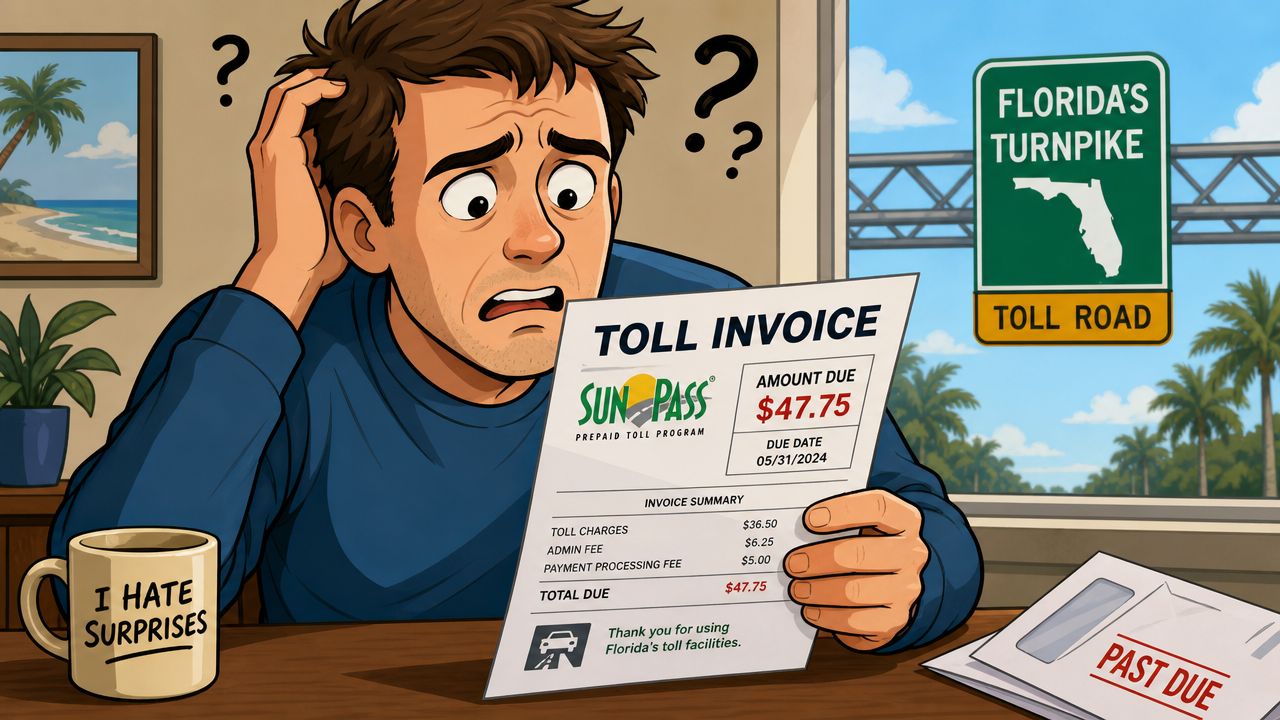
Toll By Plate in Florida is the fallback system for drivers who use a toll road without a SunPass or another accepted transponder. Instead of charging a device in your car, the toll system reads your plate and sends a bill to the registered owner.
That sounds simple. It isn’t always cheap.
Practical rule: If you drive toll roads more than occasionally, don’t rely on a mailed bill as your plan.
Most drivers don’t need more jargon. They need answers. Is the bill real? Why is it higher than expected? Can you use Toll-By-Plate everywhere? What should you do next so this doesn’t keep happening?
Those are the questions that matter because toll mistakes don’t stay small for long. A minor oversight can turn into repeated stress, wasted time, and avoidable charges.
What smart drivers do differently
Prepared drivers make toll decisions before they hit the road. They check whether the route includes toll roads, whether their vehicle has a valid transponder, and whether a rental company has its own toll rules.
That habit matters beyond tolls. It’s the same mindset that helps drivers avoid tickets, missed paperwork, and bad roadside decisions. Driver education isn’t just about passing a requirement. It’s about learning how to stay ahead of expensive surprises.
How Toll By Plate Works in Florida
You miss the toll sign, keep driving, and assume you can sort it out later. That is exactly how Toll-By-Plate turns into an expensive habit.
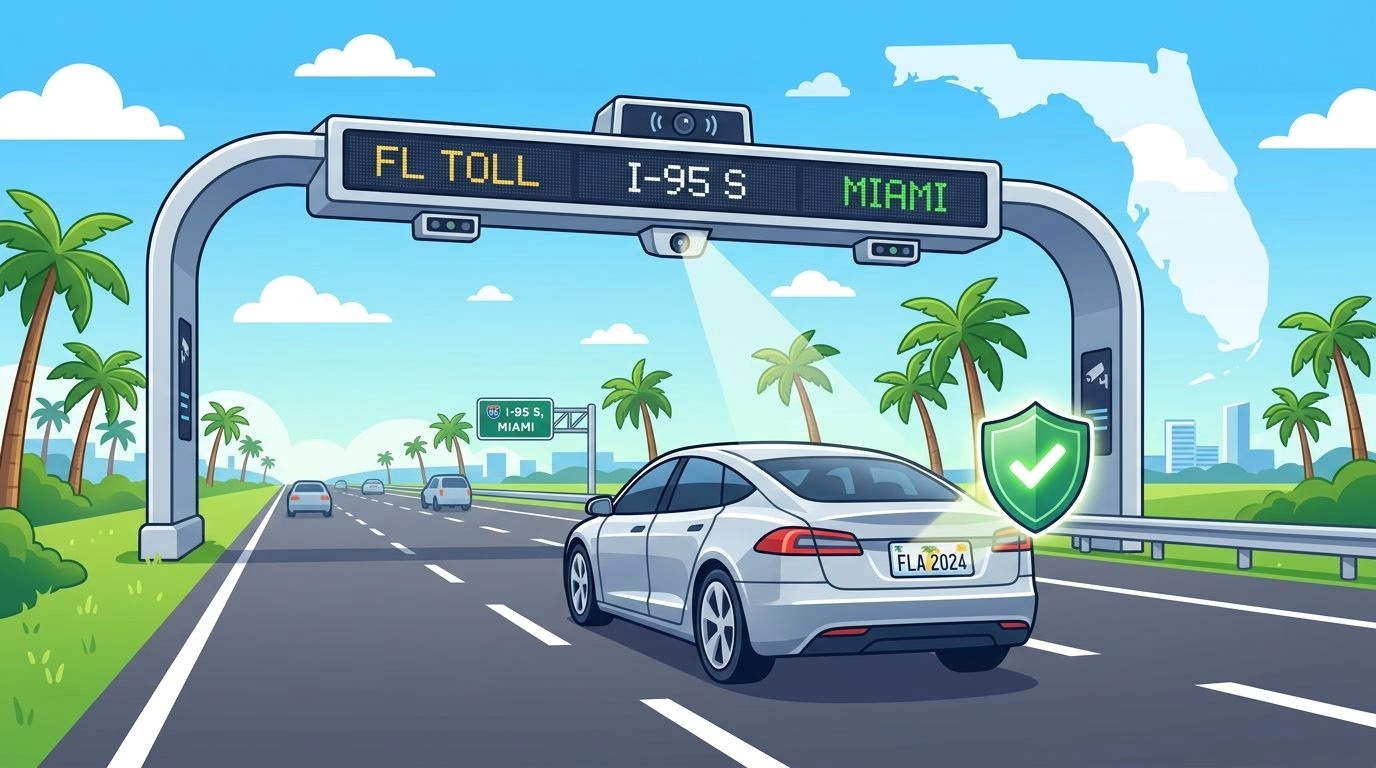
Here is what happens. If your vehicle goes through a Florida toll point without a SunPass or another accepted transponder, the system tries to identify the car by license plate instead. A camera reads the plate, matches it to the registered owner, and a bill is mailed later. That bill covers the tolls and the added processing charge that comes with plate billing.
What happens on the road
Florida’s toll system is built to keep traffic moving. It does not wait for drivers to get organized after the fact.
- You pass through a toll location: In many places, there is no cash option and no reason for traffic to slow down.
- The system checks for a transponder: If it does not find one, it switches to plate billing.
- Your plate is photographed: The plate becomes the way the toll agency tracks the trip.
- The bill is mailed later: The registered owner gets the invoice, not necessarily the person who was driving.
If you want a plain-English explanation of billing problems, disputes, and prevention, read BDISchool’s Florida toll guide.
Where drivers make costly assumptions
The biggest one is assuming Toll-By-Plate is a universal backup across every Florida toll facility. It is not. Some roads and lane types require a working transponder, and drivers who treat plate billing as a catch-all solution are the ones who get surprised later.
Managed Lanes are the clearest example. If you enter one without the right setup, you can create a bigger problem than a normal mailed invoice.
That is why prepared drivers handle tolls before the trip, not after it. Check your route. Know whether your vehicle has a valid transponder. If you drive a rental, confirm the rental company’s toll policy before you leave the lot. That simple habit saves money, cuts stress, and keeps a minor mistake from turning into repeated fees.
Understanding Your Bill Fees and Payments
A Toll-By-Plate bill usually bothers drivers for two reasons. First, they weren’t expecting it. Second, they don’t immediately understand what they’re looking at.
The fix is simple. Separate the bill into the actual road charge and the extra cost of using the fallback billing system.
What your invoice is really charging
Your bill generally reflects the tolls you used, then adds an administrative charge for processing and mailing the invoice. That’s why a short trip can feel more expensive than it should.
Florida tolls vary a lot by route. According to Visit Florida’s toll overview, Florida Turnpike tolls can range from $1 to $30 per section, while local bridges and roads may cost roughly $0.50 to $2.50. The same source says Central Florida Expressway Authority transponder customers save an average of 30% versus cash payers and 50% versus Pay By Plate users.
That’s the core problem with Toll-By-Plate. It turns a fallback option into a costly habit if you use toll roads regularly.
Read the bill in this order
Don’t start by panicking over the total. Read it like a driving instructor would teach you to scan traffic. One piece at a time.
- Check the vehicle details: Make sure the plate and vehicle match yours.
- Review the travel dates: A timing error creates a lot of bad assumptions.
- Separate tolls from fees: That tells you what you drove versus what processing added.
- Pay attention to billing period: Toll invoices are grouped, not always sent trip by trip.
If something doesn’t line up, gather your registration details, dates, and any records that help you verify where the car was.
For related driver records and paperwork issues, this Florida citation lookup resource can help you understand how to confirm identifying information accurately.
How to handle payment without making it worse
The smartest move is to address the bill promptly. Sitting on it rarely improves anything.
Use the payment instructions printed on the invoice. Florida toll agencies typically provide ways to pay online, by mail, or by phone. Follow the invoice itself, not a guess, and make sure the vehicle and billing information match exactly before you submit payment.
A toll bill is easier to fix when it’s fresh. Once you’ve ignored it, every conversation gets harder.
If you’re a frequent Florida driver, the lesson isn’t just �pay this one.� It’s �stop letting mailed toll bills manage your driving.�
SunPass Versus Toll By Plate The Real Cost
You miss one exit, roll through an electronic toll lane without a transponder, and shrug it off. Then the mail shows up. That �easy� trip now costs more than it should have, and the extra charge came from being unprepared, not from the road itself.
If you use Florida toll roads more than occasionally, stop treating Toll-By-Plate as a normal plan. SunPass is the better setup. Toll-By-Plate is a convenience trap. It works, but it often costs more, adds billing friction, and leaves more room for mistakes.
Florida toll agencies have long made the pattern clear. Plate billing adds an administrative charge to the toll invoice, and transponder users generally pay less than drivers who wait to be billed by mail. Florida also requires an accepted transponder for Managed Lanes, so Toll-By-Plate is not even a full-access option.
Here’s a quick visual overview before the comparison.
SunPass vs. Toll-By-Plate at a Glance
| Feature | SunPass | Toll-By-Plate |
|---|---|---|
| How you pay | Through a compatible transponder in the vehicle | By license plate after the trip |
| Typical cost position | Lower toll amount in many cases | Higher than transponder-based tolling |
| Extra invoice charge | No mailed plate-billing admin fee in the standard setup | Includes an administrative fee on the invoice |
| Managed Lanes access | Yes, with accepted transponder setup | No, not usable on Florida Managed Lanes |
| Best for | Regular Florida drivers and commuters | Occasional or unprepared drivers |
My recommendation as a driving advisor
Use Toll-By-Plate only as a backup.
If you live in Florida, commute, visit Orlando often, use the Turnpike, or drive anywhere with frequent cashless tolling, get a transponder. Do it before the next trip, not after the next bill. You will usually spend less, keep your toll records cleaner, and avoid the annoying chain of invoices, late handling, and correction calls.
This is a driving habit issue as much as a payment issue. Prepared drivers make cheaper decisions because they plan ahead. That same mindset helps with tolls, citations, and enforcement problems. If you want a better grasp of what happens when toll issues escalate, read this Florida toll enforcement guide.
A practical way to improve those habits is to strengthen your overall traffic awareness. Options include route planning tools, defensive driving refreshers, and online safety courses. For example, Florida traffic school courses from BDISchool cover the kind of decision-making habits that help drivers avoid paperwork, toll trouble, and preventable violations.
When Toll-By-Plate still makes sense
It has a place, just a narrow one.
- Short-term visitors: You are in Florida briefly and will use only a few toll roads.
- Unexpected route changes: Navigation pushed you onto a toll facility and you had no transponder ready.
- One-off vehicle use: You borrowed a car and did not know its toll setup in advance.
Use it when you must. Don’t build your driving routine around it. Convenience feels cheap in the moment, but unprepared driving usually costs more later.
Penalties Disputes and Rental Car Tolls
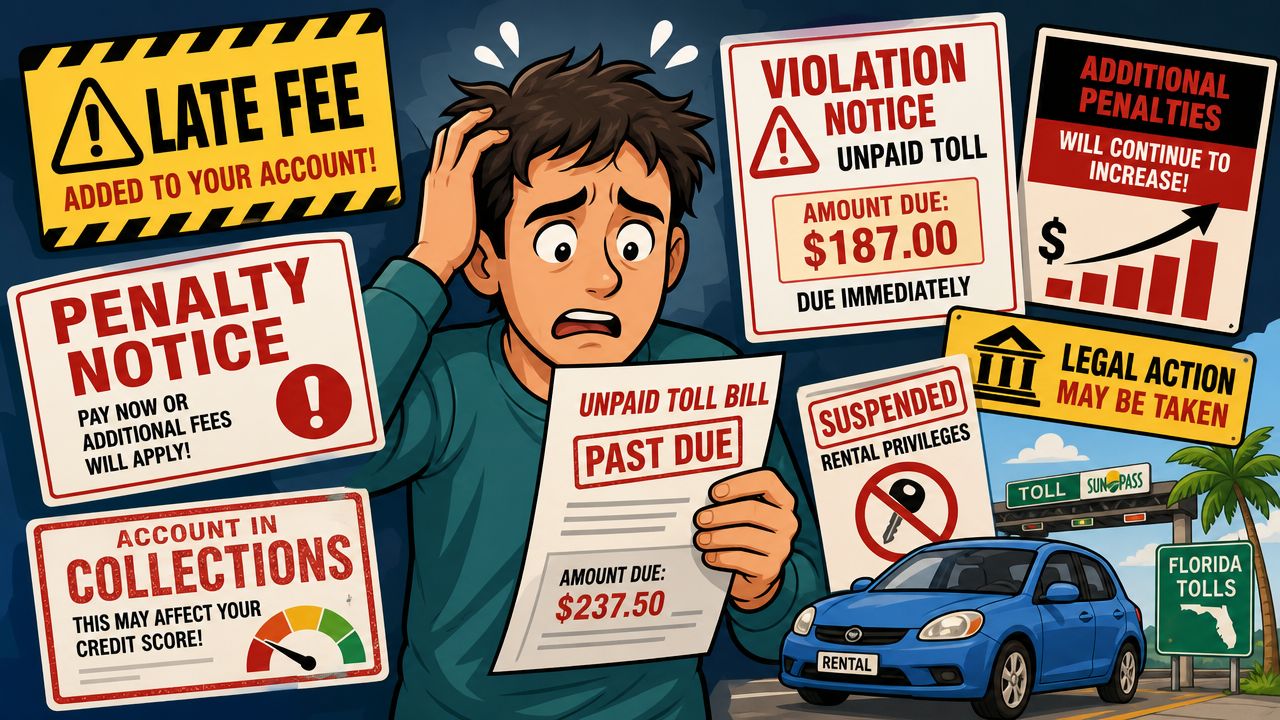
Ignoring a toll bill is bad driver math. A small road charge can grow into a much more frustrating problem because once a notice goes unpaid, you stop dealing with a routine billing issue and start dealing with enforcement.
That’s why I tell students to treat toll mail like a dashboard warning light. You don’t wait and hope it disappears.
What to do if you think the bill is wrong
Don’t lead with anger. Lead with documentation.
Start by checking whether the plate, dates, and vehicle details match your records. If they don’t, contact the toll agency using the invoice information and keep copies of everything you send. Good disputes are organized, short, and supported by facts.
Use this basic approach:
- Match the plate first: A simple misread creates a false trail quickly.
- Check ownership timing: If you sold the car, returned a lease, or changed registration, dates matter.
- Keep route records: Trip notes, rental agreements, and return receipts help.
- Respond quickly: Delay makes investigation harder.
If you’re trying to understand the broader enforcement side, this Florida toll enforcement guide gives a useful overview of what happens when toll issues escalate.
Drivers usually get into the most trouble when they ignore a notice they should have verified right away.
Rental cars are a separate trap
Rental toll charges confuse people because the bill often doesn’t come straight to you first. The rental company is usually the registered owner, so the toll gets connected to the company and then passed through under the rental agreement.
That’s where many drivers get hit twice emotionally. First by the toll itself. Then by the rental company’s separate processing terms.
Before you leave the lot, ask these questions:
- Does the car have an active transponder?
- If I decline it, how are tolls billed to me?
- Are charges passed through later after return?
- What records should I keep if I need to question a charge?
The right time to understand rental tolling is at pickup, not after your vacation.
The bigger lesson
Toll trouble usually starts with a simple habit failure. The driver didn’t check the route, didn’t ask about the car, or didn’t open the mail promptly.
That’s why better driver education matters. Safe driving isn’t only steering, braking, and lane changes. It’s also knowing how Florida systems work so minor mistakes don’t snowball into legal, financial, or registration headaches.
How to Avoid Toll Fines and Drive Smarter
The easiest way to avoid Toll-By-Plate problems is to stop treating toll roads like a surprise. Plan before you drive.
If you use Florida toll roads with any regularity, get a compatible transponder. If you rent cars, ask toll questions at the counter. If you rarely use toll roads, set your navigation carefully and read every notice that arrives.
Smarter habits that save stress
- Set up your payment method early: Don’t wait until after a trip.
- Review routes before departure: Toll roads are easier to avoid before you merge onto them.
- Open every toll notice immediately: Delay creates preventable problems.
- Build better driving awareness: Good habits reduce more than toll mistakes.
For drivers who want to improve judgment, planning, and roadway awareness, these highway driving tips are a strong starting point.
The bigger point is simple. Proactive drivers spend less money cleaning up avoidable mistakes.
Florida Toll By Plate FAQ
A lot of drivers end up here after the same mistake. They used a toll road, assumed it would sort itself out, and then a bill showed up later with extra charges. That is exactly why Toll-By-Plate catches people off guard. It works, but it is the expensive backup plan.
Can I use Toll-By-Plate on Florida Managed Lanes
No. Managed lanes typically require a SunPass or another accepted transponder, so do not count on plate billing to cover that trip.
Why did I get a bill weeks after driving
Because the system bills by mail after your plate is matched to the vehicle owner. The trip happens first. The notice arrives later. If you are not watching your mail, that delay can turn a small toll into a larger problem.
Is Toll-By-Plate the cheapest way to pay Florida tolls
No. It usually costs more than paying with a transponder. If you drive Florida toll roads more than once in a while, relying on Toll-By-Plate is a bad habit and an expensive one.
What if the bill is for a car I sold or no longer had
Check the trip date against your sale or transfer records right away. If the dates do not line up, contact the toll agency listed on the notice and send the documents that prove the ownership change.
Do rental car tolls work the same way
Not exactly. The rental company usually gets charged first because it owns the vehicle, then it passes the toll and any added fees to you under the rental agreement. Read that agreement before you leave the lot, not after the bill arrives.
Can I avoid the administrative fee
Usually no, once the trip has already gone through Toll-By-Plate. The better fix is to stop treating plate billing as your plan and start treating it as the costly fallback it is.
What’s the best long-term fix
Use a transponder if you expect to drive toll roads with any regularity. Then drive like someone who plans ahead. Check your route, know how your vehicle will be billed, and deal with notices immediately.
If you want fewer toll mistakes, less paperwork, and better judgment behind the wheel, take a look at BDISchool. Their online Florida courses help drivers build the habits that prevent small mistakes from turning into expensive ones.