Impaired driving kills someone every 39 minutes in the United States, and Florida accounts for a significant portion of these preventable tragedies. At floridadetscourse.com, we believe that education is the most powerful tool for stopping this epidemic before it starts.
An impaired driving prevention program teaches drivers to recognize dangers, understand their own limits, and make better choices. This blog post walks you through the critical topics that can literally save your life or someone else’s.
The Real Cost of Impaired Driving in Florida
Fatal Crashes and Permanent Consequences
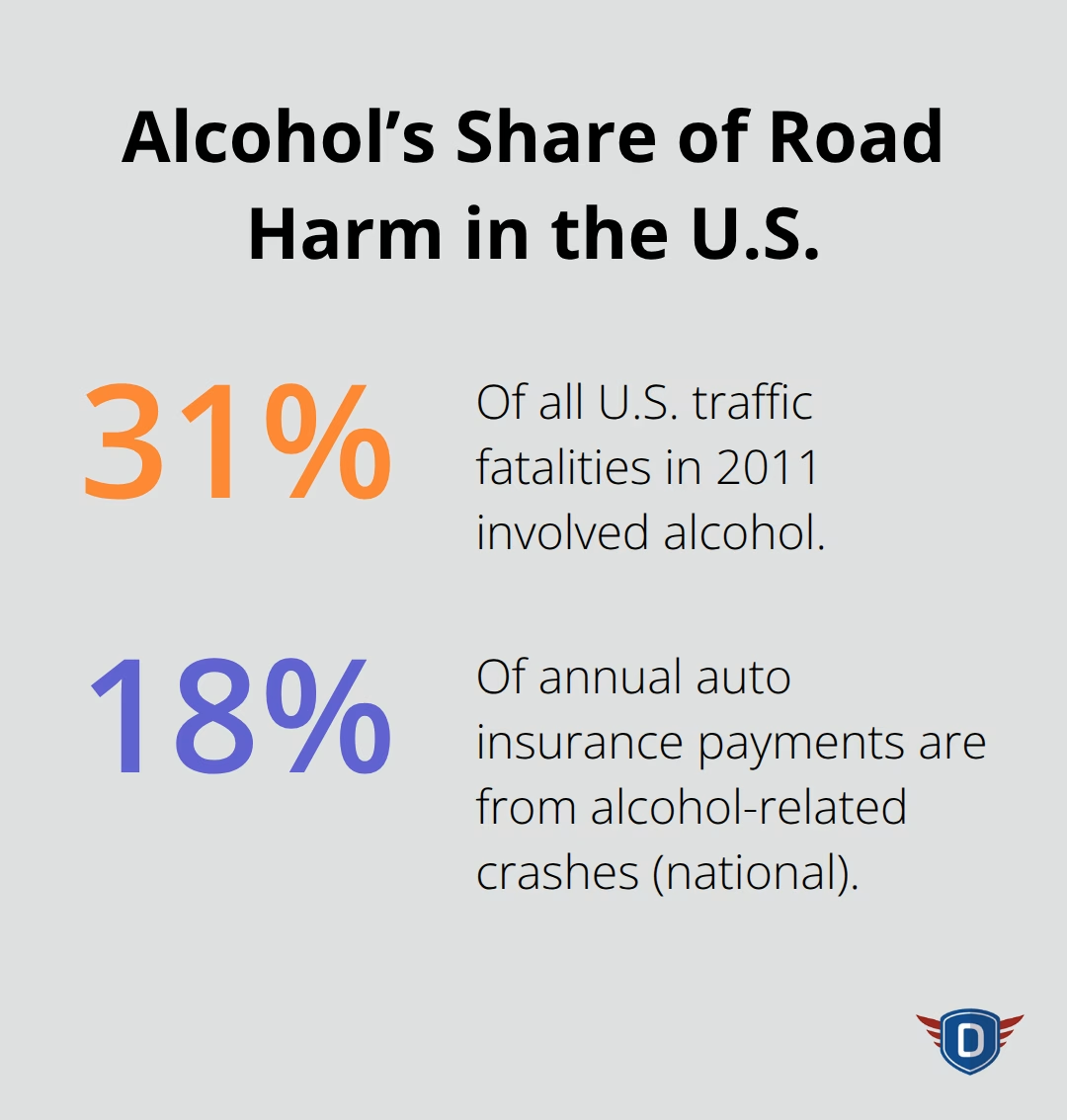
In 2011, alcohol-related crashes killed 9,878 people across the United States, with one fatality occurring roughly every 53 minutes according to the U.S. Department of Transportation. Florida, with more than 16 million licensed drivers, experiences a proportionally devastating toll. That year alone, 31% of all fatal crashes involved alcohol, meaning impaired driving caused nearly one in three deaths on American roads. These numbers represent preventable tragedies that families never recover from.
A DUI conviction stays on your Florida driving record for 75 years-not 7 years, not 10 years, but three-quarters of a century. This permanent mark affects employment opportunities, housing applications, and your ability to travel across state lines. For drivers under 21 facing a BAC suspension between 0.02 and 0.05, the consequences arrive even faster, with license suspension immediate and reinstatement requiring course completion and a hardship license petition.
The Financial Toll of a Single DUI
A first-offense DUI costs between $7,828 and $10,828 when you factor in fines, penalties, restitution, education programs, attorney fees, and the inevitable spike in auto insurance premiums. The average alcohol-impaired fatality costs society approximately $3.5 million total, including $1.1 million in direct monetary losses and $2.4 million in quality-of-life impacts. Insurance rates don’t just increase temporarily-they remain elevated for years.
Crash costs per mile driven spike dramatically with blood alcohol content, reaching $5.80 per mile at BAC 0.10 or higher compared to $0.10 per mile when completely sober. Nationally, alcohol-related crashes account for about 18% of the roughly $103 billion in annual auto insurance payments.
Florida’s Broader Societal Burden
Florida’s societal burden from alcohol abuse reaches approximately $70.3 billion annually across healthcare costs, lost productivity, and premature deaths. These numbers transform abstract statistics into concrete reasons why impaired driving prevention matters from day one behind the wheel. Understanding what impaired driving actually costs-to your wallet, your future, and your community-sets the stage for why the TLSAE course addresses specific topics that directly counter these devastating outcomes.
How Impaired Driving Impairs Your Brain and Body
The Immediate Effects on Reaction Time and Motor Control
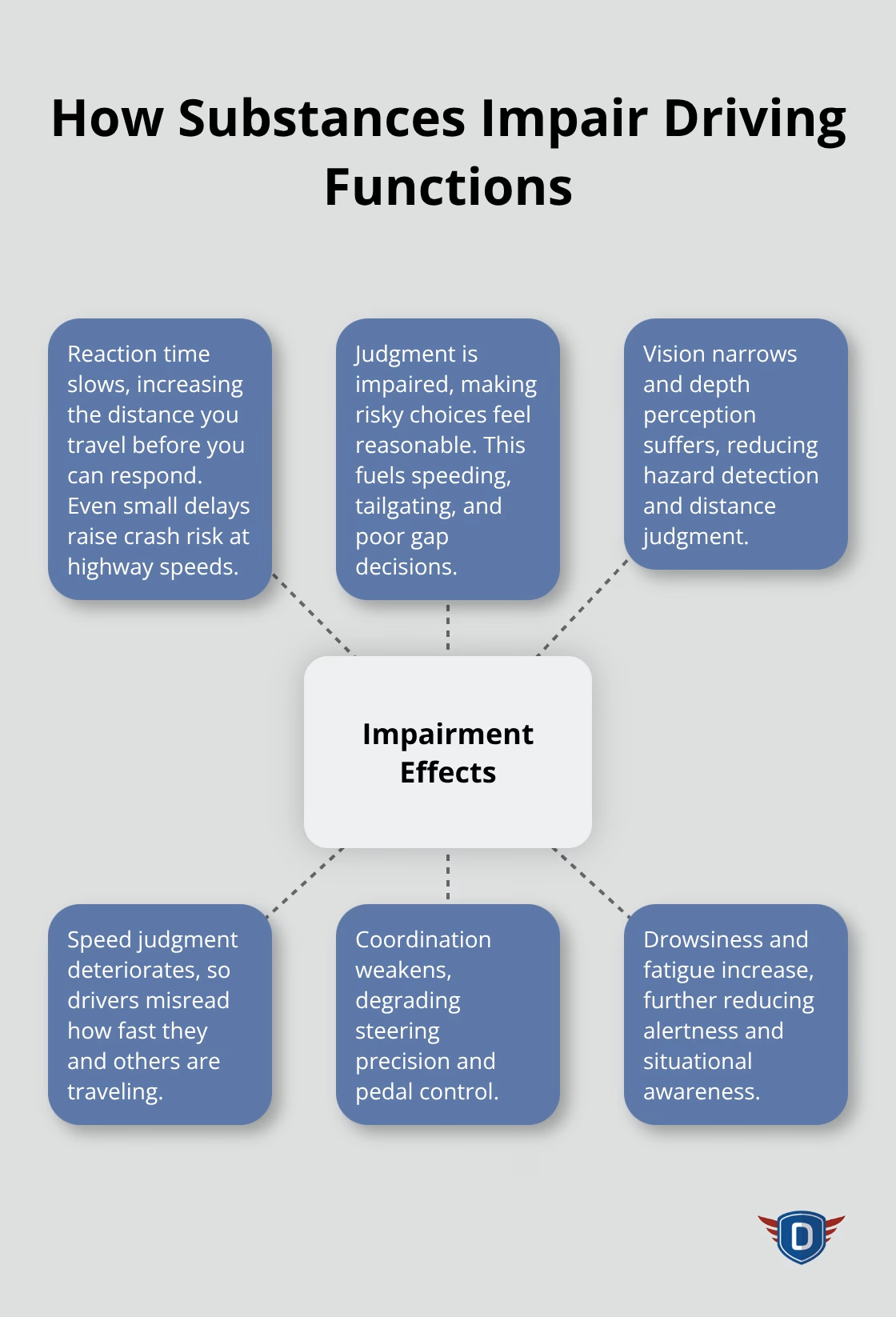
Alcohol and drugs attack your central nervous system and degrade the exact skills driving demands. Within 15 minutes of consuming a drink, alcohol slows your brain’s ability to process information, and once you feel buzzed, alcohol steadily decreases a person’s ability to drive a motor vehicle safely. At a BAC of 0.08 percent, the legal limit in Florida, your reaction time slows enough that at 55 miles per hour you travel an additional 32 feet before responding to a hazard. The National Highway Traffic Safety Administration found that 66 percent of alcohol-related crash fatalities involved drivers with a BAC of 0.08 percent or higher, proving that this threshold exists because it genuinely impairs survival-critical responses.
Drugs compound this problem differently depending on the substance. Marijuana slows reaction time and impairs judgment even at low doses. Stimulants like cocaine or methamphetamine create false confidence and aggressive driving. Prescription painkillers and antihistamines cause drowsiness and reduced coordination. Florida’s TLSAE course breaks down exactly how each category of substance degrades specific driving functions-your vision narrows, your depth perception fails, your ability to judge speed deteriorates, and your muscle coordination weakens.
Why You Cannot Trust Your Own Judgment
Understanding your personal impairment threshold matters more than memorizing legal limits. Some people metabolize alcohol faster than others based on body weight, gender, food intake, and medication interactions. A 120-pound woman reaches 0.08 BAC after three drinks in two hours, while a 200-pound man reaches it after four drinks in the same timeframe. The problem is that you cannot accurately judge your own impairment while impaired-your judgment itself is compromised.
This reality forces a hard truth: honest self-assessment means acknowledging that you consumed alcohol or drugs and making the decision not to drive, period. No exceptions. Look for slurred speech, impaired balance, difficulty focusing, poor coordination, or delayed responses in anyone considering driving. For yourself, you must act before the moment of decision arrives, when your compromised judgment cannot be trusted.
Peer Pressure and High-Risk Situations
Peer pressure intensifies this challenge, especially for young drivers. Nearly 30 percent of teens reported riding with an impaired driver according to NHTSA data, and about 10 percent admitted to driving after drinking themselves. Half of teen deaths from alcohol-related crashes occur between 3 p.m. and midnight, with 56 percent happening on Fridays, Saturdays, or Sundays when social situations peak.
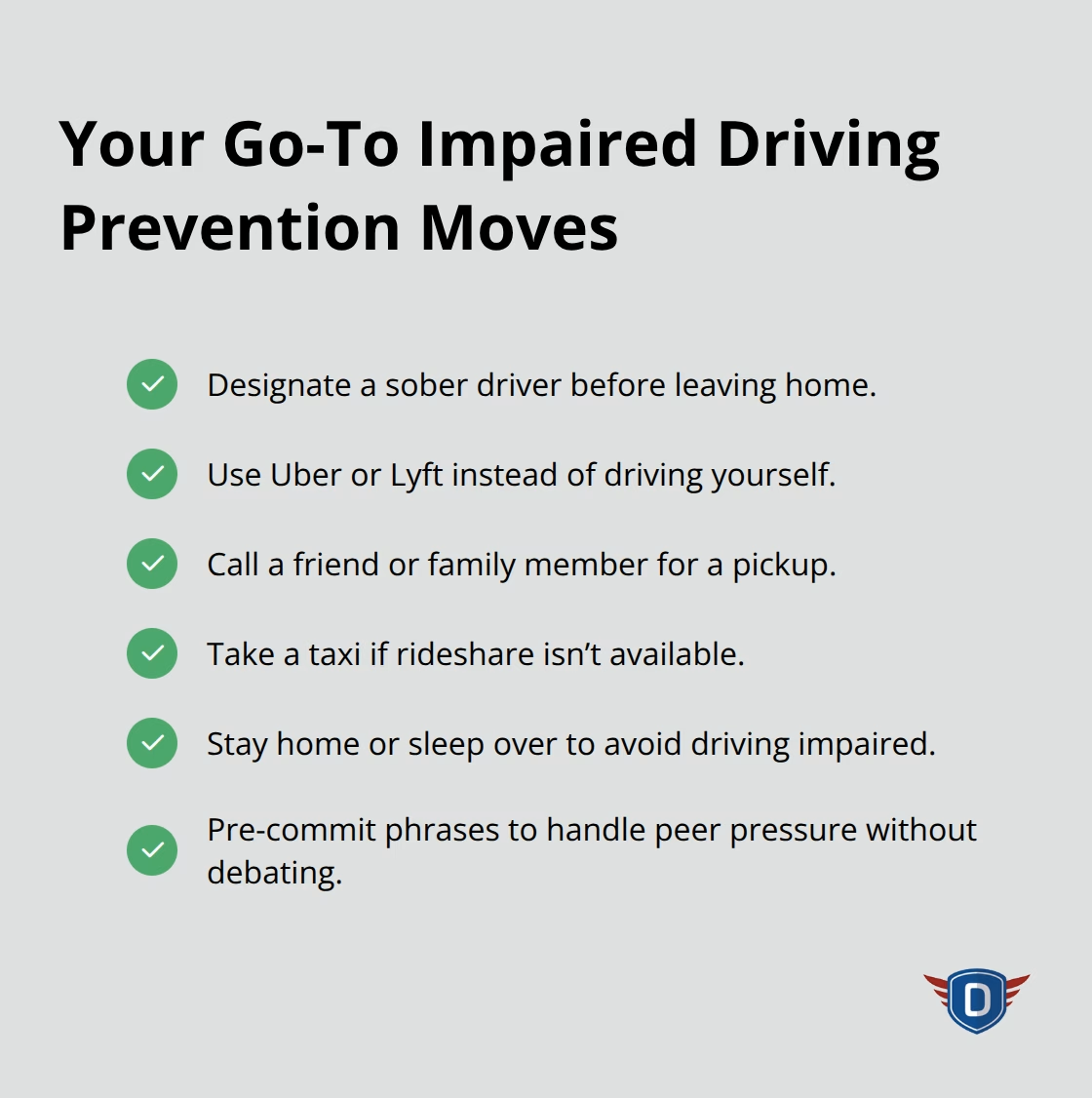
Planning ahead eliminates this trap entirely. Designate a sober driver before going out, use rideshare services, or simply stay home-these actions remove the moment of decision-making when judgment is already compromised. The choice you make before the party, before the drinks, before the pressure arrives, determines whether you drive impaired. This forward-thinking approach transforms how young drivers navigate social situations and sets the foundation for understanding what specific prevention strategies actually work in real life.
How to Actually Stop Impaired Driving Before It Happens
Make the Decision Before the Night Begins
No one decides to drive impaired in the moment. That decision happens hours earlier when you choose what to do that night. According to the National Highway Traffic Safety Administration, nearly 30 percent of teens rode with an impaired driver in the prior month, and about 10 percent drove after drinking themselves. This gap between knowing better and doing better exists because prevention requires planning, not willpower. Designate a sober driver before leaving home and eliminate the trap of compromised judgment later. Text your designated driver now, before the event, and make it non-negotiable.
Use Rideshare and Transportation Alternatives
Rideshare services like Uber and Lyft exist specifically for this moment, and a $15 to $25 ride costs infinitely less than the cost of a first DUI, which ranges between $10,000 and $25,000. If you cannot afford a rideshare, call a friend, family member, or taxi. If none of those options exist, stay home. This forward-thinking approach transforms how drivers navigate social situations and removes the moment when impaired judgment controls your actions.
Spot the Warning Signs in Others
Recognizing impairment in others requires observing specific physical signs before they reach a vehicle. Slurred speech, impaired balance, difficulty focusing eyes, poor coordination, and delayed responses indicate someone should not drive. Watch for these markers in anyone who consumed alcohol or drugs before they attempt to operate a vehicle.
Understand Why You Cannot Trust Your Own Judgment
For yourself, the recognition challenge is harder because impairment damages your own judgment simultaneously. This is why planning ahead matters so completely. You cannot trust your assessment of your own condition once alcohol or drugs enter your system. At a BAC of 0.08 percent (Florida’s legal limit), your brain cannot accurately evaluate whether you are safe to drive. Half of teen deaths from alcohol-related crashes occur between 3 p.m. and midnight, with 56 percent happening on Fridays, Saturdays, or Sundays when social pressure peaks and impulsive decisions happen fastest.
Prepare Your Response to Peer Pressure in Advance
Peer pressure intensifies this challenge because saying no to friends feels awkward in the moment. The solution is preparing your response in advance. Decide your phrases before the pressure arrives: “I am driving,” “I have a designated driver,” “I am using a rideshare,” or “I am staying over tonight.” These statements require no explanation and no debate. When you announce them before drinking starts, they become your plan, not your excuse. A parent-teen driving plan can help establish these conversations early and build the foundation for safer decisions throughout a young driver’s life.
Final Thoughts
The TLSAE course transforms abstract statistics into personal motivation by showing drivers exactly how alcohol and drugs degrade reaction time, judgment, and coordination. When you understand that a DUI conviction stays on your Florida record for 75 years and costs between $7,828 and $10,828, you plan ahead instead of improvising in the moment. When you recognize that peer pressure intensifies in social situations, you prepare your response in advance-these decisions made before the night begins determine whether you drive impaired or protect yourself and others.
Florida’s impaired driving prevention program works because educated drivers make safer choices that ripple through families and communities. Every designated driver you choose, every rideshare you use instead of driving impaired, and every moment of peer pressure you resist through advance planning represents a life protected. The data proves this approach works: drivers who understand impairment’s true cost commit to prevention and transform their behavior on the road.
We at floridadetscourse.com believe that safe driving starts with knowledge that sticks with you long after you finish a course. Explore our comprehensive driver education programs to discover how we help you become the safer, more responsible driver your community needs.