You�re probably here because you�ve seen the same thing a lot of people in Tampa see every day. Trucks lined up on I-4, rigs moving freight near the port, trailers stacked in yards off the main roads, and a steady stream of commercial traffic that never really stops. At some point, a lot of people start asking the same question. Could I make a living doing that?
The short answer is yes. But getting from �I�m thinking about it� to �I�ve got my CDL and my first job� takes more than signing up for the first school that runs an ad.
In Tampa, the path is fairly fast if you choose the right program and handle the early paperwork correctly. The local market is active, the schools are used to training beginners, and carriers hire out of this area because freight moves through Tampa all year. What national guides usually miss is that Tampa has its own rhythm. Port traffic, industrial corridors, busy urban roads, and a mix of local, regional, and over-the-road work all affect what kind of training makes sense and what kind of first job you should take.
Starting Your Engine in the Tampa Bay Trucking Scene
A lot of career changes start in traffic. You�re sitting near a warehouse district, watching tractor-trailers roll by, and thinking that the person in that cab has a skill you could learn. In Tampa, that thought isn�t unrealistic. It�s one of the more direct career pivots you can make if you�re willing to train hard and handle the licensing process the right way.
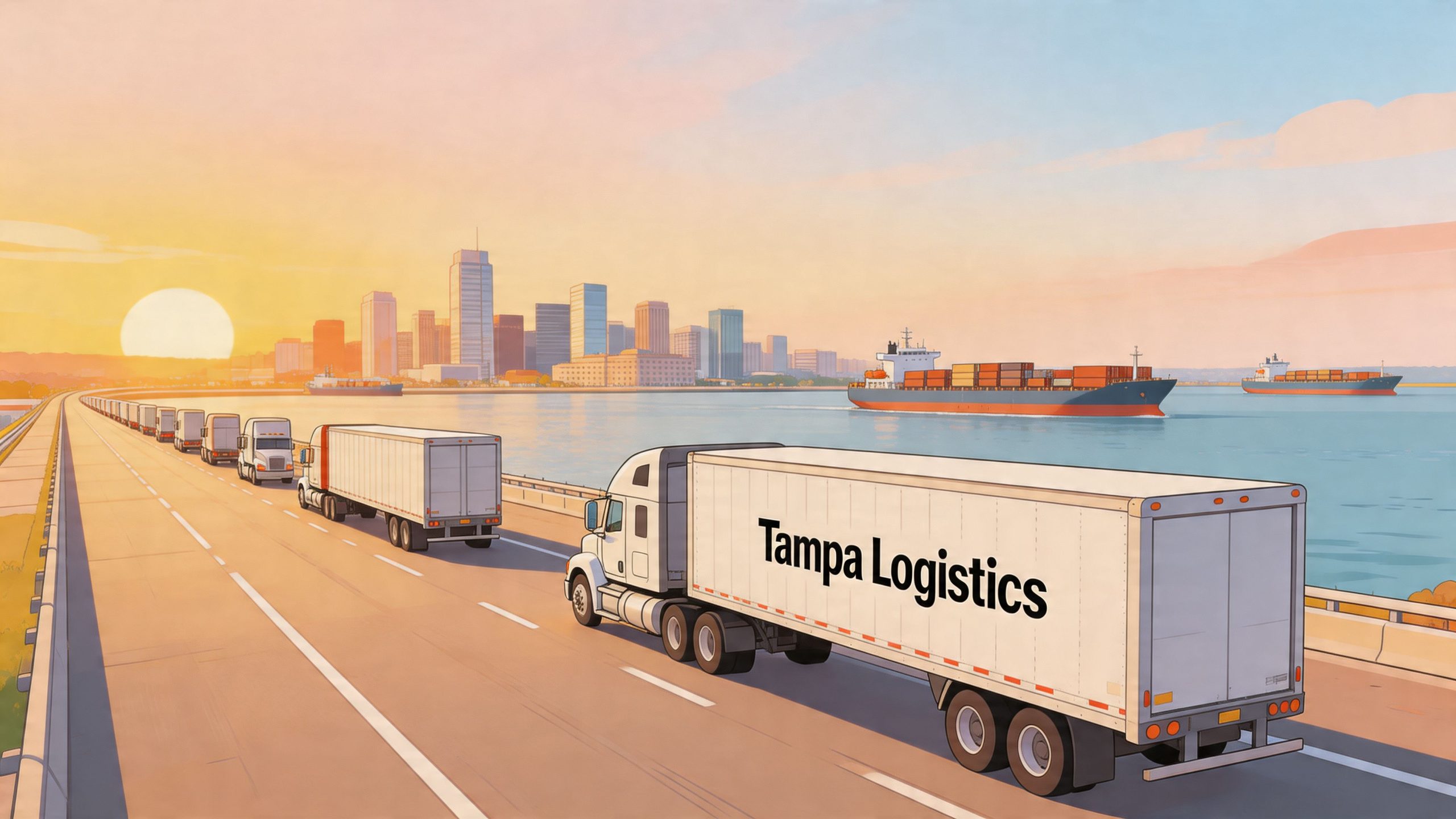
Tampa gives new drivers something many cities don�t. Depth in the local market. Tampa�s logistics footprint includes 50 active carriers, which creates real entry-level opportunity for people coming out of training, according to this local market overview on Tampa CDL demand. That same source notes that demand has stayed strong enough that Roadmaster expanded from 20 to 27 locations by late 2022.
That matters for one simple reason. A CDL is more useful when you earn it in a place where freight is always moving.
Why Tampa works for beginners
Tampa sits in a part of Florida where a new driver can train on several types of roads in a short span. You get city traffic, interstate traffic, industrial areas, tight turns, and shipping-related congestion. That�s uncomfortable at first, but it builds useful habits faster than training in a sleepy area with no pressure.
A beginner in Tampa also gets exposed early to the kind of driving decisions that matter on the job:
- Route awareness: You learn quickly that getting somewhere isn�t the same as getting a truck somewhere.
- Traffic patience: Port-area delays and urban congestion teach spacing, timing, and calm decision-making.
- Backing discipline: Crowded yards and business districts force you to slow down and think before every maneuver.
Practical rule: If a school trains you only to pass the exam, you may leave with a license and still feel lost in real Tampa traffic.
What your path usually looks like
For applicants, the sequence is straightforward. Confirm you qualify. Get your medical card. Study for the permit. Enroll in training. Pass the skills test. Start interviewing with a very clear idea of what kind of trucking life you want.
That last part gets overlooked. Not every first job is a good first job. A lot of problems in trucking start when people chase speed and promises instead of training quality and fit.
If you�re searching for cdl classes in tampa fl, think of the process less like buying a class and more like entering a trade. The license is the gate. Value comes from where you train, how much actual seat time you get, and whether your first employer gives you a workable start.
Your Pre-Trip Checklist Eligibility and Florida CDL Permit
A lot of Tampa applicants start calling schools before they handle the part that can hold them up. Then a start date gets picked, the permit is still undone, the medical card hits a snag, and the whole plan slides back a few weeks.
Handle the eligibility and permit work first. It saves money, keeps your training timeline realistic, and tells you early if anything on your record needs attention.
Know the age and license rules
Florida follows the standard CDL age split. At 18, you can drive commercially inside Florida. At 21, you can cross state lines and qualify for more jobs. Around Tampa, that difference matters. Plenty of local work exists for intrastate drivers, but interstate carriers and many larger freight outfits want applicants who are 21 or older.
You also need a valid driver�s license and identification that matches across your paperwork. If your name, address, or license status is inconsistent, fix it before you enroll. I have seen applicants lose class time over simple document problems that should have been cleaned up at the start.
Your driving record matters too. A recent violation does not always block training, but it can limit who will hire you after school. That is especially true if you want better freight options instead of taking the first seat offered.
Get your DOT medical card early
The DOT physical is one of the first real checkpoints.
Do it early. Do not wait until the week your class starts.
Bring your license, any required identification, prescription information, and paperwork for medical conditions if you have them. Be accurate on the forms. Small inconsistencies can slow down certification, and Tampa-area schools cannot fix that for you once the clock is running.
Keep paper copies and a phone photo of everything. That habit helps later when you are dealing with permit testing, school enrollment, and job applications.
Put every CDL document in one folder from day one. License, proof of identity, medical paperwork, and residency documents. You will use that folder over and over.
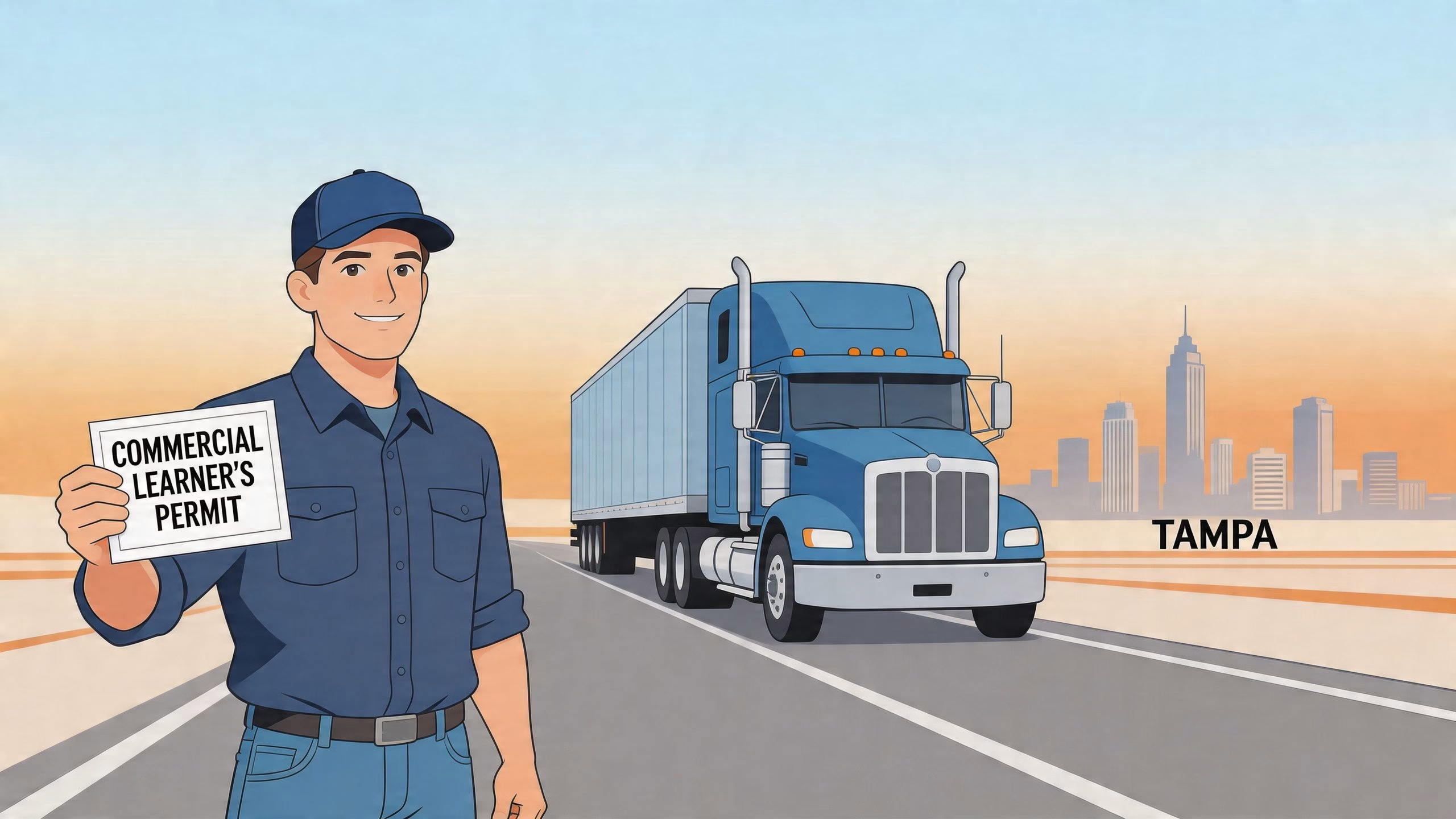
Study for the Commercial Learner Permit the smart way
The permit is where beginners either build momentum or lose it. Car driving experience does not prepare you for CDL written tests by itself. The applicants who do best break the material into parts and study in the order they will need it.
Use this approach:
- Start with the Florida CDL manual section for general knowledge.
- Add air brakes and combination vehicles if you plan to earn a Class A.
- Take practice tests repeatedly until the wording stops feeling new.
- Review missed questions by topic so weak areas do not keep repeating.
- Schedule the permit test once your scores are consistently solid, not just barely passing.
If you want a simple checklist for the permit side, this guide to the Florida CDL permit process lays out the steps clearly.
Choosing your path
Applicants searching for cdl classes in tampa fl usually say they want a license. What they really need to decide is what kind of work they want access to.
In Tampa, that choice has local consequences. Port freight, container work, foodservice, beverage delivery, dump work, bus driving, and regional dry van all point people toward different license classes and endorsements. Port Tampa Bay creates demand for Class A drivers, but that does not mean Class A is automatically the best fit for every beginner.
| Class / Endorsement | What You Can Drive | Common Careers |
|---|---|---|
| Class A | Tractor-trailers and other combination vehicles | Port freight, regional dry van, flatbed, refrigerated freight, tanker work |
| Class B | Straight trucks, buses, and other heavier single vehicles | Dump trucks, box trucks, local delivery, transit and coach driving |
| Class C | Smaller commercial vehicles requiring certain endorsements | Passenger shuttle work, some hazmat roles, specialized local driving |
| Tanker endorsement | Tank vehicles | Fuel, liquid, and bulk transport |
| HAZMAT endorsement | Loads regulated as hazardous materials | Specialized freight with added screening and testing |
| Passenger endorsement | Passenger-carrying commercial vehicles | Bus and shuttle driving |
Class A gives the broadest job options. For a lot of Tampa students, that flexibility is worth the extra study and training time. But if you already know you want local bus or straight-truck work, Class B may be the cleaner path.
What beginners usually get wrong
The biggest mistake is rushing.
A fast permit pass with weak understanding usually shows up later in training. Backing instructions make less sense. Air brake rules feel harder than they should. Pre-trip memorization gets rougher. Then the student blames the school, when the underlying problem started before class.
These are the errors I see most often:
- Rushing the permit: Barely passing creates problems once classroom and pre-trip training start.
- Ignoring record issues: Tickets, suspensions, or unresolved license problems can hurt hiring more than applicants expect.
- Picking the wrong class: A student who wants broad freight options often does better starting with Class A instead of upgrading later.
- Waiting too long on the medical card: A preventable delay can cost a seat in the class you wanted.
This stage is basic, but it is not minor. Drivers who handle paperwork, deadlines, and rules well at the beginning usually handle training and hiring better too.
Navigating Tampa’s CDL School Landscape
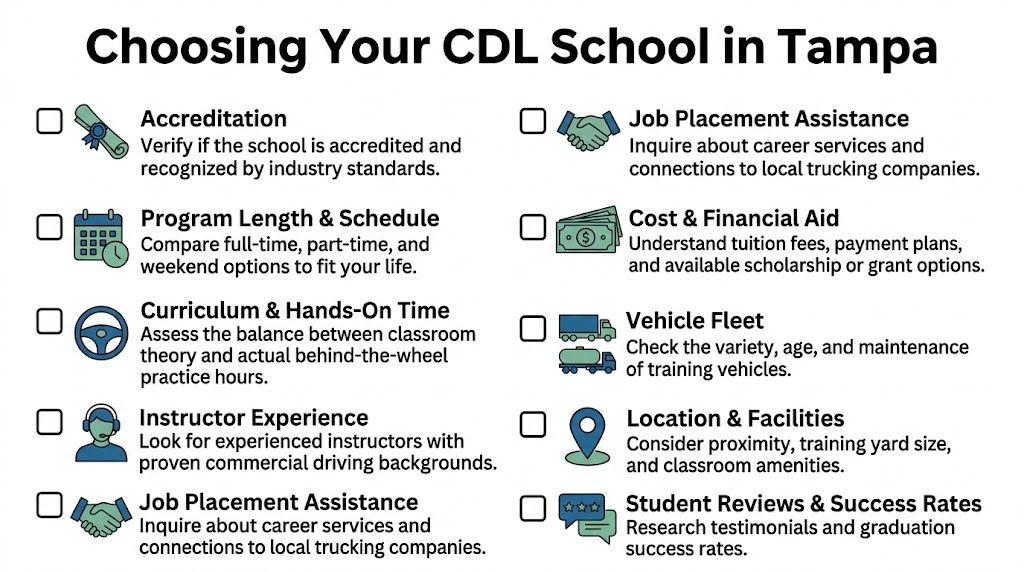
A Tampa student can visit one school near east Tampa in the morning, call another by lunch, and hear three very different sales pitches by dinner. That is normal here. The smart move is to compare programs the way a hiring manager would compare drivers. On training time, equipment, instructor access, testing support, and where graduates go to work.
The mistake I see all the time is picking a program because it starts fastest or sounds cheapest on the phone. In Tampa, that can backfire. A school that rushes you through backing and pre-trip may still get you to test day, but Port Tampa Bay freight, foodservice work, and local delivery jobs all punish weak fundamentals pretty quickly.
The main training models in Tampa
The Tampa market usually breaks into three school types.
Private self-pay schools give you the most freedom after graduation. You pay upfront or finance tuition, finish training, earn the CDL, and apply where you want. That matters if you want options beyond one carrier contract, especially around Tampa where some drivers aim for container work tied to Port Tampa Bay, while others want beverage delivery, construction hauling, or over-the-road starter jobs.
Community college partnerships tend to appeal to students who want a more formal classroom setup and a school environment that feels less like a recruiting office. Hillsborough Community College works with SAGE Truck Driving Schools, and the HCC truck driver training program page lays out the structure, admission steps, and program format. For some students, that setup provides better accountability. For others, the schedule feels less flexible than a private school.
National chain programs are common in Tampa too. Names like Roadmaster and 160 Driving Academy come up often because they have a repeatable system and employer relationships across multiple markets. That consistency can help if you like a defined process. It can also feel more standardized than personal.
What to compare before you sign anything
Skip the brochure language and ask questions that expose how the day-to-day training works.
Use this checklist:
- Seat time in the truck: Ask how much time you personally spend driving, not observing another student.
- Yard practice structure: Find out how often you repeat straight line, offset, and parallel backing before road work increases.
- Instructor ratio: One instructor trying to manage too many beginners at once usually slows everybody down.
- Testing help: Ask how they teach pre-trip, backing, and road driving as separate skills.
- Truck condition: The equipment does not need to be fancy, but it should be safe and close to what you will test in.
- Schedule fit: Tampa traffic, family obligations, and work schedules can turn an advertised class calendar into a problem fast.
- Recruiting reality: Ask which carriers hire there, what freight those companies move, and whether the jobs are local, regional, or over the road.
A strong admissions office answers those questions clearly. A weak one keeps repeating that placement is high and spots are filling up.
Tampa names you�ll hear often
Students shopping for cdl classes in tampa fl usually hear the same group of names first. Hillsborough Community College through SAGE gets attention from people who want a school tied to a college setting. Roadmaster is well known and has been on many Tampa shortlists for years. 160 Driving Academy gets mentioned by applicants looking for a faster, standardized format. CDL Training of Tampa LLC comes up because some students want a smaller local option instead of a larger brand.
Recognition alone should not make the decision for you.
I tell students to look at where the school sits in the Tampa job flow. A program with active ties to carriers hiring out of Seffner, east Tampa, Lakeland, or the port side of the bay may open more realistic first-job conversations than a school with good ads and weak local connections.
How to spot weak programs
The warning signs usually show up before enrollment paperwork does.
Be careful with any school that does the following:
- Won�t explain drive time clearly
- Blurs the difference between watching and driving
- Talks about jobs without naming route type or freight
- Treats pre-trip like pure memorization
- Acts like every graduate is ready for every carrier
- Rushes you to sign before you visit the yard
Program length matters too. A shorter course is not automatically bad, but new drivers need enough repetition to build control. Passing the state test is one standard. Handling a crowded merge on I-4, backing into a tight Tampa yard, or setting up clean near port traffic is a different standard.
Keep your personal record clean while you prepare
Schools train you. Carriers judge the full picture.
That includes your driving record before your first application goes out. If you need to clear up a traffic issue while keeping your schedule flexible, a state-approved online driving school option in Florida may help with that part of the process.
It is separate from CDL training, but it still affects hiring. In Tampa, where new drivers often compete for the same entry-level openings, a cleaner record gives you more room to choose instead of taking whatever is left.
Behind the Wheel What to Expect From Your Training
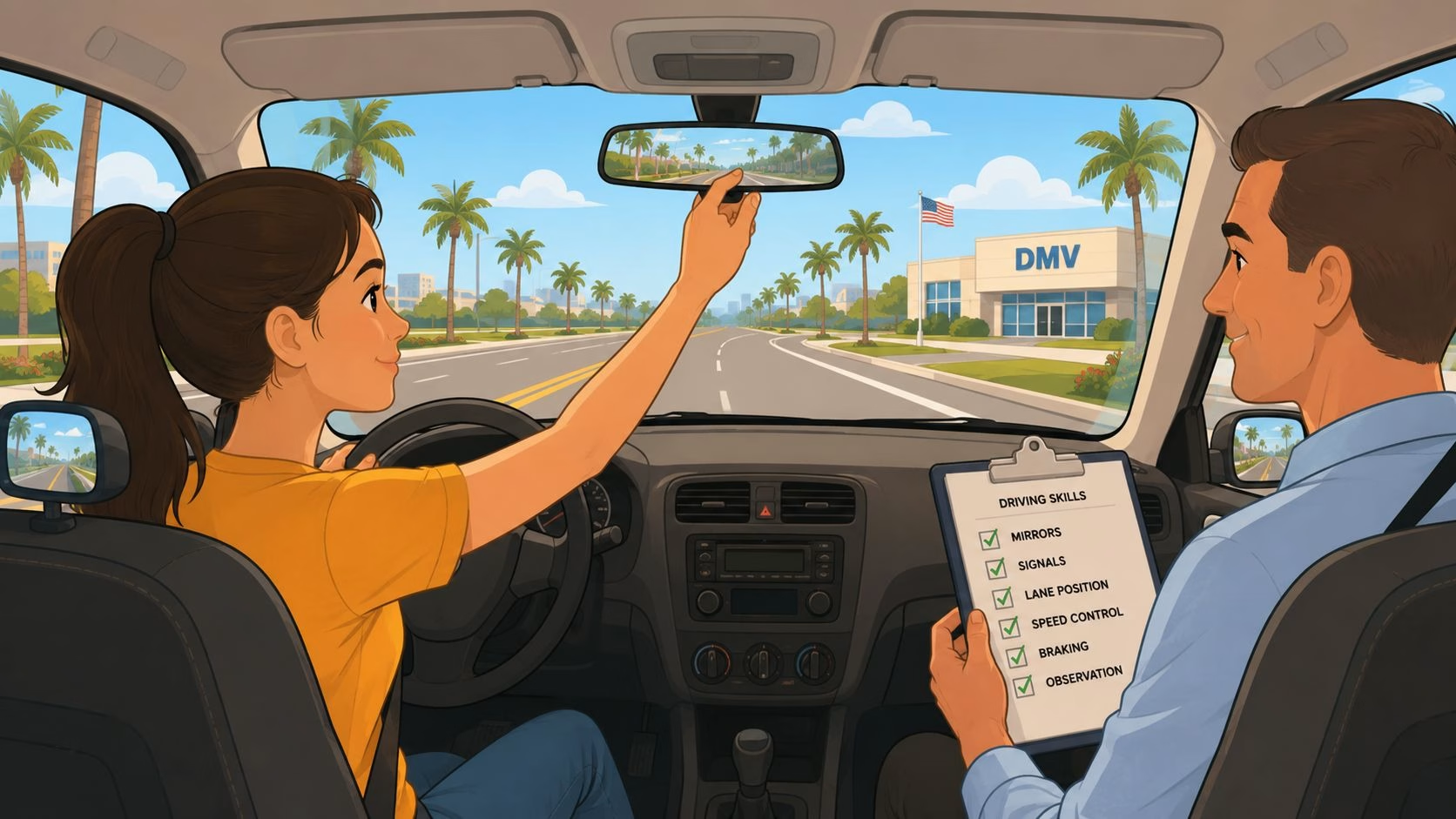
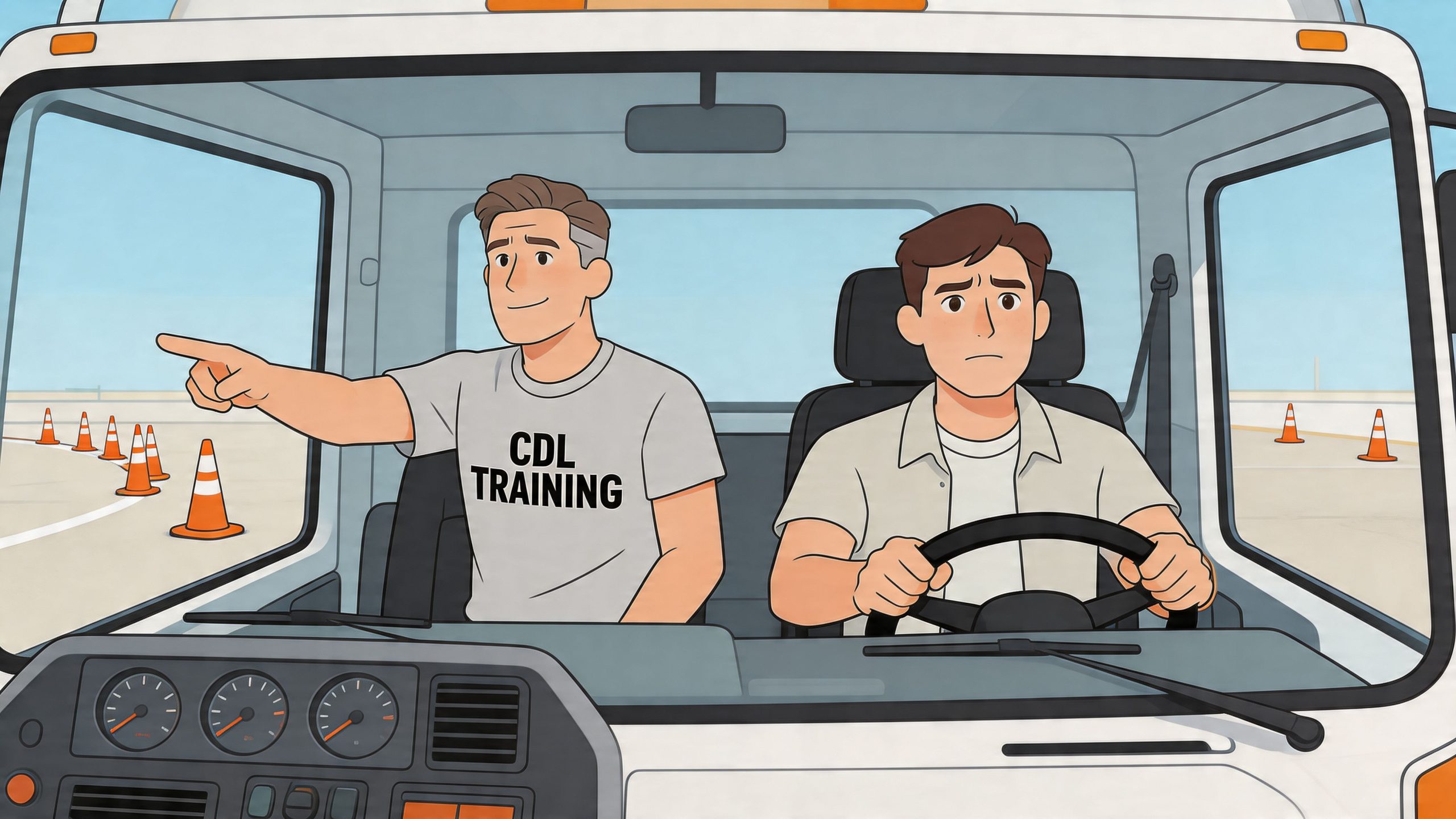
Your first real day on the yard usually resets your expectations fast. A student shows up thinking the hard part is driving forward. By lunch, they figure out the job starts long before the truck moves. You are learning inspection order, air brake checks, mirror routine, backing setup, shifting timing, and how to stay calm while an instructor keeps correcting the same mistake.
That early pressure is normal in Tampa programs that train people for actual local hiring conditions. Schools feeding graduates into port, warehouse, beverage, foodservice, and regional dry van work do not have much use for loose habits. Port Tampa Bay freight, busy industrial streets, and tight customer yards punish sloppy setup.
What a training day usually looks like
A solid training day has a rhythm. You spend part of it in instruction, part of it around the truck, and part of it either in the yard or on the road depending on where you are in the program.
In the classroom, the focus is usually practical, not academic. Expect work on air brakes, combination vehicles, log basics, endorsements, cargo awareness, and the inspection sequence you will repeat until you can do it under stress. Good instructors keep tying every topic back to test points and job reality.
Outside is where students either settle in or start fighting the process.
Straight-line backing comes first because it teaches small steering input and trailer response. Offset backing shows whether you can fix a bad angle before it gets worse. Alley dock and parallel work expose patience, mirror discipline, and how well you listen to coaching. If a school burns through these too fast, students may pass a practice run and still struggle once the pressure goes up.
Pre-trip is usually the first real wall
Students rarely fail pre-trip because they are lazy. They fail because they try to memorize words instead of building a repeatable physical routine.
Walk the same path every time. Touch the part you are naming. Say what you are checking and why it matters. If you miss a section in practice, stop and restart the sequence correctly instead of shrugging it off. That habit saves people on test week.
For extra review, a vehicle maintenance refresher for Florida drivers helps reinforce what components do and what defects to identify.
Shop-floor advice: The item you skip in practice because you are �pretty sure� you know it is often the item your examiner asks about.
Yard coaching matters more than school marketing
The strongest instructors do not just tell you to turn harder or pull up. They explain why your setup failed, where your eyes were late, and what the trailer was already doing before you noticed the problem.
That is the difference between getting through a maneuver and actually learning it.
I have seen students in Tampa who looked rough on day three turn into safe entry-level drivers because one instructor caught the same bad habit every session and fixed it before it became permanent. I have also seen students spend too much time waiting for a turn, watching other people back, and calling that practice. It is not the same.
A quick look at a truck training environment helps if you�ve never seen how yard instruction is staged:
Road training around Tampa shows you where your weak spots are
The yard is controlled. Tampa traffic is not.
Once you leave the cones, little mistakes start stacking up. Late mirror checks on Dale Mabry. Wide right turns near warehouse entrances in East Tampa. Hesitation in heavier traffic around I-4 and I-75 connections. Trouble managing space when cars dive under your trailer near port and industrial corridors. Road work in this area exposes timing, observation, and patience fast.
That is why students need repeated road sessions, not one or two clean runs. A driver who can back well in a quiet yard still needs time to handle lane position, bridge height awareness, traffic lights, curb tracking, and uneven customer entrances without getting flustered.
If your long-term goal is to become a cdl driver with no experience, road training is where you start looking hireable instead of just test-ready.
Habits that help you improve faster
Students usually progress faster when they do a few simple things consistently:
- Use the same pre-trip order every day
- Write down recurring errors after yard or road sessions
- Ask why a correction matters instead of only fixing that one rep
- Take pull-ups early instead of trying to save a bad backing setup
- Treat every ride as practice, even when another student is driving
The habits that slow people down are easy to spot too:
- Rushing to look advanced
- Arguing with corrections before trying them
- Blaming the truck for every mistake
- Checking out mentally during observation time
- Studying test phrases without connecting them to the equipment
CDL training is repetitive on purpose. Repetition builds control. Control is what carries you through a Florida test site, through tight Tampa yards, and into that first job where nobody cares how confident you sounded in class. They care whether you can handle the truck safely.
The Final Mile Acing the Florida CDL Test and Facing the Job Market
By test week, most students are tired of hearing the same commands and repeating the same routines. That�s a good sign. It means the process is becoming automatic.
Florida�s CDL skills test is usually easier to handle when you think of it as three separate events. Inspection first. Control skills second. Road drive last. Treat each part like its own job, then reset mentally before the next one.
How to stay clean on test day
The inspection phase needs a calm pace and a fixed pattern. Don�t sprint through it. Touch what you�re naming. Use consistent wording. If you lose your place, return to your sequence instead of guessing.
For the maneuver portion, the goal isn�t style. It�s control. Examiners want to see setup, observation, and correction. Backing errors often begin before the truck even moves, because the setup was rushed.
For the road drive, stay boring. That�s good driving in a test truck. Smooth braking, wide awareness, proper lane use, complete stops, and patient turns beat flashy confidence every time.
If you�re still sorting out scheduling logistics for DMV-related testing steps, a practical Florida DMV road test scheduling resource can help you stay organized on the administrative side.
Most failed test days start before the test begins. Poor sleep, missing documents, rushing breakfast, arriving late, or letting nerves hijack your routine.
What schools don�t always tell you about the first job
A lot of schools market the first job like it�s the finish line. It isn�t. It�s the start of your adjustment period.
Yes, many graduates find work quickly. But fast placement and a good fit are not the same thing. Tampa schools and recruiters may highlight immediate openings, yet long-term reality matters more. A report referenced by Tampa Truck Driving School says 45% of first-year Florida drivers leave in that period, often because of route shortages and Hours of Service fatigue, with Tampa port congestion adding pressure in the market, as noted in this discussion of Tampa trucking job realities.
That number should make you slow down and ask better questions in every interview.
Questions to ask before you accept an offer
Don�t just ask what the truck pays. Ask how the job works.
Use questions like these:
- What kind of routes will I run?
- How much waiting time should I expect at shippers or receivers?
- Will I be home on the schedule being advertised?
- What support does a new driver get in the first months?
- How is dispatch communication handled?
- What happens if freight slows down?
If you�re trying to understand how beginners break into the field without a long work history, this guide on how to become a cdl driver with no experience gives a useful outside perspective on getting through that first hiring stage.
The Tampa-specific reality
Tampa is a strong market, but it has friction points national articles skip. Port-related traffic can eat time. Urban delivery work can be physically and mentally harder than people expect. Some local jobs sound attractive because they get you home daily, but they may involve heavy stop-and-go work, dock pressure, and tighter margins for error.
That doesn�t mean avoid local work. It means match the job to your tolerance.
A solid first employer usually gives a beginner three things:
- A realistic route structure
- Respectful dispatch communication
- Enough consistency to build skill without panic
The best first job isn�t always the one that talks the loudest. It�s the one that lets you survive year one, keep learning, and avoid becoming part of the turnover problem.
Tampa CDL Frequently Asked Questions
Can I get started if I�m still working a full-time job
Yes, if your schedule and the school’s schedule fit.
A lot of Tampa applicants try to hold onto a day job while training. That can work, but only if you ask hard questions before enrollment. Ask which days you must be on the yard, how missed range time is handled, and whether road drives are locked into daytime slots. Some programs are built around full-time attendance even if the sales pitch sounds flexible.
Miss too much hands-on time and you fall behind fast. Pre-trip, backing, and shifting are repetition skills.
Is private school better than company-sponsored training
Private school usually gives you more freedom after graduation. You can talk to different carriers, compare local and regional jobs, and avoid being tied to one employer if the fit is wrong.
Company-sponsored training lowers the upfront cost, which matters for plenty of people. The trade-off is commitment. Read the contract slowly. Check the repayment terms, the length of the work obligation, and what happens if you leave early or get terminated. I tell new drivers the same thing every time. Cheap training can get expensive if you sign before you understand the penalty language.
Are there veteran-friendly options in Tampa
Yes, but the level of help varies from school to school.
Hillsborough County has a mix of private CDL schools and public training routes, and they do not all handle veteran paperwork the same way. Some admissions offices know exactly how to process benefits and explain the timeline clearly. Others hand you a phone number and leave you to sort it out.
Ask direct questions. Which benefits do you accept? Who handles certification paperwork? How long does approval usually take before class start? If the answer sounds vague, keep calling around.
What if I�ve had a recent traffic ticket
A ticket does not always stop you from entering school. It can affect hiring, especially with starter carriers that screen driving records hard.
Severity matters. Recency matters too. A minor issue from a while back is different from a fresh reckless driving charge or multiple violations close together. Pull your motor vehicle record, know what is on it, and keep proof of any completed court or traffic school requirements. Tampa employers and national carriers pulling from this market will check.
How do I choose between Class A and Class B
Choose based on the job you want six months from now, not the shortest path through school.
Class A gives you the widest range of work. That includes over-the-road freight, regional runs, many port-related container jobs after you build experience, and more options if you want to leave one carrier and move to another. Class B fits better if you are aiming at straight trucks, dump trucks, buses, or certain city routes.
In Tampa, that distinction matters. Port Tampa Bay influences a lot of Class A demand, while municipal, construction, and local delivery work often point drivers toward Class B. Watch the jobs first, then pick the license.
How long does the whole process usually take in Tampa
If you stay on top of the permit, medical card, and school attendance, the process can move fairly quickly. Delays usually come from paperwork problems, missed training days, or waiting on a test slot.
Do not plan your finances around the fastest case. Build in extra time for retests, DMV scheduling, and the gap between finishing school and starting your first job.
What�s the best way to compare cdl classes in tampa fl
Compare schools the way a driver compares equipment. Get specific and look past the sales script.
Roadmaster Drivers School of Tampa, Tampa Truck Driving School, and public options tied to workforce or technical education each appeal to different applicants. One school may move students through quickly. Another may give better scheduling for working adults. Another may have stronger local employer relationships. The right choice depends on your budget, your schedule, and whether you want the broadest first-job options or the fastest route into the seat.
Ask each school:
- How much actual behind-the-wheel time do students get
- Are range hours shared with too many students at once
- Do you train on manual, automatic, or both
- Who teaches pre-trip, and how is it graded during training
- Which Tampa-area employers regularly hire your graduates
- What fees are separate from tuition
- What happens if I need extra backing practice
Then visit the yard if you can. Look at the trucks. Watch a backing session. Listen to how instructors correct mistakes. A school that teaches calmly and clearly usually produces better entry-level drivers than one that rushes people through.
What should I do right now if I�m serious about starting
Start with paperwork and timing.
Get your license, medical information, proof of identity, and driving record together. Study for the permit. Then call schools and ask real questions about schedule, equipment, total cost, and local hiring connections. If you live on the wrong side of Tampa traffic for a 6 a.m. start time, that matters too. A long cross-town commute can wreck attendance before training even gets rolling.
One more thing. Protect your record while you are getting ready. If you need help dealing with a moving violation in Florida, BDISchool offers Florida-approved online traffic school courses that can help drivers handle moving violation requirements, avoid extra damage to their record in eligible situations, and stay organized while preparing for the next step in their driving career.