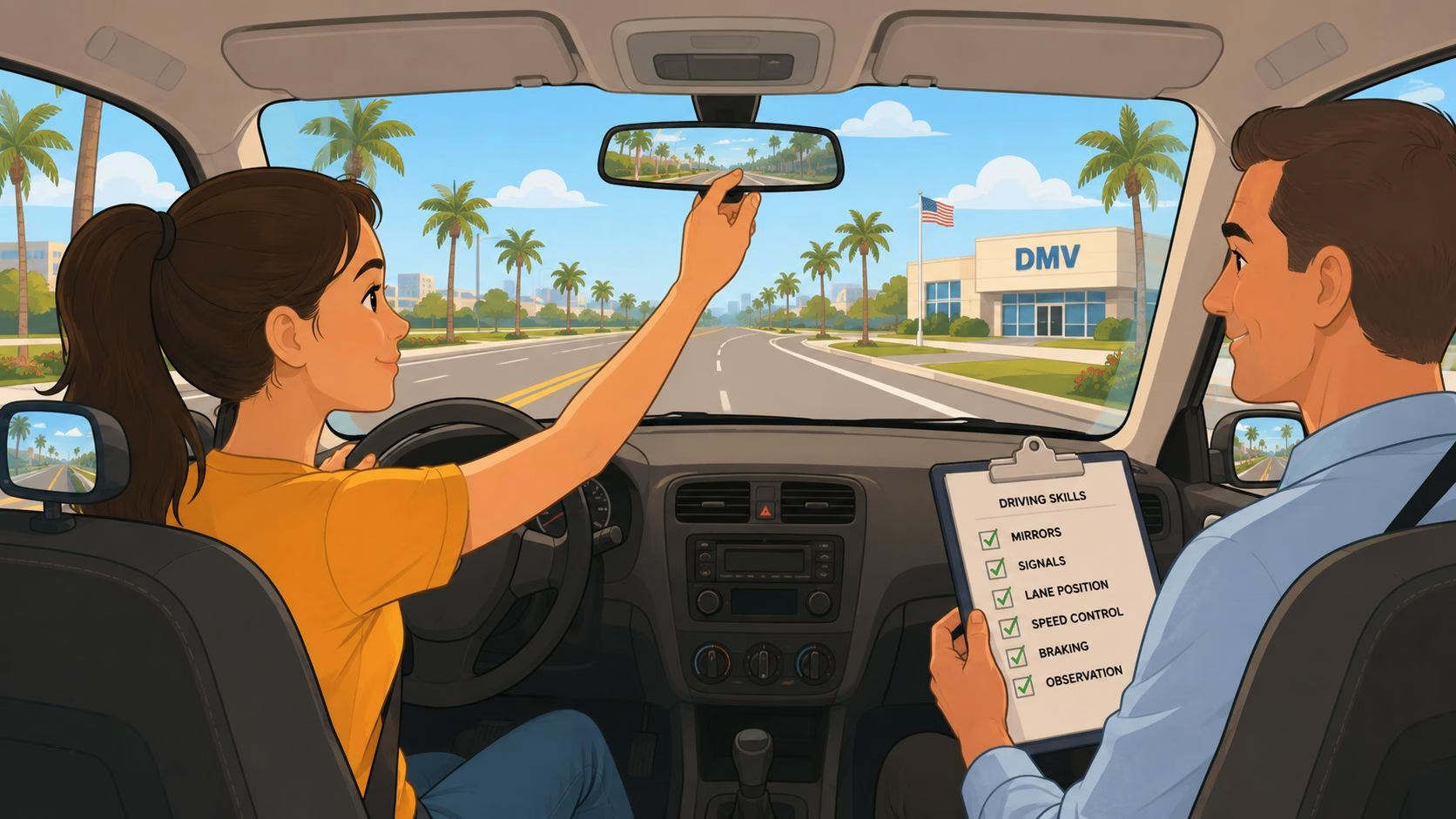
Getting your teen behind the wheel in Florida comes with specific requirements and real challenges. We at floridadetscourse.com know that navigating the state’s Graduated Driver Licensing system while building genuine driving skills takes more than just passing a test.
Teen driving lessons in Florida work best when they combine understanding the rules with hands-on practice and professional guidance. This guide walks you through what your teen needs to know and do to become a safe, confident driver.
Florida’s Teen Driving Path: What You Actually Need to Know
The Foundation: Florida’s Graduated Driver Licensing System
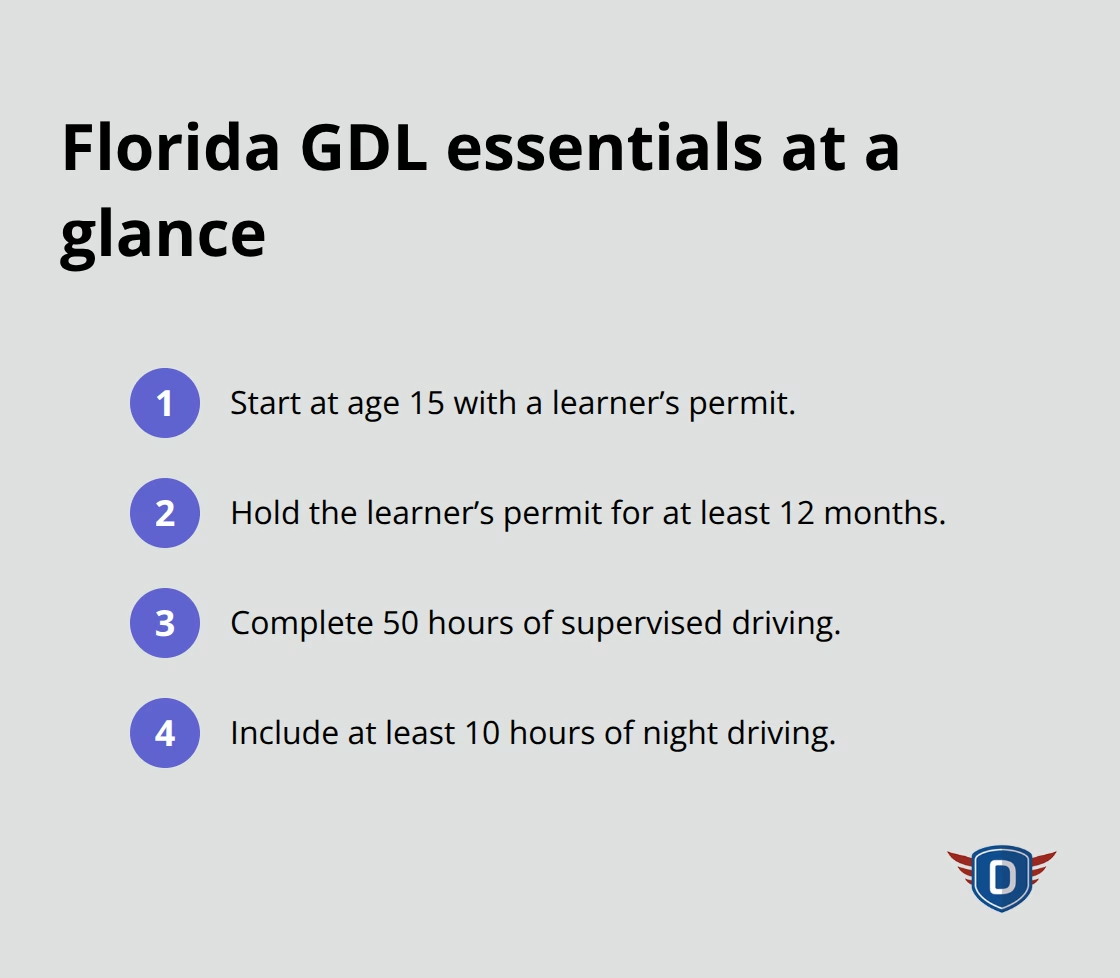
Florida’s Graduated Driver Licensing system rests on real crash data showing that teens benefit from structured progression. The state requires your teen to start at age 15 with a learner’s permit, hold it for a minimum of 12 months, and complete 50 hours of supervised driving before moving to a full license. This isn’t arbitrary. Research from the National Highway Traffic Safety Administration shows that teens who log consistent supervised hours before driving independently have significantly lower crash rates. The 50-hour requirement breaks down to 10 hours at night, which matters because nighttime driving accounts for a disproportionate share of teen accidents despite representing fewer total miles.
The Learner’s Permit Phase: Building Fundamentals
During the first three months of holding a learner’s permit, your teen can only drive during daylight hours with a licensed adult 21 or older beside them. After three months, driving extends until 10 p.m., provided they remain supervised. This phased approach gives your teen time to build fundamental skills without the added challenge of low-light conditions right away.
Provisional License Restrictions: Earning More Freedom
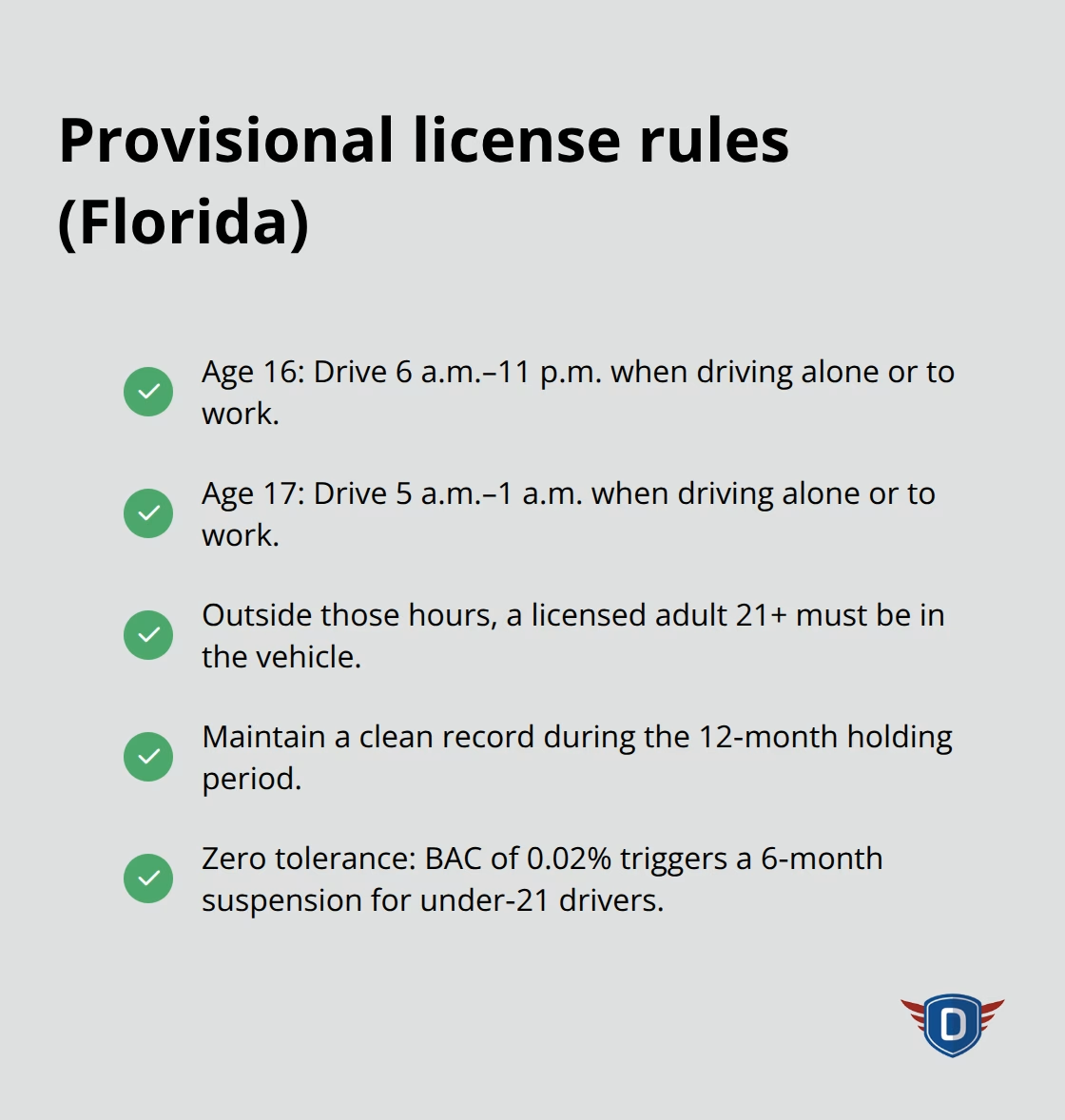
Once your teen passes the road test and earns a provisional license at age 16 or 17, restrictions continue but shift to reflect slightly more independence. Sixteen-year-olds can drive from 6 a.m. to 11 p.m., while 17-year-olds gain an extended window from 5 a.m. to 1 a.m., but only if they drive alone or to work. Outside those hours, they need a licensed adult 21 or older in the vehicle.
Zero-Tolerance Alcohol Policy and Driving Record Requirements
Florida enforces a zero-tolerance policy for alcohol-drivers under 21 with a BAC of 0.02% or higher face immediate license suspension for six months. These aren’t minor penalties. Your teen must also maintain a clean driving record during the 12-month holding period; even one moving violation resets the clock or extends eligibility until age 18. This structure means starting early with professional instruction makes tangible sense-the sooner your teen masters the fundamentals under expert guidance, the smoother the progression through each phase.
Why Professional Instruction Matters Now
Florida’s system works best when parents understand each stage as a genuine safety checkpoint, not just a bureaucratic hurdle. The requirements exist because they address real risks that teen drivers face. Professional driving instruction accelerates your teen’s ability to meet these requirements safely and confidently, which is why the next section explores the specific skills your teen must develop to succeed.
What Skills Teen Drivers Must Master
Hazard Recognition Saves Lives
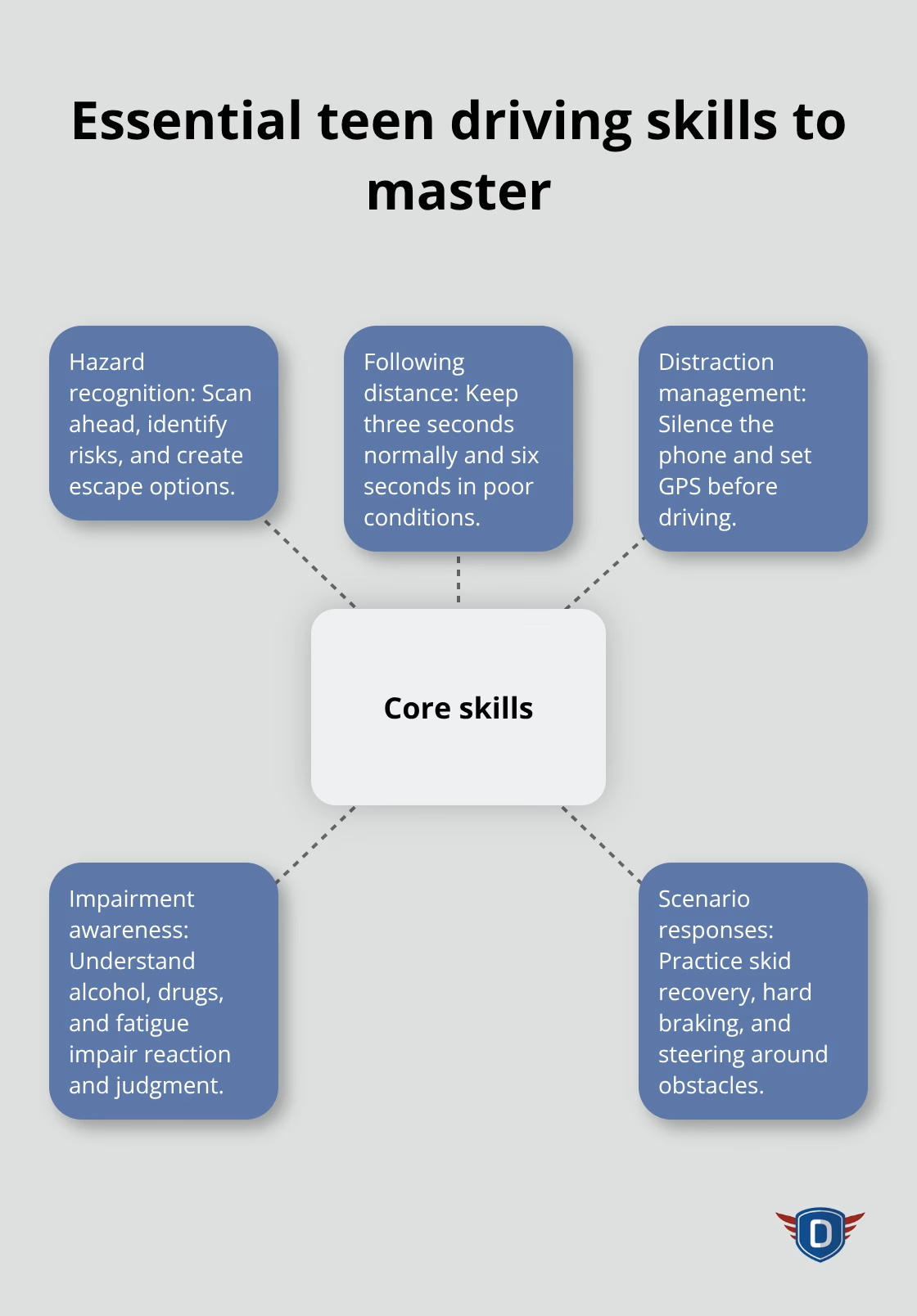
Defensive driving isn’t about memorizing a list of rules-it’s about developing the split-second decision-making that keeps your teen alive when things go wrong on the road. The National Highway Traffic Safety Administration reports that teen drivers have a higher rate of fatal crashes, mainly because of their immaturity, lack of skills, and lack of experience. Professional instruction teaches teens to maintain a three-second following distance at normal speeds and six seconds in poor weather or heavy traffic, not as an abstract guideline but as a practiced habit they develop through repeated on-road experience.
Understanding Road Threats
Your teen needs to understand that every car on the road presents a potential threat-the driver texting, the vehicle merging without signaling, the pedestrian stepping between parked cars. Certified instructors walk your teen through specific scenarios: what to do when an oncoming car drifts into their lane, how to recover from a skid, when to brake hard versus when to steer around an obstacle. This isn’t theoretical. Your teen practices these responses under controlled conditions with an instructor who can immediately correct their instincts before a real emergency forces a dangerous choice.
Managing Distractions and Impaired Driving
Distractions kill teen drivers at alarming rates. The Centers for Disease Control and Prevention found that distraction played a role in fatal crashes involving teen drivers, with cell phones being the most common culprit. Your teen’s brain is still developing its ability to divide attention, which means they cannot safely text, adjust the radio, eat, or engage with passengers the way an adult driver might. Professional driving instruction teaches your teen the specific mechanics of staying focused: keeping both hands on the wheel, setting the GPS before driving, silencing their phone, and understanding why conversation with passengers requires active management of attention.
Alcohol, Drugs, and Fatigue
Your teen also needs concrete knowledge about impaired driving-not just that alcohol and drugs are illegal, but how even one drink affects reaction time, judgment, and vehicle control at the speeds they’ll be driving. Florida’s zero-tolerance policy means any detectable alcohol results in license suspension, so your teen needs to understand the stakes aren’t just legal penalties but genuine loss of independence. Instructors emphasize that fatigue impairs driving as severely as alcohol, which matters because many teens drive after school sports, work shifts, or late-night social events. A professional instructor teaches your teen to recognize their own fatigue signals and make the decision to pull over or call for a ride-a skill that potentially saves their life far more often than any emergency maneuver.
Why These Skills Matter for Your Teen’s Next Phase
Mastering these skills during the learner’s permit phase sets your teen up for success when they move to a provisional license. The restrictions Florida places on teen drivers (limited hours, supervised driving requirements) exist specifically because teens who lack these foundational skills face the highest crash risk. Once your teen demonstrates consistent hazard recognition, distraction management, and sound judgment about impaired driving, they’re ready to handle the increased independence that comes with a provisional license-and the professional instruction that builds these habits early makes that transition far smoother.
How Certified Instructors Transform Teen Drivers Faster
Real-Time Correction Builds Better Habits
State of Florida-certified instructors reshape how your teen processes road situations and reacts to threats. When your teen takes a two-hour lesson, they receive immediate feedback on specific errors-steering too early into a turn, braking too hard, maintaining improper following distance-before those errors become dangerous habits. A study from the Insurance Institute for Highway Safety confirms that professional instruction significantly reduces crash rates among teen drivers, particularly when combined with consistent supervised practice. The feedback loop works powerfully: your teen makes a mistake, the instructor corrects it immediately, your teen practices the correct technique repeatedly during that same session, and the correction sticks. Most students benefit from starting with three lessons, which provides enough repetition to establish foundational skills while your teen builds confidence without becoming overly dependent on instructor guidance.
Highway Experience Without the Risk
Real-world practice in actual traffic conditions separates professional instruction from classroom learning. Your teen navigates the roads they’ll actually drive on, facing real traffic patterns, real pedestrians, and real decision-making pressure under an instructor’s watchful eye. This matters because Florida’s road test evaluates three-point turns, parking on hills with proper curb positioning, quick stops, and backing up straight for roughly 50 feet-all maneuvers your teen practices during professional lessons on actual streets. When your teen practices with a parent, the parent often tolerates minor errors or skips challenging scenarios; a certified instructor deliberately exposes your teen to difficult situations and requires competent execution.
Dual-Control Safety Removes Anxiety
Professional instructors use late-model sedans equipped with dual-control brakes, meaning the instructor can intervene if your teen makes a dangerous decision. This removes the paralyzing anxiety that prevents learning. Your teen learns faster when they know someone can prevent a crash, because they take more risks in controlled ways and develop genuine problem-solving skills rather than defensive, overly cautious habits. After three lessons, your teen has experienced highway merging, residential street navigation, and parking scenarios with professional coaching, providing a genuine foundation before continuing practice with parents.
Insurance Rewards and Confidence Building
After completing professional behind-the-wheel training, many auto insurers offer discounts for teens who’ve completed a specified number of instruction hours, which offsets part of the lesson cost while rewarding your teen’s commitment to formal training. The confidence your teen builds through professional instruction translates directly into safer decision-making on the road, even after lessons end.
Final Thoughts
Your teen’s path to becoming a safe, confident driver depends on three interconnected elements: understanding Florida’s requirements, mastering essential skills, and obtaining professional guidance that accelerates learning. The Graduated Driver Licensing system exists because it works-teens who progress through each phase with solid fundamentals and consistent practice have measurably lower crash rates than those who rush through requirements. When your teen combines this structured progression with professional teen driving lessons in Florida, they develop the hazard recognition, distraction management, and sound judgment that matter far more than simply passing a test.
Professional instructors accelerate this process because they provide immediate correction, expose your teen to real-world traffic scenarios, and build confidence through controlled practice. Your teen learns defensive driving by practicing three-point turns on actual streets, navigating real traffic patterns, and receiving expert feedback that reshapes their instincts before bad habits form. Most students benefit from three initial lessons, which establishes foundational skills while your teen continues practicing with parents and builds toward the road test.
The next step is straightforward: enroll your teen in a professional driving instruction program that combines classroom education with on-road practice. We at floridadetscourse.com provide comprehensive driver education programs designed specifically for Florida teens, with certified instructors who understand the state’s requirements and the real skills your teen needs. Visit floridadetscourse.com to schedule lessons and give your teen the professional foundation that transforms them from an anxious learner into a genuinely capable driver.