Every year, thousands of drivers in Florida face accidents that could have been prevented with better skills and knowledge. At floridadetscourse.com, we’ve seen firsthand how driver education safety tips transform how people handle the road.
This guide covers the defensive driving fundamentals, common mistakes, and Florida traffic laws that matter most. You’ll learn practical strategies to reduce your accident risk and potentially lower your insurance costs.
How to Build a Defensive Driving Foundation That Actually Works
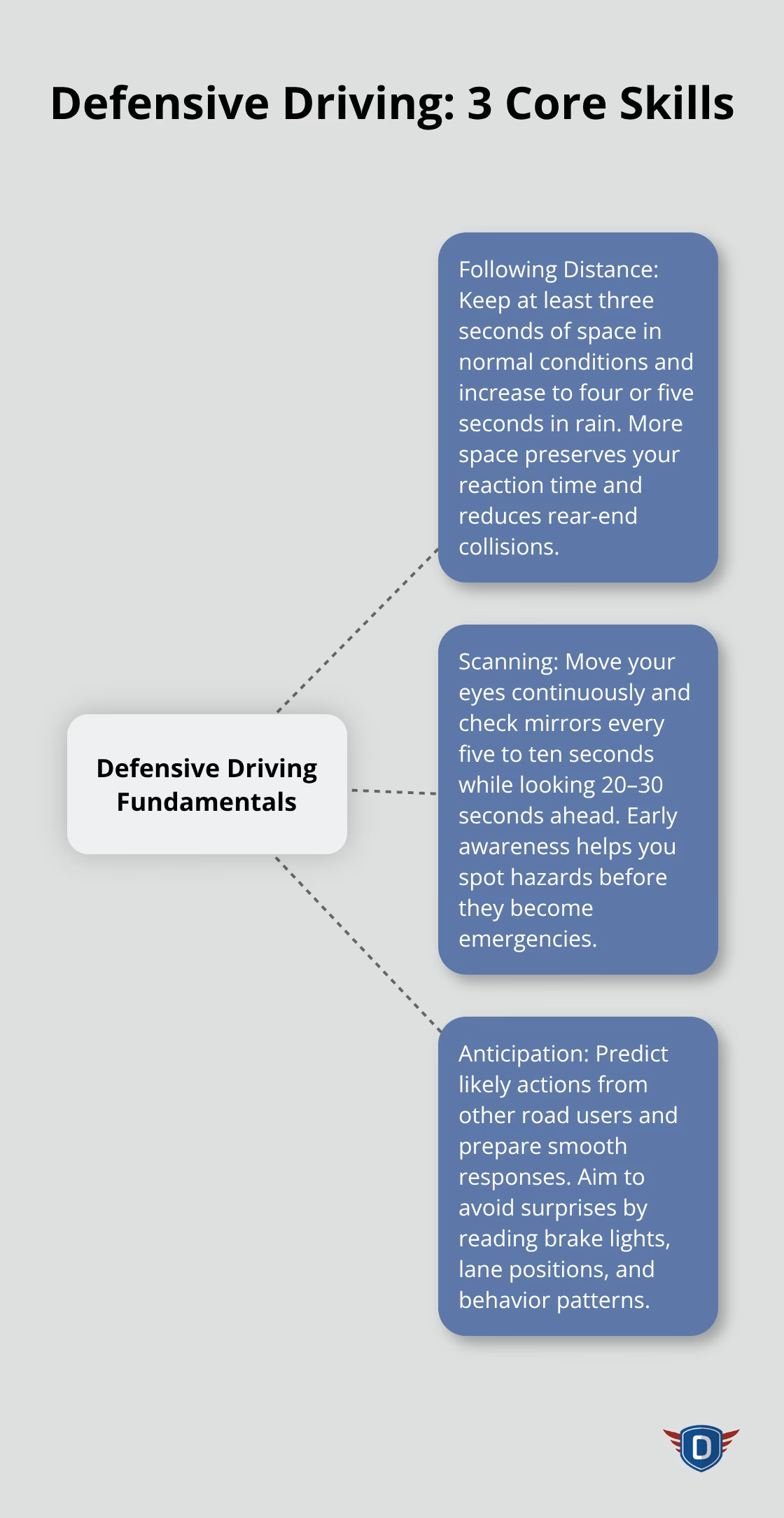
Defensive driving rests on three core skills that separate safe drivers from those headed toward accidents. The National Safety Council reports that over 80 million drivers have completed defensive driving courses since 1964, and the data shows why: drivers who master these fundamentals see measurable reductions in crash risk. The foundation requires understanding speed-appropriate following distances, constant environmental awareness, and the ability to spot danger before it forces you to react.
Why Following Distance Matters More Than You Think
Following distance is the single most ignored safety tool on Florida roads. Most drivers follow at distances that give them almost no reaction time, which means if the car ahead brakes suddenly, a collision is nearly inevitable. The rule is straightforward: maintain at least three seconds of space between your vehicle and the one ahead in normal conditions. Count the seconds by watching when the car ahead passes a fixed object like a sign, then count how long until your vehicle reaches that same point.
In rain or on wet roads, increase this to four or five seconds. At highway speeds above 55 mph, that three-second gap translates to roughly 120 feet of space, yet most drivers maintain barely half that distance. Aggressive tailgating is a factor in countless crashes, and it gives you zero margin for error when unexpected braking occurs.
Scanning and Mirrors Keep You Ahead of Traffic
Constant scanning means your eyes move continuously across the road ahead, to the sides, and in your mirrors every few seconds. Too many drivers stare straight ahead, missing the developing hazard that builds two cars ahead or in an adjacent lane. Check your mirrors at least every five to ten seconds, and scan 20 to 30 seconds ahead to spot brake lights, lane changes, or obstacles early.
Use peripheral vision to monitor your blind spots, and turn your head before changing lanes because mirrors have limitations. When you scan effectively, you spot the driver drifting between lanes, the pedestrian stepping into the crosswalk, or the debris in your path while you still have time to respond safely. Poor scanning is particularly dangerous at intersections, where roughly one-quarter of traffic fatalities and about one-half of all traffic injuries in the United States are attributed to intersections.
Anticipation Transforms You From Reactive to Proactive
Anticipation means predicting what other drivers will do based on their position, speed, and behavior patterns. If a driver ahead drifts slightly toward your lane, assume they may cross into it and prepare to brake or move. If you see brake lights lighting up three cars ahead, begin slowing before you reach the congestion.
Watch for pedestrians stepping off curbs, cyclists swerving into traffic, and weather conditions that demand adjusted speed. The goal is never to be surprised by what happens on the road. Drivers who anticipate hazards have time to make controlled decisions instead of slamming brakes in panic. This skill separates experienced, safe drivers from those who feel constantly startled by traffic.
How These Skills Connect to Real-World Driving Decisions
These three fundamentals work together in every driving situation you face. A driver who maintains proper following distance, scans consistently, and anticipates hazards handles unexpected events with composure instead of panic. Learning these defensive driving basics ensures you develop the muscle memory and mental habits that keep you safe on every road.
What Really Causes Crashes: The Mistakes You’re Making Right Now
Distracted Driving: The Nine Daily Fatalities Nobody Talks About
Distracted driving kills approximately 3,208 people annually in the United States, yet most drivers convince themselves they handle phone use better than average. One in three teens who text have texted while driving, and dialing a number raises crash risk by 6x while texting raises it by 23x according to NHTSA data. The problem isn’t that drivers don’t know phones are dangerous-it’s that they underestimate how quickly a split-second distraction becomes a collision.
Drivers who eliminate phone access entirely during trips cut their crash risk dramatically compared to those who believe they can manage quick glances. Put your phone in the trunk, not the passenger seat. Silence notifications.
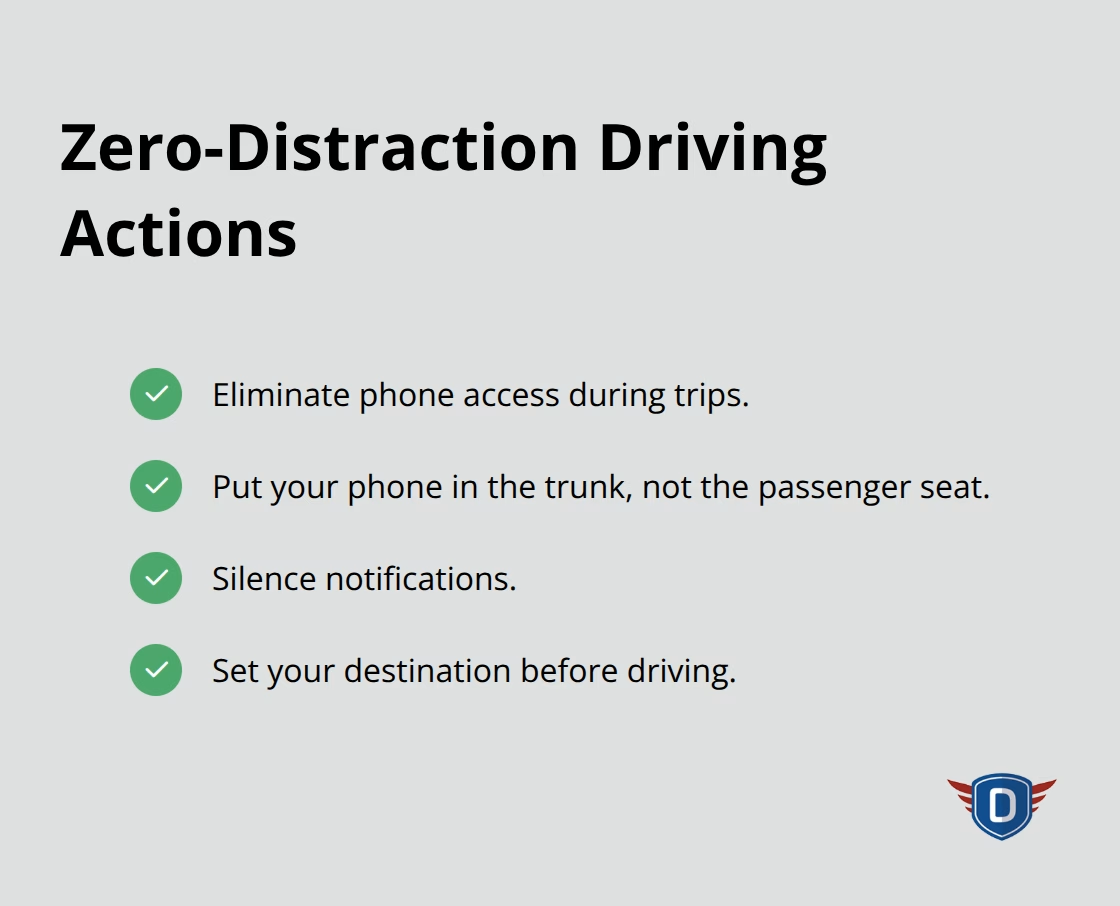
If you must navigate, set your destination before driving. The uncomfortable truth is that no text message, email, or call justifies the risk of killing yourself or someone else.
Speeding and Aggressive Driving: The Deliberate Choices That Kill
Speeding was involved in fatal crashes among teen drivers according to NHTSA, yet speed limits exist for specific road conditions, not as suggestions. A driver traveling 10 mph over the limit on a wet road has already abandoned the defensive driving principles discussed earlier-proper following distance becomes useless when you’re moving too fast to stop. Aggressive tailgating, honking, flashing lights, and cutting off other vehicles don’t get you anywhere faster; they create unpredictable situations where other drivers make panicked decisions.
If someone is driving slowly ahead of you, that’s their choice. Pass safely when legal, or accept the delay. Road rage accomplishes nothing except increasing your crash risk and potentially landing you in legal trouble.
Weather and Road Conditions Demand Speed Adjustments You Resist
Rain reduces tire grip, wet roads increase stopping distance significantly, and fog eliminates visibility-yet drivers maintain highway speeds as though conditions haven’t changed. In rain, your three-second following distance should become four or five seconds. On icy or snow-covered roads, speeds should drop to 20 or 30 mph below normal limits because your tires have far less grip than on dry pavement.
Loose gravel, standing water, and debris scattered across lanes all require slower speeds and increased awareness. Night driving presents additional challenges: headlights illuminate only 250 feet ahead at 60 mph, giving you roughly four seconds to spot and react to hazards. Reduce speed at night, use high beams when safe, and understand that fatigue compounds the risk. Drowsy driving claimed 644 lives in 2024 according to NHTSA data, often in conditions where tired drivers underestimate their impairment. If you feel your attention drifting, pull over immediately.
Overconfidence: The Root Cause of Every Crash
The common thread connecting all these mistakes is overconfidence. Drivers who cause crashes rarely believed they would be the ones to crash. They thought they texted safely, drove fast competently, or handled bad weather just fine. The defensive driving foundation you learned earlier-maintaining distance, scanning, and anticipating-only works when you eliminate distractions, respect speed limits, and adjust for conditions.
These aren’t restrictions on your freedom; they’re the practical steps that separate drivers who reach their destinations safely from those who don’t. Understanding these mistakes is only the first step. Florida traffic laws provide the legal framework that reinforces these safety principles, and knowing them protects you from citations, points, and insurance increases.
Florida Traffic Laws That Protect Your Record and Wallet
Right-of-Way Rules and Intersection Safety
Florida’s traffic laws create predictable, safe driving environments where every driver knows what to expect. Right-of-way rules define who has the legal advantage at intersections, and violations create the exact unpredictable situations that cause crashes. At a four-way stop, the first vehicle to arrive has the right-of-way; if two vehicles arrive simultaneously, the one on the right proceeds first. At a traffic light, you cannot turn left on green unless oncoming traffic is clear or a left-turn arrow appears, meaning you yield to pedestrians and oncoming vehicles regardless of your light color.
Failure to understand these rules costs Florida drivers thousands in citations and insurance increases annually. More importantly, it causes collisions. Intersection crashes account for roughly half of all traffic injuries in the United States, which means the driver who doesn’t understand right-of-way isn’t just breaking the law-they’re creating the exact scenario where another driver panics and causes a crash.
Speed Limits in School and Work Zones
School zones in Florida demand 15 mph speeds during operating hours, typically 7:30 to 9:30 a.m. and 2:30 to 4:00 p.m. on school days, with violations costing 300 dollars or more plus points on your license. These reduced speeds exist because children are unpredictable and visibility is limited; a driver traveling 25 mph in a school zone at 7:45 a.m. is choosing to ignore the one environment where speed limits have the strongest safety justification.
Speeding fines double in school and work zones, and points accumulate faster. One careless decision in a school zone can trigger license suspension and force you to attend traffic school anyway. The financial and legal consequences compound quickly when you ignore these regulations.
Seat Belt and Child Safety Seat Requirements
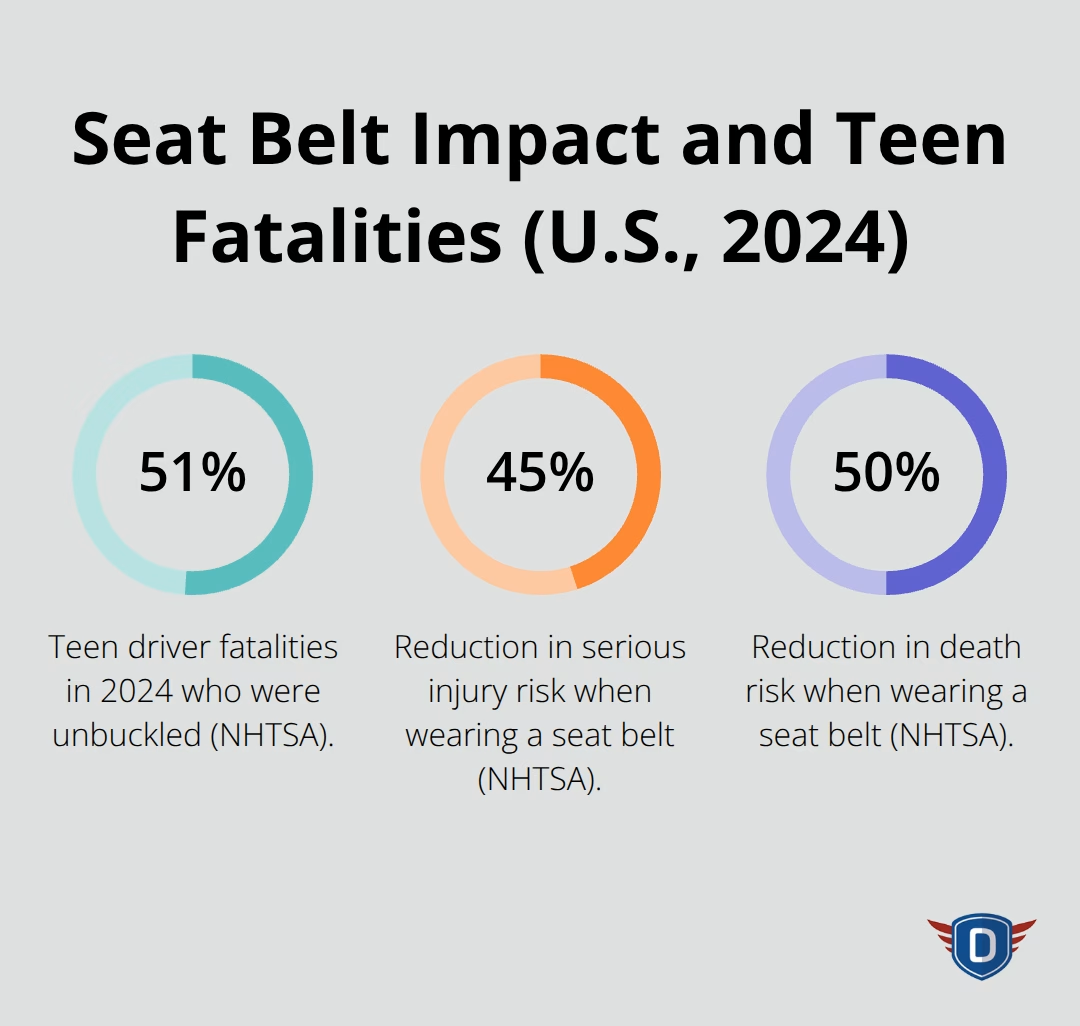
Seat belt usage separates drivers who survive crashes from those who don’t. Florida law requires seat belts for all occupants, yet 51 percent of teen driver fatalities in 2024 were unbuckled according to NHTSA data. Drivers who skip seat belts aren’t just violating the law-they’re making a choice that dramatically increases their chance of death or severe injury.
Children under six years old must use a car seat or booster seat appropriate to their height and weight, with rear-facing seats required until age two. Violations carry 60 dollar fines plus points. Using the wrong seat type for your child’s size is as dangerous as using no seat at all. Seat belts reduce serious injury risk by 45 percent and death risk by 50 percent according to NHTSA, which is why Florida law enforcement prioritizes seat belt enforcement.
How Traffic Laws Connect to Safe Driving Behavior
Every traffic regulation reflects crash data and injury prevention research. When you obey right-of-way rules, adjust speed in school zones, and secure yourself and your passengers with seat belts, you implement the exact safety behaviors that prevent crashes. These laws aren’t restrictions on your freedom; they’re the practical steps that separate drivers who reach their destinations safely from those who don’t.
Understanding these laws means recognizing that compliance directly reduces your crash risk and protects your driving record from costly violations. Florida-approved traffic school courses cover these laws in practical detail, helping drivers understand not just what the law requires but why each requirement exists.
Final Thoughts
The defensive driving fundamentals, common mistakes, and Florida traffic laws covered in this guide form the foundation of safer driving. Maintaining proper following distance, scanning consistently, and anticipating hazards work together to prevent crashes before they happen. Eliminating distractions, respecting speed limits, and adjusting for weather conditions eliminate the choices that cause collisions.
Driver education safety tips matter because they directly reduce your crash risk and protect your wallet. Drivers who complete formal traffic safety courses see measurable improvements in decision-making and crash avoidance. Insurance companies recognize this value and offer discounts to drivers who complete approved courses, often recovering the course cost within a single policy year.
At floridadetscourse.com, we provide Florida-approved traffic school courses designed to help you master these safety principles. Our courses blend clear explanations with real-life scenarios, helping you understand not just what the law requires but why each requirement exists. Enroll in a floridadetscourse.com course to meet court requirements, lower your insurance rates, and develop safer driving habits that protect you and your passengers on every trip.