Teen drivers face real dangers on the road. Motor vehicle crashes remain the leading cause of death for teenagers in the United States, with nearly 2,500 teens killed annually in traffic accidents.
Traffic safety education for teens isn’t optional-it’s a necessity. We at floridadetscourse.com believe that comprehensive driver training, combined with parental involvement and modern safety practices, can dramatically reduce these tragic statistics and build a generation of responsible drivers.
The Real Cost of Teen Driving: Why Education Saves Lives
Fatal Statistics That Demand Action
Teen drivers face odds that would alarm any parent. In 2024, 2,320 teenagers aged 15 to 18 died in motor vehicle crashes according to the National Highway Traffic Safety Administration. For every teen who dies, roughly nine more suffer serious injuries that change their lives forever. The Insurance Institute for Highway Safety reports that teens crash at nearly four times the rate per mile driven compared to drivers aged 20 and older-a gap that reflects inexperience and poor judgment combined.
The Specific Dangers Teens Face
Speeding alone was a factor in 33% of teen fatal crashes in 2024. Distracted driving amplifies the danger: texting while driving is the most alarming distraction, and dialing a phone by six times. These aren’t theoretical risks; they’re everyday hazards that kill real teenagers.
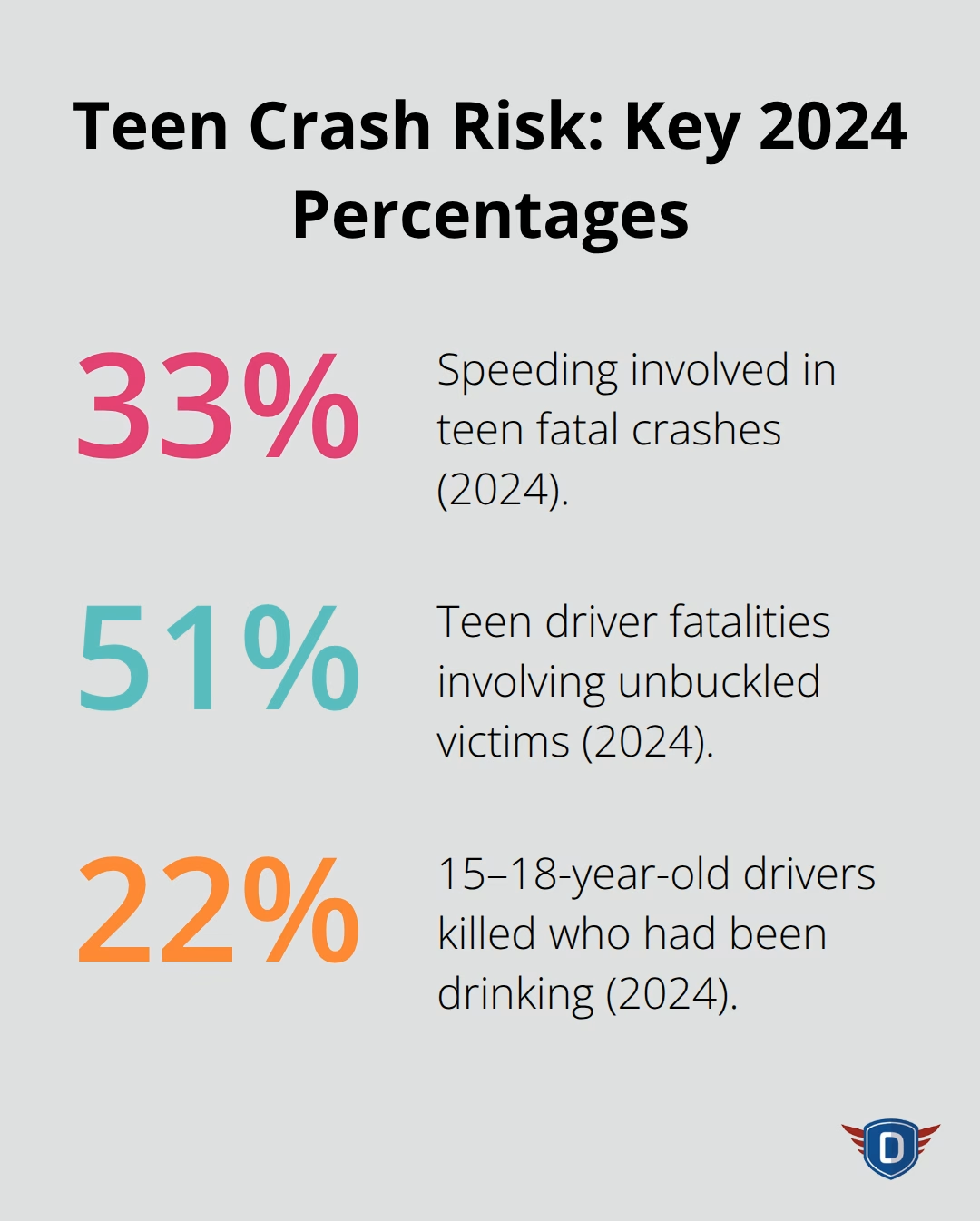
The data shows that 51% of teen driver fatalities in 2024 involved unbuckled victims, a preventable tragedy that underscores how basic safety practices remain ignored.
Passengers amplify risk significantly. Having just one teenage peer in the vehicle increases risky driving behaviors 2.5 times, and multiple teen passengers raise that to roughly three times. Drowsy driving claimed 644 teen lives in 2024, particularly on late-night rural roads. Alcohol involvement remains alarming-about 22% of 15 to 18-year-old drivers killed in crashes had been drinking, despite zero-tolerance laws.
How Education Closes the Gap
Comprehensive driver education directly addresses these gaps. Quality supervised driving practice with diverse road conditions and hazard exposure produces better results than sheer hours logged, according to the Insurance Institute for Highway Safety. Formal traffic safety education builds hazard recognition, decision-making skills, and situational awareness before dangerous habits form.
The Graduated Driver Licensing system, implemented across all 50 states, has been associated with an 11% lower fatal crash involvement rate for 16-year-old drivers. This system restricts unsupervised driving during high-risk periods and introduces progressive responsibility. Parental supervision combined with structured practice creates measurable protection that goes beyond what inexperience alone can overcome.
What Comes Next
Understanding these risks and the power of education sets the stage for exploring what actually works in teen driver training. The next section examines the core components that transform knowledge into safer driving behavior.
What Skills Transform Teen Drivers Into Safe Operators
Hazard Recognition: The Teachable Skill That Saves Lives
Defensive driving forms the foundation that separates crashes from close calls. Hazard recognition as the single most teachable skill that reduces teen crash risk is supported by research showing that teen drivers have crash rates nearly 4 times those of drivers 20 and older per mile driven. Effective hazard recognition means spotting dangers three to five seconds before they occur: the car drifting across the center line, the pedestrian stepping between parked vehicles, the slick patch on the road after rain.
Teen drivers with formal training in hazard perception show measurably better outcomes. Research demonstrates that hazard perception training reduces crashes for 16 to 18-year-old males by approximately 24 percent. This translates directly to fewer accidents and lower insurance claims.
Vehicle Control in Real-World Conditions
Teens need hands-on practice with vehicle control in actual driving situations, not just familiar routes. Supervised practice with diverse road conditions produces better results than logging hours on the same streets. The National Highway Traffic Safety Administration emphasizes that high-quality, varied supervised driving experience improves skills more effectively than sheer practice hours alone.
Teens should practice in rain, at night, on highways, and in congested areas before facing these conditions alone. Wet roads demand different braking techniques than dry pavement. Highway merging requires judgment about speed and spacing that only real experience teaches. Nighttime driving presents visibility challenges that daytime practice cannot replicate.
Distraction and Impairment: The Preventable Killers
Managing distractions and impaired driving awareness demand equally serious attention because they represent the most preventable killers on the road. Distracted driving is dangerous, claiming 3,208 lives in 2024, yet education programs that specifically address smartphone use and passenger management show measurable improvements in behavior.
Teens need clear, non-negotiable rules: phones locked in the trunk during driving, no peer passengers during the learner and intermediate stages, and zero tolerance for any alcohol or drugs. These rules aren’t arbitrary restrictions-they address the specific behaviors that kill teen drivers.
Traffic Laws Connected to Real-World Judgment
Understanding Florida traffic laws and road signs matters, but only if that knowledge connects to real-world decision-making. A teen who memorizes right-of-way rules but doesn’t understand how to apply them when an aggressive driver runs a red light hasn’t truly learned traffic law.
Quality driver education integrates legal knowledge with practical judgment: why speed limits exist on specific road types, how to recognize when another driver is impaired, what your legal rights and responsibilities are when another vehicle hits you. This integration of knowledge and judgment separates effective training from test-prep memorization.
Building the Foundation for Independent Driving
These four skill areas-hazard recognition, vehicle control, distraction management, and legal judgment-work together to transform inexperienced teens into capable drivers. Each skill reinforces the others. A teen who recognizes hazards early has more time to control the vehicle safely.
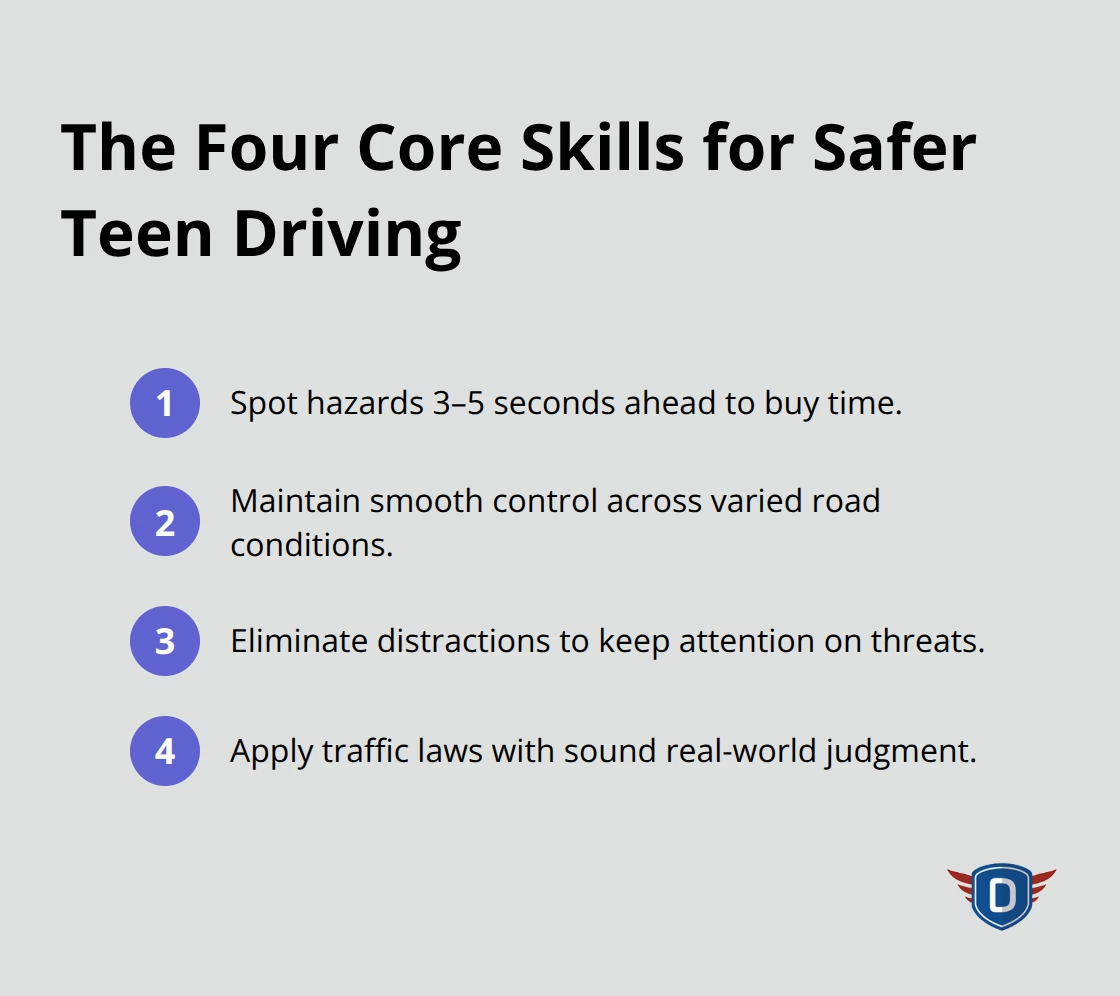
A teen who manages distractions maintains focus on hazard spotting. And teen who understands traffic laws makes better judgment calls in split-second situations.
The next section examines how parents and educators work together to reinforce these skills through supervised practice, clear expectations, and modern monitoring tools that keep teens accountable while building their confidence.
How Parents and Educators Shape Safe Teen Drivers
Supervised Practice Builds Real Competence
Supervised driving practice is non-negotiable, not aspirational. The Insurance Institute for Highway Safety emphasizes that high-quality, diverse supervised driving experience improves skills more effectively than logging hours on familiar routes. Try for at least 30 hours of behind the wheel driving practice, with at least 10 hours occurring at night. This matters because nighttime driving is riskier than daytime driving for teen drivers.
During supervised practice, focus on exposure to different road types: highways, congested urban streets, wet conditions, and low-visibility situations. A teen who practices only on quiet residential streets hasn’t actually learned to drive. Parents should use the IIHS driving skills checklist to guide practice sessions toward specific competencies rather than simply accumulating miles. Track these hours in writing-it creates accountability and documents readiness for independent driving.
Written Contracts Remove Ambiguity
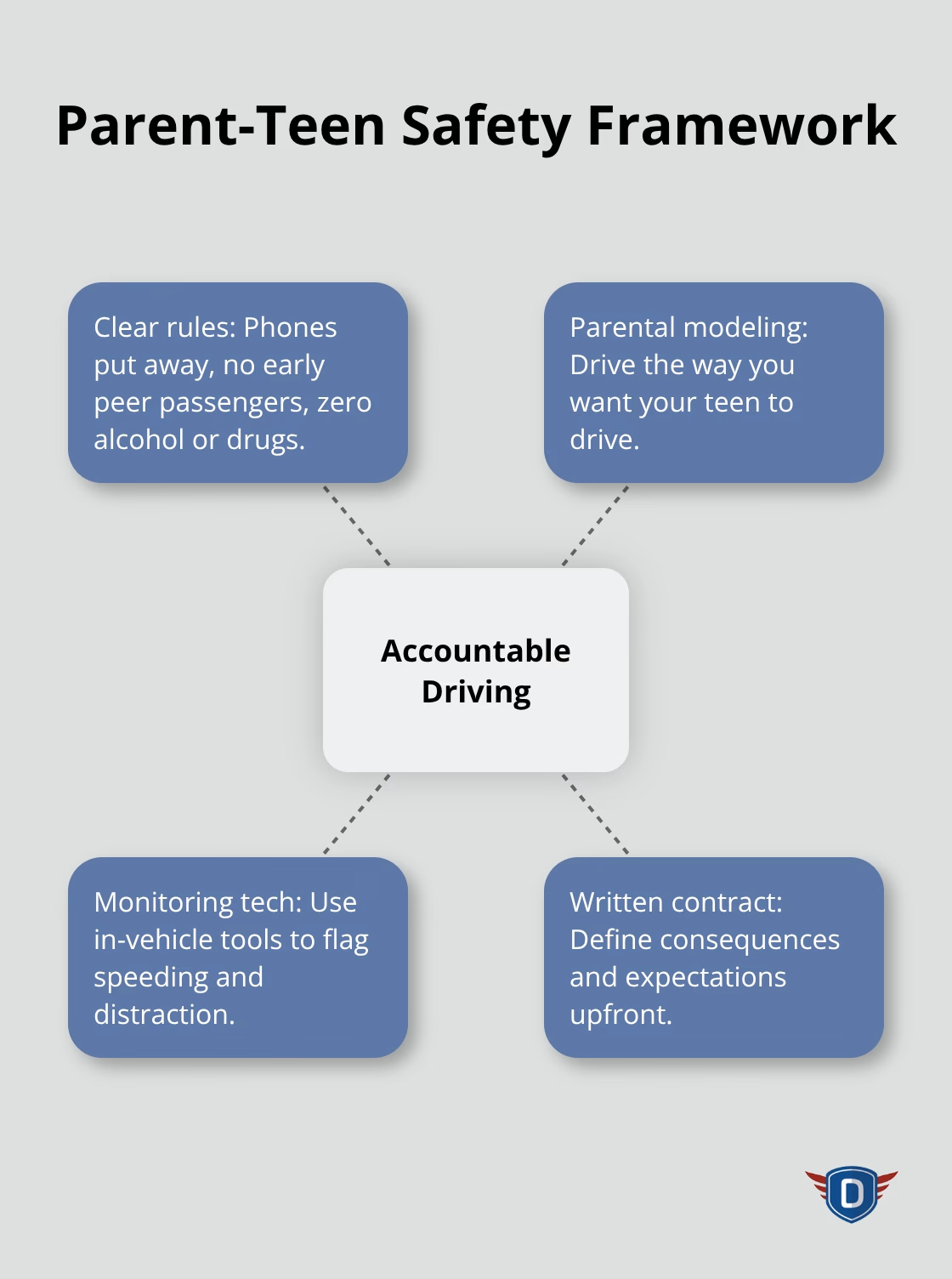
Written contracts work because they remove ambiguity and establish consequences before emotions run high. The CDC recommends parent-teen driving contracts that specify non-negotiable rules: no phone use while driving, no passengers during the learner and intermediate stages, zero alcohol or drugs, and seat belts on every trip.
A Liberty Mutual and SADD study found that 41% of teens report parents continue unsafe driving behaviors after being asked to stop, meaning your own driving habits directly undermine your authority on safety rules. If you speed regularly or check your phone at red lights, your teen will too. Set specific consequences for rule violations-not threats, but actual outcomes like loss of driving privileges for a defined period. Clear ground rules about passengers, nighttime driving, and phone use create accountability that extends the benefits of formal driver education.
Technology Enforces Accountability
Modern in-vehicle monitoring devices like Snapshot from Progressive offer a practical enforcement mechanism: these systems detect distracted driving and speeding, providing data that removes the trust question from conversations about safe behavior. Some families report that real-time feedback from these devices changes teen driving more effectively than lectures because teens see their own behavior data.
The combination of clear rules, parental modeling of safe driving, and technology-based accountability creates the environment where safe habits actually develop rather than just being preached. These three elements work together to transform rules from restrictions into internalized safety practices that teens carry into adulthood.
Final Thoughts
Traffic safety education for teens works because it addresses the specific behaviors that kill young drivers. The statistics are stark: 2,320 teen deaths in 2024, speeding in one-third of fatal crashes, texting increasing crash risk by 23 times. But the data also shows what reverses these trends-Graduated Driver Licensing has prevented roughly 5,800 deaths since 1996, and hazard recognition training reduces crashes by 24% for teen males.
The core principles are straightforward: teens need hands-on practice in varied conditions, clear non-negotiable rules about passengers and phones, parental modeling of safe driving, and accountability through written contracts or monitoring technology. These elements work together because they address the root causes of teen crashes (inexperience, poor judgment, and risky peer influence) rather than treating symptoms. Quality driver education creates long-term benefits that extend far beyond the first year of independent driving.
floridadetscourse.com provides the structured programs and certified instruction that transform knowledge into actual behavior change for traffic safety education teens. The investment in comprehensive driver training pays dividends in lives saved, injuries prevented, and a generation of drivers who understand that safety isn’t negotiable.