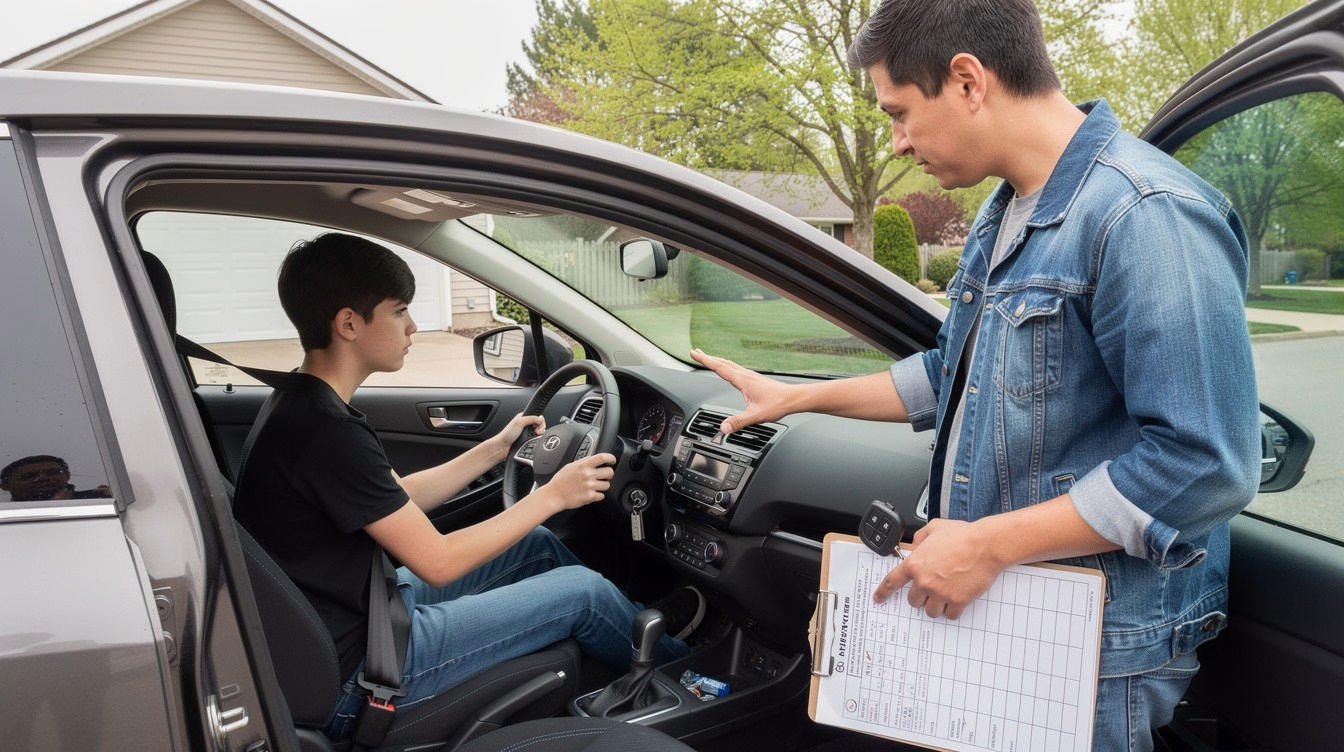

Defensive driving isn’t just about following rules-it’s about making split-second decisions that keep you alive. A DETS training program teaches you exactly how to do that, covering everything from hazard recognition to emergency maneuvers that actually work when seconds count.
At floridadetscourse.com, we’ve seen firsthand how this training transforms drivers. You’ll learn traffic law, risk assessment, and crash avoidance strategies that reduce accidents and lower your insurance premiums.
What Makes DETS Different from Other Driver Training
How DETS Outperforms Standard Driver Education
DETS training stands apart from standard driver education because it focuses on preventing accidents before they happen, not just teaching you how to pass a test. While conventional driver education covers basic vehicle operation and traffic rules, DETS goes deeper into the psychology and physics of dangerous situations. You’ll learn how to read the road ahead, recognize patterns that lead to crashes, and respond with precision when split-second decisions matter.
The National Highway Traffic Safety Administration reports that defensive driving reduces accident risk, which is why insurance companies take this training seriously enough to offer discounts. Standard courses might tell you to maintain a safe following distance; DETS teaches you exactly what that distance looks like at different speeds and how weather, road conditions, and vehicle type change your safety margin. You’ll understand why a 3-second gap isn’t always enough and how to adjust based on real conditions you encounter.
Florida’s Strict Approval Standards
Florida’s approval process for DETS programs is strict because the state recognizes that poor driver training creates liability. Programs must meet all requirements set by the Florida Department of Highway Safety and Motor Vehicles, which means every topic, every hour of instruction, and every assessment follows state standards. This isn’t just compliance paperwork-it means you receive instruction designed specifically for Florida’s roads, traffic patterns, and legal requirements.
The state mandates coverage of hazard recognition, crash avoidance, and the impact of attitude on driving decisions, ensuring you learn what actually prevents accidents in Florida’s high-traffic corridors and weather conditions. When you complete a DETS program approved by Florida, your certificate carries weight with courts and insurance companies because they know the content meets rigorous standards, not generic national guidelines. That approval difference directly affects your insurance rates and your legal standing if you’re completing this for court purposes.
What This Means for Your Next Steps
The distinction between DETS and standard driver education becomes even more important when you look at the specific skills you’ll actually master. Understanding the core competencies-from traffic law to hazard recognition to emergency maneuvers-shows you exactly why this training transforms how you drive.
The Skills That Actually Stop Accidents
Traffic Law as a Survival Tool
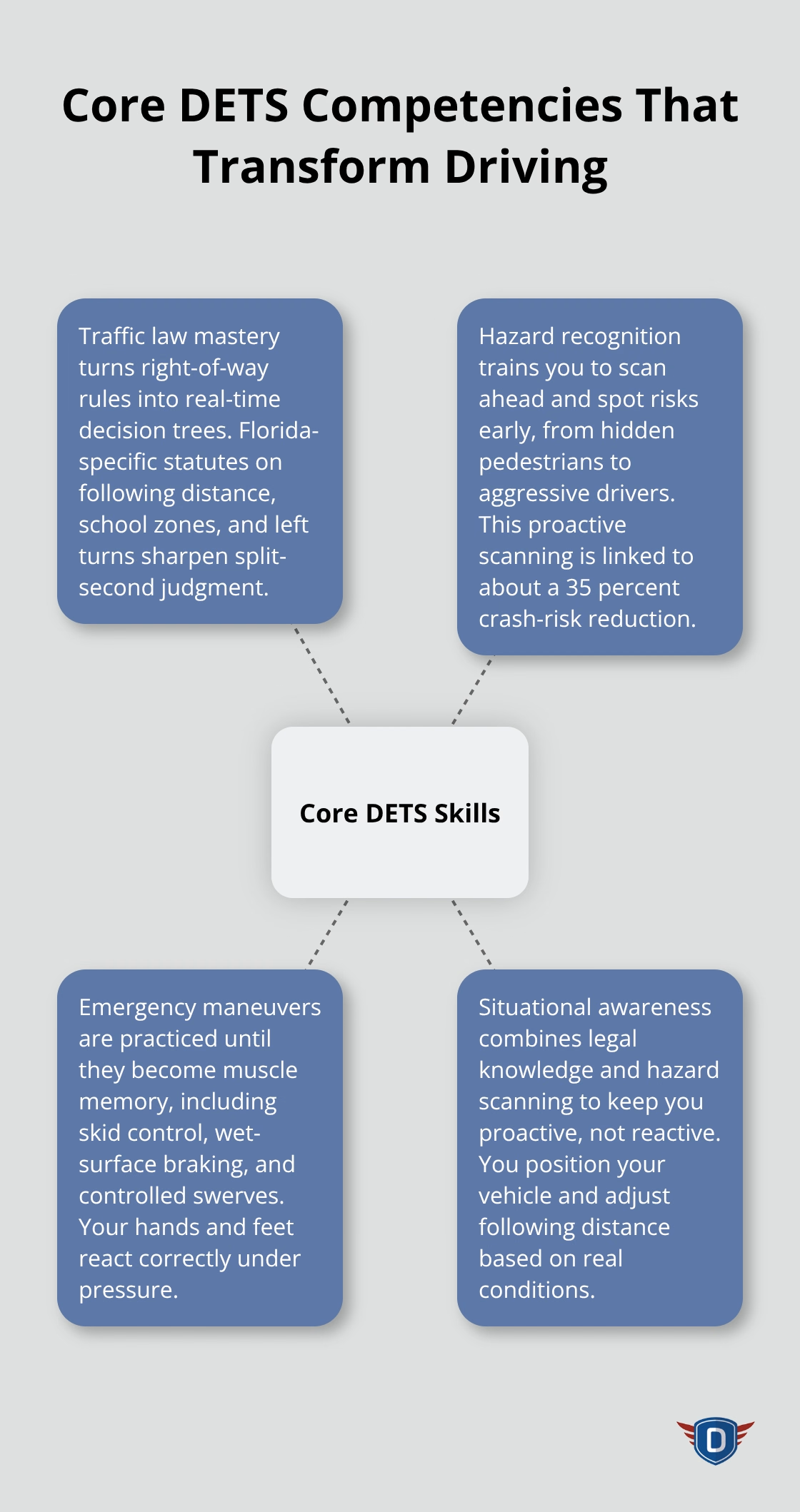
Traffic law knowledge forms the foundation of defensive driving, but most drivers treat it as memorization for a test rather than a practical tool for survival. In DETS training, you learn right-of-way rules not as abstract concepts but as decision trees you apply in real time. When an intersection has no traffic signal, you need to know instantly who has the legal advantage, not because a rule says so, but because hesitation kills.
Florida law requires you to yield to vehicles on your right at four-way stops, but DETS teaches you to verify that other drivers actually understand this rule before proceeding. The Insurance Institute for Highway Safety reports that right-of-way violations cause crashes annually in the United States, making this knowledge genuinely lifesaving. You’ll learn how Florida’s specific statutes on following distance, speed limits in school zones, and left-turn protocols differ from other states, which matters if you drive across state lines or move.
Reading the Road Before Danger Strikes
Hazard recognition separates drivers who avoid crashes from those who cause them. DETS training teaches you to scan the road systematically, reading brake lights three cars ahead, watching for pedestrians hidden by parked vehicles, and identifying which drivers are distracted or impaired. The National Safety Council found that drivers who receive hazard recognition training reduce their crash risk by approximately 35 percent.
You’ll learn that a car with tinted windows at a red light often means the driver cannot see you, so you position yourself accordingly. You’ll recognize that a delivery truck with hazard lights on might suddenly open its door into traffic. You’ll spot the signs of aggressive driving before someone cuts you off-these observations transform your reactions from reactive to proactive.
Emergency Maneuvers That Work Under Pressure
Crash avoidance strategies and emergency maneuvers form the final piece of defensive driving competency. You’ll learn how to steer out of a skid, brake correctly on wet pavement, or swerve around an obstacle without losing control. These aren’t theoretical exercises; they’re practiced responses that your muscle memory develops so your hands and feet react faster than your conscious mind can think.
Understanding how vehicle dynamics change on different road surfaces (wet asphalt, gravel, ice) prepares you for conditions you’ll encounter in Florida. Your body learns the correct steering input before panic takes over, which is when most drivers make fatal mistakes. This muscle memory, combined with the traffic law knowledge and hazard recognition skills you’ve already mastered, creates a complete defensive driving system.
Why These Skills Translate to Real Insurance Savings
Insurance companies recognize that drivers trained in these specific competencies file fewer claims. Your certificate from a Florida-approved DETS program signals to insurers that you’ve learned measurable, testable skills-not just watched a video. The combination of traffic law mastery, hazard recognition ability, and emergency maneuver competency directly reduces your accident probability, which is exactly what insurers measure when calculating your premium.
Courts also weight DETS completion heavily when drivers need point reduction or license reinstatement. The state’s approval standards mean your training meets the same rigorous benchmarks that law enforcement and the judiciary trust. This recognition extends beyond insurance and legal compliance into something more valuable: the confidence that comes from knowing you can handle dangerous situations before they escalate.
How DETS Training Pays for Itself
Insurance Discounts That Cover Training Costs
Insurance companies track driving records obsessively, and a DETS certificate directly reduces your premiums because it proves you’ve mastered accident prevention. Florida insurers typically offer discounts ranging from 5 to 15 percent for drivers who complete an approved defensive driving course, though the exact percentage depends on your insurer and current driving history. If you pay $1,200 annually for car insurance, a 10 percent discount saves you $120 per year-money that covers the cost of DETS training within the first month.
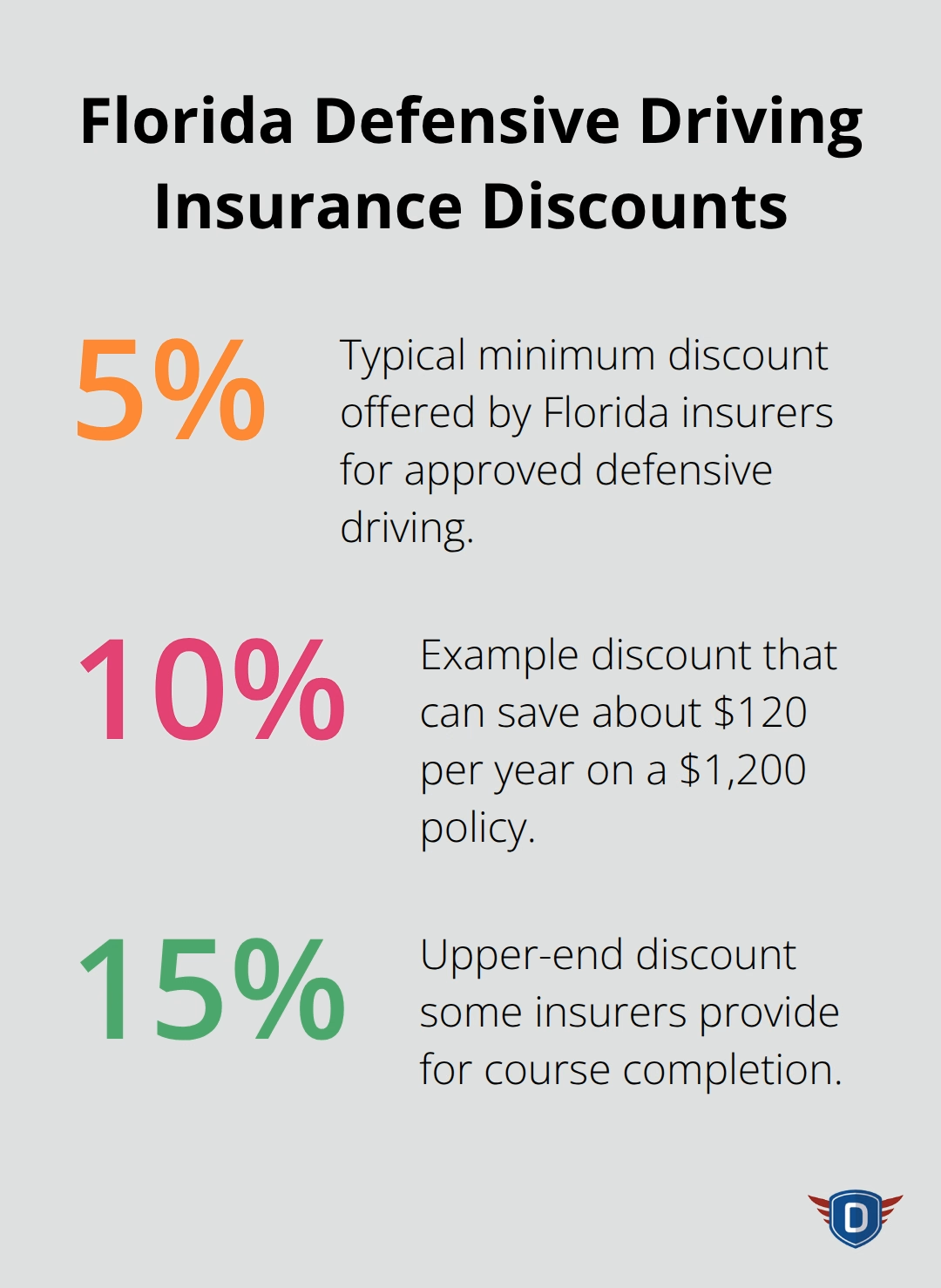
The discount usually applies for three to five years, meaning a single training program can save you $360 to $600 over that period. Insurance companies recognize that DETS-trained drivers file fewer claims, so they reward you with lower rates. This isn’t speculation; it’s how actuarial data works. Drivers who understand hazard recognition, emergency maneuvers, and traffic law file fewer collision and comprehensive claims, which directly reduces the insurer’s financial exposure.
Court Requirements and Point Reduction
Court-ordered traffic school serves a different but equally valuable purpose: stopping points from accumulating on your driving record. Florida allows drivers to reduce up to four points by completing a Basic Driver Improvement course, and judges frequently order this as a condition of sentencing for moving violations. If you received a citation for speeding and the court mandates DETS completion, finishing the course prevents those points from reaching your record, which means your insurance company never sees the violation.
Points disappear from your record after a certain period, but during that time they directly increase your premiums and can trigger license suspension if you accumulate 12 points within 12 months. Completing DETS removes this risk entirely. For drivers facing license reinstatement after suspension, an Intermediate Driver Improvement course becomes mandatory-the state requires it before you can legally drive again.
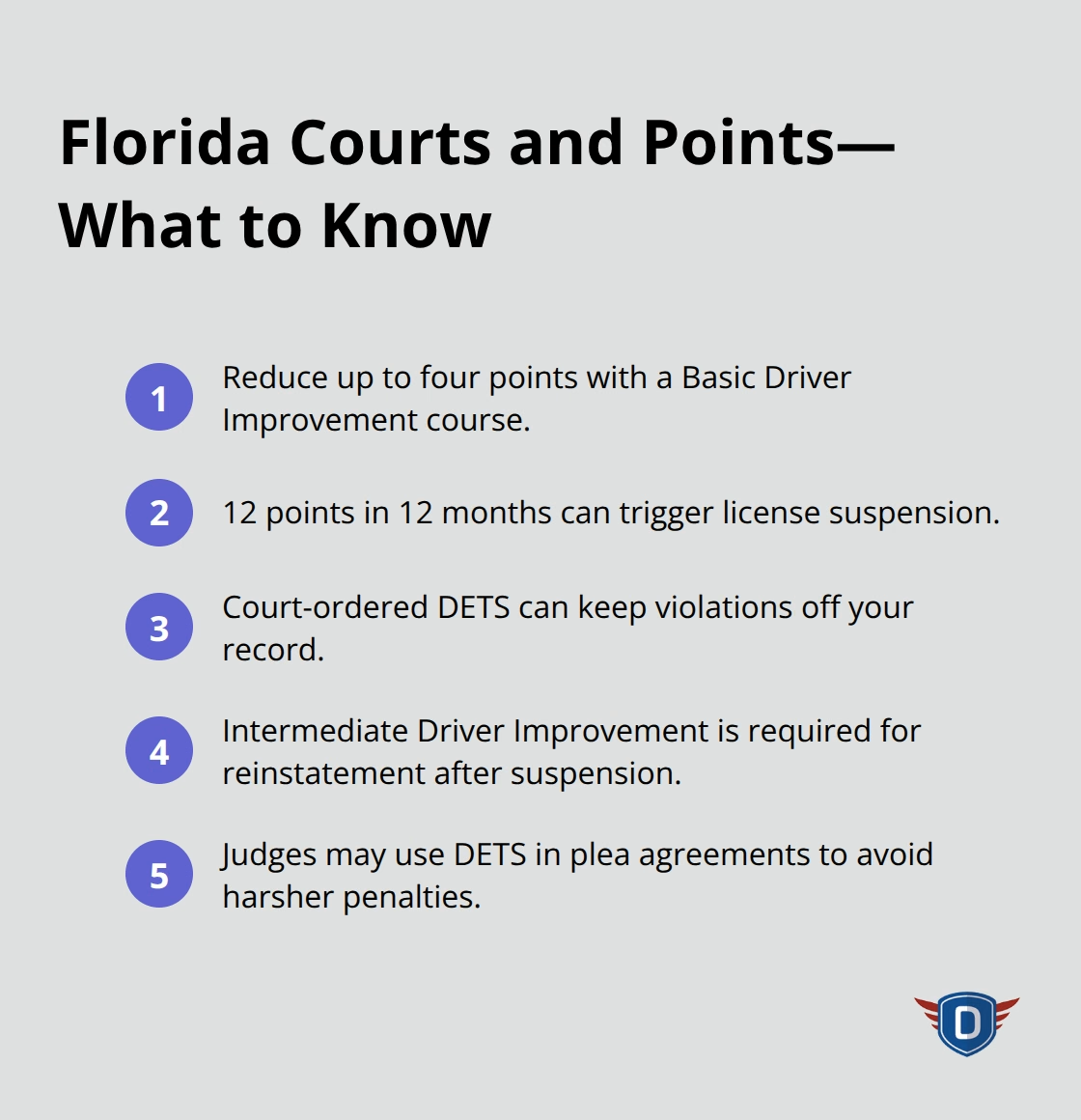
Some courts also use DETS completion as part of plea agreements, allowing drivers to avoid harsher penalties like fines or license revocation. The strategic value of completing this training when a court orders it cannot be overstated-it’s the difference between maintaining your driving record and facing escalating consequences.
Building Lasting Safety Habits
Long-term defensive driving habits transform how you interact with traffic, and this behavioral shift creates safety benefits that extend far beyond insurance discounts. Drivers trained in systematic hazard recognition develop what safety researchers call situational awareness, which means you unconsciously scan for threats before they become emergencies. After completing DETS training, you position your vehicle differently at intersections, maintain appropriate following distances based on actual road conditions rather than guessing, and recognize impaired or aggressive drivers before they create danger.
These habits compound over years-a driver who avoids just one serious accident through better decision-making saves far more than any insurance discount. The National Safety Council estimates that defensive driving training reduces crash risk by 35 percent, which translates to actual lives saved and injuries prevented. This confidence extends to challenging driving conditions; a DETS-trained driver handles wet pavement, heavy traffic, or construction zones with practiced responses rather than panic. The muscle memory developed during emergency maneuver training activates without conscious thought, meaning your hands and feet respond correctly while your brain processes the threat. This automatic competence builds the kind of road confidence that prevents accidents before they occur-you’re no longer anxious about difficult driving situations because you’ve practiced the correct responses.
Final Thoughts
Defensive driving isn’t optional in Florida-it’s the difference between arriving safely and becoming another statistic. The data backs this up: drivers who complete a DETS training program reduce their crash risk by approximately 35 percent according to the National Safety Council. That’s not a marginal improvement; that’s a fundamental shift in how you interact with traffic.
The financial case is equally clear. A 10 percent insurance discount from completing DETS training saves most Florida drivers $120 to $150 annually, which covers the course cost within weeks. Over three to five years, that single training program generates $360 to $600 in savings while simultaneously protecting your driving record from points that would spike your premiums even higher. Courts recognize this value too-judges order DETS completion because it works, reducing reoffense rates and keeping dangerous drivers off the road.
When you master hazard recognition, traffic law, and emergency maneuvers, you develop the situational awareness that prevents accidents before they happen. You position your vehicle correctly at intersections, maintain appropriate following distances based on actual conditions, and recognize impaired drivers before they create danger (these habits compound over years, transforming you from a reactive driver into a proactive one). Florida’s roads carry over 23 million registered vehicles, and every driver trained in defensive techniques makes those roads safer for everyone. Take our Florida-approved DETS training program to start protecting yourself and your community today.