
Substance abuse behind the wheel kills thousands of drivers, passengers, and pedestrians every year. In Florida alone, impaired driving accounts for a significant portion of fatal traffic accidents, making substance abuse traffic education not just helpful but necessary.
At floridadetscourse.com, we believe every driver needs to understand how alcohol and drugs destroy reaction time, judgment, and motor control. This guide covers what you need to know about impaired driving-from the science of impairment to the legal consequences and practical prevention strategies.
How Substance Abuse Damages Driving Performance
Alcohol’s Immediate Impact on Reaction Time
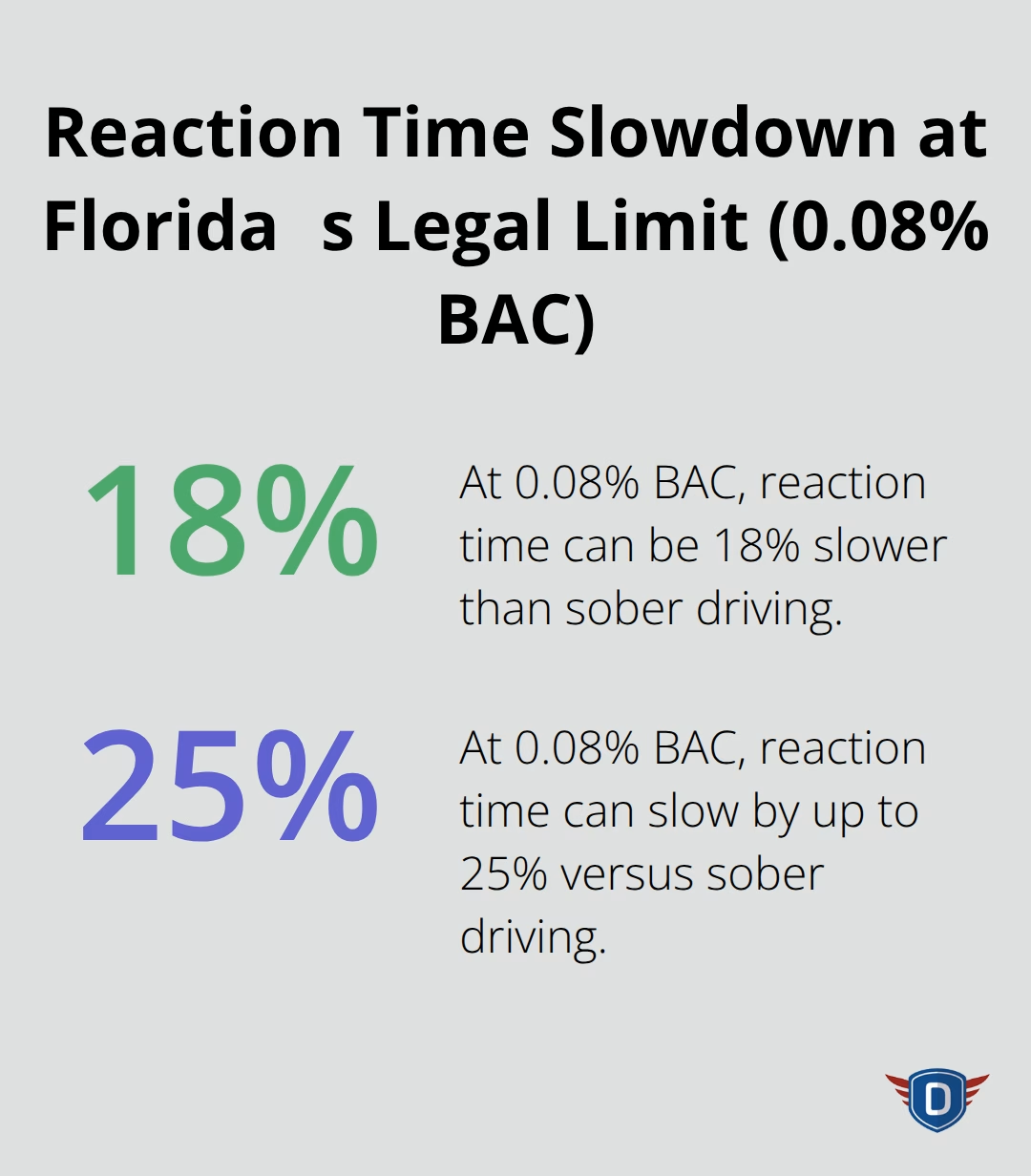
Alcohol hits your central nervous system within minutes of consumption, and the effects on driving ability are immediate and measurable. A driver with a blood alcohol concentration of just 0.05 percent experiences reduced coordination, impaired ability to track moving objects, and slower response to emergency situations, according to the National Highway Traffic Safety Administration. At 0.08 percent (the legal limit in Florida), your reaction time slows by 18 to 25 percent compared to sober driving.
This delay matters enormously. At 55 miles per hour, a vehicle travels 80 feet per second, and even a half-second delay in braking can mean the difference between avoiding a collision and causing a fatal crash.
Drugs Create Unpredictable Impairment
Drugs present an even more unpredictable threat because their effects vary dramatically based on the substance. Marijuana impairs judgment and motor control, making it difficult to judge distances and maintain lane position. Stimulants like methamphetamine cause erratic behavior, aggressive driving, and poor decision-making that endangers everyone on the road.
Opioids and prescription medications slow reaction time and cognitive function similarly to alcohol, yet many drivers underestimate their impairment because they obtained the drugs legally. This false sense of safety creates a dangerous gap between perceived and actual driving ability.
Florida’s Crash Data Reveals the Real Cost
Florida’s crash data tells a stark story about the real-world consequences. In 2022, nearly 9,000 traffic crashes involved impaired drivers across the state, with over 400 fatal crashes where alcohol or drugs played a role. These numbers represent preventable deaths and injuries that devastated families and communities.
The economic cost extends beyond human tragedy: impaired driving crashes cost Florida over 15 billion dollars annually in medical expenses, lost productivity, property damage, and emergency response.
Prevention Starts Before You Drink or Use
What makes this particularly frustrating is that the impairment is entirely preventable. If you plan to consume alcohol or use substances, arrange transportation beforehand through a rideshare service, designated driver, or taxi. This single decision eliminates your ability to drive impaired and protects lives on the road. Understanding these dangers forms the foundation for recognizing impaired driving in others and knowing the legal system’s response to those who choose to drive anyway.
What Happens After a DUI Arrest in Florida
Immediate Penalties and Sentencing
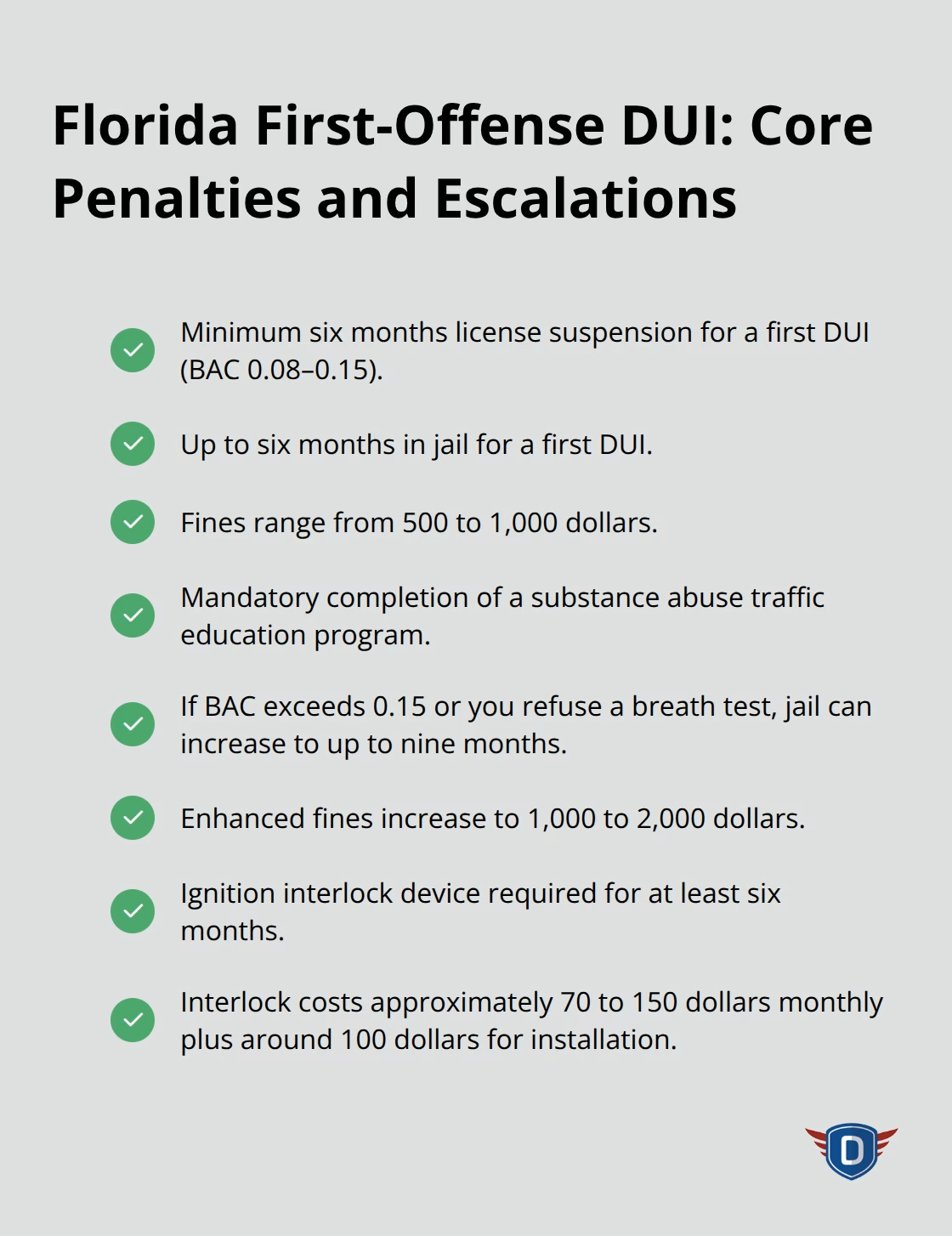
A DUI conviction in Florida carries penalties that extend far beyond the courtroom and reshape your financial reality for years. Florida law treats impaired driving with severity, and the state’s sentencing structure reflects this commitment to deterrence. For a first-offense DUI with a blood alcohol concentration between 0.08 and 0.15 percent, you face a minimum of six months license suspension, up to six months in jail, fines ranging from 500 to 1,000 dollars, and mandatory completion of a substance abuse traffic education program. If your BAC exceeded 0.15 percent or you refused a breathalyzer test, penalties escalate immediately: jail time increases to up to nine months, fines jump to 1,000 to 2,000 dollars, and you must install an ignition interlock device for a minimum of six months, which costs approximately 70 to 150 dollars monthly plus installation fees around 100 dollars.
Escalating Consequences for Multiple Convictions
Multiple convictions compound these consequences exponentially. A second DUI within ten years means mandatory ten-day minimum jail time, 1,000 to 2,000 dollars in fines, and one-year license suspension with mandatory interlock installation for two years. A third conviction within ten years elevates the offense to a felony, resulting in 30-day minimum jail time, 2,000 to 5,000 dollars in fines, and ten-year license revocation.
The Hidden Financial Burden
The financial damage extends far beyond direct penalties. Court costs and attorney fees (ranging from 1,000 to 5,000 dollars depending on case complexity) add substantial expense. Mandatory victim impact panel attendance incurs additional fees. Your insurance carrier will almost certainly drop you after a DUI conviction, forcing you into the Florida assigned risk market where premiums triple or quadruple compared to standard rates. A driver convicted of a single DUI typically pays an additional 1,500 to 3,000 dollars annually in insurance premiums over the next three to five years, totaling 7,500 to 15,000 dollars in excess costs.
License Reinstatement Requirements
License reinstatement requires completing your substance abuse education program, paying reinstatement fees of 150 to 500 dollars depending on suspension length, and providing proof of financial responsibility through an SR-22 insurance form. Delaying compliance only extends your suspension and adds administrative fees. The Florida Department of Highway Safety and Motor Vehicles enforces these requirements strictly, and any lapse in compliance restarts the suspension clock.
Employment and Housing Consequences
The employment consequences often prove equally devastating: many employers conduct background checks that reveal DUI convictions, limiting job prospects in professional, transportation, and customer-facing roles. Housing applications and rental agreements frequently include background checks, potentially affecting where you can live. These collateral consequences make the decision to drive impaired extraordinarily expensive, affecting employment, housing, insurance, and freedom for years after a single arrest. Understanding these real costs helps drivers recognize why substance abuse traffic education programs exist-they address the root cause of impaired driving before arrest becomes necessary.
Spotting Impaired Drivers and Planning Safe Transportation
Recognizing Dangerous Driving Patterns
Impaired drivers exhibit specific behavioral patterns that signal dangerous judgment and motor control loss. Weaving between lanes, straddling the center line, making abrupt stops, or accelerating without reason are clear warning signs. Impaired drivers often fail to dim their headlights, drive with windows down in cold weather, or make wide turns that cross into adjacent lanes.
Responding to Impaired Drivers on the Road
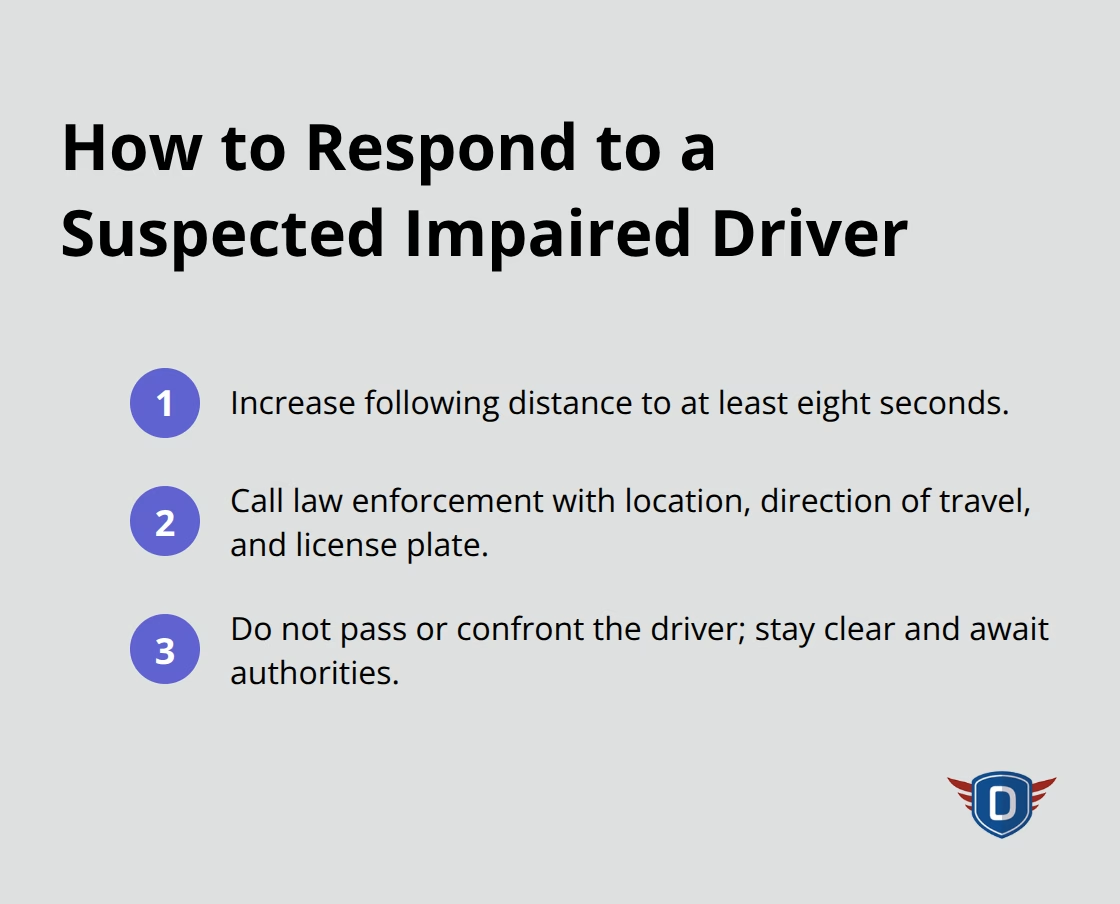
If you observe these behaviors, increase your following distance to at least eight seconds behind the vehicle, which gives you time to react if the impaired driver brakes suddenly or swerves into your path. Report the vehicle’s location, direction of travel, and license plate to local law enforcement immediately rather than attempting to pass or confront the driver yourself. Your observation could prevent a crash that kills or injures someone.
Using Rideshare Services to Avoid Impaired Driving
The most effective prevention strategy eliminates the choice to drive impaired in the first place through pre-planned transportation. Rideshare services like Uber and Lyft have fundamentally changed how people can avoid driving after consuming alcohol or drugs. This expense is negligible compared to the legal and financial consequences of a DUI conviction.
Designated Drivers and Alternative Transportation
Designated drivers work equally well when you commit to the arrangement before drinking begins, not as an afterthought. If you serve as the designated driver, that means zero alcohol consumption for the entire outing, not just limiting yourself to one or two drinks. Taxis, public transportation, and overnight stays at a friend’s house provide legitimate alternatives when rideshare services aren’t available.
Making Transportation Decisions Before Consuming Substances
The financial burden of arranging safe transportation is negligible against the legal penalties, employment consequences, and human cost of impaired driving. Make your transportation decision before you consume any substance, and execute that plan with the same commitment you’d give to any critical responsibility.
Final Thoughts
Substance abuse behind the wheel remains one of Florida’s most preventable traffic dangers, yet thousands of drivers continue to drive impaired every year. The science proves that alcohol and drugs destroy reaction time, impair judgment, and eliminate the motor control necessary for safe driving. The legal consequences are equally clear: DUI convictions in Florida carry jail time, license suspension, mandatory substance abuse traffic education programs, and financial penalties that extend far beyond the courtroom into employment, housing, and insurance costs for years.
Make transportation decisions before you consume any substance-rideshare services, designated drivers, and alternative transportation eliminate the option to drive impaired and cost far less than the legal and financial fallout from a DUI conviction. Substance abuse traffic education programs exist because they work; they address the attitudes and behaviors that lead drivers to make dangerous choices behind the wheel. These programs help drivers understand how impaired driving affects judgment and decision-making, allowing them to recognize the real costs of substance abuse on the road.
Visit floridadetscourse.com to explore our Florida-approved traffic school programs and take the first step toward safer driving habits that protect you and everyone sharing Florida’s roads.