Adult drivers face a completely different learning curve than teenagers, and most standard driver education programs ignore this reality. First-time adult drivers often juggle work, family, and other commitments while trying to build confidence behind the wheel.
At floridadetscourse.com, we’ve seen how the right specialized program transforms adult learners into safer, more confident drivers. This blog post breaks down why adults need education designed specifically for them.
Why Adult Learners Process Information Differently
Adult learners retain information through experience and application, not memorization. The brain of an adult driver operates on pattern recognition built over decades of life experience, which means standard teenage driver education approaches fail spectacularly. Teenagers learn rules as abstract concepts; adults need to understand why those rules matter in their specific driving contexts. Research from adult learning theory shows that adults require immediate relevance to their lives and control over their learning pace.
A 45-year-old returning to driving after fifteen years away learns nothing from generic videos about stopping distances. That driver needs instruction addressing highway anxiety, modern vehicle technology they’ve never encountered, and how their slower reflexes affect braking times on contemporary roads. Adults also bring established habits from their past driving experience or from driving cultures in other countries, and these habits often conflict with current traffic laws. A driver who learned to drive in a country where horn use signals friendly greetings will struggle with horn etiquette on American highways without explicit instruction.
Why Prior Experience Creates Obstacles
The stakes feel higher for adult learners because they carry real responsibilities: they need to drive for work, they may be transporting children, and they’re acutely aware of insurance consequences. This psychological weight means adults respond poorly to condescending instruction or overly simplified content. They need respect for their maturity combined with honest acknowledgment that their prior experience may actually work against safe driving in 2026’s traffic environment.
How Anxiety Shapes Adult Learning Outcomes
Driving anxiety in adults stems from genuine sources, not irrational fears. A 50-year-old who hasn’t driven in two decades faces legitimate challenges: reaction times do slow with age, modern traffic moves faster than it did thirty years ago, and vehicles now have blind spots created by thicker pillars and backup cameras that require new mental models. Dismissing these concerns as nervousness wastes valuable instruction time.
Specialized adult programs address anxiety through graduated exposure and transparent skill assessment. Starting with quiet residential streets before advancing to highways works because it builds procedural memory and genuine confidence, not false assurance. Adults also experience performance anxiety during testing situations, and research on adult cognition shows that high-stress conditions impair learning. Programs that separate skill-building from evaluation phases produce better outcomes than those that combine them.
Why Insurance Recognition Matters
The insurance industry indirectly validates this approach: some providers offer discounts specifically for adults completing specialized driver education courses, recognizing that tailored instruction produces measurable risk reduction. Adults need instructors who explain what they’re doing and why, who acknowledge fear as rational, and who celebrate incremental progress. A 48-year-old driver who successfully navigates a highway merge after five lessons hasn’t failed because she needed five lessons; she’s succeeded in acquiring a critical skill that will protect her life for decades.
These learning differences demand instruction designed specifically for adult minds and adult lives. The next section examines how specialized programs translate this understanding into practical teaching methods that actually work.
How Specialized Programs Work for Adult Drivers
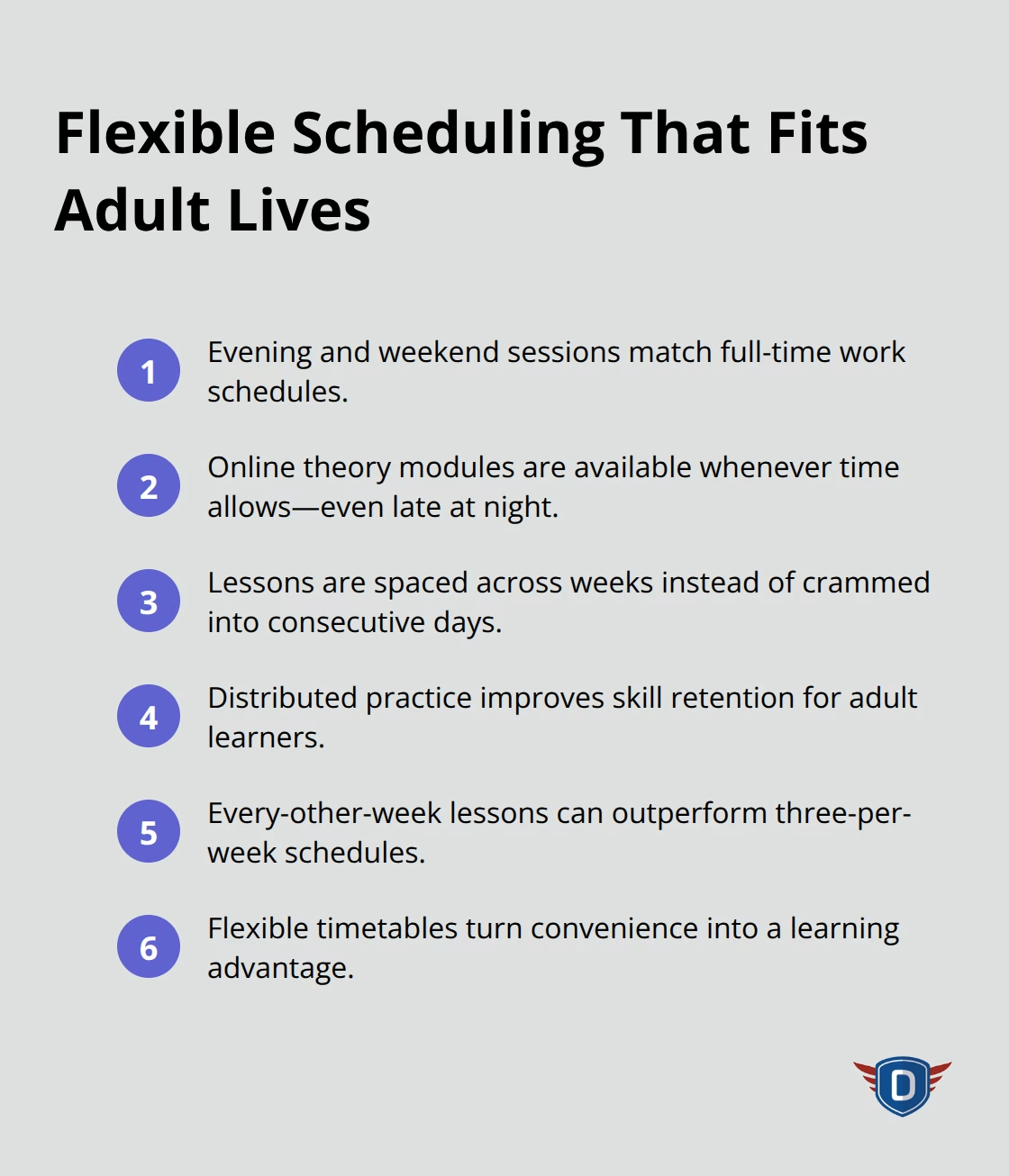
Adult drivers need instruction that fits into packed schedules, not around them. Most adult learners work full-time, manage family responsibilities, and cannot commit to rigid lesson times that work for teenagers. Specialized adult programs solve this by offering evening and weekend sessions, online theory components that adults complete at midnight if necessary, and the ability to space lessons across weeks rather than cramming them into consecutive days. This flexibility matters because adults retain skills better through distributed practice. Research on adult cognition shows that spacing lessons across time produces stronger memory formation than massed practice, so a program offering lessons every other week actually outperforms one pushing three lessons per week. The schedule becomes an educational advantage, not just a convenience.
Personalized Instruction Targets Actual Skill Gaps
Personalized instruction separates effective adult programs from mediocre ones. A 52-year-old learning to drive for the first time has completely different needs than a 38-year-old returning to driving after a decade away. The first needs foundational skills; the second needs to unlearn outdated habits and adapt to modern traffic. Generic curricula treat both drivers identically, wasting time on irrelevant content. Quality adult programs assess each driver’s background, identify specific gaps, and build instruction around those gaps. If a driver never learned highway merging, that gets intensive focus. If another driver merges fine but panics in heavy rain, the rain driving gets the attention. This tailored approach means adults spend lesson time on actual skill deficits rather than reviewing material they already know. One-on-one instruction from certified instructors who understand adult learners produces measurable improvement because the instruction targets the actual problem.
Defensive Driving Reduces Collision Risk
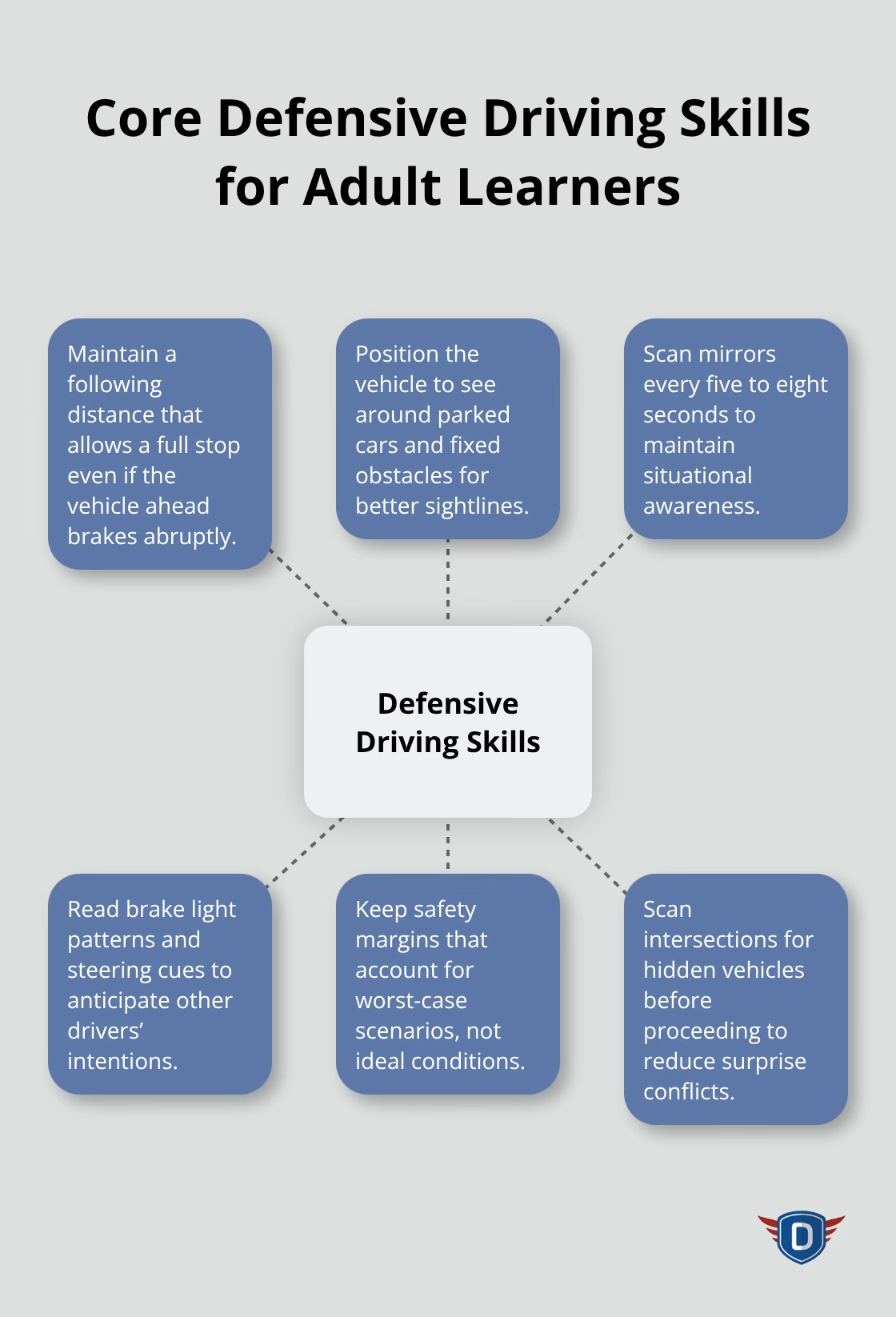
Defensive driving instruction transforms how adults process traffic situations. Many adult learners drive reactively, responding to immediate threats rather than anticipating them. Specialized programs teach hazard recognition, which means scanning intersections for hidden vehicles before proceeding, reading other drivers’ intentions from brake light patterns and steering angle, and maintaining safety margins that account for worst-case scenarios. A driver trained in defensive techniques maintains a following distance that allows stopping even if the vehicle ahead stops abruptly without warning lights. That same driver positions their vehicle to see around parked cars and scans mirrors every five to eight seconds rather than staring straight ahead. These behaviors compound over thousands of driving hours, meaningfully reducing collision risk.
High-Risk Behaviors Demand Explicit Instruction
Defensive driving also addresses the behaviors that actually cause crashes. Many driver education programs focus on speed and following distance while ignoring distraction, impaired driving, and aggressive decision-making. Adults need instruction on recognizing when fatigue impairs judgment, understanding how a single glance at a phone creates dangerous blind spots, and managing anger on congested roads. Programs that emphasize these high-risk behaviors produce drivers who make safer choices. Insurance companies recognize this value: some providers offer premium discounts specifically for adults completing specialized driver education that includes defensive driving components, acknowledging that the instruction measurably reduces claims.
The combination of flexible scheduling, personalized assessment, and behavior-focused instruction creates a foundation for safer driving. What remains is understanding how these programs translate into real financial and safety outcomes that matter to adult learners and their families.
Tangible Payoffs from Completing Adult Driver Education
Insurance Savings Compound Quickly
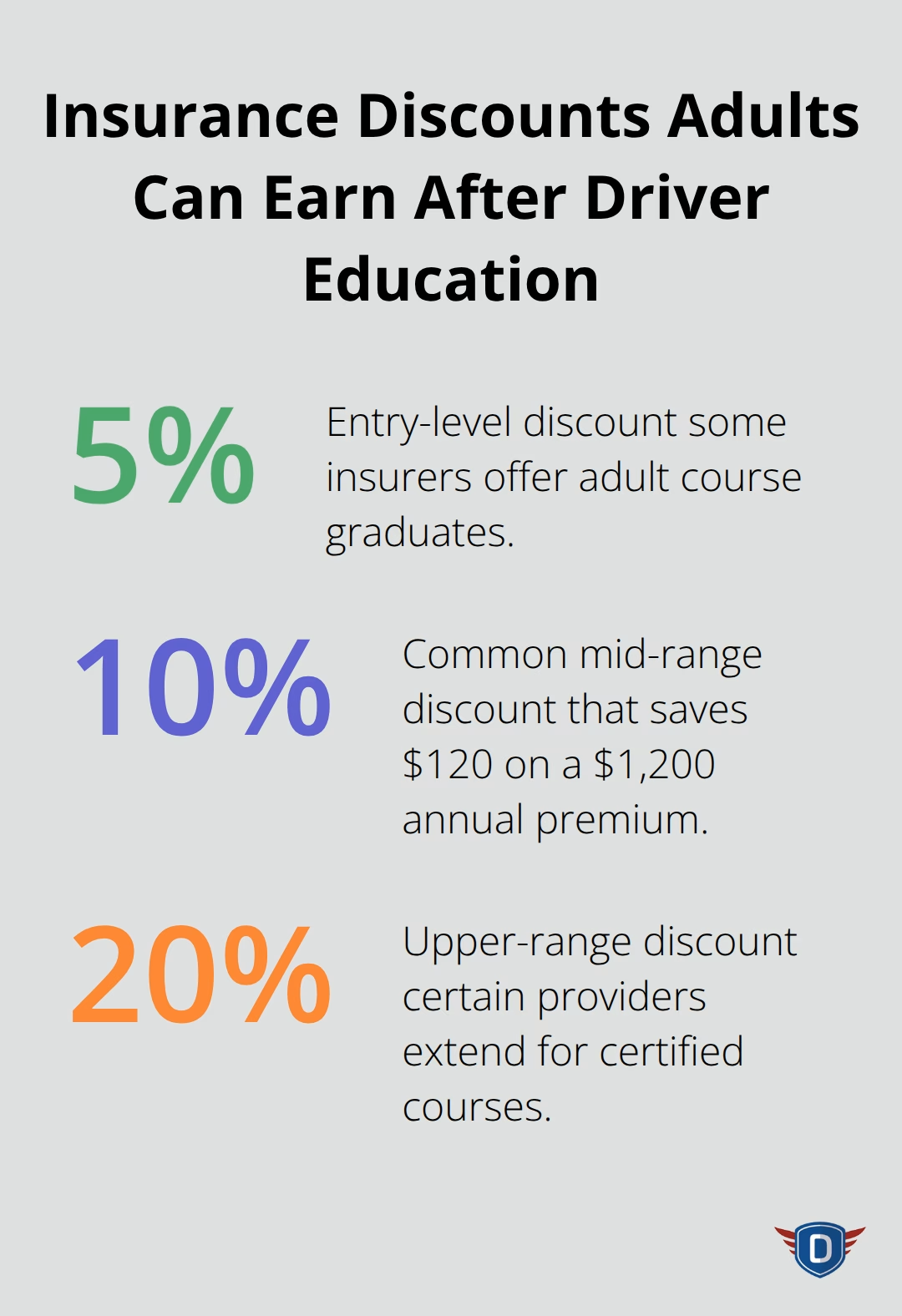
Adult driver education pays for itself through concrete financial benefits that appear within months of course completion. Insurance companies recognize that specialized adult programs reduce claims, and many providers offer insurance discounts ranging from 5 to 20 percent for drivers completing certified courses. For a 55-year-old paying $1,200 annually for auto insurance, a 10 percent discount means $120 in immediate savings. Over a five-year period, that totals $600 in pure savings before accounting for the additional benefit of avoiding accident surcharges, which typically add $200 to $500 per year depending on fault determination and policy terms. A single collision increases insurance costs by an average of $400 to $900 annually for three years, making the prevention value of defensive driving instruction economically substantial. Adults who complete programs emphasizing hazard recognition and risk assessment demonstrate measurably lower claims frequency than those who skip formal education. The cost of a comprehensive adult driver education program-typically between $300 and $800 depending on intensity and location-recoups itself through insurance savings alone within the first year for many drivers.
Safety Improvements Persist for Years
Adult graduates report practical safety improvements that compound over years of driving. Adults who receive personalized instruction addressing specific skill gaps experience fewer near-miss incidents and demonstrate better decision-making in high-pressure driving situations. These behavioral changes persist years after course completion because adults internalize why the techniques work rather than simply memorizing rules. Adult drivers trained in defensive techniques maintain safer following distances, recognize hazard patterns earlier, and avoid the distraction-related errors that cause serious traffic crashes.
Commercial Drivers Earn Higher Wages
Commercial drivers completing specialized adult education programs qualify for higher-paying positions requiring safety certifications. Many commercial driving employers explicitly prefer or require candidates with recent formal training because insurance underwriters offer fleet discounts for companies employing certified drivers. A commercial driver earning $45,000 annually can advance to positions paying $52,000 to $58,000 with proper credentials, representing $7,000 to $13,000 in annual income increase directly attributable to formal driver education completion.
Emergency Response Skills Protect Lives
The skills matter most in weather events and emergency situations where untrained drivers hesitate or make poor choices while trained drivers execute appropriate responses automatically. Adult drivers trained in defensive techniques recognize dangerous patterns earlier and respond with practiced precision rather than panic (a critical advantage when sudden obstacles appear on highways or when visibility drops during storms). These trained responses develop through instruction that addresses real-world scenarios rather than theoretical road rules.
Final Thoughts
Adult drivers benefit measurably from specialized education designed around how they actually learn and live. First-time adult drivers and those returning to the road after years away need instruction that respects their maturity, acknowledges their real constraints, and targets the specific behaviors that prevent crashes. Generic teenage driver education fails because it ignores the psychological weight adults carry, the established habits they must unlearn, and the modern traffic environment they face.
Tailored programs reduce accidents and insurance costs through mechanisms that compound over time. A driver who completes defensive driving instruction and maintains safer following distances avoids collisions that would have cost thousands in repairs, medical bills, and insurance surcharges. The 5 to 20 percent insurance discounts many providers offer for course completion represent immediate financial recognition of reduced risk, with these savings easily exceeding the program cost over five years while behavioral improvements persist indefinitely.
We at floridadetscourse.com understand that adult learners deserve education built specifically for them-combining flexible scheduling, personalized instruction, and defensive driving techniques that address the behaviors actually causing crashes. Explore our comprehensive adult driver education programs and transform yourself into a safer, more capable road user.