Your vehicle’s position at an intersection determines whether you’ll have a clear path forward or find yourself in a dangerous situation. Poor positioning costs lives-the National Highway Traffic Safety Administration reports that intersection crashes account for roughly 50% of all traffic fatalities.
We at floridadetscourse.com know that defensive positioning tactics aren’t just about following rules; they’re about controlling what happens around you. This guide shows you exactly where to position your vehicle, from lane selection to handling roundabouts, so you can drive with confidence and stay safe.
Getting Your Vehicle in the Right Position Before You Reach the Intersection
Why lane markings matter more than most drivers think
Lane markings exist for one reason: to organize traffic flow and prevent collisions. White lines separate same-direction traffic, while yellow lines divide opposing lanes. Solid lines mean you cannot cross; dashed lines permit crossing when safe.
Most drivers ignore this distinction until they commit to a dangerous move. Lane markings are a proven safety treatment for intersection crashes due to a reduced number of conflict points and reduced intersection speeds.
Position yourself early, not at the last moment
You need to position your vehicle in the correct lane at least 300 feet before the intersection, not 50 feet. This distance gives you time to read lane markings, identify traffic control devices, and spot pedestrians or cyclists without panic.
If you turn left, move to the leftmost lane designated for left turns. If you turn right, use the rightmost lane. Staying in a center lane when you need to turn forces you to cut across other vehicles or miss your turn entirely-either outcome creates risk.
Straddling lanes confuses everyone around you
Straddling two lanes is the fastest way to confuse other drivers about your intentions. Drivers around you won’t know if you commit to your lane or switch into theirs, so they can’t predict your behavior.
Entering a turn lane too late means you turn from a lane not designed for turning, which puts you on a collision course with vehicles traveling straight. This mistake accounts for a significant portion of intersection collisions.
Maintain escape space at traffic lights
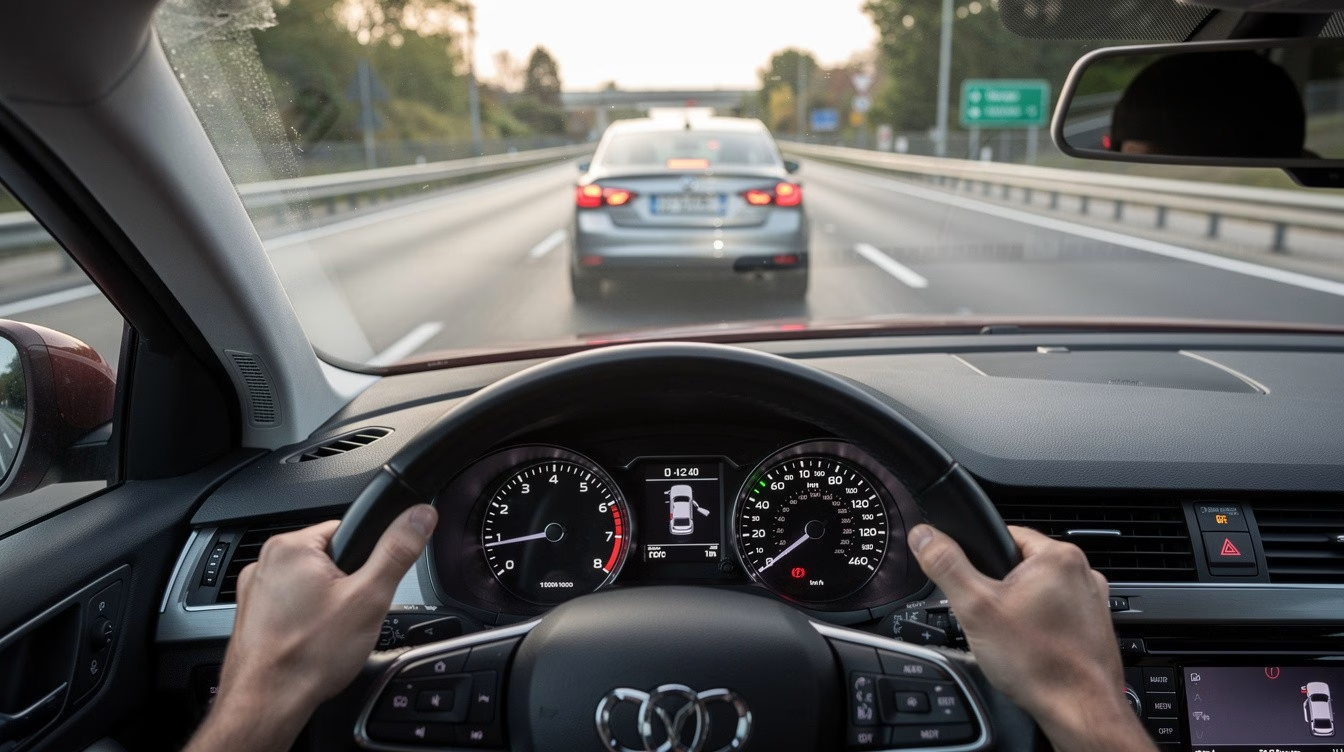
Escape space at traffic lights is essential if the vehicle in front of you stalls or if a vehicle behind you fails to stop. Leave at least one car length of space in front of you (roughly 10�15 feet).
Finally, positioning in a lane you don’t intend to use because it feels faster wastes mental energy and increases your chances of missing your turn or making an illegal maneuver. Choose your lane based on your destination, not on traffic flow patterns that seem faster.
What happens when you position correctly
Proper positioning at traffic lights and stop signs sets up everything that follows. Once you occupy the right lane with adequate spacing and clear sightlines, you can focus on reading traffic control devices and anticipating pedestrian movement-the skills that separate safe drivers from those who react too late.
Positioning at Traffic Lights, Four-Way Stops, and Turning Lanes
Stop with space to maneuver
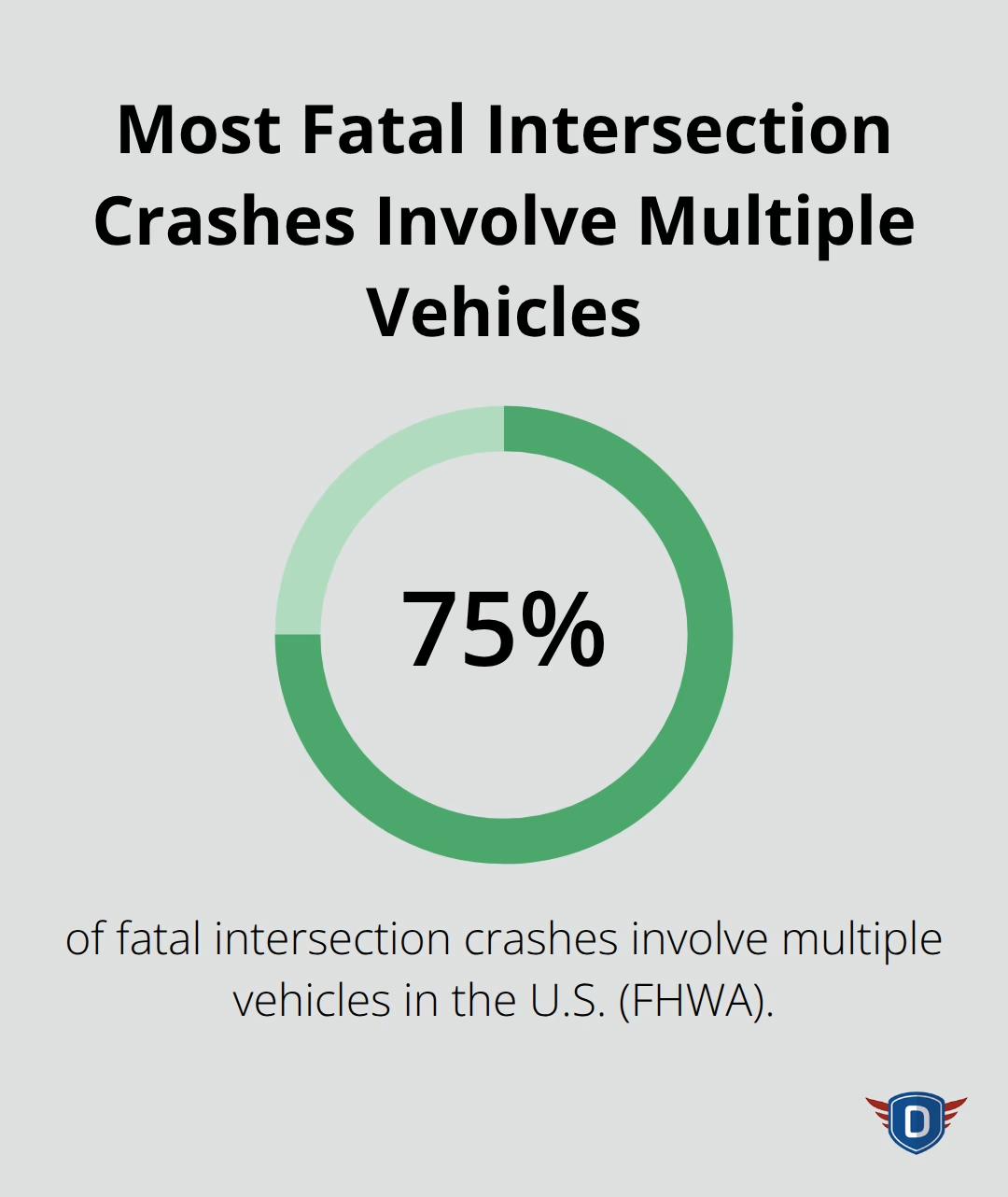
At traffic lights and four-way stops, your position determines whether you execute your maneuver safely or create conflict with cross-traffic and turning vehicles. The Federal Highway Administration identifies 75% of fatal intersection crashes as involving multiple vehicles, with angle and turning collisions accounting for most of these incidents.
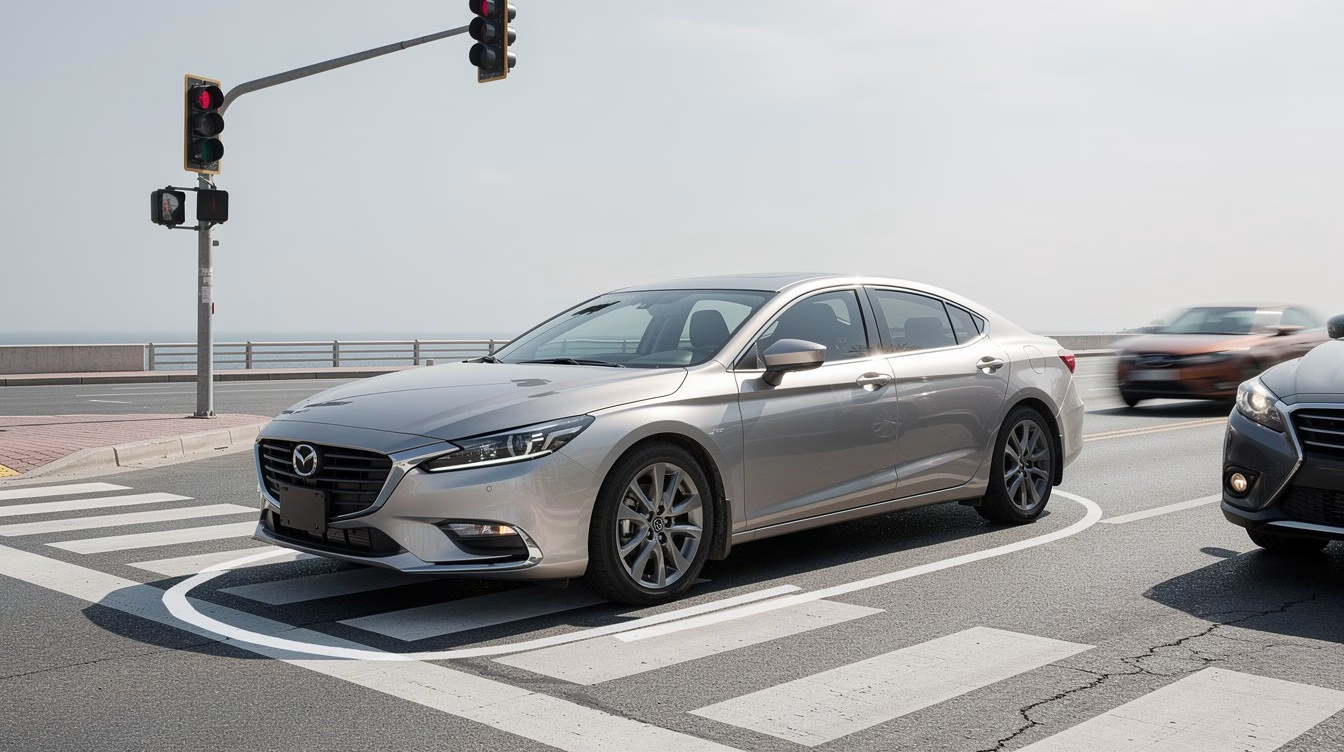
Stop at least 10�15 feet behind the vehicle in front of you at a red light so that if the lead vehicle stalls, you have room to maneuver around it without blocking the intersection. Position yourself fully within your intended lane, not straddling two lanes, because other drivers need to know exactly where you’ll move next.
Yield correctly at four-way stops
At four-way stops, the first vehicle to stop generally proceeds first; if two vehicles arrive simultaneously, yield to the vehicle on your right. Do not rely on eye contact or assumptions about what another driver will do-confirm they’re actually stopping and moving before you commit to your turn. Left turns demand extra caution because you’re crossing opposing traffic; if you have a green arrow, opposing traffic should be stopped completely, but with a regular green light, wait for a safe opening rather than forcing your turn into traffic. Never assume the driver ahead of you will turn just because their signal is on; signals fail, drivers change their minds, and you need clear space to complete your turn without hitting them.
Position for right and left turns early
Right turn lanes and left turn lanes require positioning well before the intersection, not cutting across lanes at the last second. For right turns, position in the rightmost lane marked for turning at least 300 feet before the intersection; this gives you time to slow gradually and scan for pedestrians entering the crosswalk. For left turns, occupy the leftmost turning lane and position your vehicle so your front wheels point slightly left, signaling your intention without blocking oncoming traffic. Avoid the common mistake of positioning in a center lane when you need to turn left; this forces you to cut across vehicles traveling straight, creating a collision course.
Navigate pedestrian intervals and roundabouts
At intersections with leading pedestrian intervals, pedestrians begin crossing 3�4 seconds before turning traffic gets a green light, so expect pedestrians in the crosswalk during your turn window. Roundabouts operate differently than signalized intersections and offer substantial safety benefits; the Insurance Institute for Highway Safety reports 25%-87% reductions in injury crashes after conversion to roundabouts compared to traditional intersections. Enter a roundabout in the lane that matches your intended exit: if exiting at the first or second exit, use the right lane; if exiting at the third or fourth exit, use the left lane. Stay in your lane throughout the roundabout and do not change lanes mid-circle; exit when your destination appears by turning right out of the circle.
Visibility and blind spots demand constant attention
Proper positioning at intersections means nothing if you cannot see cross-traffic, pedestrians, or cyclists approaching from adjacent lanes. Parked cars, delivery trucks, landscaping, and large SUVs hide pedestrians and cross-traffic from view, so perform head checks in addition to mirror scans before you commit to any maneuver. Position your vehicle to maximize sightlines by stopping behind the line, searching left-right-left, repositioning if needed, and only committing when the view is clear. This staged visibility approach prevents the inadequate surveillance that causes nearly half of all intersection crashes.
Defensive Positioning Strategies
Maintain distance as your first line of defense
Distance from the vehicle ahead of you prevents you from being pushed into the intersection if the lead vehicle gets hit from behind. At traffic lights and stop signs, maintain at least one car length between your vehicle and the one in front; this buffer also gives you room to steer around a stalled car without entering the intersection yourself. Too many drivers position bumper-to-bumper at red lights, eliminating their escape route entirely.
Distance also applies to vehicles beside you in adjacent turning lanes. Position your vehicle so you have lateral space to maneuver if another driver drifts into your lane or if a pedestrian steps into your path unexpectedly. Defensive drivers plan escape routes at intersections and maintain vehicle positions that provide multiple options when hazards appear, which reduces the likelihood of collision in these critical moments.
Use active head movement to see what mirrors cannot
Visibility demands active head movement, not passive mirror checking. Parked cars, delivery trucks, landscaping, and large SUVs create blind zones that mirrors cannot penetrate, so you must physically turn your head left-right-left before committing to any intersection maneuver.
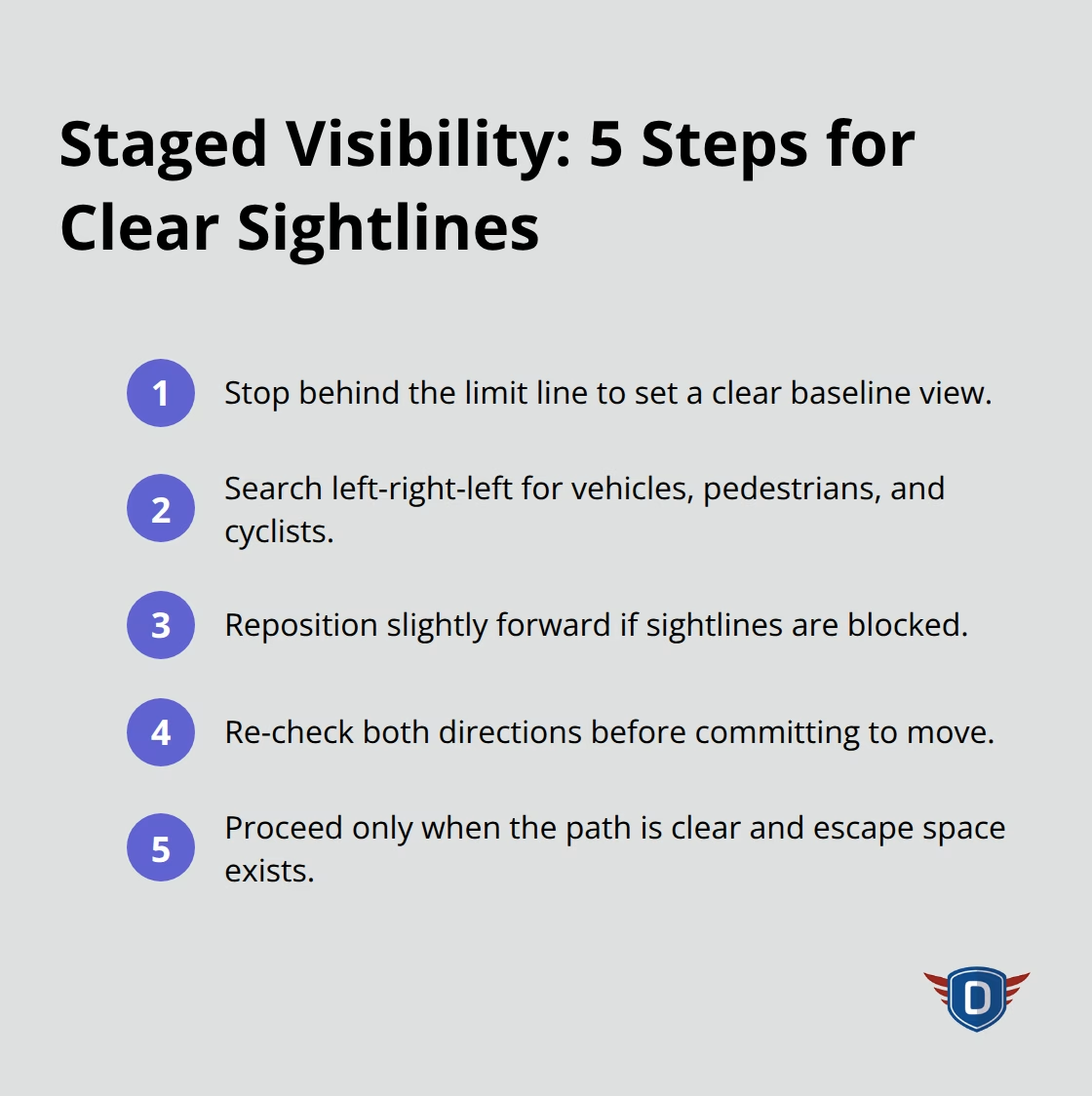
The staged visibility approach works because it forces you to stop, search, reposition if needed, and re-check before moving. Position your vehicle to maximize sight lines by stopping behind the line initially, scanning for cross-traffic and pedestrians, then inching forward only if your view remains clear. Never rely on the assumption that you can see everything from your starting position; many drivers position too far back and miss pedestrians or cyclists in the near corner of the intersection.
Identify and avoid high-risk zones
High-risk zones include the area directly across from you (where cross-traffic approaches), the far corners of the intersection (where pedestrians enter from adjacent streets), and the space behind large vehicles turning in front of you. Blind spots extend farther than most drivers estimate, especially on the driver’s side and rear corners of your vehicle, so shoulder checks are mandatory before any lane change or turn at an intersection.
Avoid positioning in the shadow of a large vehicle during the approach; if you cannot see the traffic light or oncoming traffic clearly, you’re in a blind zone and cannot react safely. Position your vehicle to maintain space around it, especially in front and to at least one side, by stopping at an angle that opens your sightlines rather than narrows them.
Final Thoughts
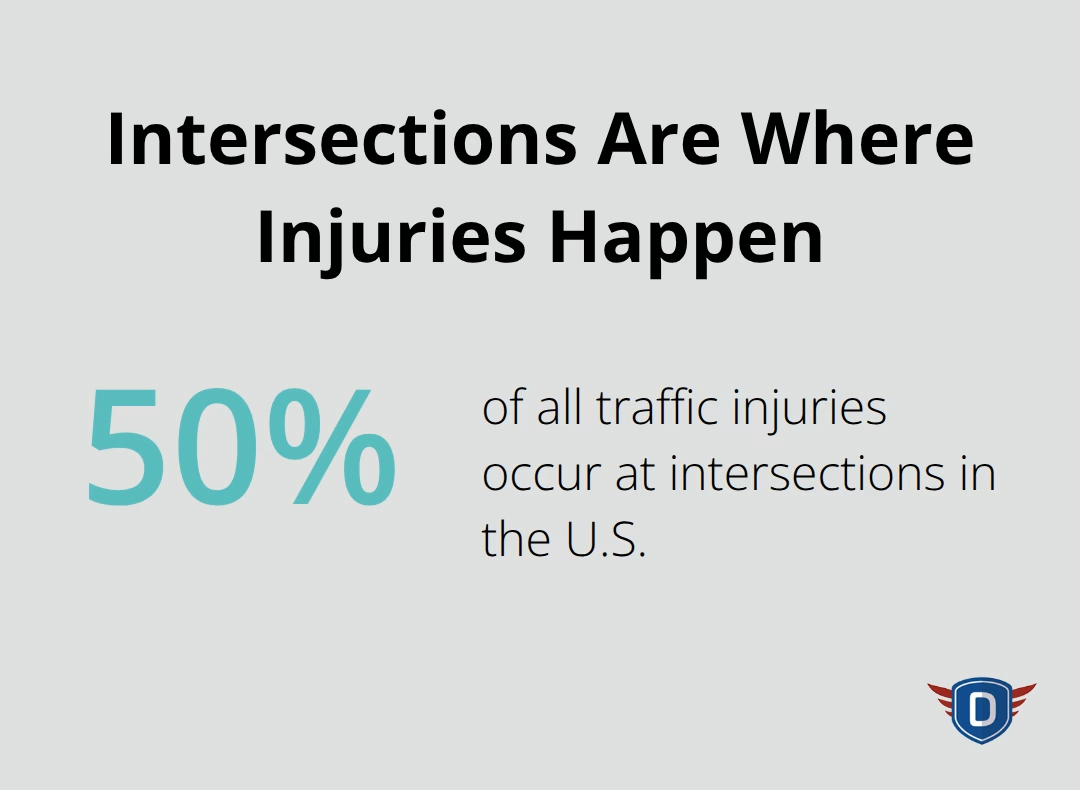
Proper vehicle positioning at intersections forms the foundation of safe driving. Every decision you make-from lane selection 300 feet before the intersection to maintaining escape space at traffic lights-directly affects your ability to avoid crashes. The data confirms this: roughly 50% of all traffic injuries occur at intersections, yet most of these incidents stem from poor positioning and inadequate visibility rather than mechanical failure.
Defensive positioning tactics work because they give you control over what happens around you. When you occupy the correct lane, maintain distance from other vehicles, and perform active head checks, you eliminate the guesswork that causes collisions. You do not rely on other drivers to do the right thing; you position yourself so you can react safely regardless of what they do.
The staged visibility approach-stop, search, reposition, re-check-becomes automatic when you practice it repeatedly, and head checks take two seconds to reveal pedestrians, cyclists, and cross-traffic that mirrors cannot show. We at floridadetscourse.com provide comprehensive driver education programs designed to help you master these skills and adopt lifelong safe driving habits through real-life scenarios and clear instruction.