Intersections are where most accidents happen. The National Highway Traffic Safety Administration reports that intersection crashes account for roughly 50% of all traffic collisions, with many resulting in serious injuries.
At floridadetscourse.com, we’ve seen firsthand how understanding intersection safety rules transforms drivers from nervous to confident. This guide breaks down everything you need to know to navigate crossroads safely.
How Traffic Signals, Stop Signs, and Yield Signs Control Right-of-Way
Understanding Traffic Light Commands
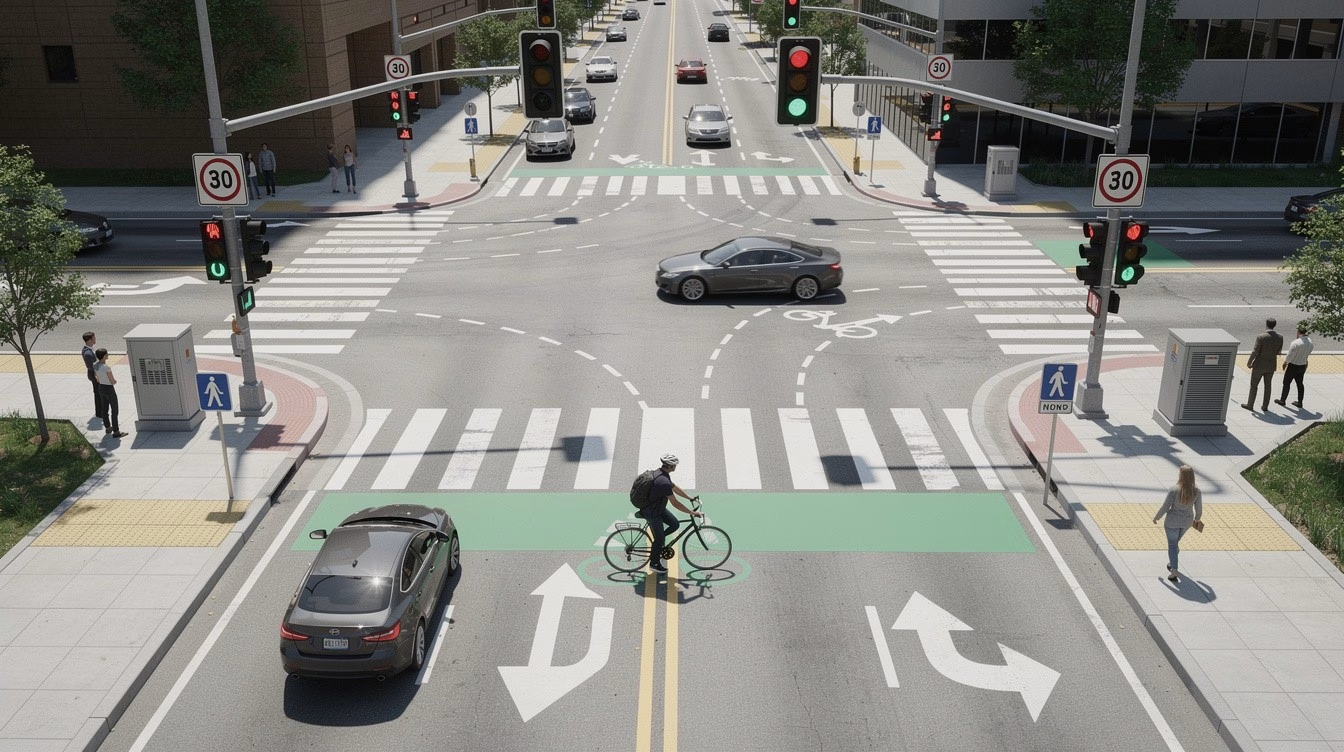
Traffic lights, stop signs, and yield signs form the backbone of intersection safety, yet many drivers misunderstand how to respond to each one. At traffic lights, a solid green light allows you to proceed only if you have enough space to cross the intersection safely and you yield to any pedestrians or bicyclists in your path. A yellow light signals that the light is about to turn red, so you should stop safely if possible, or proceed through with caution if stopping isn’t feasible. A flashing red light requires a complete stop, and you may only proceed when it’s safe, treating it exactly like a stop sign. You can turn right on a red light unless a No Turn on Red sign is posted, but only after stopping and yielding to pedestrians and other traffic. Red arrows mean stop completely, and you cannot turn in that direction until a green signal or green arrow appears. When a traffic light malfunctions entirely, treat the intersection as if all four directions have stop signs and proceed with extreme caution. The California DMV Driver Handbook confirms these rules, and they apply consistently across most states.
Stop Sign Right-of-Way Hierarchy
Stop sign intersections operate on a different principle: the vehicle that arrives first at the intersection has the right-of-way, regardless of direction. If two vehicles arrive simultaneously, you must yield to the vehicle on your right. When three vehicles arrive at the same time, the car furthest to the left yields until the two vehicles to the right have passed. In head-to-head scenarios where one vehicle goes straight and another turns, straight-through traffic takes priority. If both vehicles turn in the same direction, you can proceed simultaneously since your paths won’t cross. When one vehicle turns right and another turns left at the same time, the right-turning vehicle goes first.
Uncontrolled Intersections and Yield Signs
At uncontrolled intersections without signs or signals, the same right-of-way rule applies: the driver on the left yields to the driver on the right. Yield signs differ from stop signs because they require you to slow down, prepare to stop if necessary, and give the right of way to other traffic, but don’t require a complete stop if the way is clear. The critical mistake most drivers make is not fully stopping at stop signs before checking for cross-traffic-this hesitation accounts for significant accident statistics at these intersections. Understanding these distinctions prepares you to handle the hazards that emerge when drivers fail to follow these rules, which we’ll examine next.
Common Intersection Hazards and How to Avoid Them
Left-Turn Collisions and Blind Spots
Left-turn collisions remain the deadliest intersection crashes, with roughly one-quarter of traffic fatalities and about one-half of all traffic injuries in the United States attributed to intersections each year. The problem stems from a fundamental misjudgment: drivers turning left often underestimate the speed of oncoming traffic or fail to account for vehicles hidden in their blind spots. When you turn left on a green light, oncoming traffic has no warning that you cross their path, and even a slight miscalculation in timing creates a head-on or T-bone collision. Position your vehicle so you can see clearly around stopped traffic in the intersection before you commit to the turn. Never creep into the intersection assuming you will have time to complete your turn once the light changes. Instead, wait in your lane until the light turns red for oncoming traffic or until you have a protected left-turn arrow. Motorcyclists and smaller vehicles hide easily in blind spots, so scan your mirrors and shoulder check twice before you turn.
Red Light Running and Aggressive Driving
Red light running compounds left-turn dangers exponentially. Drivers who race through intersections after the light turns red cause crashes at speeds that transform survivable accidents into fatal ones. Red lights mean stop completely, not a rolling stop, because running them raises the risk of high-speed side-impact crashes that cause severe injuries and deaths. Aggressive drivers who tailgate through intersections, honk at pedestrians, or swerve between lanes create unpredictable situations that other drivers cannot anticipate or avoid. Your job at every intersection is to assume the worst about other drivers’ intentions and reactions. A defensive mindset protects you when someone else makes a dangerous choice.
Pedestrian and Cyclist Visibility Issues
Pedestrians and cyclists present visibility challenges that require constant vigilance. Pedestrians wearing dark clothing at night become nearly invisible until they enter your direct line of travel, and cyclists often assume drivers see them even when they occupy blind spots or ride without lights. Illinois law requires cyclists to stop and yield at four-way stops just like vehicles, yet many cyclists ignore this rule entirely, creating surprise encounters at intersections. The California DMV Driver Handbook emphasizes that pedestrians have the right of way in both marked and unmarked crosswalks, but this legal protection means nothing if you fail to see them in time to stop.
When you turn right, check your right mirror and blind spot specifically for pedestrians and cyclists before you execute the turn. Eye contact with crossing pedestrians serves as your confirmation that they see you and that you see them, reducing near-miss incidents substantially. Avoid honking at pedestrians or cyclists to move faster, as this startles them and sometimes causes them to freeze or move unpredictably into your path. At night, reduce your speed through intersections and increase your scanning time because your headlights cannot illuminate pedestrians until they are much closer than in daylight. The shared responsibility for safety means you cannot rely on pedestrians or cyclists to follow rules or to be visible-you must actively protect them through your own defensive actions.
How to Read Intersections Before They Become Dangerous
Scan Early and Scan Thoroughly
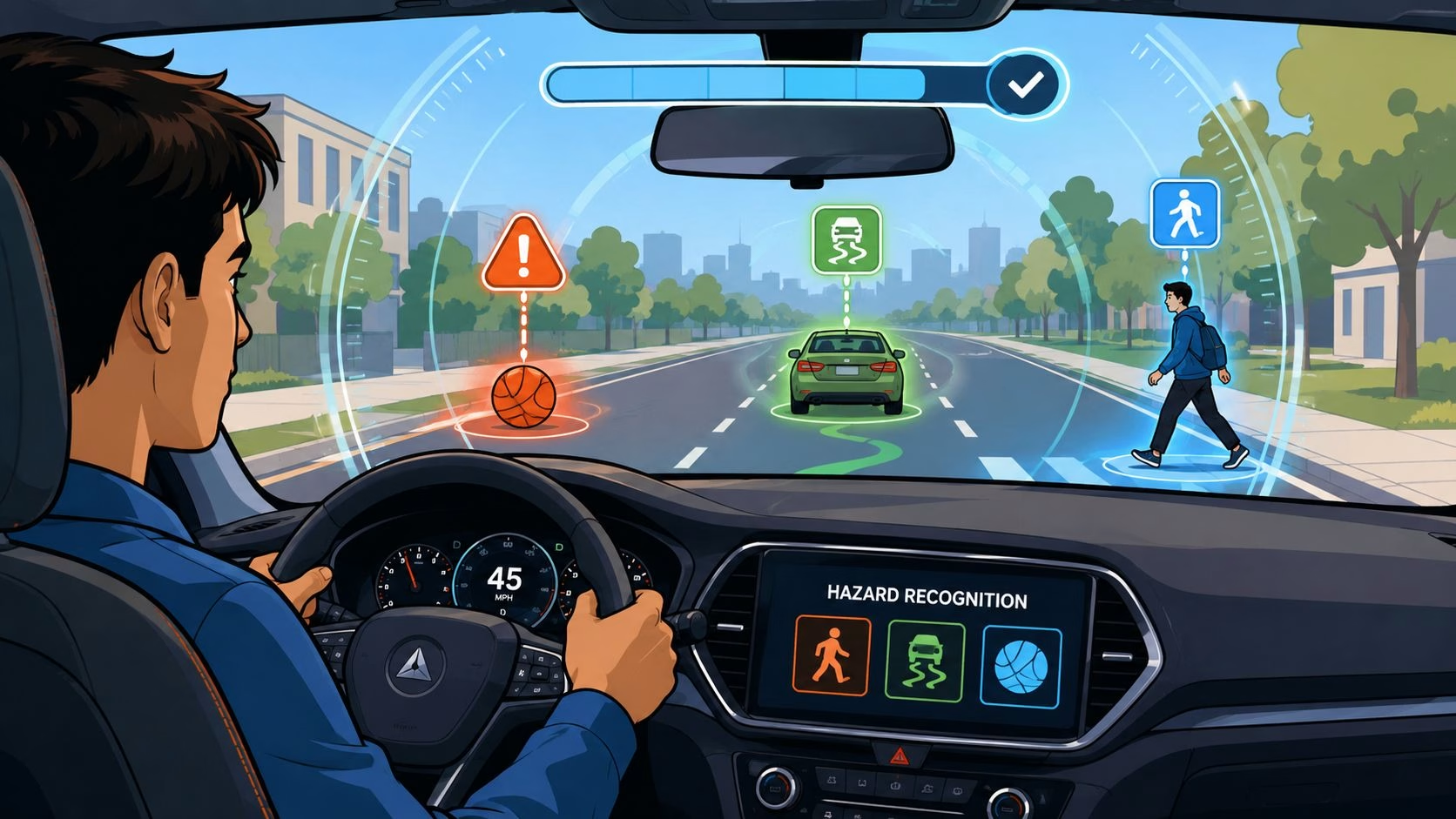
Effective intersection scanning requires you to look far beyond what sits directly in front of you. Most drivers focus only on the traffic light or the vehicle ahead, missing the motorcyclist in their blind spot, the pedestrian stepping off the curb, or the aggressive driver accelerating through a yellow light.
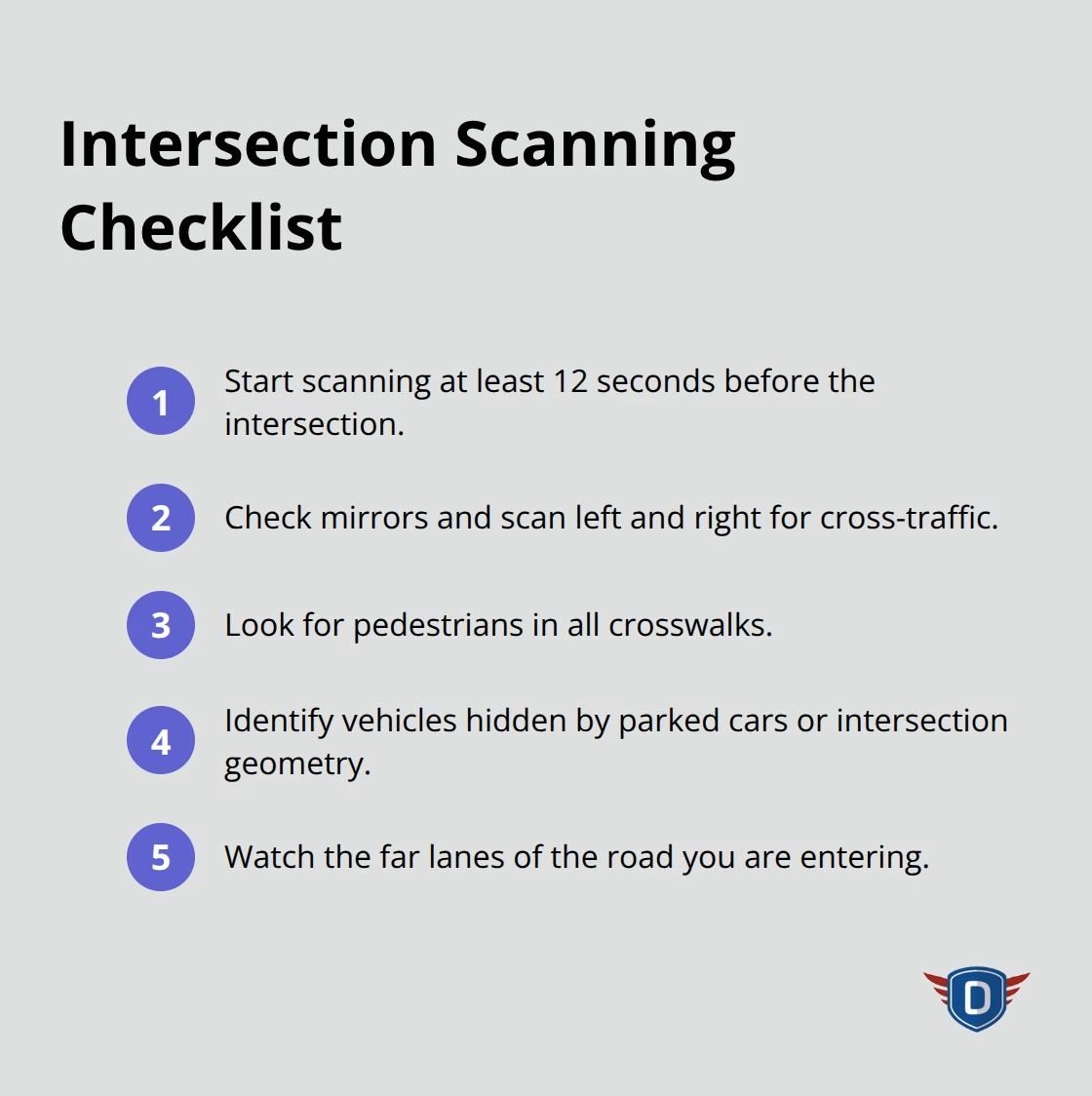
Start scanning at least 12 seconds before you reach an intersection, which translates to roughly one city block at normal speeds. Check your mirrors, glance left and right for cross-traffic, look for pedestrians in all crosswalks, and identify any vehicles that might hide behind parked cars or the intersection geometry itself. Pay specific attention to the far lanes of the road you’re entering because drivers there operate outside your primary field of vision.
Anticipate Red Light Runners
When you approach an intersection controlled by a traffic light, assume that at least one driver will run the red light. 939 people were killed in red-light running crashes in 2017, a 10-year high at that time. Pause for one full second after your light turns green before accelerating, and scan the cross-traffic one more time to confirm that oncoming vehicles have actually stopped. This single habit eliminates most left-turn collision risk because you catch the driver who ignores their red light before you commit to crossing their path.
Position Your Vehicle for Maximum Visibility
Positioning your vehicle correctly at an intersection directly impacts your ability to see and be seen. At a stop sign, pull forward slowly until you can see around obstacles like parked vehicles or landscaping, stopping only when you have a clear view of all approaching traffic. Never rely on gaps in traffic that appear from a distance because vehicles can accelerate or decelerate unexpectedly. When turning left, position your vehicle in the center of the intersection only if you have a protected arrow or if oncoming traffic has completely cleared. Otherwise, stay in your lane and wait.
Signal Intent and Manage Speed
Use your turn signal at least 100 feet before the intersection so other drivers know your intention, but understand that signaling does not give you the right of way. Aggressive drivers sometimes accelerate when they see a turn signal, creating a dangerous game of chicken that you cannot win. Reduce your speed to 15 to 20 miles per hour as you enter any intersection, even when you have the light, because this gives you time to react if another driver makes a sudden move.
Make Eye Contact to Confirm Safety
Eye contact with pedestrians, cyclists, and drivers at adjacent stop signs provides critical confirmation that they see you. If a pedestrian looks directly at you before crossing, they have acknowledged your presence. If they avoid your gaze or appear distracted by their phone, assume they will step into your path anyway and prepare to stop. This approach transforms intersections from places where accidents happen into spaces where you maintain complete control.
Final Thoughts
Mastering intersection safety rules transforms how you drive and protects everyone on the road. The principles we’ve covered-understanding traffic control devices, recognizing hazards, scanning thoroughly, and communicating through signals and eye contact-form the foundation of safe intersection navigation. When you apply these techniques consistently, you reduce your accident risk dramatically, and the statistics confirm this: drivers who follow proper right-of-way rules, anticipate red light runners, and position their vehicles strategically avoid the collisions that account for roughly 50% of all traffic crashes.
Safe intersection navigation requires you to develop habits that protect you and everyone sharing the road. Each time you pause before accelerating on a green light, each time you make eye contact with a pedestrian, and each time you scan your blind spots before turning, you actively prevent crashes. These small actions compound into a driving record free from accidents and violations, and they demonstrate that intersection safety rules work when drivers commit to them.
At floridadetscourse.com, we understand that confidence at intersections comes from proper education and practice. Our comprehensive driver education programs teach you the defensive techniques and traffic law knowledge needed to navigate crossroads safely, whether you’re a new driver building foundational skills or an experienced driver seeking to refresh your knowledge. Visit floridadetscourse.com today to start your journey toward confident, safe intersection navigation.