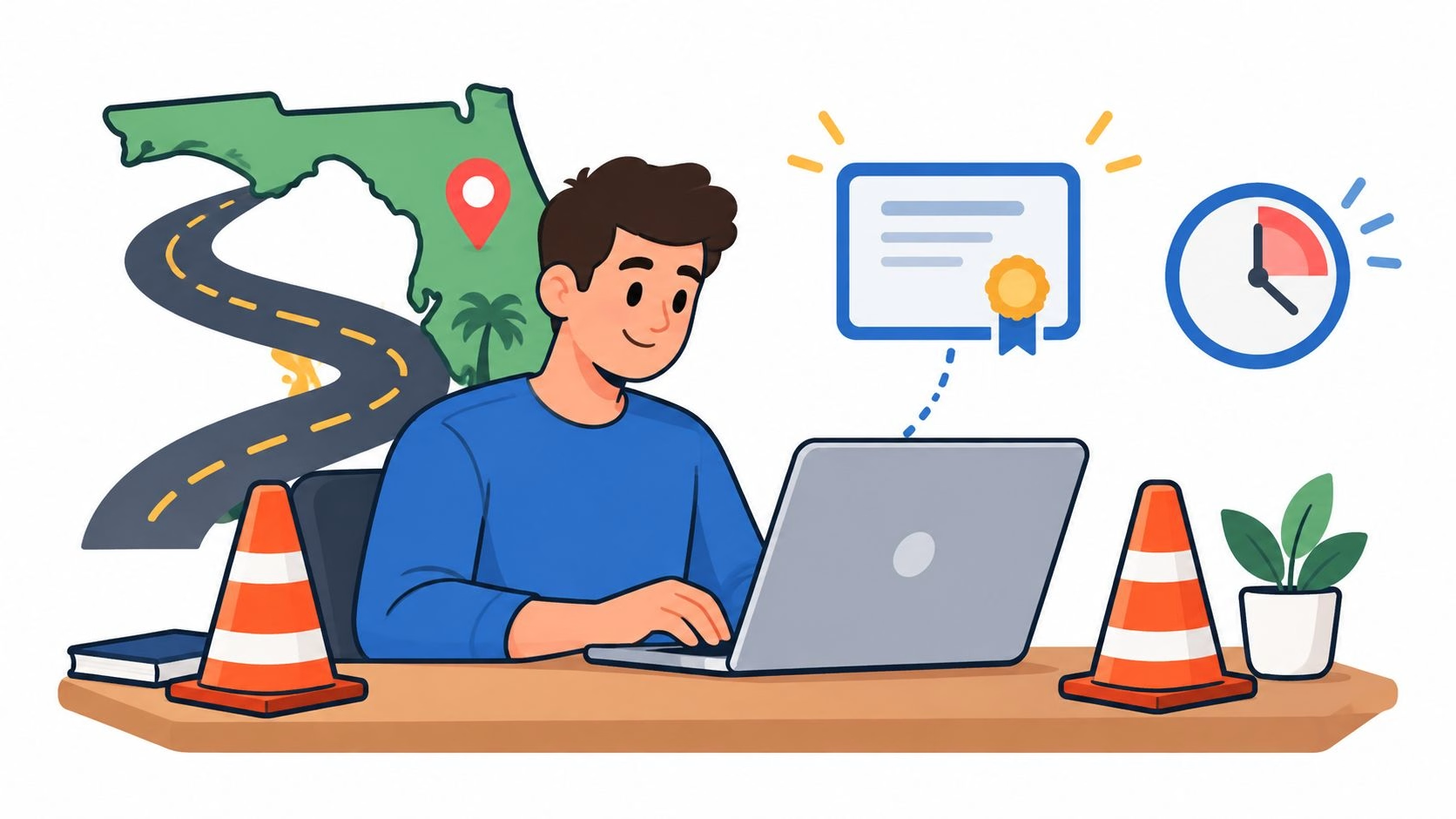

If you were told to complete a driving course after a ticket, court case, or license issue, your first question is usually simple: what is a BDI course? BDI stands for Basic Driver Improvement. It is a state-approved course designed to review safe driving habits, traffic laws, decision-making, and risk awareness, often for drivers who need to meet a legal, court, DMV, or insurance-related requirement.
For many drivers, a BDI course is not something they plan for. It comes up after a citation, as part of a compliance step, or when they want to protect their driving record. That is why clear information matters. You want to know what the course is, whether you need it, how long it takes, and whether taking it online will count.
What is a BDI course?
A BDI course is a Basic Driver Improvement course. It is a traffic safety program that teaches defensive driving principles, reviews state traffic rules, and helps drivers reduce risky behavior behind the wheel.
In practical terms, the course is meant to improve how you drive and how you respond to everyday traffic situations. It may also serve a formal purpose, such as satisfying a court order, meeting a DMV requirement, qualifying for a benefit related to a citation, or fulfilling a condition tied to your driving status.
The exact rules depend on your state and the reason you are taking the course. In some places, BDI is commonly tied to ticket dismissal or point reduction. In others, it may be required after a suspended license, a court referral, or a driver improvement order. That is one reason drivers should always confirm the purpose of the course before enrolling.
Who usually needs a BDI course?
The answer depends on the situation. A BDI course is often required or recommended for drivers dealing with a traffic violation, a court directive, or a licensing issue. Some people take it voluntarily, while others must complete it by a deadline.
A driver may need a BDI course after receiving a traffic ticket and choosing an option that helps avoid points or maintain a cleaner driving record. Another driver may be ordered by a court or motor vehicle agency to complete the course after multiple violations or a more serious traffic matter. In some cases, a BDI course is part of getting driving privileges reinstated.
There are also drivers who take a course like this because they want a structured refresher. That is less common when people ask what is a BDI course, but it still matters. A formal review of defensive driving can be useful for drivers who want to rebuild confidence or correct habits before a small issue becomes a larger one.
What does a BDI course cover?
Most BDI courses focus on the core behaviors that affect crash risk and legal compliance. The goal is not just to repeat traffic laws, but to connect those laws to real driving decisions.
Course topics often include right-of-way rules, speed management, following distance, lane changes, intersections, impaired driving risks, distracted driving, and how attitude affects safety. Many programs also cover the consequences of violations, including points, fines, license suspension, insurance effects, and preventable crashes.
A good course explains both the rule and the reason behind it. For example, it does not just tell you to leave space between vehicles. It explains how reaction time, road conditions, and speed change the stopping distance you actually need. That makes the material more useful, especially for drivers trying to avoid repeat violations.
Is a BDI course the same in every state?
No. The term BDI is used differently depending on the state. Approval rules, course length, reporting requirements, and eligibility can all vary.
That is where some confusion starts. One state may officially use the term Basic Driver Improvement, while another state offers a similar defensive driving or traffic school course under a different name. The purpose may look similar, but the details are not always interchangeable.
If you need a course for court, DMV, or ticket-related reasons, the safest approach is to verify three things before you register: whether the provider is approved in your state, whether the course fits your exact requirement, and whether completion will be reported or documented in the way your court or agency expects.
How long does a BDI course take?
Course length depends on state rules and the reason for enrollment. Some are relatively short, while others are set for a specific number of hours by law or regulation.
If the course is state-approved, the provider usually cannot shorten it just for convenience. That can be frustrating for drivers who want to finish quickly, but it is also part of what gives the course its credibility. Approved driver education programs are built to meet specific standards, not just offer general safety tips.
For online students, the practical benefit is flexibility. Even when a course has a required duration, many approved providers let you complete it at your own pace, log in and out as needed, and use a phone, tablet, or computer. For people balancing work, family, or court deadlines, that matters.
Can you take a BDI course online?
Often, yes. Many drivers complete their BDI requirement online through an approved provider. Online delivery is especially helpful for people who need a convenient option without traveling to a classroom.
That said, online eligibility depends on state rules and the reason you are taking the course. Some courts and agencies accept online completion without any issue. Others may have specific provider, format, or reporting requirements. If your completion is tied to a legal deadline, it is smart to confirm those details first instead of assuming any course will work.
When the online course is approved, the benefits are straightforward. You can start when your schedule allows, move through the material at a reasonable pace, and complete a legitimate requirement from home. For many drivers, that is the difference between getting the course done on time and falling behind.
What should you look for in a BDI course provider?
Approval comes first. If the course is not recognized for your purpose, convenience does not help.
After that, most drivers care about the same things: clear pricing, easy access on mobile devices, flexible scheduling, and dependable customer support. If you are taking the course because of a court date, reinstatement issue, or citation deadline, support matters more than people expect. Questions tend to come up when you are already under time pressure.
A reliable provider should also make the enrollment process simple. You should be able to see what the course is for, who it is approved for, how completion works, and what to expect before paying. Transparent course information helps prevent the most common problem drivers face: signing up for the wrong program.
What is a BDI course supposed to help you achieve?
At the most basic level, a BDI course helps you meet a requirement and become a safer driver. Those two outcomes usually go together, even if your first reason for enrolling is compliance.
For some people, success means satisfying a court or DMV order by the deadline. For others, it means handling a citation in the least damaging way available under state rules. And for many drivers, the long-term value is practical. A better understanding of traffic laws and defensive driving can reduce repeat mistakes, lower risk on the road, and help protect your record.
There is also a mindset shift that matters. Many traffic violations are not caused by a lack of basic driving skill. They come from distraction, impatience, poor judgment, or underestimating risk. A strong BDI course addresses that side of driving too.
FAQ
Is a BDI course mandatory?
Sometimes. It can be mandatory if a court, DMV, or state agency requires it.
In other cases, it may be optional but still beneficial for a traffic-related matter.
Does BDI mean Basic Driver Improvement?
Yes. BDI stands for Basic Driver Improvement.
It is a traffic safety and driver education course focused on safer, more responsible driving.
Will a BDI course remove points from my license?
It depends on your state and your case. Some states allow approved courses to help with point-related outcomes, while others use different rules.
Always verify eligibility before enrolling.
Can I take a BDI course on my phone?
Often, yes. Many online providers offer mobile-friendly courses.
You should still confirm that the course is approved for your requirement.
How do I know if the course is approved?
Check the provider’s approval information and match it to your state and reason for taking the course.
If your course is court-ordered, confirm with the court if needed.
Is BDI the same as traffic school?
Not always. Sometimes the terms are used similarly, but they are not always identical.
The course name, purpose, and approval rules can vary by state.
If you need a BDI course, the best next step is not to guess. Confirm your requirement, choose an approved provider, and make sure the course fits your exact situation. A clear, legitimate online option can save time, reduce stress, and help you move forward with confidence.