New drivers face a steep learning curve when it comes to traffic laws. The rules of the road aren’t just suggestions-they’re legal requirements that protect you and everyone around you.
At floridadetscourse.com, we’ve seen firsthand how understanding traffic laws transforms new drivers into confident, safe operators. This guide breaks down what you need to know to stay legal and avoid costly violations.
What You Must Know About Right-of-Way and Speed
Right-of-Way Rules at Intersections
Right-of-way rules determine who moves first at intersections, and getting this wrong costs lives. Each year roughly one�quarter of traffic fatalities and about one�half of all traffic injuries in the United States are attributed to intersections. The fundamental rule is simple: yield to traffic already in the intersection. When two vehicles arrive simultaneously from perpendicular directions, the driver on the left yields to the driver on the right. Left-turning vehicles must always yield to straight-moving and right-turning traffic, regardless of signal color.
Vehicles entering from driveways, alleys, or private roads must stop completely and yield to all roadway traffic and pedestrians. Pedestrians in marked crosswalks have absolute right-of-way-you cannot turn across a crosswalk without yielding first. Emergency vehicles with activated lights receive immediate right-of-way; pull to the right edge and stop. Many states now enforce Move Over Laws that require you to slow down and change lanes when you pass stopped emergency or hazard vehicles on highways.
Failing to yield causes serious crashes and results in immediate points on your license plus hefty fines. This single mistake can spike your insurance rates for years.
Speed Limits and Following Distance
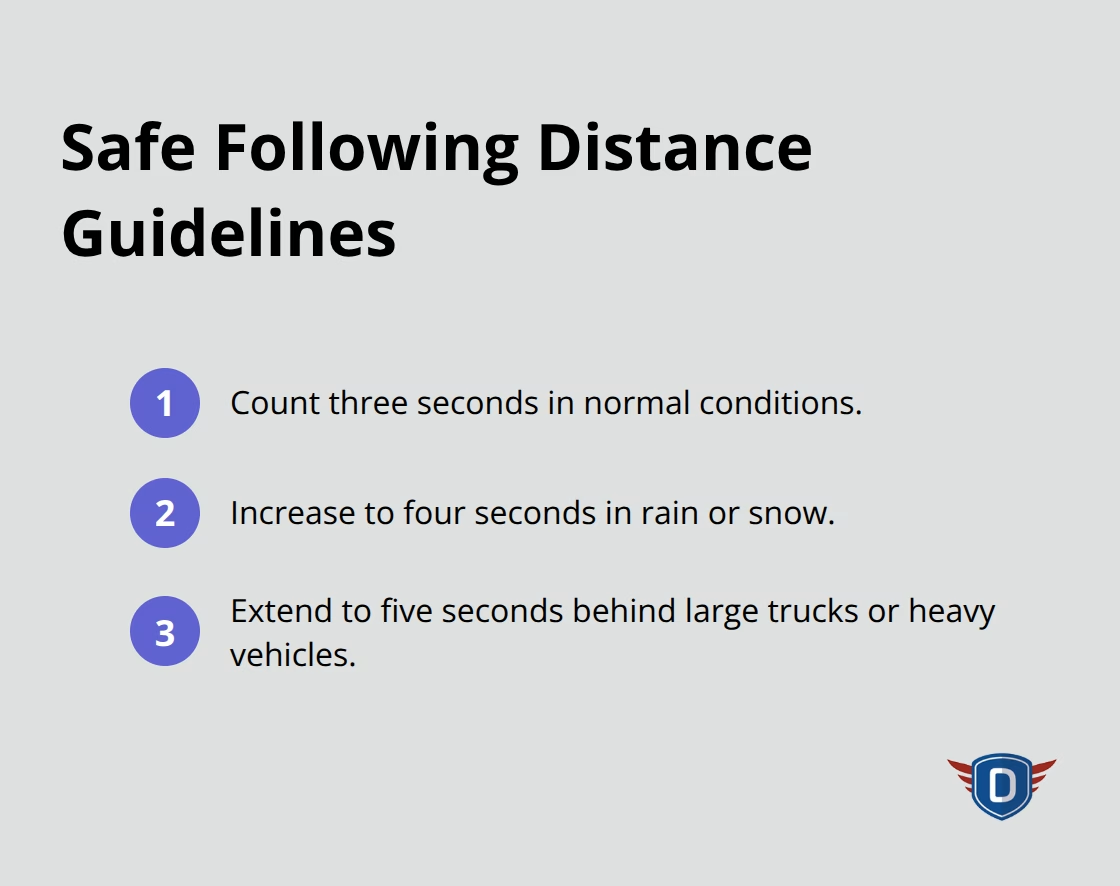
Speed limits exist because physics does not negotiate. Speeding increases both crash probability and injury severity, which is why the National Highway Traffic Safety Administration emphasizes speed compliance above almost everything else. The three-second rule for following distance serves as your baseline-count three seconds between the rear of the car ahead and your front bumper. In rain or snow, increase this to four seconds minimum. When you follow large trucks or heavy vehicles, extend to five seconds because they require more stopping distance.
Tailgating is cited as a moving violation in most states and earns points that affect insurance rates. You must adjust your speed for weather, traffic density, and road conditions even when you stay below posted limits. Driving 10 mph over the limit in a 35 mph school zone carries fines starting at $150 and can result in license suspension for new drivers under 18.
Traffic Signals and Road Signs
Traffic signals demand absolute respect: red means stop completely, yellow means prepare to stop (not accelerate), and green means you proceed only if the intersection is clear. Road signs convey legal requirements, not suggestions. Stop signs require a full stop at the line; rolling stops are violations. Yield signs mean you slow down and give right-of-way. One-way, do-not-enter, and no-turn signs are absolute prohibitions.
Ignoring any of these costs points, fines, and increased insurance premiums that compound over years. Understanding these rules is the foundation for safe driving, but knowing the law is only half the battle. The next section explores what happens when drivers violate these rules and how violations affect your driving record, insurance, and legal standing.
What Violations Cost You
Florida’s Point System and License Suspension
Traffic violations in Florida operate on a point system that directly attacks your wallet and driving privileges. The Florida Department of Highway Safety and Motor Vehicles assigns points based on violation severity, and accumulating points triggers automatic consequences. A single moving violation typically adds 3 to 4 points to your record.
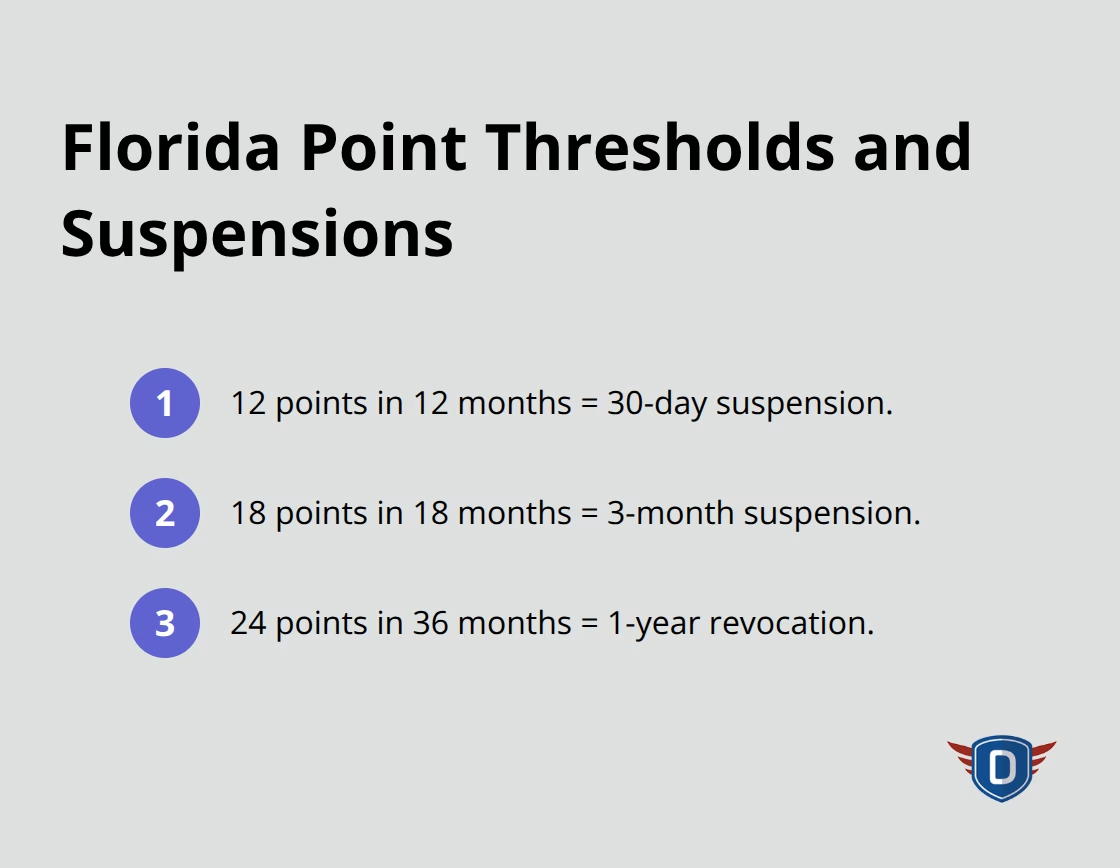
Accumulate 12 points within 12 months, and the state suspends your license for 30 days. Hit 18 points in 18 months, and you face a 3-month suspension. Reach 24 points in 36 months, and your license gets revoked for a full year.
This escalation system means your first violation sets you on a dangerous trajectory if you’re not careful.
Insurance Rate Increases After Violations
Insurance companies monitor your driving record obsessively, and violations directly translate to rate increases that dwarf the original fine. A single moving violation can raise your premiums for three years. If you get two or more speeding tickets in three years, you can likely count on an insurance rate increase.
Hit four violations, and insurers either drop you entirely or charge rates so high that coverage becomes financially impossible. The National Safety Council data shows that drivers who complete defensive driving courses reduce their crash risk and often qualify for 5 to 10 percent insurance discounts, but no discount erases a violation’s impact.
Financial Penalties and Fines
Financial penalties compound the damage from violations. Speeding fines range from $130 to $500 depending on how far over the limit you drove. Reckless driving carries fines of $100 to $1,000 plus potential jail time. Failing to yield at an intersection costs $130 to $500 and adds points that haunt your record for years.
Court Requirements and Traffic School Options
Court requirements depend on violation type and your driving history. Drivers cited for serious violations must appear in court, where judges can impose additional penalties beyond fines and points. First-time violators often receive options like traffic school completion to reduce points, but subsequent violations eliminate this mercy.
Florida-approved traffic school programs satisfy court requirements and help drivers avoid license suspension while demonstrating responsibility to insurance companies. The Basic Driver Improvement course takes just 4 hours to complete and removes 4 points from your record when approved by the court, directly preventing the suspension threshold from approaching. Completing this course signals to your insurer that you’re serious about safer driving, which can soften the insurance rate increase.
The Cost of Ignoring Violations
Drivers who ignore these opportunities and accumulate violations face the worst outcome: license revocation, which requires expensive reinstatement fees, mandatory driving tests, and months without legal driving privileges. The difference between completing traffic school and ignoring the violation often amounts to thousands of dollars in saved insurance premiums over three years. Understanding what violations cost you is only part of the equation-the real question becomes how to avoid them in the first place.
How to Stop Violations Before They Start
Build Defensive Driving Habits
The gap between understanding traffic laws and actually following them on the road is where most new drivers fail. Knowing that speeding increases crash risk doesn’t stop you from hitting 45 in a 35 mph zone when you’re running late. Knowing that tailgating is illegal doesn’t prevent you from creeping up on the car ahead when traffic frustrates you. The only way to avoid violations is to build driving habits that make safe choices automatic, not optional.
Defensive driving means staying mentally ahead of the road by scanning for hazards at least 12 seconds ahead. Adjust your speed before conditions demand it, and position your vehicle to give yourself escape routes. When you spot a yellow light, your first instinct should be to brake and prepare to stop, not accelerate through. When you approach an intersection, check for cross-traffic and pedestrians before your vehicle enters.
The National Highway Traffic Safety Administration found that drivers who actively practice these techniques reduce their crash involvement by measurable percentages because they react to what might happen, not what already happened.
Eliminate Distracted Driving
Distracted driving kills 3,208 people annually according to NHTSA data, and the single worst distraction is texting, which pulls your eyes off the road for an average of 5 seconds. At 55 mph, that’s the length of a football field driven blind.
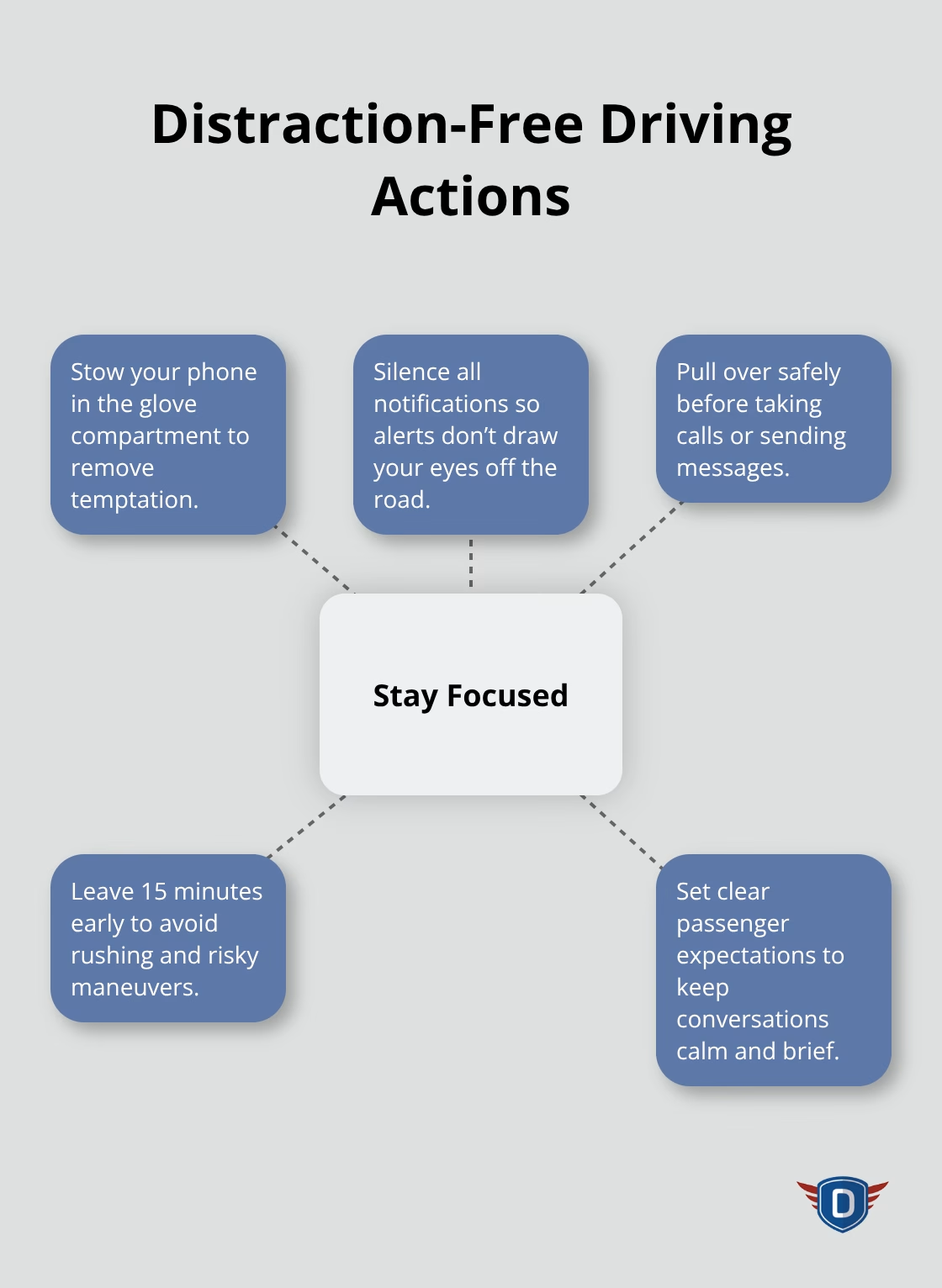
Put your phone in the glove compartment, not the cup holder. Silence notifications entirely, not just mute them.
If you must take a call, pull over completely. Your passengers matter too-aggressive drivers often start as impatient drivers, and impatience comes from feeling rushed. Leave 15 minutes earlier than you think you need to. This single change eliminates the pressure that leads to speeding, tailgating, and aggressive lane changes.
Control Aggressive Driving Impulses
Aggressive driving and road rage start with the belief that other drivers owe you something. They don’t. A driver who cuts you off made a mistake, not a personal attack. Honking your horn, flashing lights, or blocking another vehicle’s path puts you on the wrong side of the law and transforms a minor annoyance into a criminal incident.
Aggressive driving in Florida can result in fines up to $1,000, jail time of up to six months, and four points added to your driver’s license. Your goal on the road isn’t to teach other drivers a lesson; it’s to get where you’re going safely. The Aggressive Driver Course offered through Florida-approved traffic school programs teaches drivers how attitude and behavior directly affect decision-making behind the wheel, helping you recognize when frustration is taking over before it becomes dangerous.
Stay Focused on Safe Driving
The simplest way to stay violation-free is to accept that driving is a task requiring your complete attention, every single time you get behind the wheel. No destination is worth a license suspension, no slight is worth criminal charges, and no time savings is worth a crash.
Final Thoughts
Understanding traffic laws transforms new drivers from passive rule-followers into confident operators who make safe decisions automatically. The knowledge you’ve built through this guide-right-of-way rules, speed limits, violation consequences, and defensive techniques-equips you to stay legal and protect yourself on Florida roads. Habits, not knowledge alone, prevent violations, and the drivers who avoid points, fines, and license suspensions practice defensive driving consistently, eliminate distractions completely, and refuse to let frustration override judgment.
We at floridadetscourse.com recognize that new drivers need practical instruction connecting traffic laws to real-world driving situations. Our Florida-approved traffic school programs teach you how attitude and behavior directly affect decision-making behind the wheel, whether you complete the Basic Driver Improvement course to remove points or take the Aggressive Driver Course to address behavioral patterns. Each course focuses on the skills and mindset that stop violations before they happen.
If you’ve received a violation, enroll in a Florida-approved traffic school course immediately to reduce points and demonstrate responsibility to your insurance company. If you haven’t violated yet, take a course anyway-the defensive driving techniques you’ll learn reduce crash risk measurably and often qualify you for insurance discounts. Ongoing driver education isn’t punishment; it’s the fastest path to becoming the safe, confident driver you want to be.