Every year, over 42,000 people die in traffic crashes in the United States alone. Most of these deaths are preventable through proper road safety education basics.
At floridadetscourse.com, we believe that structured driver education transforms how people approach the road. The habits you build today determine whether you arrive home safely tomorrow.
Why Road Safety Education Reduces Crashes
The Stark Reality of Traffic Deaths
Every year, over 42,000 people die in traffic crashes in the United States. The National Highway Traffic Safety Administration reports that speed contributes to roughly 26 percent of all fatal crashes, while weather-related accidents kill nearly 5,000 people annually and injure over 418,000. Teen drivers face the harshest reality-their crash risk is three times higher per mile than adult drivers, and in Georgia alone, teen drivers accounted for 13 percent of all fatal car accidents in 2020.
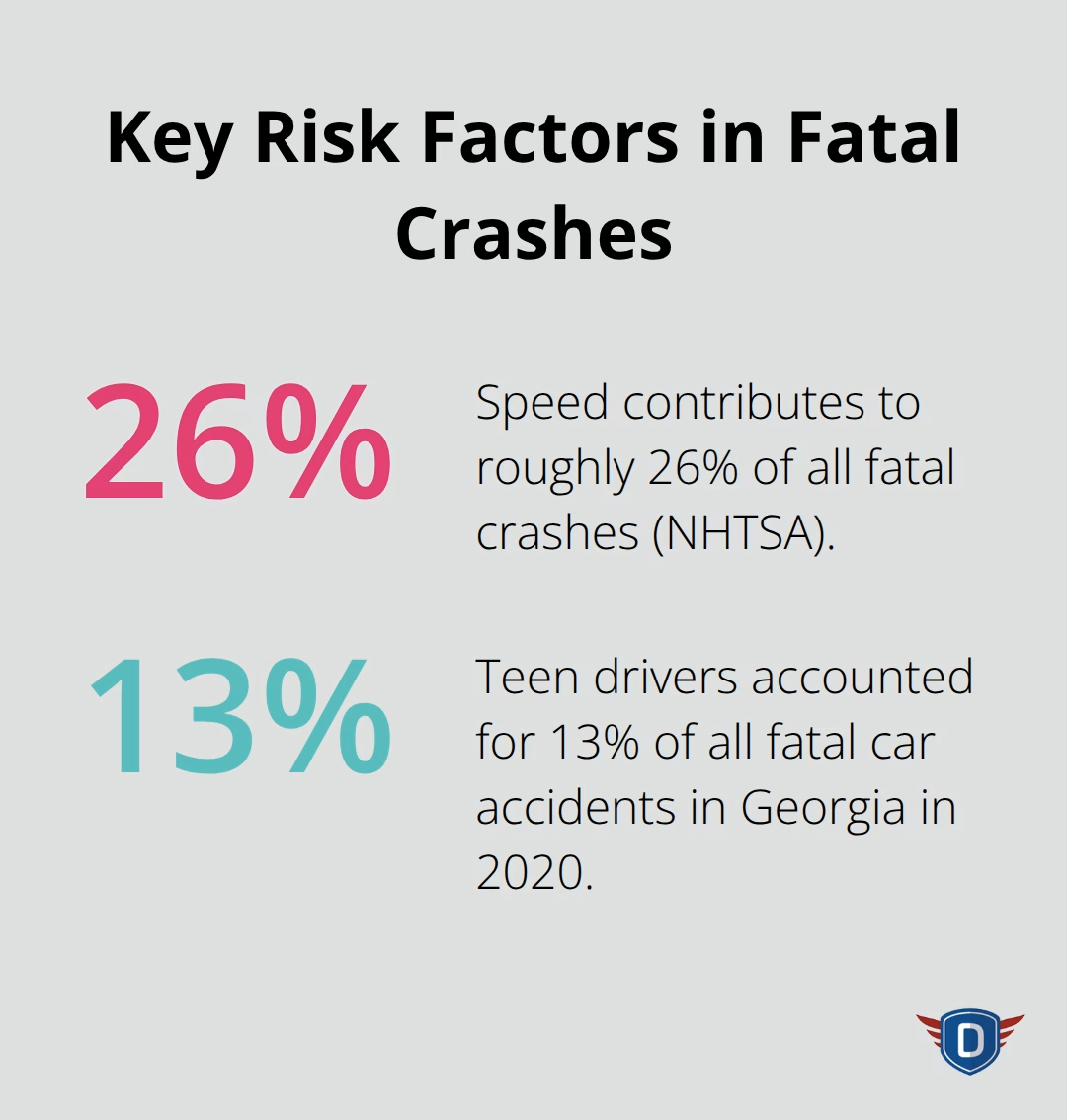
These statistics represent preventable deaths that structured road safety education directly addresses.
How Professional Instruction Changes Outcomes
Drivers who receive professional instruction are about 16 percent less likely to crash than those who learn informally. This gap exists because formal education teaches decision-making frameworks that self-taught drivers never develop. When you understand why the three-second following distance exists, you apply it consistently. When you recognize that yellow lights last only 3 to 6 seconds depending on intersection size, you stop attempting risky light runs that cost $150 to $500 in tickets and far worse in crashes.
Building Habits That Protect You for Life
New drivers who complete formal instruction are about 15 percent more likely to use seat belts consistently throughout their entire driving careers-a habit that compounds into decades of protection. Professional driver education programs work because they replace guesswork with concrete rules and deliberate practice. The total economic cost of motor vehicle crashes exceeds $242 billion annually in the United States, yet most of this damage is avoidable through education that teaches hazard recognition, proper mirror scanning every 5 to 8 seconds, and defensive scanning that reduces crash risk by approximately 50 percent.
The Power of Cognitive Training
Cognitive training for drivers significantly reduces collision involvement both per year and per mile driven. A driver trained to scan 12 to 15 seconds ahead on highways and 4 to 6 seconds ahead in city traffic spots trouble before it becomes a crisis. A driver taught progressive braking instead of panic stops maintains steering control and avoids the secondary collisions that kill more people than the initial impact. Education transforms the moment you touch the steering wheel, making safety automatic rather than an afterthought.
Moving Beyond Statistics to Real Skills
The foundation matters most. Formal instruction teaches you to recognize hazards before they develop into emergencies, to apply consistent following distances in all conditions, and to make split-second decisions based on proven principles rather than instinct. These skills separate drivers who arrive home safely from those who don’t. Understanding the mechanics of safe driving-why braking progressively works better than slamming pedals, how mirror positioning eliminates blind spots, what makes a three-second rule necessary-transforms you from someone who follows rules into someone who understands them.
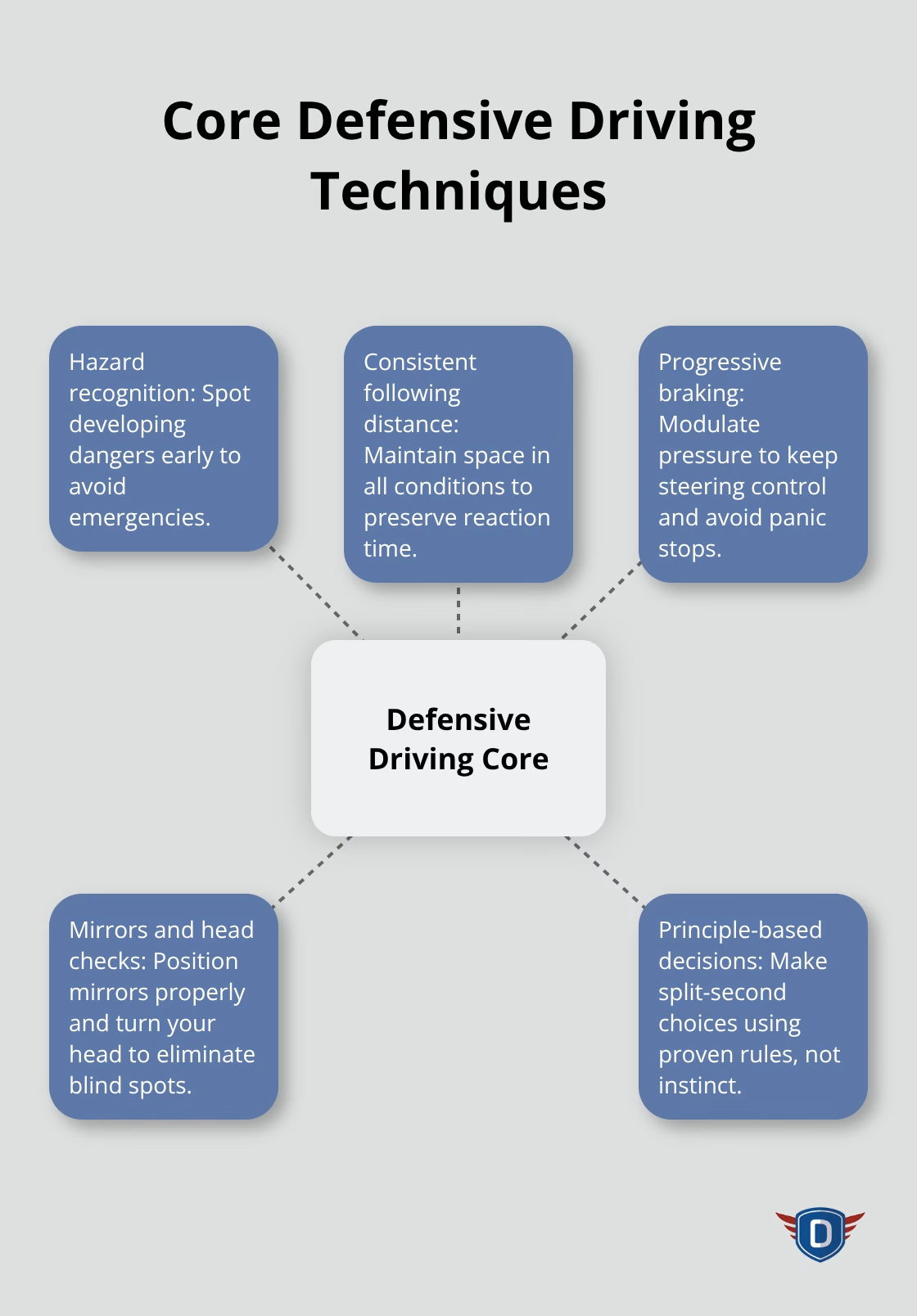
This understanding is what carries forward into every drive you make for the rest of your life.
What Every Driver Must Know About the Road
Scan Ahead to Stop Crashes Before They Start
Defensive driving starts with a single principle: anticipate danger before it arrives. Most drivers react to hazards only after they appear, which costs them precious milliseconds they cannot afford. Active scanning reduces crash risk by roughly 50 percent, yet most drivers scan only 2 to 3 seconds ahead in city traffic when they should look 4 to 6 seconds forward. This means scanning the road ahead of the car directly in front of you, not just the bumper you are following. On highways, extend that vision to 12 to 15 seconds ahead-roughly a quarter mile at 55 mph.
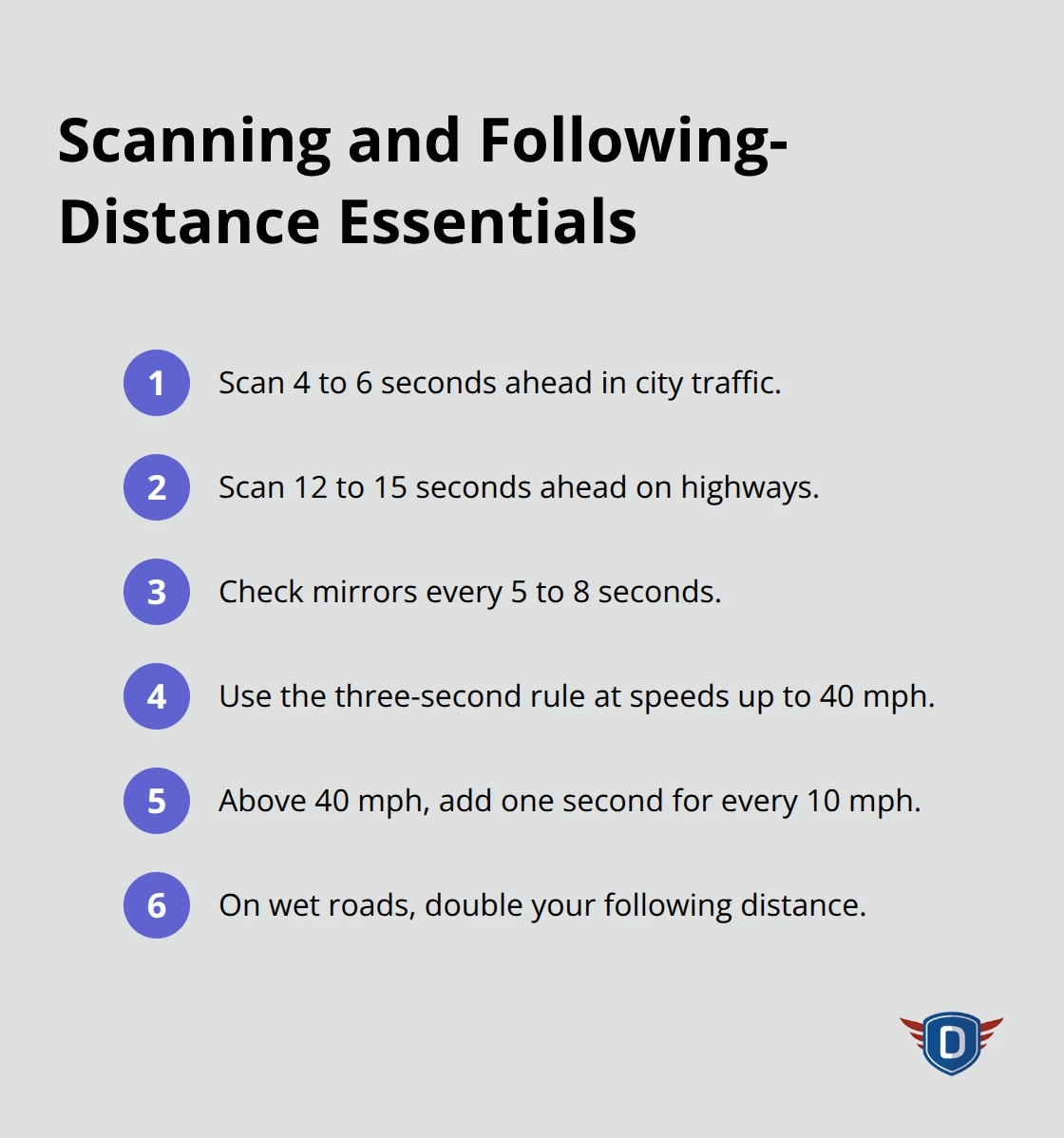
When you spot brake lights lighting up three cars ahead, you already know to ease off the accelerator before the vehicle directly in front of you slows down. This proactive approach eliminates the panic stop that triggers rear-end collisions.
Use Mirrors and Head Checks to Eliminate Blind Spots
Mirror checks every 5 to 8 seconds reveal what happens behind and beside you, but mirrors alone create blind spots extending 10 to 12 feet on each side of your vehicle. Turn your head before every lane change. This habit takes seconds and prevents crashes that mirrors cannot catch. Proper mirror positioning-adjusted so you barely see your car’s edge-reduces blind-spot risk significantly. The effort you invest in this simple action pays dividends across decades of driving.
Master Right-of-Way Rules to Navigate Intersections Safely
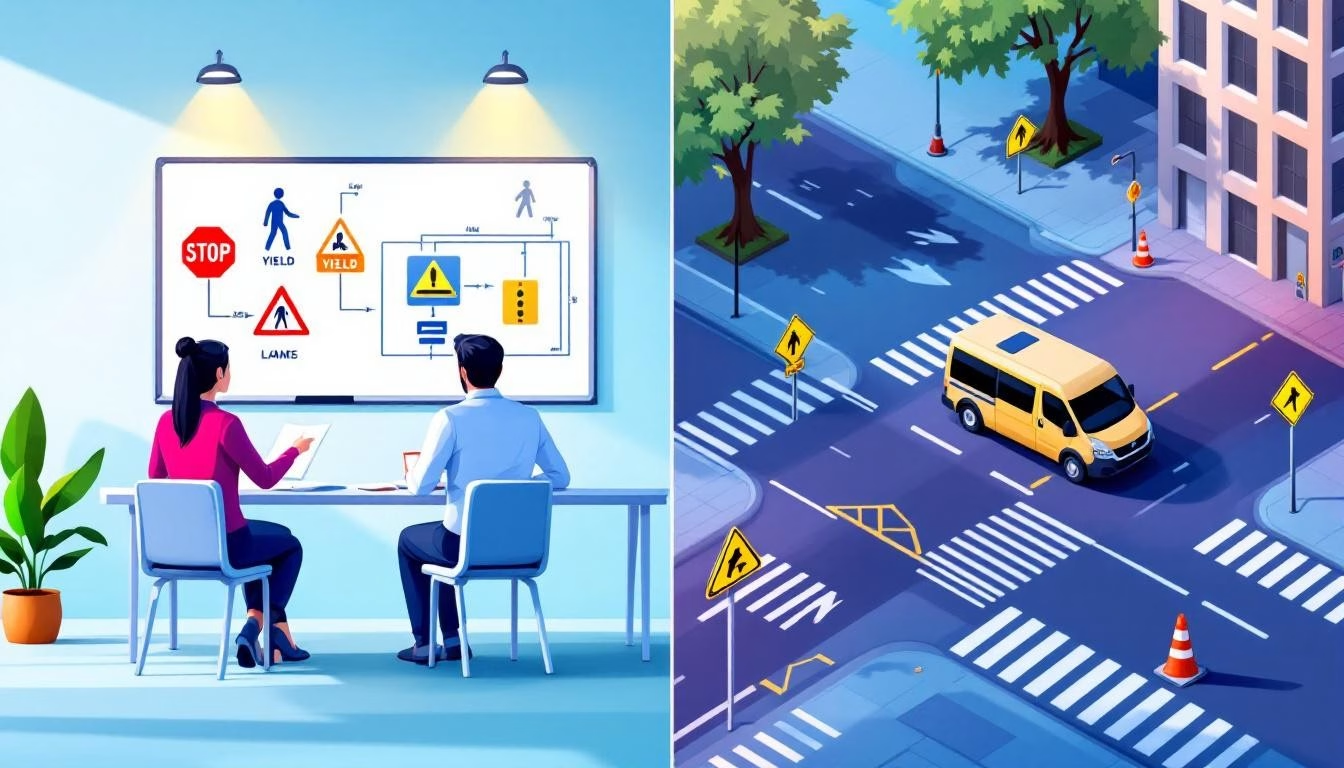
Understanding right-of-way rules prevents the hesitation that causes crashes at intersections. At four-way stops, the driver who arrives first proceeds first; if two vehicles arrive simultaneously, the driver on the right has the right of way. At uncontrolled intersections, yield to traffic on your right. Yellow lights last only 3 to 6 seconds depending on intersection size and speed-attempting to beat a red light costs $150 to $500 in tickets in most states and far worse in collisions. Solid white lines prohibit lane changes while broken white lines allow them; double yellow lines mean no passing in either direction. These markings exist because they prevent specific crash types.
Maintain Safe Following Distance in All Conditions
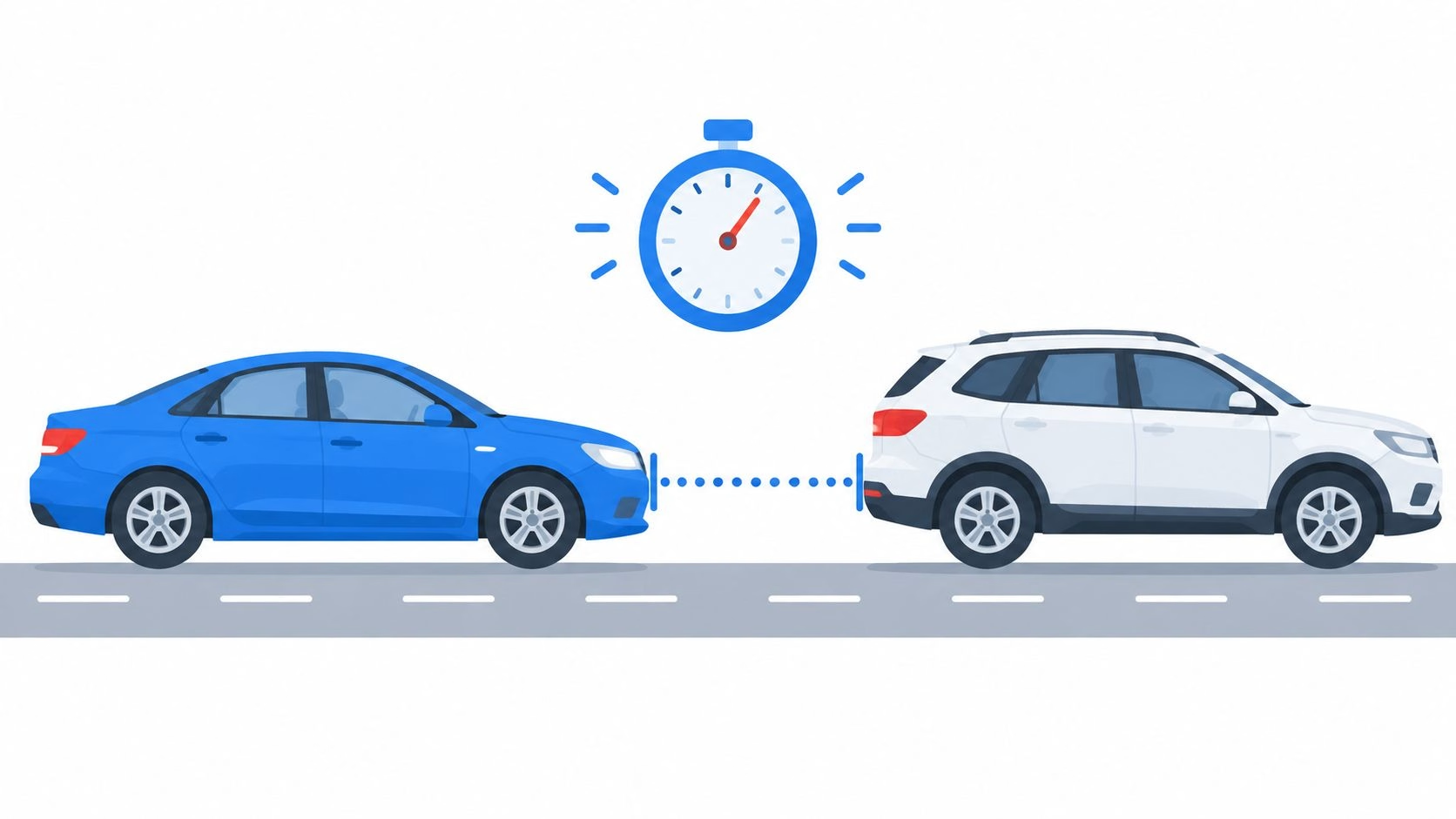
Following distance determines whether you stop safely or become someone’s hood ornament. The three-second rule applies at speeds up to 40 mph: pick a fixed point, watch the vehicle ahead pass it, then count one thousand one, one thousand two, one thousand three. If you reach that point before finishing the count, increase distance. Above 40 mph, add one second for every 10 mph of speed. On wet roads, double your following distance. This math prevents 1.5 seconds to recognize danger plus 1.5 seconds to react from becoming insufficient time to avoid impact.
Recognize Hazards and Control Your Vehicle
Hazard recognition separates safe drivers from those who luck out. Dashboard warning lights communicate your vehicle’s health: check engine light signals emissions issues, oil pressure warning indicates immediate danger requiring you to pull over, temperature gauge should stay near the middle, battery warning signals charging problems, and tire pressure monitoring systems reveal underinflation that reduces grip and increases stopping distance. Check tire pressure monthly to prevent blowouts that cause loss of control. Defensive driving techniques like progressive braking instead of slamming the pedal maintain steering control; anti-lock braking systems help during hard stops, but threshold braking-applying maximum brake pressure without locking wheels-must be practiced in safe environments to understand your vehicle’s limits. Speed contributes to roughly 26 percent of fatal crashes because higher speeds reduce reaction time and increase stopping distance exponentially. A vehicle traveling at 65 mph requires significantly more distance to stop than one at 55 mph. Weather-related crashes kill nearly 5,000 people and injure over 418,000 annually; on wet roads, reduce speed and increase following distance beyond normal recommendations. These specifics transform abstract safety rules into concrete actions that keep you alive and prepare you to handle the advanced techniques that separate exceptional drivers from average ones.
How Habits Form Through Deliberate Practice
Structured Training Replaces Random Repetition
Structured driver education works because it replaces random repetition with deliberate practice focused on specific outcomes. When you take a professional course, instructors identify exactly what you do wrong and correct it immediately, rather than letting bad habits calcify over months of unsupervised driving. The IIHS research shows drivers with formal instruction crash 16 percent less frequently than self-taught drivers, and this advantage persists for decades because the habits formed during structured training become automatic. Your brain builds neural pathways through repetition under guidance, which means checking mirrors every 5 to 8 seconds stops feeling like a conscious choice and becomes what you do without thinking. This automaticity matters most during emergencies when you have no time for deliberate thought. A driver trained to scan 4 to 6 seconds ahead in city traffic spots the pedestrian stepping between parked cars before that pedestrian reaches the street. A driver who practiced progressive braking under instruction applies it without panic when a child runs into the road. The habits you form during structured courses determine whether your body responds correctly when your conscious mind freezes in fear.
Adapting Skills to Different Road Conditions
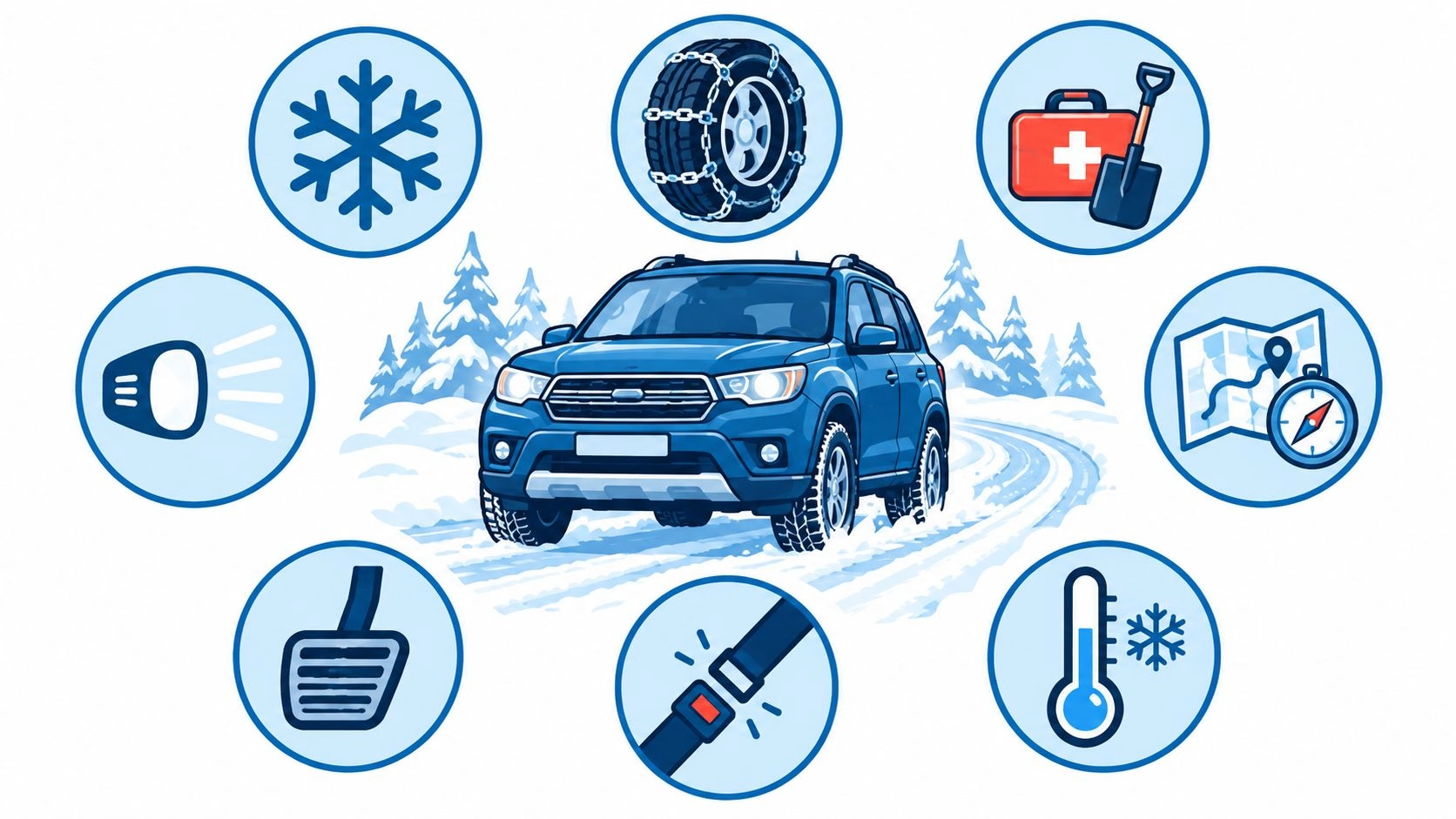
Different driving conditions demand different skill sets, and professional instruction teaches you to adapt rather than apply one approach to every situation. Wet roads require double your normal following distance because wet asphalt reduces tire grip, which means your three-second gap becomes dangerously short when rain falls. Night driving demands slower speeds because your headlights illuminate only 150 to 200 feet ahead at 60 mph, leaving you insufficient time to react if you maintain daytime speeds. Highway merging requires understanding that vehicles traveling at 65 mph cover roughly 95 feet per second, so the gap you judge as safe while stationary becomes a closing death trap in real traffic. Professional courses teach you to adjust speed, following distance, and scanning patterns based on conditions rather than driving the same way regardless of circumstances. The driver who maintains 55 mph on wet roads survives; the driver who maintains 65 mph becomes a statistic.
Staying Current With Vehicle Technology
Ongoing education throughout your driving life keeps you current with new vehicle technologies that change how you drive. Modern vehicles include automatic emergency braking and lane-keeping assistance systems that require different strategies than older cars. A driver unfamiliar with how these systems function may disable them in frustration or trust them in situations where they cannot help. Continuing education courses teach you how these technologies work, what their limitations are, and when to override them with human judgment. A driver who understands that automatic braking requires you to steer around obstacles while the system handles deceleration responds faster than the driver who assumes the system handles everything.
Refreshing Skills to Maintain Safety Standards
Safety standards maintained throughout your driving life require regular skill refreshment because knowledge fades without use. A study on defensive driving shows that drivers who take refresher courses every three to five years maintain higher safety standards than those who never return to structured learning. These refresher courses address new traffic patterns in your area, updated traffic laws that you may have missed, and changes in your own driving that bad habits introduce over time. The driver who took excellent instruction at age 16 may develop sloppy lane discipline by age 35 if nobody corrects it, but a refresher course identifies and eliminates that drift before it causes a crash. Insurance companies recognize this reality, which is why many offer discounts of roughly 10 percent for completing defensive driving courses, and some states require periodic refresher training for license renewal. You arrive at the intersection safer because you learned the rules once, but you stay safe across decades because you maintain those standards through continued attention and periodic professional guidance.
Final Thoughts
Road safety education basics form the foundation that separates drivers who arrive home safely from those who become statistics. The habits you build through structured instruction-scanning ahead, checking mirrors every 5 to 8 seconds, maintaining proper following distance, understanding right-of-way rules-become automatic responses that protect you across decades of driving. These are not suggestions or optional practices; they are the concrete actions that reduce your crash risk by roughly 50 percent and keep you alive when emergencies occur.
Continuous learning throughout your driving life maintains the safety standards that initial instruction establishes. A refresher course every three to five years addresses new traffic patterns in your area, updates you on changed traffic laws, and corrects the bad habits that gradually develop without professional oversight. Insurance companies recognize this reality by offering discounts of roughly 10 percent for completing defensive driving courses, which means your knowledge fades without use, but periodic professional guidance keeps your skills sharp and your decision-making sound.
We at floridadetscourse.com offer comprehensive driver education programs that teach you to understand why safety rules exist, not just memorize them. Our certified instructors provide personalized guidance in a supportive learning environment, helping you adopt lifelong safe driving habits through real-life scenarios and clear explanations. Whether you need basic instruction, a refresher course, or specialized training, professional driver education transforms how you approach every drive.