Crashes happen in seconds, but the decisions you make behind the wheel determine whether you’ll avoid them. We at floridadetscourse.com know that crash prevention tactics aren’t complicated-they’re about understanding risk and reacting correctly.
This guide walks you through the scenarios that cause most collisions and the defensive driving techniques that stop them. You’ll learn how to handle everything from wet roads to distracted drivers.
Where Most Crashes Happen and How to Avoid Them
Rear-end collisions dominate crash statistics
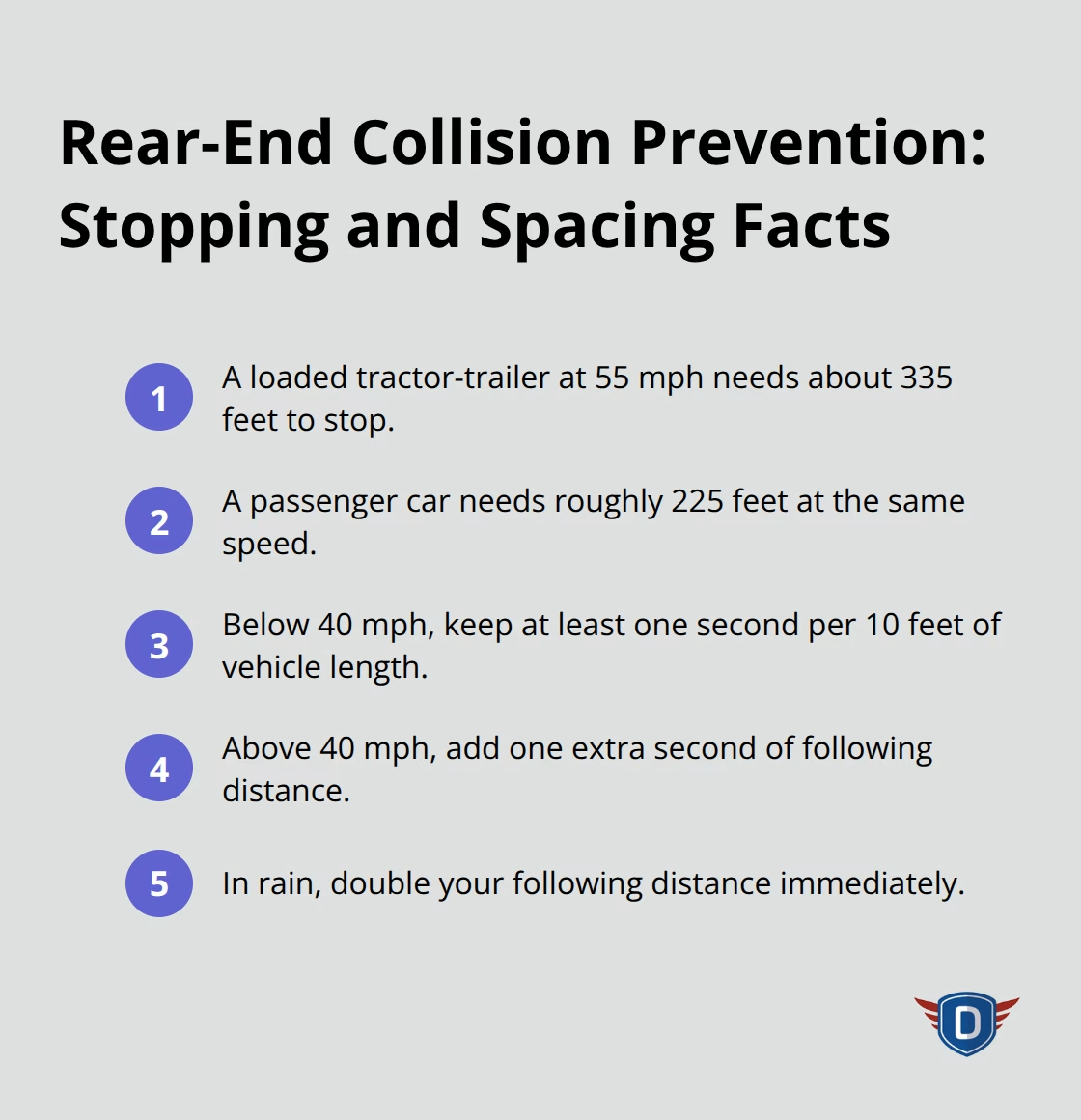
Rear-end collisions account for the largest share of crashes on American roads, and the data is sobering. The Large Truck Crash Causation Study reveals that a loaded tractor-trailer traveling at 55 mph needs approximately 335 feet to stop, compared to just 225 feet for a passenger car. This gap matters because most drivers follow far too closely. The Three-Second Rule provides the baseline for safe spacing: maintain at least one second of distance per 10 feet of vehicle length below 40 mph, then add another second once you exceed 40 mph. In rain, double that distance immediately.
Heavy vehicles demand even greater spacing because their stopping power diminishes with load. Tailgating a truck at highway speed guarantees that you’ll have no time to react if the vehicle ahead brakes suddenly. The physics work against you-not in your favor.
Intersection accidents stem from right-of-way violations
Intersection accidents occur because drivers misread right-of-way and ignore traffic signals. Running red lights caused 1,086 fatalities in 2023 according to the Insurance Institute for Highway Safety. These collisions typically involve high-speed side impacts where occupants have minimal protection. Approach every intersection with caution, not speed. Scan left, right, and left again before entering, even if your light is green, because other drivers will violate the signal. Never assume the intersection is clear just because you have the legal right to proceed.
Lane changes require thorough blind spot checks
Lane change mistakes occur because drivers fail to check their blind spots properly. Use the SMOG method: signal at least 100 feet ahead, check your mirrors every 5 to 8 seconds, look over your shoulder to confirm the blind spot is clear, then go. Most drivers skip the shoulder check entirely and rely only on mirrors, which creates dangerous gaps in their awareness. Your mirrors cannot see everything. A vehicle traveling at highway speed can cover 146 feet in three seconds-enough to move through your blind spot while you’re checking only your mirrors. The shoulder check takes one second and eliminates that risk completely.
These three crash types (rear-end, intersection, and lane change) account for the majority of collisions on American roads. Understanding why they happen puts you ahead of most drivers. The next section shows you how to apply defensive techniques that stop these crashes before they start.
Master Defensive Driving Techniques
Scan the road far ahead to spot hazards before they threaten you
Defensive driving separates drivers who avoid crashes from those who cause them. The difference lies in three core skills: scanning the road far ahead to spot hazards before they become threats, adjusting your speed to match conditions rather than posted limits, and maintaining vehicle control when emergencies demand immediate action. Most drivers fail at the first skill and never reach the third.
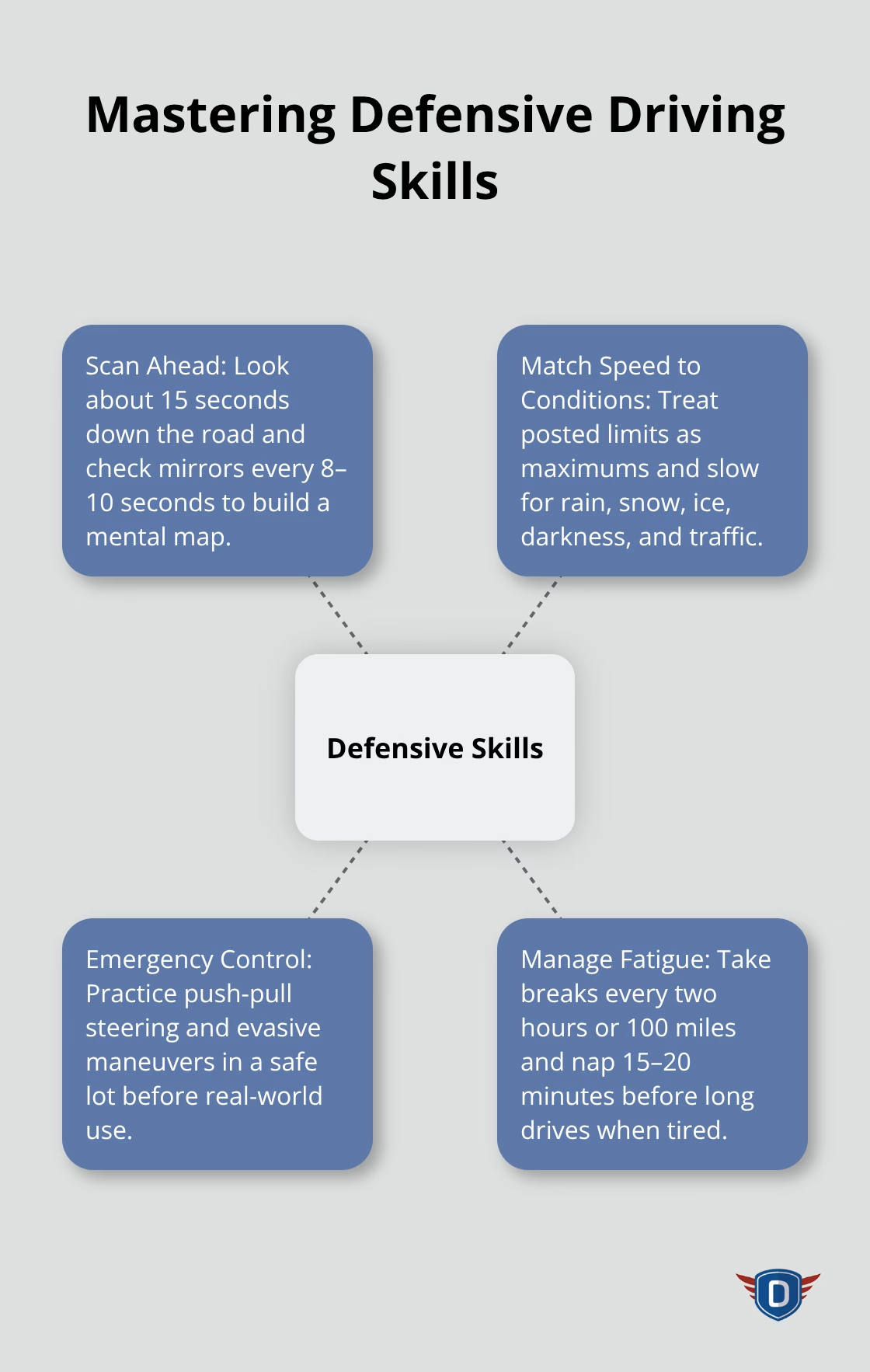
Your eyes determine what your brain can process, and your brain determines what your hands will do. A study on driver eye-scanning behavior found that most drivers look only straight ahead and miss up to 80 percent of road information available to them. This tunnel vision is deadly. Expand your scanning to about 15 seconds ahead of your vehicle, which means looking roughly a quarter-mile down the road at highway speeds. Check your mirrors every 8-10 seconds and glance at your rearview mirror regularly. This constant scanning builds a mental map of traffic flow and hazards before they reach your position.
When you spot a problem early, you have options. When you spot it late, you have panic.
Adjust your speed to match conditions, not the posted limit
Speed management means understanding that posted limits are maximums for ideal conditions, not targets for all situations. Rain requires slowing 5 to 10 mph below the posted limit because wet pavement reduces tire grip. Snow or ice demand cutting your speed in half and increasing your following distance to at least 10 seconds.
Night driving accounts for nearly half of all fatal crashes according to NHTSA data, yet most drivers maintain daytime speeds in darkness. Reduce speed below posted limits at night, keep your headlights on, and clean your windshield regularly because glare from oncoming headlights compounds visibility problems. Your speed must match what you can see and what your tires can grip, not what the sign says.
Practice emergency braking and steering in safe conditions first
Emergency braking and steering require practiced precision because panic produces failure. Use push-pull steering by placing your hands at 9 and 3 on the wheel, not at 10 and 2. This hand position gives you more leverage and range of motion during sharp maneuvers.
In an evasive maneuver, check your mirrors and blind spots first, steer sharply toward your escape route, countersteer to stabilize the vehicle, then match your speed with surrounding traffic. Practice these movements in a safe, empty parking lot before you ever need them on a real road. Your decision-making speed matters more than your reaction speed. A hazard must be recognized instantly, and your vehicle must be positioned to escape rather than relying on fast hands alone.
Recognize how fatigue erodes your defensive abilities
The National Safety Council reports that drowsy driving contributes to more than 90,000 crashes annually, which means fatigue erodes both your scanning ability and your emergency response capability. On long drives, take a 15 to 20 minute nap before driving if you’ve had a long day, and stop every two hours or 100 miles to maintain alertness.
These three skills-early scanning, appropriate speed adjustment, and practiced emergency control-form the foundation of crash avoidance. They require deliberate practice in low-stress situations first, then gradual progression toward more complex driving conditions. The next section shows how real-world conditions test these skills and what adjustments you must make to stay safe.
How Weather and Distractions Test Your Defensive Skills
Wet roads demand immediate speed reduction
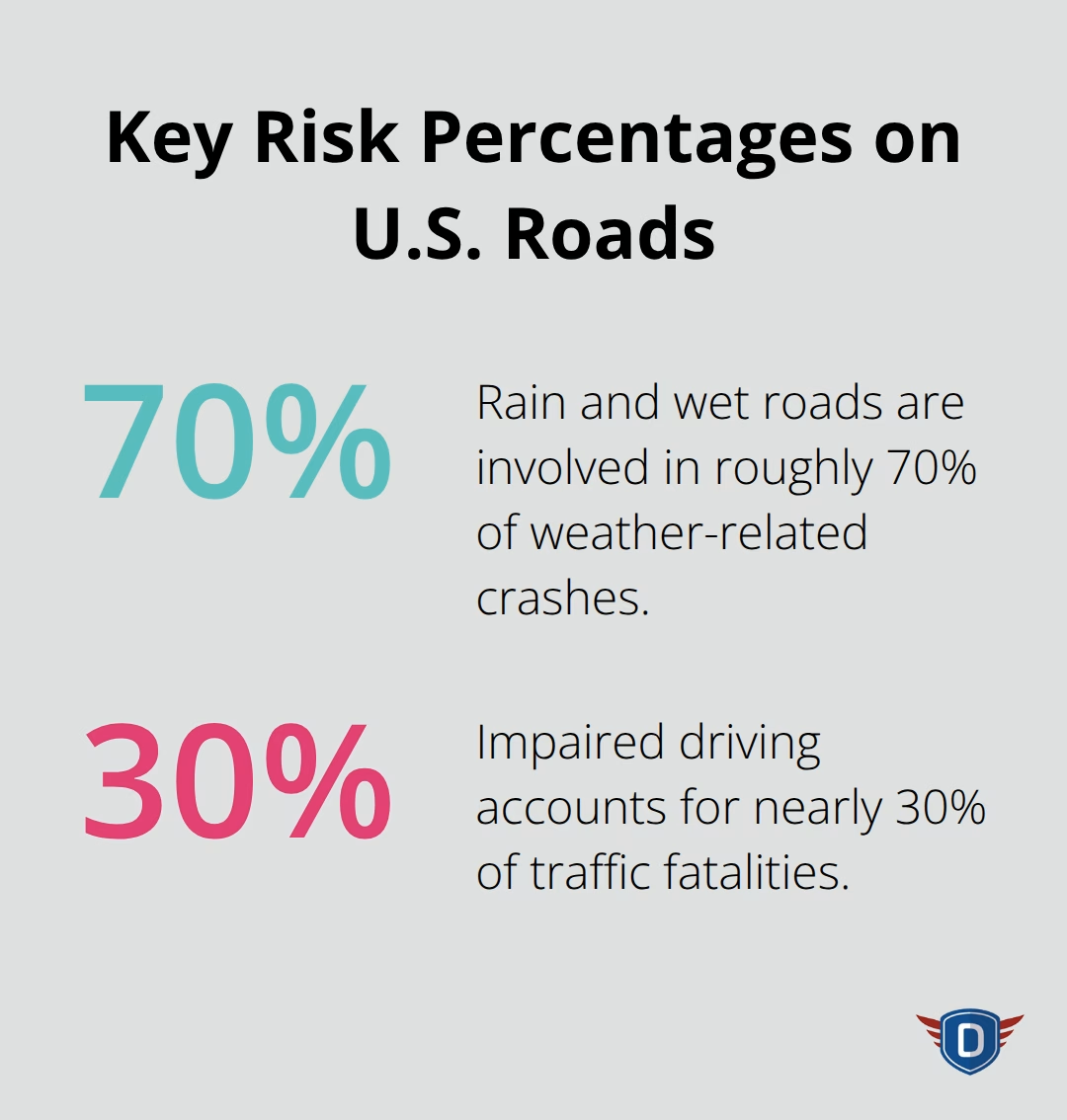
Wet pavement strips your tires of grip faster than most drivers realize. According to NHTSA data, rain and wet roads are involved in roughly 70 percent of weather-related crashes, yet drivers often maintain highway speeds as if conditions haven’t changed. The moment rain hits your windshield, your stopping distance increases dramatically. At 55 mph on wet pavement, you need significantly more distance to stop than on dry asphalt because water reduces the friction between tire and road.
Check your tire tread depth using the penny test: insert a penny upside down into the tread grooves, and if you can see the top of Lincoln’s head, your tires are worn and dangerous in wet conditions. Replace them before the next rain, not after a close call. Increase your following distance to at least 6 seconds in rain because your decision-making speed remains the same but your vehicle’s stopping ability has declined.
Black ice and freezing conditions require extreme caution
Black ice appears invisible on dark roads, especially on bridges and overpasses where cold air accelerates ice formation. Never trust a clear-looking road surface at night during freezing temperatures. Reduce speed below posted limits, avoid sudden braking that triggers skids, and if your vehicle does slide, countersteer smoothly in the direction you want the front wheels to point.
Nighttime driving compounds visibility and fatigue risks
Nighttime driving nearly doubles your crash risk according to NHTSA research, and fatigue compounds the danger when you’re already tired from a long day. Your headlights illuminate roughly 160 feet ahead at 55 mph, which means you’re traveling blind beyond that distance in darkness. Reduce your speed so you can stop within the distance your headlights illuminate, not beyond it.
Use low-beam headlights when oncoming traffic approaches because high beams blind other drivers and eliminate your ability to see the road. Keep your windshield clean inside and out because interior dust and exterior film create glare that worsens night visibility.
Distracted driving eliminates your ability to scan and react
Distracted driving remains the leading cause of crashes nationwide, claiming 3,308 fatalities and injuring over 289,000 people annually according to NHTSA. Your phone is not your biggest threat-it’s the second biggest. The biggest threat is your own decision to look away from the road. Place your phone in a location where you cannot reach it while driving, such as the trunk or a bag in the back seat.
Impaired driving and medication effects require advance planning
Impaired driving accounts for nearly 30 percent of traffic fatalities, and impairment extends beyond alcohol to include prescription medications and fatigue. Read medication labels for warnings about driving impairment, and if you’ve taken a new medication, test your reaction time and focus on a quiet road before driving in traffic. Plan your ride home before you go out, not after you’ve been drinking. Designate a sober driver or arrange a rideshare before the evening begins because making that decision after alcohol consumption is nearly impossible.
Final Thoughts
The crash prevention tactics covered in this guide address the root causes of collisions: poor scanning, inappropriate speed, and delayed reactions. Practicing these strategies daily transforms them from knowledge into automatic behavior that protects you and everyone sharing the road. Start with the Three-Second Rule on your next drive, then add mirror checks every 8 seconds, and gradually build toward the full defensive toolkit through consistent repetition.
Safe driving habits protect more than your safety-they protect your driving record and your finances. A single at-fault collision raises your insurance premiums by an average of 40 percent and can stay on your record for years, while traffic violations add points that threaten your license and increase costs further. The money you save on insurance premiums, court fees, and vehicle repairs far exceeds the time you invest in practicing defensive techniques.
We at floridadetscourse.com understand that safe driving requires more than knowing the rules-it demands real-world application through structured instruction and personalized guidance. Our driver education programs teach you how to apply crash prevention tactics in actual driving scenarios with certified instructors who help you develop the habits that keep you safe every time you drive.