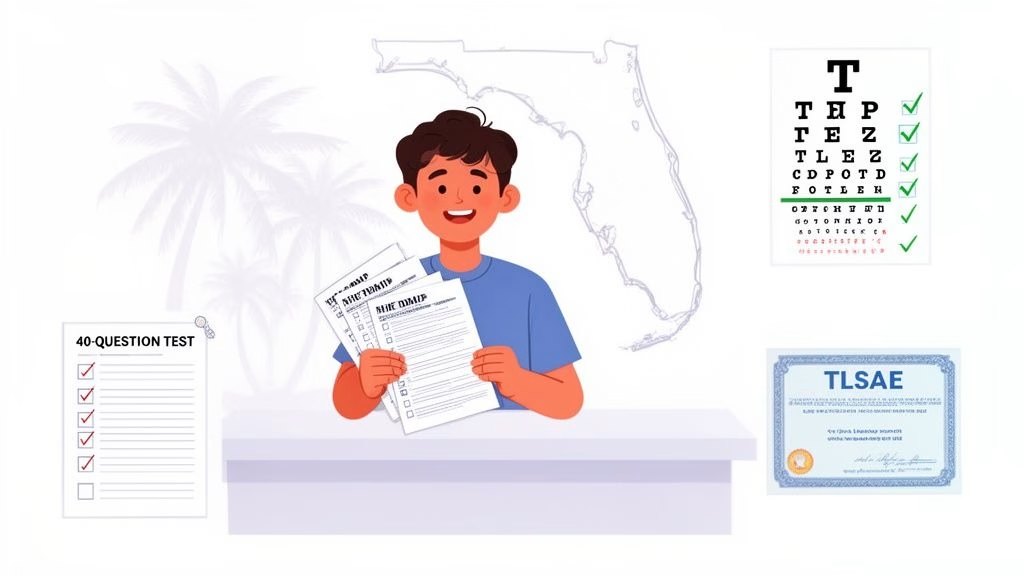
Getting your learner's permit is the first real taste of freedom on the road. In Florida, the core permit test requirements are pretty straightforward. You'll need to be at least 15 years old, show you�ve completed the Traffic Law and Substance Abuse Education (TLSAE) course, and bring the right documents to prove you are who you say you are.
Your Quick Checklist For The Florida Permit Test
Think of it like this: heading to the DMV without all your paperwork is like showing up for a big game without your equipment. You'll be sent straight back to the locker room. Knowing exactly what you need to bring beforehand is the single best way to avoid that frustration and a wasted trip.
This initial checklist breaks down the essentials, giving you a clear starting point. Once you get these basics handled, the whole process feels much less intimidating. It puts you on the fast track to getting that permit in your hand and starting a lifetime of safe driving.
The Three Core Requirements
Before you get bogged down in the details, let's make sure you have the three big pillars covered. Every single one is a non-negotiable step on your path to getting that learner's permit.
Minimum Age: You have to be at least 15 years old on the day you apply. Florida law sets this minimum to ensure a baseline level of maturity, so there are absolutely no exceptions.
Required Education: You must pass the 4-hour Traffic Law and Substance Abuse Education (TLSAE) course. This is a state-mandated program that covers the nuts and bolts of traffic laws, road signs, and the serious dangers of driving under the influence.
Proper Identification: You�ll need to bring original documents (no photocopies!) that prove your identity, Social Security number, and your home address. These have to meet the federal REAL ID standards.
This flow chart gives you a simple visual of how these main permit test requirements fit together.

As the graphic shows, knocking out the age, course, and ID requirements is the foundation for everything else. With those three things taken care of, you're ready to move on and actually prepare for the test itself.
Florida Learner's Permit Quick Checklist
To make it even easier, here's a simple table you can use to double-check that you have everything you need before you head out the door.
| Requirement Category | What You Need |
|---|---|
| Age | Be at least 15 years old on application day. |
| Education | Proof of completing the 4-hour TLSAE course. |
| Identification | Original, REAL ID-compliant documents. |
| Parental Consent | A signed Parental Consent Form if you are under 18. |
| Tests | Be ready to pass vision and knowledge exams. |
| Fees | Bring payment for the required state fees. |
Review this checklist one last time before your appointment. Having all your ducks in a row is the best way to ensure a smooth, successful trip to the DMV.
Are You Eligible for a Florida Learner's Permit?
Before you even crack open a study guide, there's a crucial first step: making sure you're actually eligible to get a learner's permit in Florida. Getting this part right is the key to a smooth trip to the DMV. The state has some very specific rules about age, residency, and parental sign-off, all designed to make sure new drivers are ready for the road.

The first hurdle is age, and it�s a simple one. In Florida, you can apply for your learner's permit once you turn 15 years old. That's a hard-and-fast rule with no wiggle room. Of course, things change a bit once you're 18, which we'll get into in a moment.
Proving Your Age and Florida Residency
When you head to the DMV, you'll need to prove two things: who you are and where you live. Think of it as your official check-in. First, you verify your identity and age, and then you confirm your Florida address.
To prove your identity, you'll need an original or certified copy of a key document. The most common ones are:
- An original U.S. Birth Certificate
- A valid U.S. Passport
- A Certificate of Naturalization
Next up is proving you live in Florida, which requires two separate documents. This is where a lot of teens get nervous because they don't have utility bills in their names. Don't worry, the state has plenty of other options.
One of the easiest ways for a teen to prove residency is with a school report card or official transcript from the current school year. As long as it lists your Florida address, you're good to go.
You can also use official mail from a government agency or certain financial institutions. If you're 18 or older, the permit test requirements are the same, but you have more options, like using a lease agreement, utility bill, or bank statement with your name on it.
The Critical Role of Parental Consent
For anyone under 18, getting a parent's signature isn't optional�it's mandatory. Your parent or legal guardian has to sign the official Parental Consent for a Driver Application of a Minor form. This isn't just about giving their permission; they're also legally accepting financial responsibility for any damages you might cause while driving.
If you are 18 or older, you can skip this step entirely. You'll sign your own application and take full responsibility for yourself. This is one of the biggest differences between getting your permit as a teen versus as an adult.
Your First Checkpoints: Courses and Exams
Think of getting your learner's permit as a series of checkpoints you need to clear. You can't just show up at the DMV and expect to walk out with a permit; Florida has a few required steps you have to complete first. These aren't just hoops to jump through�they're designed to build a solid foundation of safety and knowledge before you ever turn the key.

Let's walk through exactly what you need to get done.
The Must-Do TLSAE Course
First up, every new driver in Florida must complete the Traffic Law and Substance Abuse Education (TLSAE) course. This is a mandatory, 4-hour class that has to be finished before you�re even allowed to sit for the permit test.
The course is all about the serious stuff:
- How alcohol and drugs impair your judgment and ability to drive safely.
- Crucial traffic laws and your responsibilities on the road.
- Proven strategies for avoiding crashes and staying alert.
The whole point is to make sure you understand the real-world dangers of driving from the very beginning. The good news is that you don't have to sit in a classroom. Many state-approved providers, including us, offer the course online. You can learn more about our convenient Traffic Law and Substance Abuse Education course to see how easy it is to check this box.
This focus on safety education isn't just a Florida thing; it's a global trend. For instance, by 2026, some new European safety rules will require in-car tech to help verify speed limits, and the driving simulator market is expected to hit $781.6 million by 2035. Florida's TLSAE requirement is right in line with this movement, ensuring new drivers have the fundamental knowledge they need before hitting the road.
Acing the Knowledge and Vision Tests
Once the TLSAE course is behind you, it�s time to prove you were paying attention. You�ll need to pass two final tests: the official knowledge exam and a basic vision screening.
The Florida Driver�s License Knowledge Exam�what everyone calls the permit test�is made up of 40 multiple-choice questions. The questions are pulled right from the official Florida Driver�s Handbook and cover two key areas:
- Road Signs: You'll need to identify signs by their color, shape, and the symbols on them.
- Road Rules: This covers everything from traffic laws and right-of-way to general safe driving practices.
To pass, you need to score a 75% or higher. That means getting at least 30 out of 40 questions right. If you don't pass, you'll have to wait 24 hours and pay a fee to try again.
Finally, you�ll do a quick vision test. The standard is pretty simple: you must have 20/40 vision or better, either with or without corrective lenses. If you need glasses or contacts to meet that standard, no problem. A restriction will just be added to your permit and license, which simply means you have to wear them anytime you're driving.
Your DMV Document Checklist: What to Bring
Nothing derails a trip to the DMV faster than showing up unprepared. Honestly, the most common reason people get turned away is simply for missing a piece of paper. But you can avoid that frustration entirely by getting your documents in order ahead of time. Think of this as your personal game plan for nailing Florida's permit test requirements.

Florida operates under the federal REAL ID Act. This just means you have to bring original documents�no photocopies allowed!�to prove who you are, your Social Security number, and where you live. Let's break down exactly what you'll need.
Proving Your Identity and Social Security Number
First things first, you need to prove you are who you say you are. This requires a primary identification document, which is the cornerstone of your application. It establishes your full legal name and date of birth.
The most common options that work as primary ID are:
- An original U.S. birth certificate (or a certified copy from the issuing agency).
- A valid, unexpired U.S. passport or U.S. passport card.
- A Certificate of Naturalization or a Certificate of Citizenship.
- Non-U.S. citizens will need to bring their valid immigration documents issued by the Department of Homeland Security.
Along with your primary ID, you have to prove your Social Security number. For this, an original Social Security card is best, but a W-2 form, a recent pay stub showing your full SSN, or a 1099 form also works. A crucial detail: the name on your Social Security document must be an exact match to the name on your primary ID.
Proving You Live in Florida
Next up is proving your residential address. You'll need to bring two separate documents to show that you're a Florida resident. This is a step that trips a lot of people up, but the state gives you plenty of options.
Here's a key rule: You can't use two documents from the same category. For instance, two different utility bills or two different bank statements won't cut it. They must come from different sources to be valid.
Gathering your paperwork is the most important step before heading to the DMV. This table breaks down exactly what you can use for each requirement.
Permit Test Document Checklist
| Document Type | Accepted Examples |
|---|---|
| Primary Identification | U.S. Birth Certificate (original or certified), U.S. Passport, Certificate of Naturalization/Citizenship, or valid immigration documents. |
| Proof of Social Security | Original Social Security Card, W-2 form, pay stub with full SSN, or a 1099 form. Name must match primary ID. |
| Proof of Residence (Two) | Deed/mortgage/rental agreement, Florida vehicle registration, utility bill (less than two months old), or mail from a government agency. |
Having these documents ready will make your visit smooth and successful. If you want an even more detailed breakdown of the options, you can check out our guide on what you need to get your permit.
Don't Forget the Fees
Last but not least, make sure you're ready to pay the required fees. The total cost can vary, but you�ll definitely have a fee for the initial application and test. It's always a good idea to have a credit card or cash on hand.
If you don't pass the knowledge exam on your first try, don't sweat it. You can retake it after 24 hours, but each attempt will cost a $10 fee. And remember, Florida now requires teens to complete 50 hours of supervised driving, with 10 of those hours being at night, before they can even take the road test for their driver's license.
Congratulations�you passed the test! You now have a learner's permit, which is your official green light to start driving. But it�s not quite a full-access pass just yet. Think of this permit as driving with training wheels; there are some key rules you have to follow to build your skills safely.
These rules aren't just there to be difficult. They're smart, common-sense guardrails designed to help you learn in a controlled environment where the risks are low. The most important rule of all? You can never drive alone.
Your Co-Pilot Requirement
Every single time you get in the driver's seat, you must have a licensed supervisor with you in the front passenger seat. This isn't a suggestion�it's the law. Your supervisor has to be a licensed driver who is at least 21 years old.
This person is your real-time coach. They�re there to help you handle tricky situations, build good driving habits right from the start, and act as your second set of experienced eyes on the road.
The supervision rule is the core of the learner's permit stage. It ensures you�re actively learning and correcting mistakes under the guidance of a seasoned driver, turning every single trip into a practical lesson.
This system works. The entire process of meeting Florida's permit test requirements is just the beginning of a journey to create safer, more confident drivers. In fact, the global driving school market was valued at a massive $103.11 billion in 2025, largely because of the need to meet these strict educational standards. Here in Florida, teens must score at least 75% on a 40-question test, and this kind of structured learning has been proven to significantly lower crash rates among new drivers.
Navigating Time-Based Curfews
On top of the supervisor rule, you also have limits on when you can drive. These curfews are in place to keep you away from higher-risk driving conditions, like heavy nighttime traffic, while you're still getting the hang of things.
For the first three months after getting your permit, you're only allowed to drive during daylight hours. After those first three months pass, you can start driving up until 10:00 PM. These time restrictions are firm and strictly enforced, so be sure to follow them.
Logging Your Driving Hours for the Next Level
Passing the permit test was a huge step, but the next goal is already on the horizon: getting your intermediate driver's license. To even be eligible to take that test, you first have to log 50 hours of supervised driving experience.
Out of those 50 hours, at least 10 hours must be done at night. This is to make sure you get comfortable driving in low-visibility conditions with your supervisor right there to help. You'll need to keep a detailed log of your hours, which your parent or guardian will have to sign off on. Mastering the rules in the Florida Driver's Manual is the best way to make the move from a permit to a license go smoothly.
Common Permit Test Questions Answered
Even after you've studied your heart out, a few nagging questions always seem to pop up about the permit test itself. Getting these details straight can make the whole process a lot less stressful. We've gathered some of the most common questions we hear from new drivers (and their parents) to clear up any last-minute confusion.
What Happens if I Fail the Florida Permit Test?
First, let's tackle the biggest worry most people have. What if you don't pass on your first try? Don't panic�it happens, and it�s definitely not the end of the world.
To pass the Florida knowledge exam, you need to score at least 75%. If you fall short, you simply have to wait at least 24 hours before trying again. You will have to pay a small fee for each re-test, so it�s best to be prepared.
Think of a failed attempt as a diagnostic tool. It shows you exactly which areas of the driver's handbook you need to hit again, whether it's road rules, traffic signs, or right-of-way laws. To build up your confidence and really nail it the next time, you can sharpen your knowledge by taking a free DMV practice permit test for Florida.
Can I Take the Permit Test Online in Florida?
Yes, but there's a key detail you can't miss. In Florida, if you are under the age of 18, you have the option to take the official knowledge exam online through a state-approved provider. This is a huge convenience, letting you test in a familiar, comfortable space.
However�and this is the important part�taking the test online doesn't get you out of a trip to the DMV. You'll still need to show up in person to take your vision test and have all your identification documents verified before they'll issue your permit.
How Long Is My TLSAE Certificate Good For?
Your Traffic Law and Substance Abuse Education (TLSAE) course is a mandatory step before you can even apply for a permit, but its completion certificate has an expiration date.
Your TLSAE certificate is valid for one year from the date you complete the course.
Pay close attention to that one-year window. You must apply for your learner's permit within that timeframe. If you let it expire, you'll have to retake the entire four-hour course and pay for it all over again. It�s a costly and time-consuming mistake, so plan accordingly!
At BDISchool, we offer the official Florida-approved online courses you need to get on the road. From the required TLSAE course for your learner's permit to a Basic Driver Improvement course to handle a ticket, our programs are self-paced and designed to fit your schedule. Learn more and get started today at https://bdischool.com.
![Teen Driver Licensing Requirements in Florida [2026]](https://floridadetscourse.com/wp-content/uploads/emplibot/florida-license-requirements-hero-1773544196.avif)