Teen drivers face real dangers on the road. According to the CDC, motor vehicle crashes are the leading cause of death for teenagers in the United States, with about 2,500 teens dying annually in these incidents.
A parent-teen driving plan changes this outcome. We at floridadetscourse.com know that structured agreements between parents and teens reduce risky driving behaviors and build safer habits from day one.
The Numbers Behind Teen Crash Risk and Why Parental Involvement Changes Everything
Teen Drivers Face Statistically Proven Dangers
Teen drivers aren’t just inexperienced-they’re statistically the most dangerous drivers on the road. According to the CDC, teens aged 16�19 have a fatal crash rate almost three times as high as drivers aged 20 and older per mile driven. In 2020 alone, roughly 2,800 teens died in motor vehicle crashes, with eight deaths occurring every single day. Male teen drivers face even steeper odds, with death rates three times higher than their female peers.
The first year of driving carries the highest risk. Sixteen-year-olds experience about 1.5 times more crashes per mile than 18�19-year-olds. Nighttime driving amplifies danger dramatically-the fatal crash rate for teens at night is three times that of adults, and 44 percent of teen crash deaths occurred between 9 pm and 6 am.
Specific Behaviors That Kill Teen Drivers
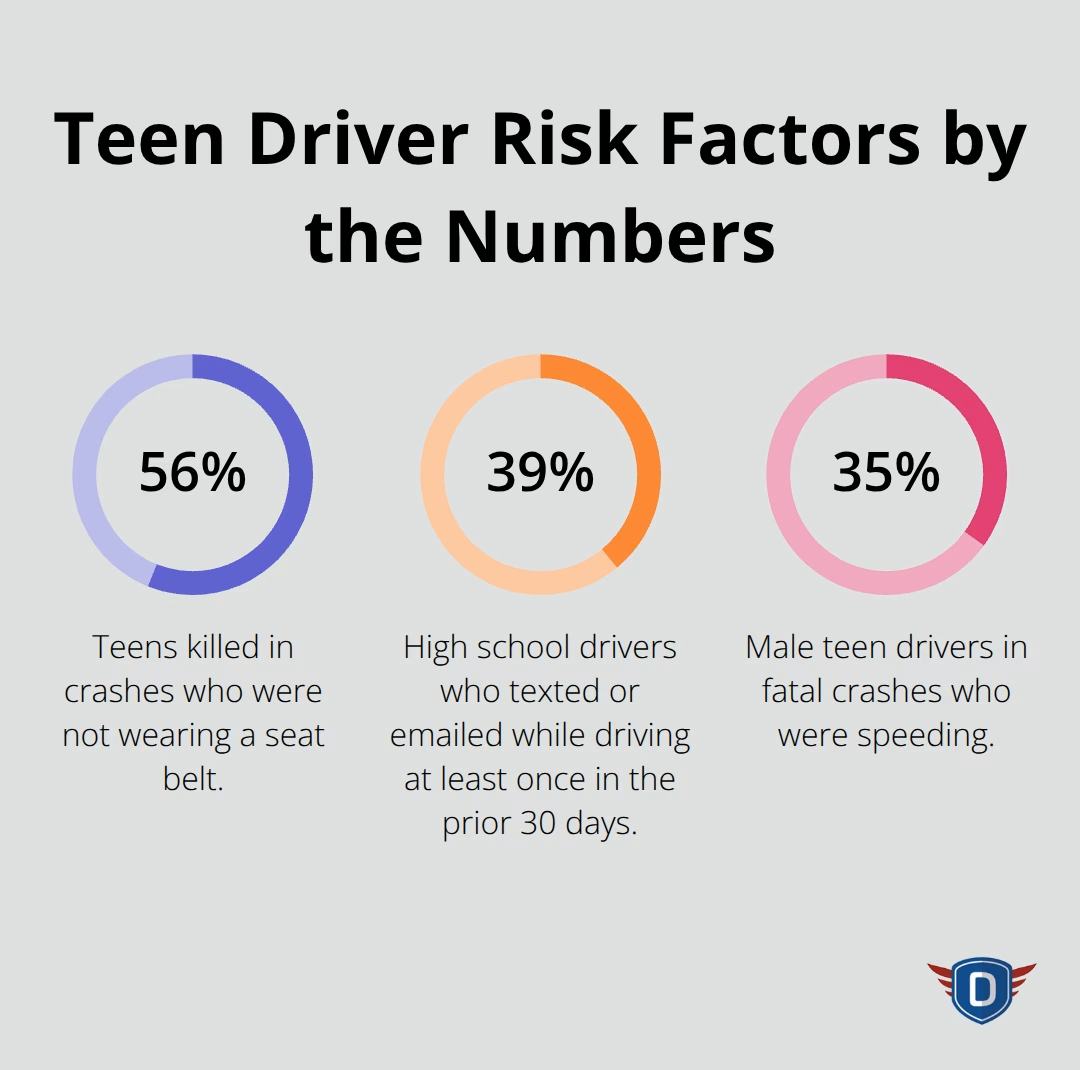
Seat belt nonuse remains a major factor in teen fatalities. Fifty-six percent of teens killed in crashes were not wearing one. Distracted driving compounds these risks significantly, with 39 percent of high school drivers texting or emailing while driving at least once in the prior 30 days according to CDC data. Speeding also plays a major role, with 35 percent of male teen drivers and 18 percent of female teen drivers involved in fatal crashes speeding at the time of the incident.
The presence of passengers increases crash risk for unsupervised teen drivers, with risk growing for each additional passenger. These aren’t abstract dangers-they’re concrete, measurable threats that a structured parent-teen driving plan directly addresses.
How Parental Involvement Reduces Risk
A structured parent-teen driving plan establishes clear boundaries around nighttime driving, passenger limits, phone use, and speed. Research from the CDC shows that families using graduated driver licensing frameworks combined with written agreements see measurable reductions in risky behaviors. Parents who actively supervise driving practice, monitor mileage and conditions, and enforce consistent consequences create accountability that teens rarely generate alone.
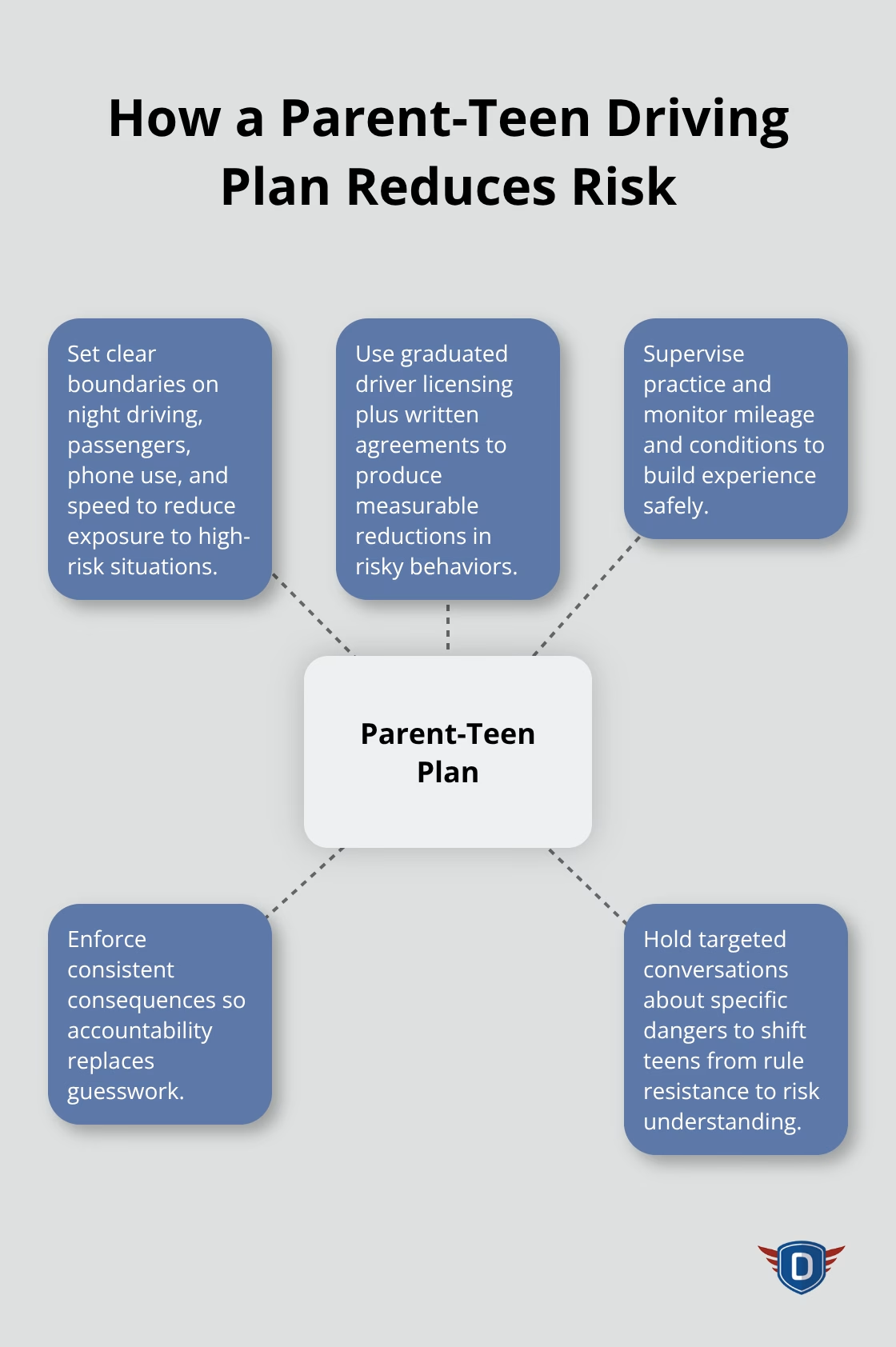
The collaborative nature of a written agreement forces conversations about specific dangers-why nighttime curfews matter, why passengers distract, why texting kills. These conversations shift teen drivers from viewing safety rules as arbitrary restrictions to understanding them as protection against statistically proven threats.
The Power of Parental Modeling and Clear Expectations
Parental modeling matters tremendously. Teens whose parents consistently wear seat belts, avoid phones while driving, and respect speed limits adopt those habits far more reliably than those receiving lectures alone. A formal agreement signed by both parties removes ambiguity about expectations and consequences, eliminating the negotiation that often derails safety rules in the moment.
When parents and teens collaborate on a written plan, they establish shared responsibility for safety. This partnership transforms driving from a privilege that teens demand into a responsibility that both parties actively protect. The next step involves creating an agreement that actually works-one with clear rules, realistic boundaries, and consequences that teens understand and accept.
Building a Written Agreement That Actually Works
Establish Non-Negotiable Safety Rules
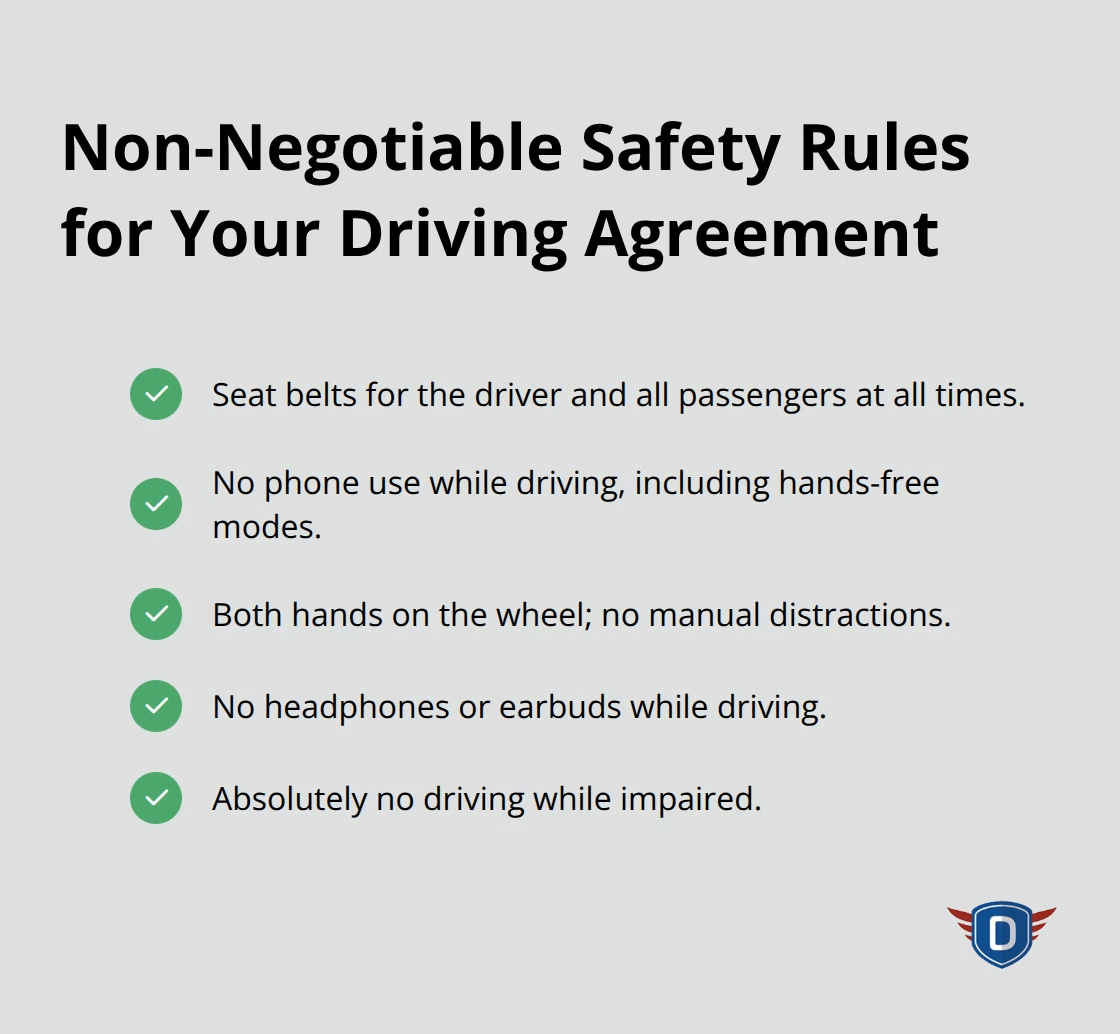
A parent-teen driving agreement only matters if it contains specific, enforceable rules rather than vague principles. The agreement must start with non-negotiable safety rules: seat belts for the driver and all passengers at all times, both hands on the wheel, no texting or phone use while driving (including hands-free modes), no headphones or earbuds, and absolutely no driving while impaired. These aren’t suggestions-they’re the foundation.
Set Clear Boundaries on When and Where Your Teen Drives
Next, establish clear boundaries around when and where your teen can drive. Nighttime driving restrictions are essential for teen safety. Set a specific curfew, such as no driving after 9 pm during the first six months, then gradually extend it as your teen demonstrates responsibility. Passenger limits matter significantly because each additional passenger increases crash risk for unsupervised teen drivers. Many effective agreements limit passengers to zero initially, then allow one peer passenger after six months of safe driving. Specify which locations are off-limits and which roads your teen should avoid during early months.
Address Distractions and Impairment Explicitly
The agreement must address distractions explicitly-no adjusting the radio, climate controls, or navigation systems while moving, no eating or drinking in the car, and no emotional driving when upset or angry. Require your teen to call for a ride if they’re tired, emotionally compromised, or in any way impaired.
Define Consequences and Rewards
Consequences transform an agreement from a suggestion into an accountability tool. Define specific penalties for violations: texting or phone use might result in two weeks of lost driving privileges, speeding might mean one month without the car, and night-curfew violations might mean two months without driving. Establish a clear violation reporting system-your teen reports their own infractions, which builds integrity and prevents you from discovering violations weeks later. Include rewards alongside penalties because positive reinforcement works better than punishment alone. For every 500 safe miles driven, grant a privilege extension: an extra hour on the curfew, permission to drive one additional passenger, or use of the car for weekend activities. After one full year of zero violations, consider removing the passenger limit or extending nighttime driving hours.
Make It Official and Living
Schedule monthly check-ins to discuss driving experiences, near-misses, and how your teen feels about the restrictions. Use these conversations to adjust rules as your teen gains experience-overly strict rules breed resentment and secret rule-breaking, while loose rules defeat the purpose. Print the agreement and post it somewhere visible like the refrigerator so both parties see it regularly. Have both you and your teen sign and date it, creating a formal commitment that signals this isn’t casual household guidance but a serious safety contract. These structured conversations and adjustments set the stage for the next critical element: how you and your teen actually talk about driving safety on an ongoing basis.
How to Talk About Driving Safety Without Creating Conflict
Start Conversations Early, Before Problems Arise
The written agreement sits on the refrigerator, but the real work happens in conversations that feel natural, not forced. Most parents approach these talks wrong-they lecture, warn, or worse, wait until after a mistake to discuss safety. That approach fails because teens stop listening the moment they sense judgment. Instead, start conversations during the first month of driving when your teen is still nervous and actually wants guidance. Ask specific questions about what scared them during their last drive: Did they feel uncertain merging on the highway? Did another driver do something unexpected? These conversations reveal genuine concerns and give you concrete things to address together, not abstract lectures about crash statistics.
Teens who voice their fears early are far more likely to follow safety rules because they understand the rules protect them from real situations, not imaginary disasters adults invented to control them.
Use Positive Reinforcement Over Punishment
Positive reinforcement works dramatically better than punishment for sustained behavior change, yet most parents default to punishment. When your teen drives 500 safe miles without violations, extend their curfew by 30 minutes immediately-not next month, but within days of hitting that milestone. This teaches their brain that safe driving produces immediate rewards. Punishment, by contrast, only teaches avoidance of getting caught.
If your teen admits they texted while driving and reports it themselves, resist the urge to impose maximum consequences. Instead, reduce their driving privileges by one week and praise their honesty explicitly: acknowledge that reporting their own violation shows integrity and maturity. This approach makes teens more likely to confess mistakes rather than hide them, giving you the information you need to help them improve.
Schedule Monthly Check-Ins Without Judgment
Schedule monthly check-ins on a specific day each month-say, the first Sunday-where you discuss driving experiences without judgment. Ask what felt challenging, what felt easy, and what rules feel unreasonable now that they have experience. If they ask to remove the passenger limit after eight months of safe driving, that’s not them testing boundaries-that’s them growing. Adjust the agreement together in real time rather than treating it as permanent law.
Families who update agreements as teens gain experience see far fewer secret rule violations because teens feel heard and respected, not controlled. The monthly conversation also catches small problems before they become dangerous habits and keeps safety front and center in your teen’s mind during those critical early months when crash risk peaks.
Final Thoughts
A parent-teen driving plan works because it transforms safety from something parents impose into something parents and teens build together. The statistics are sobering-eight teen deaths daily, crash rates three times higher than adult drivers, 56 percent of fatalities involving unbelted teens-but these numbers also reveal what works: structured agreements, clear boundaries, consistent consequences, and honest conversations reduce risky behaviors measurably. When your teen reports their own texting violation instead of hiding it, when they ask to adjust the curfew after proving themselves responsible, when they call for a ride instead of driving tired, these moments show that your parent-teen driving plan actually changed how they think about safety.
Long-term benefits extend far beyond the first year of driving. Teens who practice safe habits early develop neural pathways that stick, and the seat belt becomes automatic while the phone stays in the glove compartment without thinking. These habits compound over years, protecting your teen not just during those dangerous early months but throughout their driving lifetime.
We at floridadetscourse.com recognize that teen driver safety requires more than rules-it requires education, practice, and ongoing support. Our comprehensive driver education programs help teens build the skills and confidence needed to navigate roads safely, and floridadetscourse.com provides the guidance that complements your parent-teen driving plan perfectly.