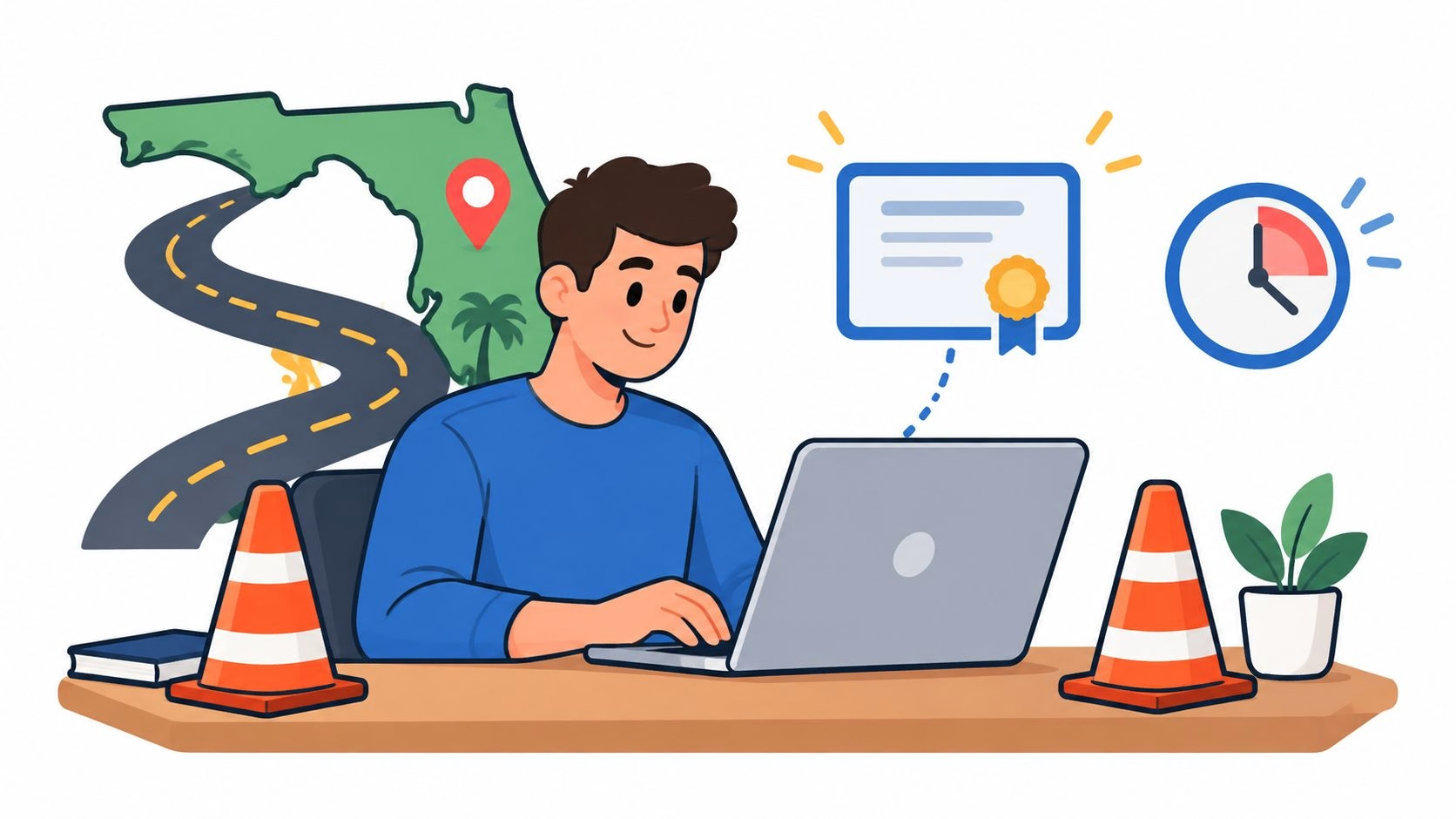

If you are asking, do I need a BDI course, you are probably dealing with a deadline, a ticket, or a DMV notice. In most cases, the answer depends on why you were told to take it, what state you are in, and whether the course is being used to satisfy a court, licensing, or insurance-related requirement.
A BDI course, or Basic Driver Improvement course, is a traffic safety program designed to help drivers meet specific legal or administrative requirements. Some people take it after a citation. Others take it because a court ordered it, a state agency requires it, or they want to address points or driving record issues. The key is not whether the course sounds useful. The key is whether an approved BDI course is required in your situation.
What a BDI course is really for
A Basic Driver Improvement course is not a general driving class for beginners. It is usually a state-approved program focused on safer driving habits, traffic laws, risk awareness, and driver responsibility.
That matters because approval status is often the difference between a course that counts and one that does not. If a court, DMV, clerk, or state agency requires BDI, they generally mean a course approved for that exact purpose in that state. An online option can be more convenient, but it still has to match the requirement.
Do I need a BDI course after a ticket?
Sometimes yes, but not automatically.
In some states, a BDI course may help with a traffic citation by meeting court conditions, qualifying for an election that keeps points off your record, or satisfying another traffic school requirement. In other situations, a ticket alone does not mean you need BDI unless the court notice, clerk, or state instructions say so.
The safest approach is to check the notice you received. Look for language about driver improvement, traffic school, election deadlines, or court-ordered education. If the document names a Basic Driver Improvement course specifically, that is your answer.
If the notice is vague, the next step is confirming the exact requirement before you enroll. Taking the wrong course can waste time and money, especially if the provider is not approved for your state or your reason for taking it.
Common situations where a BDI course may be required
The most common reason is a traffic citation that gives you the option or requirement to complete a driver improvement course. Another common situation is a court order after a moving violation. Some drivers are also required to complete BDI because of point accumulation, license-related issues, or as part of reinstatement or compliance steps.
There are also cases where a driver takes BDI voluntarily because it may help with record-related concerns or insurance matters, but that is different from a mandatory requirement. Voluntary and required courses can look similar on the surface, yet the reporting rules, deadlines, and approvals may differ.
How to know if your requirement is mandatory or optional
Start with the source of the requirement. If it came from a court, DMV, clerk of court, licensing agency, employer, or insurance program, read the wording carefully.
Mandatory usually means the notice says you must complete the course by a certain date. Optional usually means you may elect to take the course to receive a specific benefit, such as avoiding points in an eligible case. If the notice does not make that clear, contact the issuing office before registering.
This is one of those areas where guessing creates problems. A course taken for the wrong reason may not be accepted, even if the course itself is legitimate.
Do I need a BDI course if I already paid my ticket?
Maybe not, but it depends on timing and the rules that applied to your case.
In many situations, paying a ticket is treated as resolving the citation without choosing the driver improvement option. If BDI was meant to be an alternative or election, that option may no longer be available after payment. If BDI was court-ordered separately, you may still need to complete it.
This is why deadlines matter. If you think a BDI course might help your case, check before paying or pleading, not after.
State rules can change the answer
A BDI course requirement is heavily state-specific. The name of the course, how often you can take it, whether it prevents points, and who approves it can vary.
For example, one state may allow online completion for eligible ticket cases, while another may require a different program name or only accept it in limited circumstances. Even within a state, courts may have their own procedures for deadlines and proof of completion.
That is why broad advice like everyone with a ticket needs traffic school is not reliable. What matters is your state, your offense, your notice, and the exact agency involved.
What to verify before you sign up
Before enrolling, confirm four things: the course type, the approval status, the deadline, and who receives the completion record.
The course type must match your requirement. A general defensive driving course is not always the same as Basic Driver Improvement. The approval must fit your state and purpose. The deadline needs to leave enough time for completion and reporting. And you need to know whether the provider reports your completion directly or if you must submit proof yourself.
Those details are easy to overlook when you are trying to move quickly. They are also the details that determine whether the course actually solves the problem.
Online BDI courses are often the practical choice
If you do need a BDI course, online delivery is usually the easiest option for busy drivers. A self-paced course lets you complete the requirement on your own schedule, from home, and often from a phone, tablet, or computer.
That convenience matters when you are working around court dates, job hours, family obligations, or license deadlines. But convenience should never come before approval. A flexible course only helps if it is accepted by the authority requiring it.
For that reason, many drivers look for a provider that clearly states course approval, pricing, device access, and completion procedures. floridadetscourse.com focuses on that kind of straightforward, compliance-centered experience.
When the answer is probably yes
You likely need a BDI course if your ticket notice, court paperwork, clerk instructions, or DMV communication specifically says Basic Driver Improvement, driver improvement, or an approved traffic safety course is required. You also likely need it if you were given a deadline and told completion is necessary to satisfy a citation, prevent a penalty, or restore compliance.
If someone unofficially suggested it, such as a friend or online forum, that is not enough by itself. The requirement should come from an authority that can accept or reject your completion.
When the answer is probably no
You probably do not need a BDI course if there is no official instruction, no court order, and no state or insurance requirement connected to your situation. You also may not need it if a different course type was assigned, such as first-time licensing education, a mature driver insurance discount course, or another specialized program.
This is where people get tripped up. Not every driver education course serves the same purpose. Taking a valid course that does not match your requirement still leaves the requirement unmet.
FAQ: Do I need a BDI course?
What does BDI mean?
BDI means Basic Driver Improvement. It is a state-approved traffic safety course used for certain tickets, court orders, point issues, or compliance needs.
Do I need a BDI course for every traffic ticket?
No. A BDI course is only needed when your state, court, clerk, or notice says it applies to your case.
Can I take a BDI course online?
Often, yes. Online BDI courses are common, but the course must be approved for your state and requirement.
Will a BDI course remove points from my license?
Sometimes. Point-related outcomes depend on state law, your eligibility, and the reason you are taking the course.
Is a BDI course the same as defensive driving?
Not always. Some states use different names for similar programs, but acceptance depends on the exact course type required.
What if I am not sure whether I need one?
Check the notice you received first. If it is unclear, contact the court, clerk, DMV, or agency listed on the notice before you enroll.
What happens if I take the wrong course?
It may not count. You could still owe the original requirement and lose time before your deadline.
If you are still asking, do I need a BDI course, treat it like a compliance question, not a guess. One quick check with the issuing authority can save you from taking the wrong class, missing a deadline, or paying twice.