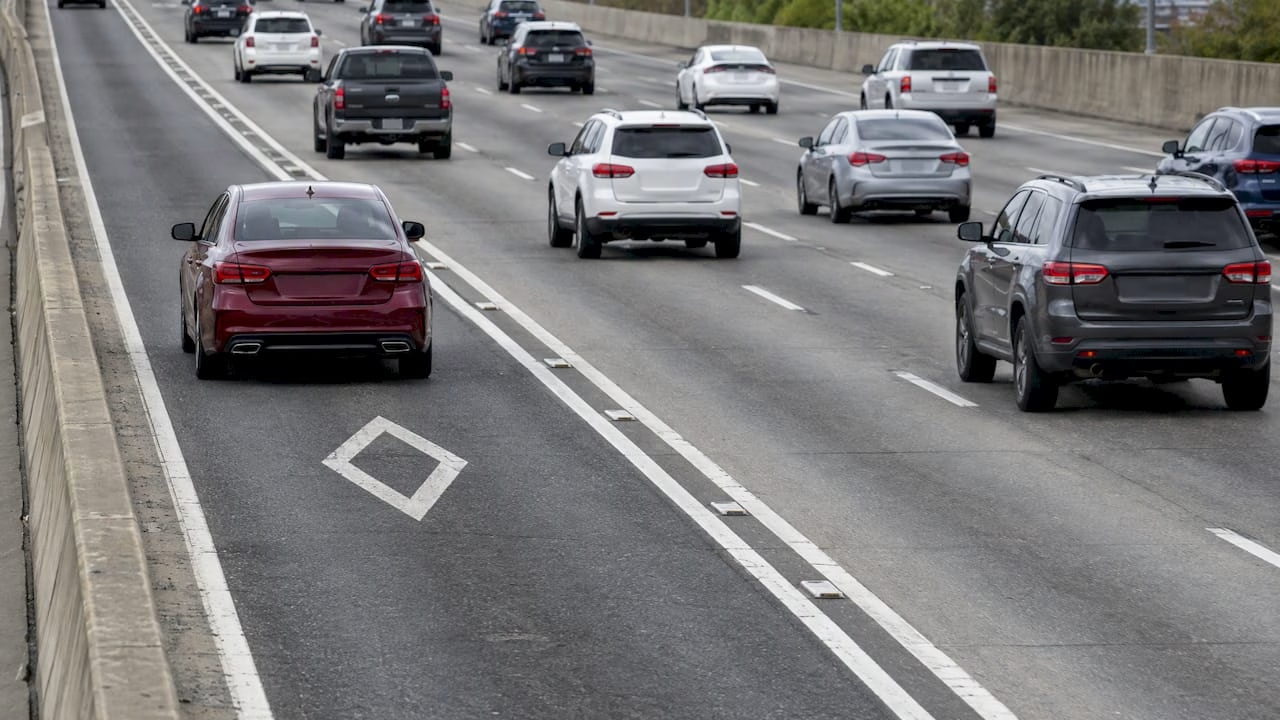
A car pool lane is a high-occupancy vehicle (HOV) lane: a lane reserved for vehicles that carry a minimum number of people, plus buses and other authorized vehicles. The sign at the entrance tells you the minimum, usually two or three occupants including the driver, and the hours when the restriction applies. If you meet the sign�s requirements, you can use the lane. If you don�t, stay out of it, because the ticket costs far more than the minutes you save.
This guide explains what the lanes are for, how to recognize them, who counts as an occupant, when the rules are in force and what happens if you break them.
Key Takeaways
- A carpool lane (also called an HOV or diamond lane) is reserved for vehicles with a posted minimum number of occupants, commonly 2+ or 3+.
- The posted sign controls everything: the occupancy number, the hours and any allowed vehicles. Rules differ by state and even by road.
- Children and infants count toward the minimum, and the driver counts as one person.
- Look for a diamond symbol and a solid white line. Enter and exit only where the markings allow.
- Using the lane without enough occupants can bring a citation. In Florida, it is a moving violation.
Table of Contents
- What a Car Pool Lane Is and What HOV Means
- Why Carpool Lanes Exist
- How to Recognize a Carpool Lane
- Who Can Use the Lane and Who Counts as an Occupant
- When Carpool Lanes Are Active
- How to Enter and Exit Legally
- What Happens If You Use the Lane Without Qualifying
- How Carpool Lane Rules Differ From State to State
- Our Perspective: Reading the Road Is a Skill You Can Build
- Take the Next Step With a State-Approved Course
- A Quick Checklist Before You Enter
- FAQ
- Sources
What a Car Pool Lane Is and What HOV Means
The Federal Highway Administration describes an HOV lane as a preferential lane reserved for qualifying carpools, vanpools, buses and other authorized vehicles. HOV stands for high-occupancy vehicle. You will also hear �diamond lane,� �commuter lane� and �carpooling lane.� They all describe the same idea.
The number on the sign is the minimum count of people in the vehicle, driver included. A �2+� sign means two or more people. A �3+� sign means three or more. Some corridors use one number at certain hours and another at other times, so read the whole sign each time you enter.
Why Carpool Lanes Exist
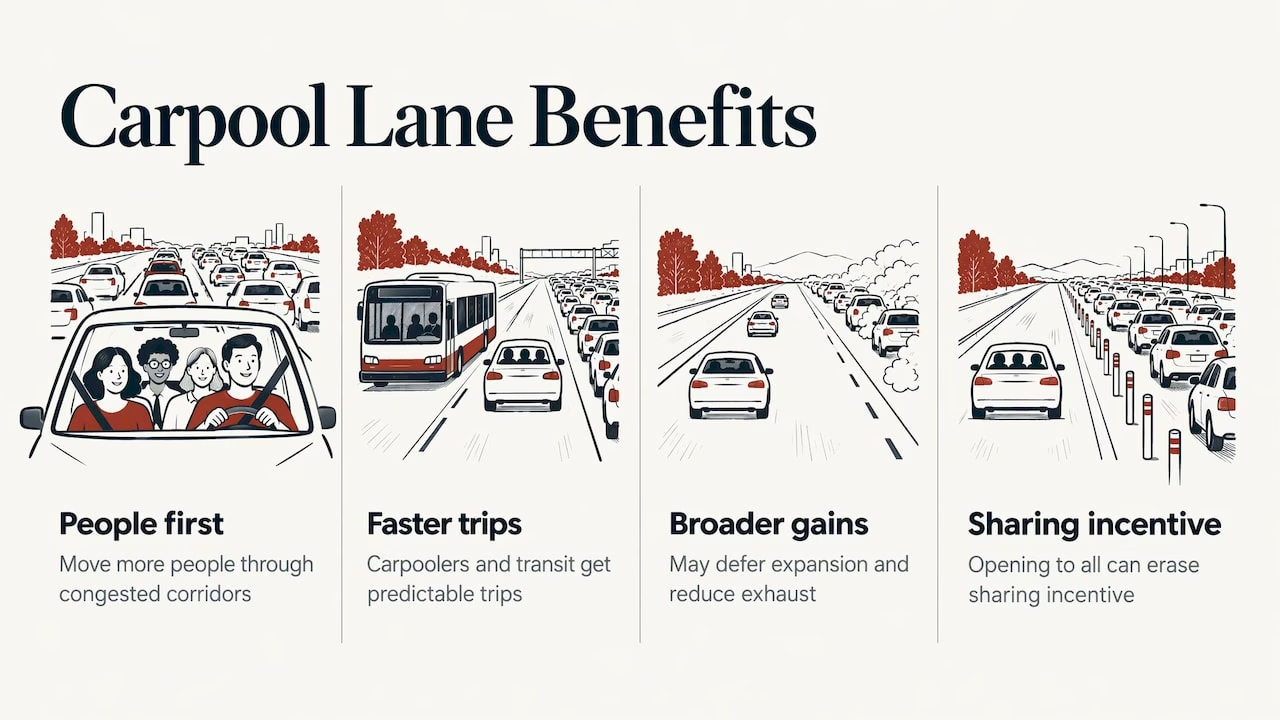
The goal is simple: move more people, not just more cars. According to the FHWA, these lanes are meant to move more people through congested corridors, give carpoolers and transit riders faster and more predictable trips, and encourage ridesharing. The agency also lists reduced single-occupant traffic, deferred roadway expansion and lower exhaust emissions as potential broader benefits.
State agencies describe it the same way. California�s transportation department treats HOV lanes as both congestion management and environmental infrastructure, linking ridesharing with highway capacity, fuel conservation and cleaner air. Texas guidance says exclusive HOV or managed lanes are intended to reduce congestion, improve air quality and safety, and make better use of existing highways.
There is also an operating reason for the restrictions. Washington State�s transportation department explains that opening a peak-period HOV lane to everyone could turn it into another congested lane and remove the incentive to share a ride.
How to Recognize a Carpool Lane
You can spot a carpool lane three ways: the diamond, the lines and the signs.
- The diamond. Washington State DOT says HOV lanes are identified by a diamond symbol on signs and pavement.
- The lines. The same agency notes they are typically separated from general lanes by a solid white line. Arizona DOT describes a white diamond in the center of the lane and solid white lane lines.
- The signs. The California DMV tells drivers to read the signs at the on-ramp or along the road, because they state the minimum occupancy and the hours when HOV rules apply.
The lane is usually the far-left lane, next to the median or oncoming traffic, though some regions place it elsewhere or separate it with a buffer. Caltrans notes that Southern California HOV lanes are generally separated by a buffer zone.
If you want to sharpen your sign and marking skills beyond HOV lanes, our guide to Florida signs, signals and roadway markings covers the full set, and our overview of traffic sign meanings explains the symbols you will meet on the road.
Who Can Use the Lane and Who Counts as an Occupant
The posted sign decides. Depending on the rules where you drive, authorized users can include:
- Carpools and vanpools that meet the minimum
- Buses and public transit
- Motorcycles
- Some toll-paying or low-emission vehicles
The FHWA says children and infants count toward the minimum, and that pregnant individuals are counted as one seat-occupant. If you are working out whether a baby in the back seat gets you into a 2+ lane, the answer under that guidance is yes. When you are carrying a baby, you will want the seat installed correctly too, and this explainer on rear-facing car seat age rules covers that side of the trip.
The exceptions differ by state. Tennessee requires every vehicle in an HOV lane to carry the minimum shown on the entrance signs, which is two people there, and lists motorcycles among the exceptions. Arizona DOT lists passenger vehicles with at least two occupants, public-transit buses, qualifying buses with at least two occupants and motorcycles as permitted during restricted times.
When Carpool Lanes Are Active
There is no national schedule. According to the FHWA, HOV hours are posted and may be limited to rush hours, run around the clock, or open to general traffic or close off-peak.
Three examples show how much it varies:
| Region | Typical operation | Source |
|---|---|---|
| Northern California | Monday through Friday during posted peak periods such as 6 to 10 a.m. and 3 to 7 p.m.; other vehicles may use the lanes outside those periods | Caltrans |
| Southern California | Generally full-time, 24 hours a day, seven days a week | Caltrans |
| Interstate 279, Pittsburgh area | HOV-2 Monday through Friday, 6 to 10 a.m. inbound and 3 to 7 p.m. outbound, with unrestricted periods and a weekday 10 a.m. to 3 p.m. closure as posted | PennDOT |
The lesson: never assume the rules you learned on your home highway apply on a road trip. Read the sign each time, especially in a state you don�t drive in often.
How to Enter and Exit Legally
A solid white line means do not cross. Many lanes have designated access points, shown by a broken line or a marked opening. Use those openings and no others.
Here is a safe routine:
- Read the sign before you merge. Confirm the minimum occupancy and that the hours are in effect.
- Count your people. The driver counts. Everyone else in the vehicle counts too, including children.
- Plan your exit early. Carpool lanes sit on the far left, so you may need to cross several lanes to reach your exit. Start moving over well before the ramp, and only where the markings allow it.
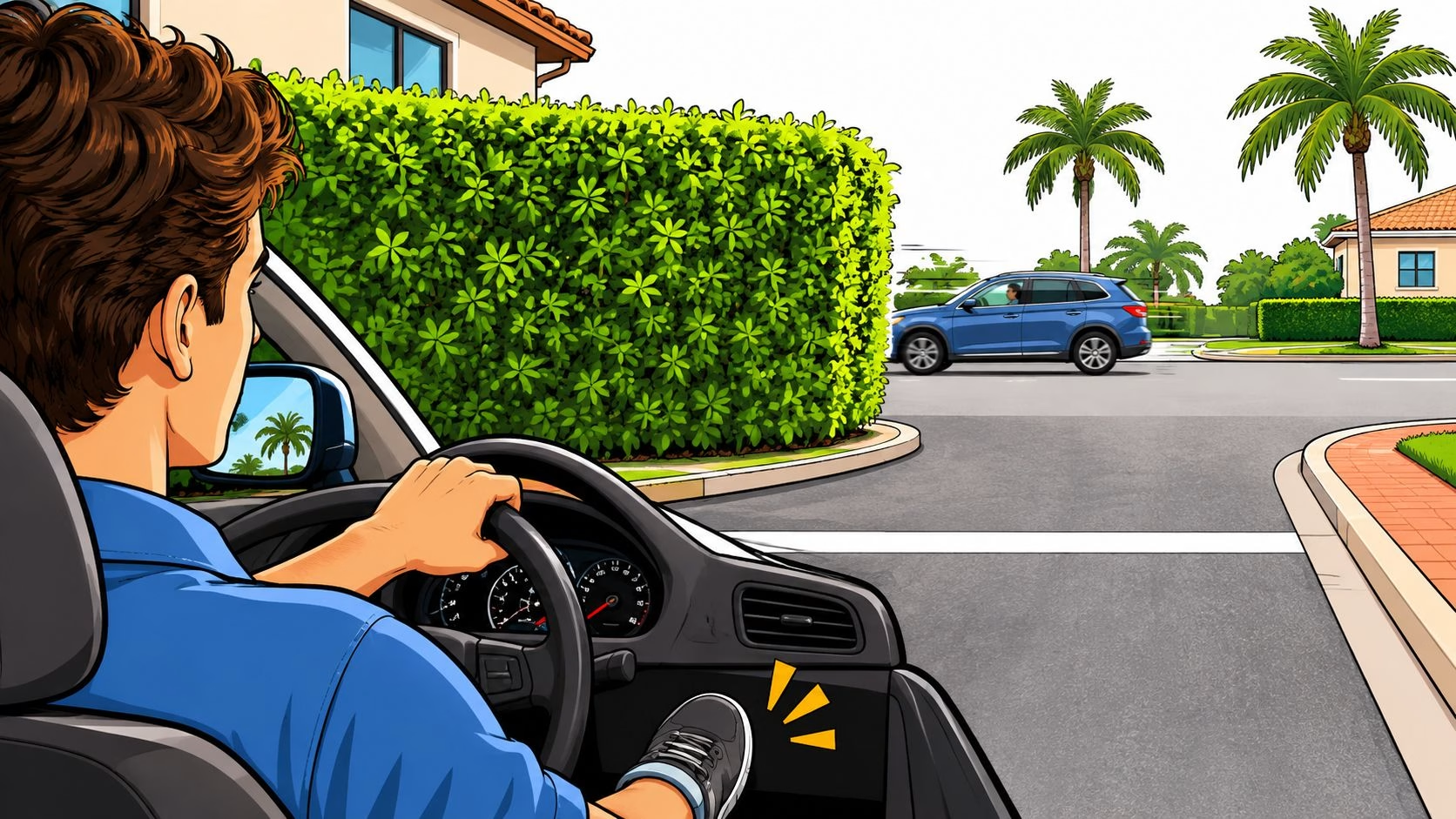
- Signal and check your blind spot every time you cross into or out of the lane.
Speed differences matter here. The carpool lane can be moving much faster than the lane next to it, so merge out smoothly rather than cutting across. Our guide on how to change lanes properly walks through the mirror, signal and blind-spot sequence, and our article on improper lane changes explains how a sloppy merge can become a citation of its own. If you want to know what solid white lines mean in other situations, see what double white lines mean in Florida.
What Happens If You Use the Lane Without Qualifying
The FHWA says a driver may be stopped and cited, and on some electronically enforced HOT lanes the registered owner may receive a ticket in the mail. Fines vary by state and by prior violations.
Arizona DOT notes that a violation may result in a traffic citation and fine.
In Florida, the statute required the occupancy number, and for lanes not designated full-time the HOV hours, to appear on traffic-control devices. Driving below the posted occupancy was a moving violation punishable under Chapter 318. Because it is a moving violation, it is not a minor parking-style ticket: it is the kind of citation that can touch your driving record. Check the current statute and your citation paperwork for the exact consequences.
If you get a lane citation
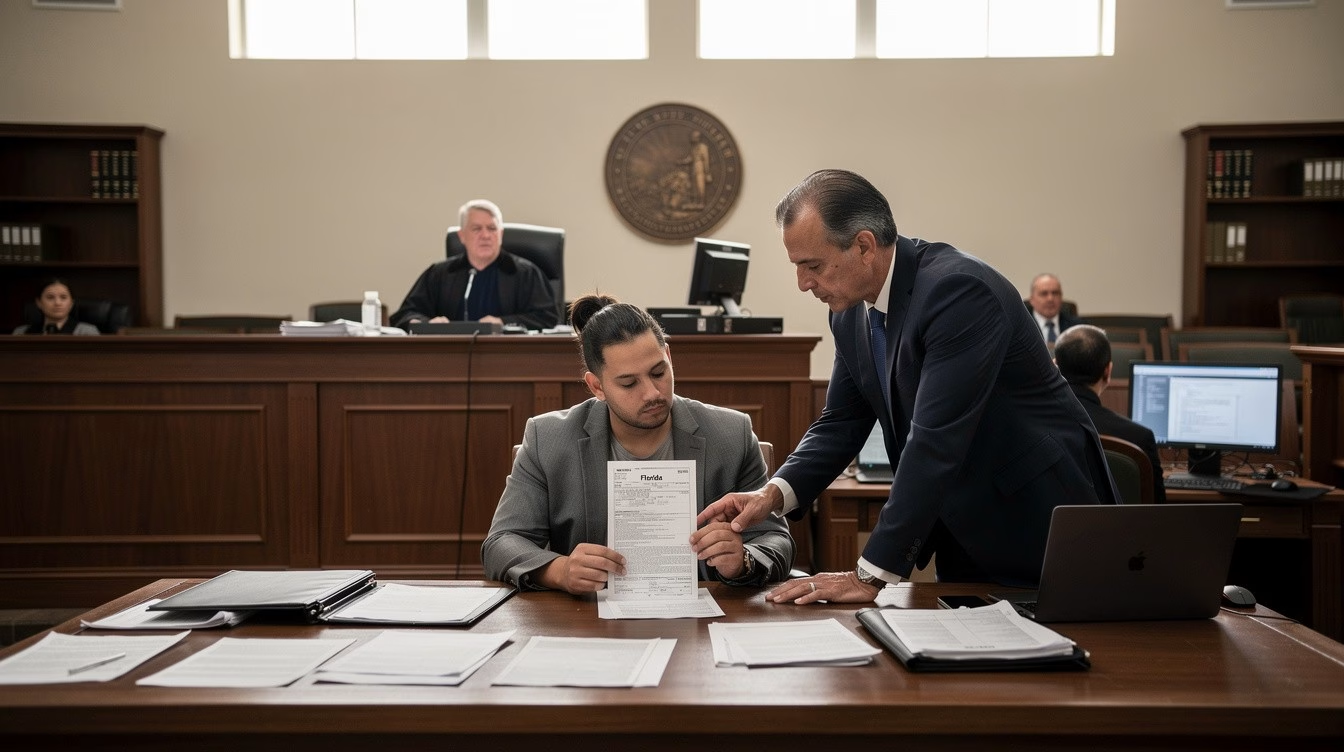
Read the citation closely. It lists your options and deadlines, and the clerk of court or the issuing agency can tell you which of them apply to you. Don�t ignore it. Missing a deadline can turn a single ticket into a bigger problem.
How Carpool Lane Rules Differ From State to State
The FHWA states that HOV rules vary by state and facility, including occupancy requirements, operating hours, permitted vehicles and penalties. A few practical habits follow from that:
- Treat every new highway as unfamiliar. Look for the sign before the first diamond.
- Check the hours. A lane that is open to everyone at midday may be restricted again by afternoon.
- Know your vehicle. Motorcycle, hybrid and toll exceptions exist in some places and not in others, and they change over time.
- When in doubt, stay out. You lose a few minutes in the general lanes. You avoid a citation.
Our Perspective: Reading the Road Is a Skill You Can Build
Most carpool lane tickets are not about drivers trying to cheat. They happen because a driver didn�t read a sign, misjudged the hours or merged across a solid line in a hurry. That is a knowledge problem, and knowledge is fixable.
At floridadetscourse.com, we build our courses in-house with certified educators and safety specialists, so the material reflects statutory requirements and real-world driving. We believe signs, markings and lane rules deserve the same attention as speed limits, because they are where everyday mistakes turn into citations.
Our state-approved online courses are designed for busy people. You study at your own pace on any device, with multilingual read-along features, and our pricing is transparent with no hidden fees and a money-back guarantee. Whether you are a new driver learning what a diamond lane means or an experienced driver refreshing your habits, a structured course is a calm, practical way to keep your record clean.
the author
Take the Next Step With a State-Approved Course
If you are a Florida driver who has received a citation, or you want a stronger grasp of signs, markings and lane rules, we can help. Our Florida Basic Driver Improvement (BDI) course is $30. The Florida Driver Education Traffic Safety Course (DETS) is $29.90, and the Traffic Laws Substance Abuse Education Course (TLSAE) is $29.95. All are state-approved and you can complete them online at your own pace.
 Florida courses page, and if you manage a team of drivers, ask about our custom fleet safety course.
New to Florida�s licensing steps? Our overview of Florida driver education requirements explains what you need and in what order.
A Quick Checklist Before You Enter
Before you merge into a carpool lane, run through these questions:
- Does the sign show a minimum I meet right now, counting everyone in the vehicle?
- Are the posted hours in effect at this time of day and day of the week?
- Is my vehicle type allowed, or am I relying on an exception I�m not sure about?
- Am I crossing at an authorized opening, with no solid white line under my tires?
- Do I know where my exit is, and can I reach it safely?
If every answer is yes, you are good to go. If any answer is no, stay in the general lanes. That is the legal and safe choice.
FAQ
What is a carpool lane?
A carpool lane is a high-occupancy vehicle (HOV) lane reserved for vehicles with a posted minimum number of people, plus buses and other authorized vehicles. The sign shows a number such as 2+ or 3+, which includes the driver. The lane is meant to move more people through congested roads and encourage ridesharing.
Can an HOV lane have two people?
Yes, in many places. A 2+ sign means two or more occupants, and Tennessee and Arizona are examples where two people qualify. Some roads require three or more, so check the sign at the entrance. Children and infants count toward the minimum.
What does the diamond on the road mean?
The white diamond marks a lane reserved for HOV use. Washington State DOT says it appears on signs and on the pavement, and the lane is typically separated from general traffic by a solid white line. The diamond tells you to read the nearby sign for the occupancy number and hours.
Are carpool lanes open all day?
Not always. Some run 24 hours a day, while others apply only during posted rush hours and open to all traffic at other times. Only the posted signs for the road you are on are reliable, so check them each time.
What happens if I use a carpool lane alone?
You may be stopped and cited, or mailed a ticket on some electronically enforced lanes. Fines depend on the state and prior violations. In Florida, driving below the posted occupancy was a moving violation under Chapter 318.
Sources
- FHWA: Frequently Asked HOV Questions
- TxDOT: Section 9, Exclusive Lanes
- WSDOT: HOV lanes
- Caltrans: High-Occupancy Vehicle Systems
- Arizona DOT: High Occupancy Vehicle (HOV)
- California DMV: Navigating the Roads
- Tennessee DOT: High Occupancy Vehicle (HOV) Lane
- PennDOT: High-Occupancy Vehicle Lanes, District 11
- Florida Statutes 2024, 316.0741
Recommended
- What Is Improper Lane Change And How To Avoid It
- How to change lanes properly: A Safe Drive Guide
- Right-of-Way Rules Explained: A Clear Look at Traffic Law Basics
- Understanding Traffic Laws: A Practical Guide for New Drivers
This article is provided for general information and is not a professional advice.