Nervous hands on the steering wheel. A racing heart at every intersection. New driver confidence doesn’t come naturally for most people-it’s built through deliberate practice and the right guidance.
At floridadetscourse.com, we’ve seen firsthand how drivers transform when they stop white-knuckling their way through traffic and start driving with genuine assurance. The difference between a shaky new driver and a composed one isn’t talent-it’s strategy and structured learning.
Understanding Confidence Behind the Wheel
What Confidence Actually Means Behind the Wheel
Confidence behind the wheel is not overconfidence or recklessness. It’s the ability to make split-second decisions without second-guessing yourself, to recognize hazards before they become emergencies, and to execute maneuvers smoothly because your body knows what to do. A Taylor & Francis meta-analysis from 2023 found roughly a 0.30 correlation between confidence and performance, with stronger effects on short-duration tasks like parking or highway merging. This means confidence directly impacts your ability to handle critical moments.
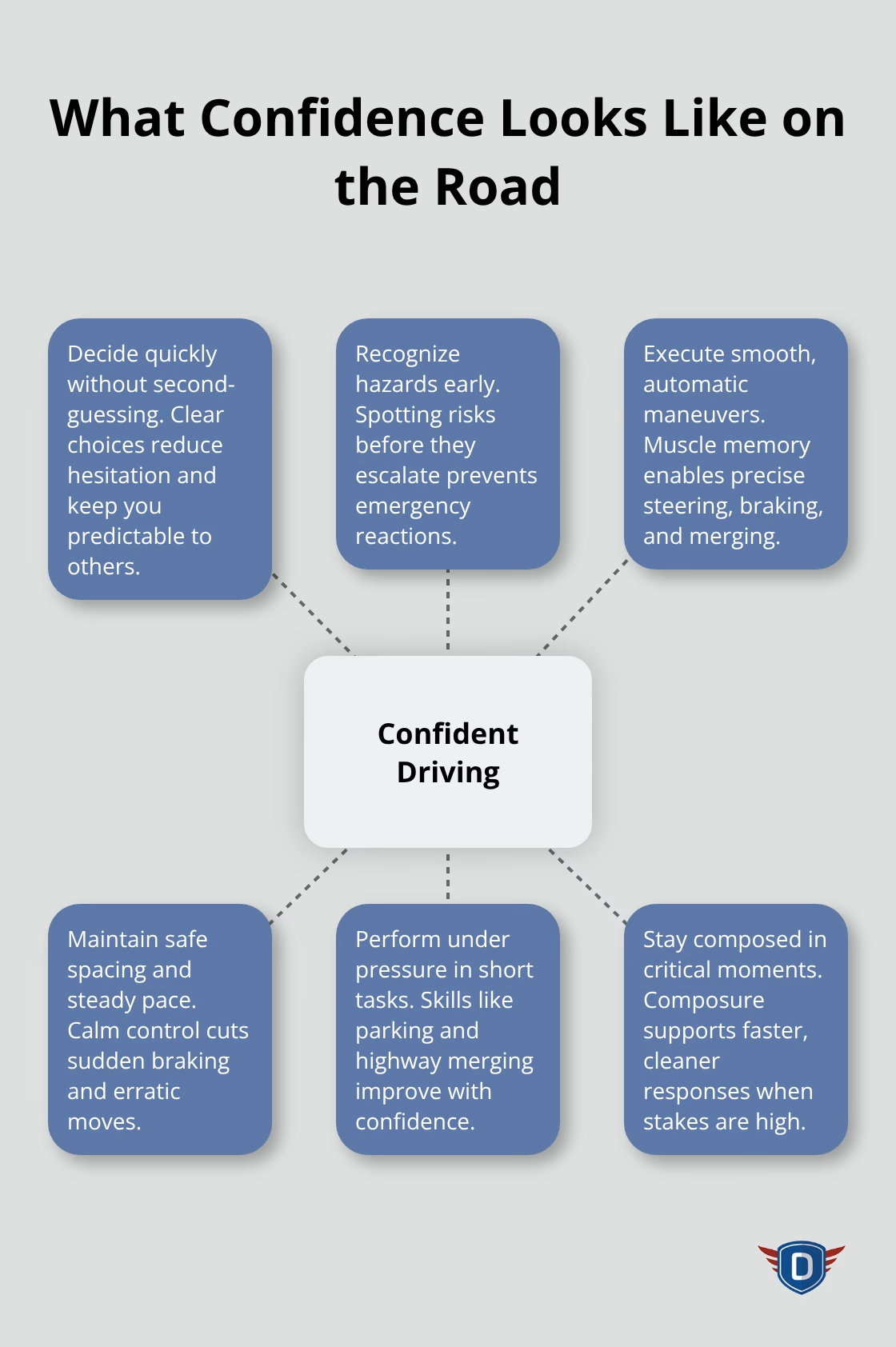
A driver who trusts their judgment reacts faster, maintains better spacing, and avoids the hesitation that causes accidents. The difference is measurable and real.
Why Doubt Behind the Wheel Increases Accident Risk
Lack of confidence kills more than skill does. When you’re uncertain, your nervous system floods with stress hormones, your reaction time slows, and your attention fractures. You focus on your fear instead of the road.
Research on driving anxiety symptoms and their impact on concentration shows that common physical symptoms include racing heart, sweating, and shortness of breath-all of which impair concentration and decision-making. An anxious driver on a highway often rides the brake, swerves unpredictably, or freezes when merging, making them a hazard to themselves and others.
Icy stopping distances can be up to ten times longer than on dry roads, yet a nervous driver may brake too hard or too late because panic overrides judgment. The real danger isn’t the road condition or the traffic. It’s the gap between what your hands do and what your brain wants them to do.
How Driver Attitude Shapes Road Safety
Your mindset before you turn the key determines how safely you’ll drive. Drivers who prioritize safety over speed and ego maintain a three-second following distance, respect posted limits, and ignore tailgaters. Also drivers who treat mistakes as learning opportunities instead of failures adjust their approach and improve.
And drivers who treat defensive driving as a learnable skill-not a suggestion-scan mirrors consistently, anticipate other drivers’ actions, and position themselves to avoid problems before they happen. Your attitude determines whether you view the road as a threat or a space you can navigate competently.
This foundation of mindset and self-awareness sets the stage for the practical techniques that actually transform nervous drivers into composed ones.
How to Practice Driving Skills That Actually Stick
Confidence emerges from repetition in conditions that matter, from feedback that corrects bad habits before they become automatic, and from building mental models of what happens on real roads. The key is structured practice-not random miles behind the wheel. Start every practice session with a proper seating position, steering wheel adjustment, and mirror setup. This baseline matters because muscle memory begins the moment you sit down. Then establish a pre-drive routine: three deep breaths, a quick risk assessment of weather and traffic patterns, and a brief route review. This reduces cognitive load during the drive and trains your nervous system to focus on what matters.
Build Skills in Graduated Stages
Practice moves from quiet residential streets to busier roads only when each step feels manageable. Empty parking lots are where you build handling skills-smooth steering inputs, gradual braking, and reversible maneuvers executed repeatedly until they become automatic. Once these basics are solid, move to low-traffic residential roads during off-peak hours to practice intersections, turns, and basic hazard recognition. A three-second following distance is your safety buffer on all roads, and maintaining it requires constant mirror checks and anticipation of other drivers’ movements. Highway merging deserves dedicated practice off-peak, focusing on smooth acceleration, shoulder checks, and holding your speed after the merge. Emergency stops on quiet roads build braking feel-knowing how your vehicle responds matters more than speed. Practice in rain or fog to experience how conditions change stopping distance and traction. Icy roads demand even more caution since stopping distances increase significantly compared to dry pavement.
Scan, Anticipate, Adjust
Defensive driving means you scan mirrors every five to eight seconds, check blind spots before lane changes, and position your vehicle to avoid problems before they develop. Develop a consistent scanning pattern: left mirror, right mirror, center, then ahead. This becomes automatic through repetition. Anticipate other drivers’ actions by reading their positioning, speed, and brake lights. A driver drifting between lanes or riding the brake signals unpredictability.
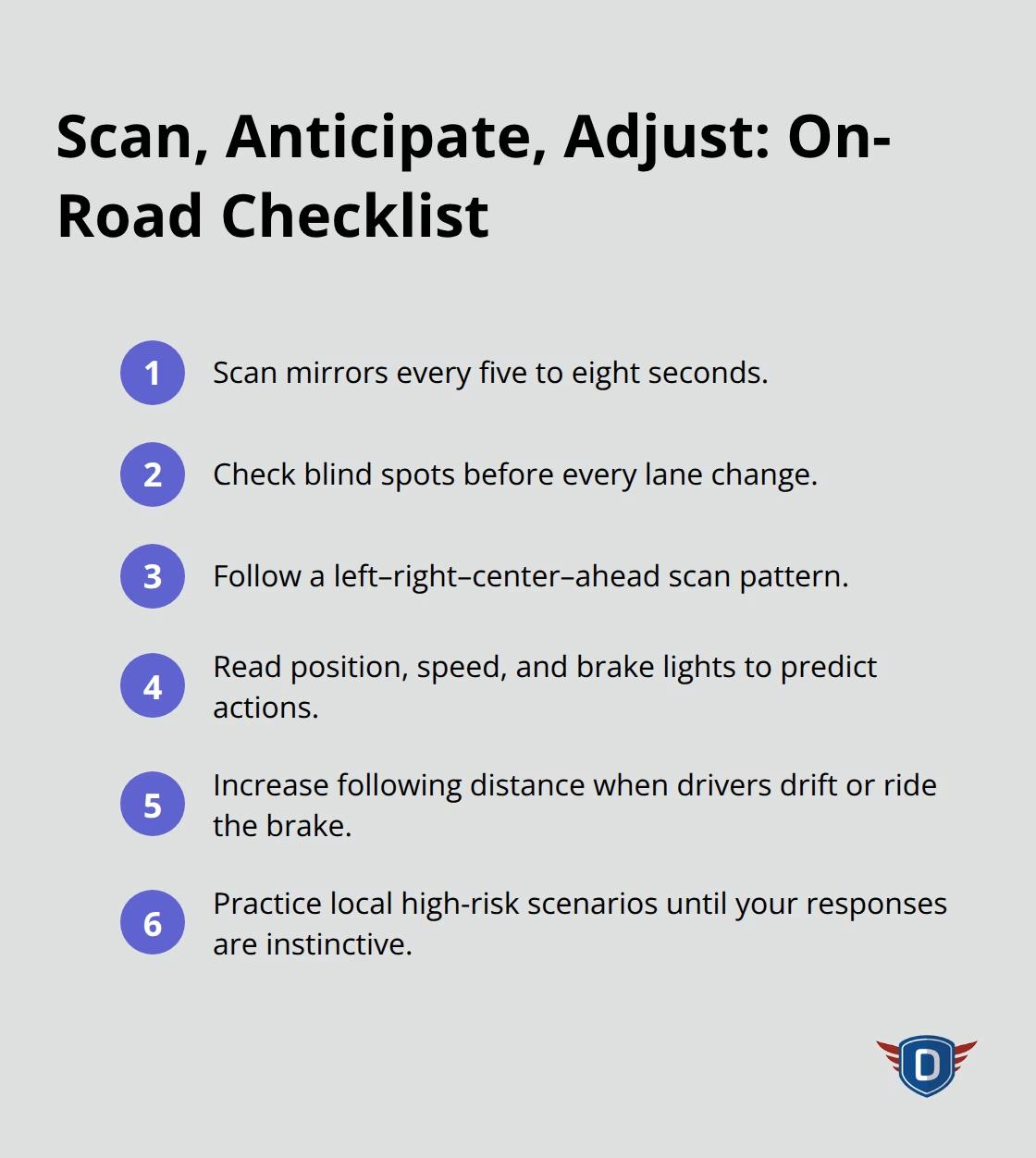
When you spot these patterns, increase your spacing and adjust your speed. High-impact hazard recognition comes from practice, not luck. Identify common scenarios in your area-rotaries, highway merges, unlit roads at night, congested intersections-and practice them repeatedly until your response becomes instinctive rather than conscious.
Manage Stress Before It Manages You
Physical symptoms of driving stress (racing heart, sweating, trembling) signal your nervous system is in overdrive. Box breathing works: inhale for four counts, hold for four, exhale for four, hold for four. This improves heart-rate variability and calms your physiology. Control your environment before you drive: silence your phone, remove distractions, and choose calming audio over stimulating content. Avoid caffeine before practice sessions since it amplifies jitters. Use specific, present-tense self-talk tied to actual tasks-not vague motivation. Address yourself by name and use action cues like focus, smooth acceleration, or check mirrors. Keep a brief progress log after each drive, noting concrete wins rather than dwelling on mistakes. This counters negative bias and builds momentum. Treat every mistake as information, not failure. Pause, assess what happened, reset your attention, and adjust your approach for the next attempt.
Transform Knowledge Into Automatic Response
Structured instruction translates what you know into what your hands and feet do without hesitation. Hazard recognition, the three-second following distance, and natural steering inputs all require deliberate repetition until they shift from conscious effort to automatic response. High-impact skills deserve dedicated practice with concrete targets (parking within two centimeters of the curb for five consecutive attempts, for example). The Novice License stage is a critical window to transform conscious actions into ingrained safe habits. This is where professional guidance accelerates your progress beyond what solo practice alone can achieve.
Why Certified Instructors Accelerate Your Progress Faster
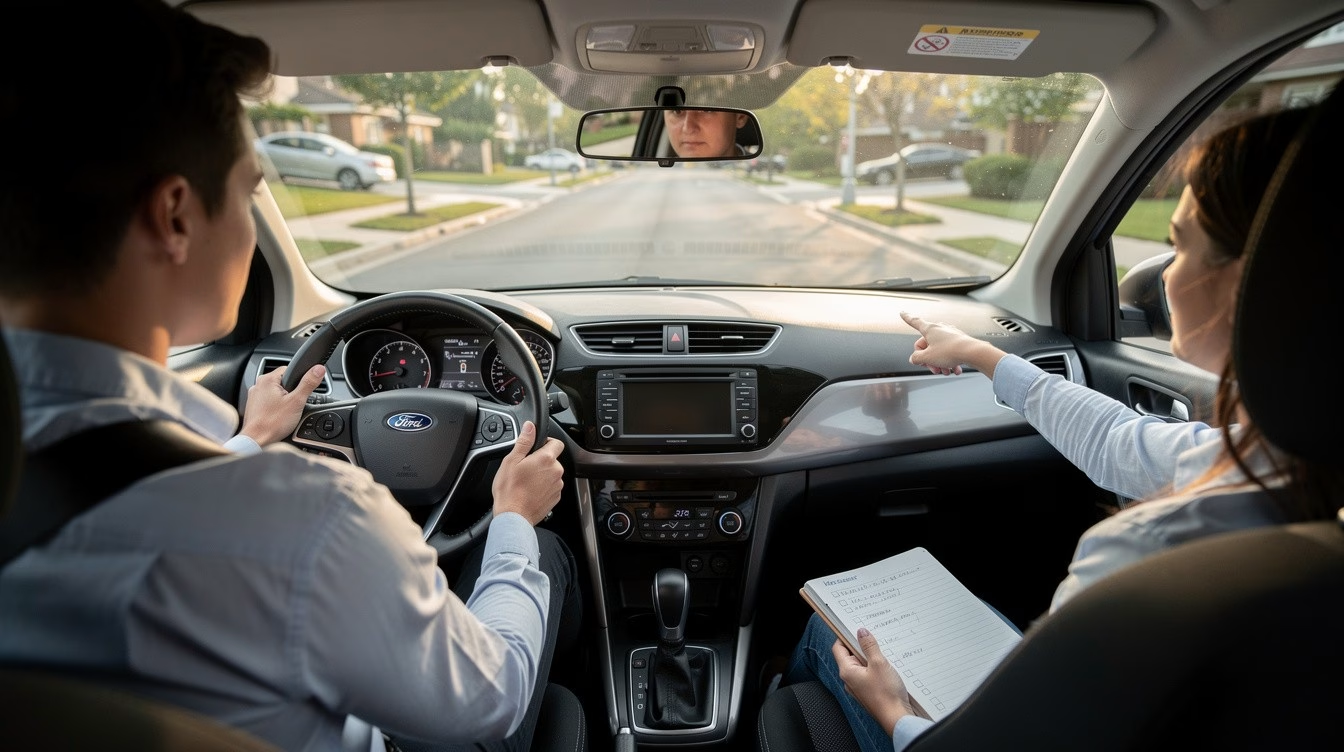
Solo practice builds miles, not mastery. A certified instructor compresses years of trial-and-error learning into weeks by identifying exactly what’s holding you back and correcting it before bad habits calcify. When you brake too early at an intersection, a professional catches it and explains why your timing creates danger. When you drift between lanes, they show you the mirror-scanning pattern that prevents it.
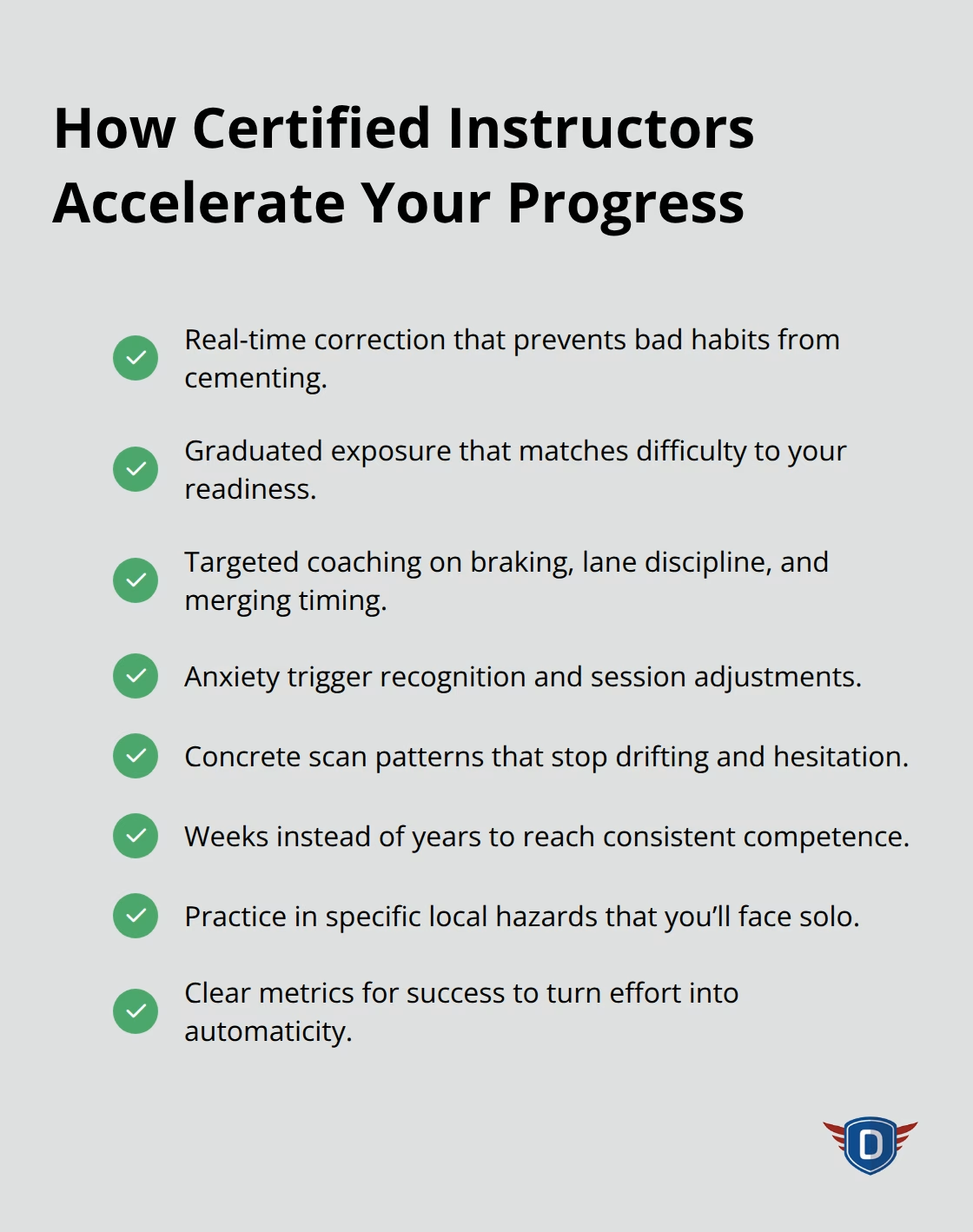
This real-time feedback separates drivers who accumulate hours from drivers who accumulate competence. A certified instructor also recognizes anxiety triggers before they derail your session. If you tense up on highway merges, they don’t push you onto the interstate. They practice merges in low-traffic conditions, build your acceleration timing, and increase complexity only when your nervous system signals readiness. This graduated exposure method works because it respects how your brain actually learns.
Real Scenarios Build Real Confidence
Professional driver education puts you on actual roads with an instructor who teaches hazard recognition, not just route completion. You practice highway merging during off-peak hours when traffic is manageable, focusing on smooth acceleration and shoulder checks until the maneuver becomes automatic. You navigate rotaries, unlit roads at night, and congested intersections in your local area because these are the hazards that will actually challenge you. An instructor knows that icy stopping distances extend significantly longer than on dry roads, so they schedule winter practice to teach you how your vehicle responds in those conditions.�
They position practice in rain and fog deliberately, not accidentally. This matters because confidence built on actual road experience transfers directly to independent driving. The instructor also teaches you to read traffic patterns-identifying which drivers are unpredictable, where blind spots hide vehicles, and how to position yourself to avoid problems before they develop. This pattern recognition comes from guided practice on real roads.
Progressive Skill Development Through Structured Courses
Structured courses transform conscious effort into automatic response through deliberate sequencing. Week one focuses on basic vehicle control-steering smoothness, gradual braking, and reversing maneuvers-all practiced in controlled environments like empty parking lots. Week two adds intersections and turns on quiet residential roads during off-peak hours. And week three introduces busier roads and defensive driving techniques like maintaining a three-second following distance and scanning mirrors every five to eight seconds. Also week four tackles the specific hazards in your area-highway on-ramps, congested intersections, or challenging road conditions.�
This progression works because each step feels manageable, your nervous system adapts gradually, and you build genuine automaticity rather than white-knuckling your way through unfamiliar scenarios. High-impact skills like parking receive dedicated practice with concrete targets: parking within two centimeters of the curb for five consecutive attempts, not just one lucky try. Professional instruction also accelerates the shift from conscious knowledge to unconscious competence. You might know intellectually that a three-second following distance is safe, but an instructor shows you what that distance actually looks like, how to measure it, and how to maintain it under real traffic conditions. This embodied knowledge-what your hands and eyes know without your brain having to think about it-separates confident drivers from nervous ones.
Final Thoughts
Unshakeable confidence behind the wheel emerges from thousands of small decisions executed correctly, from recognizing hazards before they become emergencies, and from trusting your own judgment because you’ve tested it repeatedly in real conditions. New driver confidence grows fastest when you combine consistent solo practice with professional guidance-solo practice builds the repetitions your nervous system needs to shift from conscious effort to automatic response, while a certified instructor compresses that timeline by identifying exactly what’s holding you back and correcting it before bad habits calcify. They teach you to read traffic patterns, manage stress before it derails your performance, and practice the specific hazards in your area until they feel manageable.
Your next step depends on where you are now. If you’re building foundational skills, structured professional instruction accelerates your progress dramatically, and at floridadetscourse.com, our certified instructors provide personalized guidance tailored to your pace and your specific challenges-whether that’s highway merging, managing anxiety, or mastering the hazards in your local area. We focus on transforming conscious knowledge into automatic response so you drive with genuine assurance, not white-knuckled tension. Visit floridadetscourse.com to explore how our comprehensive driver education programs help you build the confidence that lasts a lifetime.
If you’re already driving independently, commit to regular practice in varied conditions and treat every mistake as information. The road demands your full attention and your best judgment. Give it both, and confidence follows.