

Defensive driving courses can cut your insurance premiums, but not all programs qualify for discounts. Insurance companies have strict requirements about which courses they’ll recognize, and getting the wrong certification means wasting time without saving money.
At floridadetscourse.com, we’ve researched which courses actually lower your rates and how much you can realistically save. This guide shows you exactly what insurers demand and how to maximize your insurance discount qualification.
What Insurers Actually Require for Defensive Driving Discounts
State Approval Determines Everything
Insurance companies reject courses that lack state approval, and this single factor decides whether you save money or waste time. Insurers evaluate courses based on state DMV certification, curriculum content, and instructor qualifications before offering any discounts. In Florida, only courses approved by the Florida Department of Highway Safety and Motor Vehicles qualify for insurance reductions. floridadetscourse.com offers Florida-approved programs that meet these exact standards, covering defensive driving techniques, safe following distances, right-of-way rules, and crash avoidance strategies that insurers specifically require.�
National providers like IMPROV, the National Safety Council, and American Safety Council also meet insurer requirements across most states, though approval varies by location. The difference between a qualifying course and a non-qualifying one determines whether you save money or lose it entirely.
Discount Percentages Shift Dramatically Across States
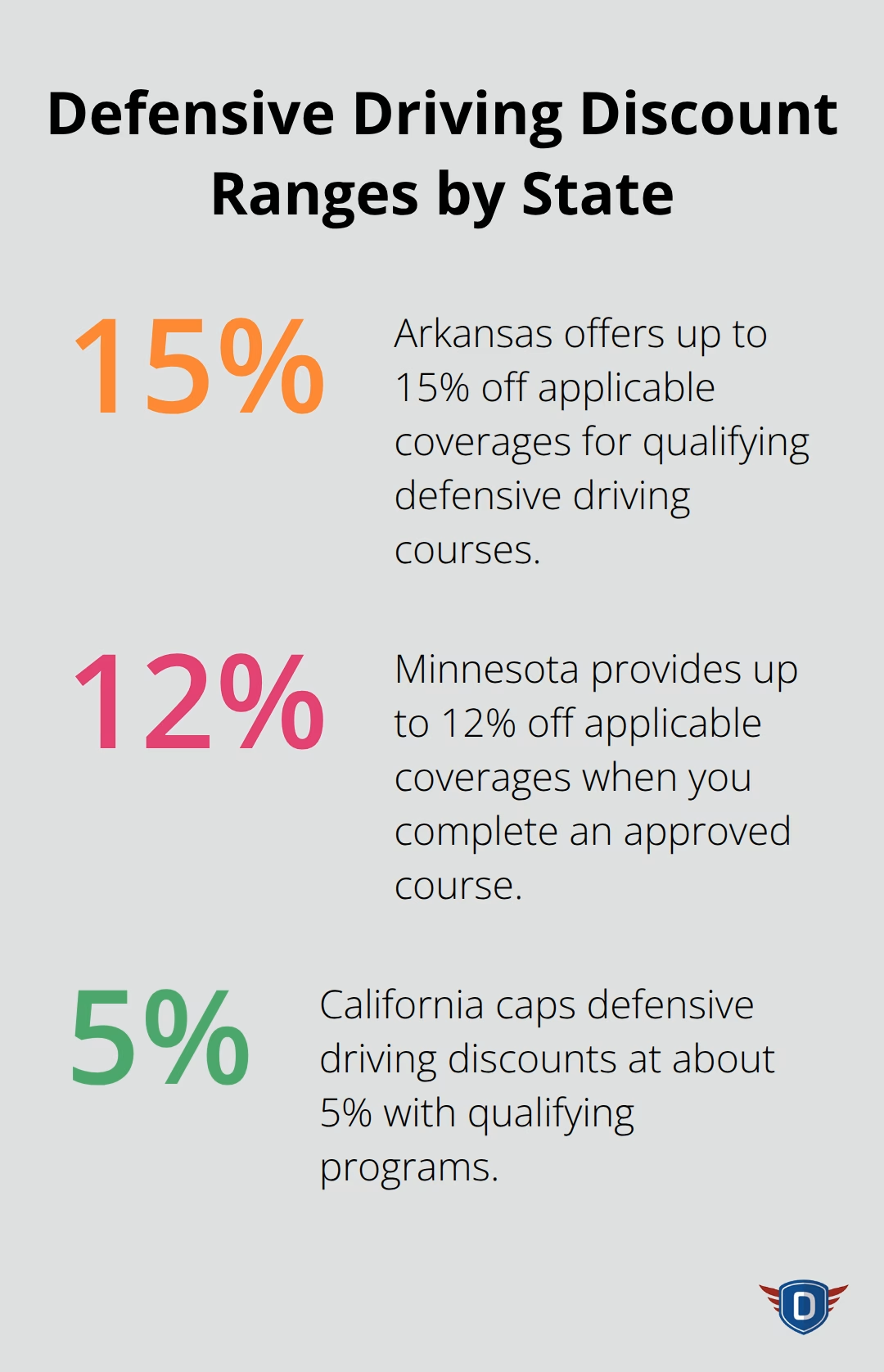
Your actual savings depend entirely on where you live and which insurer covers your vehicle. Arkansas leads with up to 15% off applicable coverages, while Delaware and Minnesota offer up to 15% and 12% respectively. Most other states fall into the 10% range, including Florida, Georgia, New York, and North Carolina, though some states like California and Illinois cap discounts at just 5%.
A few states including Massachusetts, Michigan, and Vermont don’t offer defensive driving discounts at all, making course completion pointless for insurance savings in those locations. The AARP Smart Driver course qualifies for discounts in most states and often yields multi-year savings rather than single-year reductions. Contact your insurance company directly to confirm which programs they accept and what percentage discount applies to your specific policy.
Certification Standards Insurers Won’t Overlook
Insurers scrutinize three elements: state DMV approval, course duration meeting local requirements, and instructor qualifications. New York requires courses approved by the New York Department of Motor Vehicles, and the AAA NY Defensive Driving Course meets this standard while delivering up to 10% savings for three years plus up to four license points reduction. Course length varies significantly by state, ranging from 4 to 8 hours depending on local regulations, and completing a shorter program in a state requiring longer coursework won’t qualify you. You must take the course once every 36 months to maintain insurance reduction benefits. Most insurers process discounts only after receiving official completion documentation directly from the course provider or from you within specific timeframes. The AARP Smart Driver course issues certificates downloadable within about 5 minutes of completion in most states, though some insurers have their own submission procedures. Fake certificates or courses from unaccredited providers result in denied discounts and potential fraud issues.
How to Verify Your Course Before Enrollment
Checking your course provider’s accreditation status through your state’s DMV prevents wasted time and money. Visit your state DMV website and search for approved defensive driving course providers in your area. Most states maintain public lists of accredited programs, and you can cross-reference your chosen course against this official database. Call your insurance company before enrolling to ask which specific courses they recognize and what discount percentage applies to your policy. Insurance companies sometimes accept courses from multiple providers but not all of them, so this conversation saves you from completing a program your insurer won’t honor. Some insurers process discounts automatically after receiving your certificate, while others require you to submit documentation manually during your renewal period.
Next Steps: Choosing Between Online and In-Person Options
Your course format choice affects both completion speed and how quickly your insurer processes your discount.
Which Courses Actually Deliver Insurance Savings
Florida-Approved Programs That Lower Your Premiums
Florida drivers save up to 10% on applicable coverages by completing state-approved defensive driving courses. floridadetscourse.com offers Florida-approved programs meeting FLHSMV standards, and our Basic Driver Improvement course qualifies you for insurance discounts with most carriers. The AARP Smart Driver course also qualifies in Florida and delivers multi-year discounts rather than single-year reductions, making it valuable if you’re 50 or older.�
National Safety Council and American Safety Council programs work across Florida as well, though your specific insurer may accept one provider but not another. The critical difference isn’t the provider’s reputation but whether your insurance company recognizes that particular course.
Contact your insurance company before you enroll and ask which Florida-approved courses they accept and what percentage discount applies to your policy. Some insurers offer 10% while others may negotiate lower rates depending on your coverage type and driving history. This conversation takes 10 minutes and prevents you from completing a course your insurer won’t honor.
Course Length and Your Time Investment
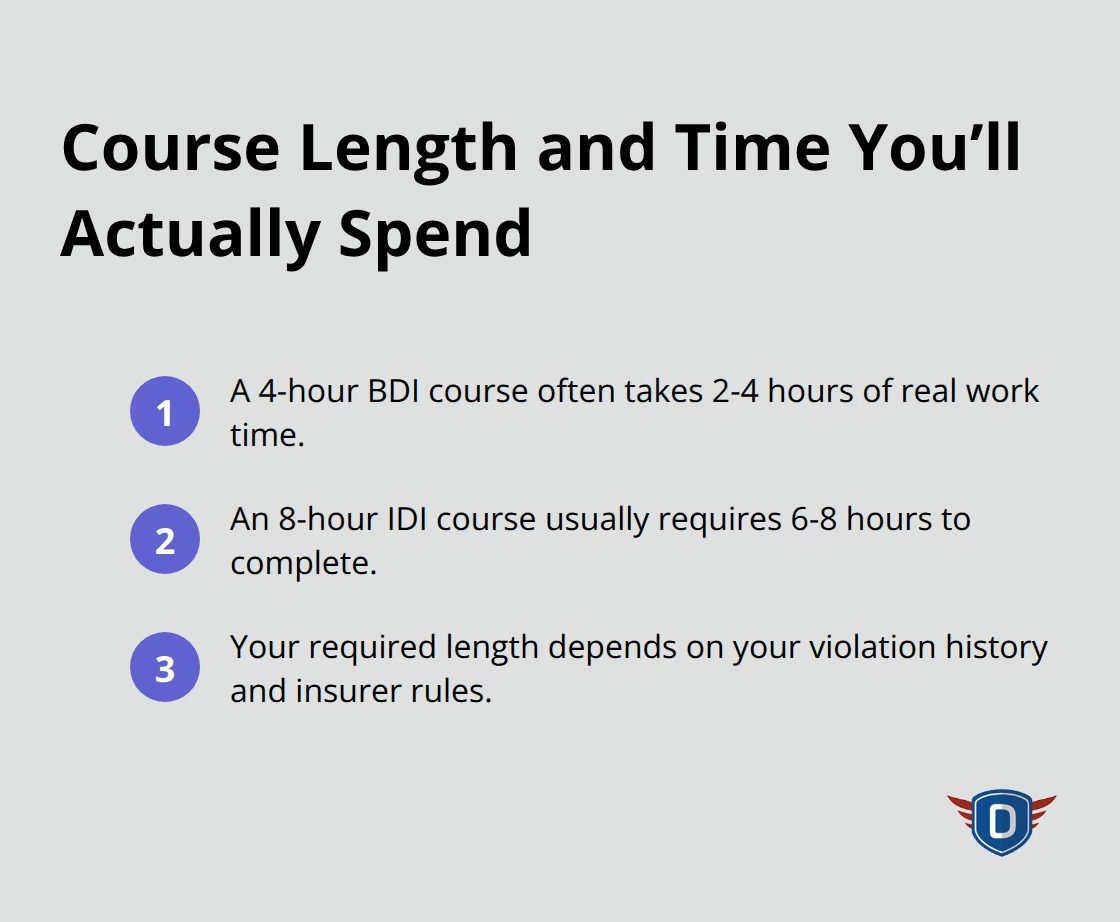
A 4-hour BDI course takes most drivers 2-4 hours of actual work time spread across a few days. An 8-hour IDI program typically requires 6-8 hours of your time. Your violation history and insurance company requirements determine which course length you need, not what sounds easier or faster.
Online Courses Process Faster Than Classroom Options
Online courses from AARP, NSC, and ASC deliver your certificate within minutes after completion in most cases. In-person classroom instruction through AAA or local providers requires scheduling coordination and travel time but appeals to drivers who learn better with instructors answering questions in real time. Insurance companies process online certificates just as quickly as classroom certificates once they receive them, so the format doesn’t affect your discount timeline.
The real speed advantage comes from immediately submitting your certificate to your insurer rather than waiting weeks after an in-person class ends. Most insurers apply your discount within 30-60 days of receiving official completion documentation, though some process it faster during renewal periods. Online self-paced courses let you finish in a single weekend if needed, while in-person classes require committing to specific class times that may not fit your schedule.
Flexibility and Completion Deadlines
The AARP Smart Driver course allows 60 days to complete it, giving you flexibility without pressure. Most online programs from NSC or ASC allow 30-90 days depending on your state. If you’re comparing actual out-of-pocket time investment, online self-paced courses win decisively for working drivers and those with irregular schedules.
Choosing Your Format Based on Learning Style
The insurance discount itself applies identically regardless of format (online or in-person), so your choice should depend on your learning style and available time, not on which option saves more money. Drivers who absorb information better through video and interactive activities thrive with online courses. Those who prefer real-time interaction with instructors and peer discussion benefit from classroom settings.
Your next decision involves understanding exactly when your insurer applies the discount and what documentation they require from you.
Getting Your Discount Applied and Tracking the Timeline
Submit Your Certificate Immediately After Completion
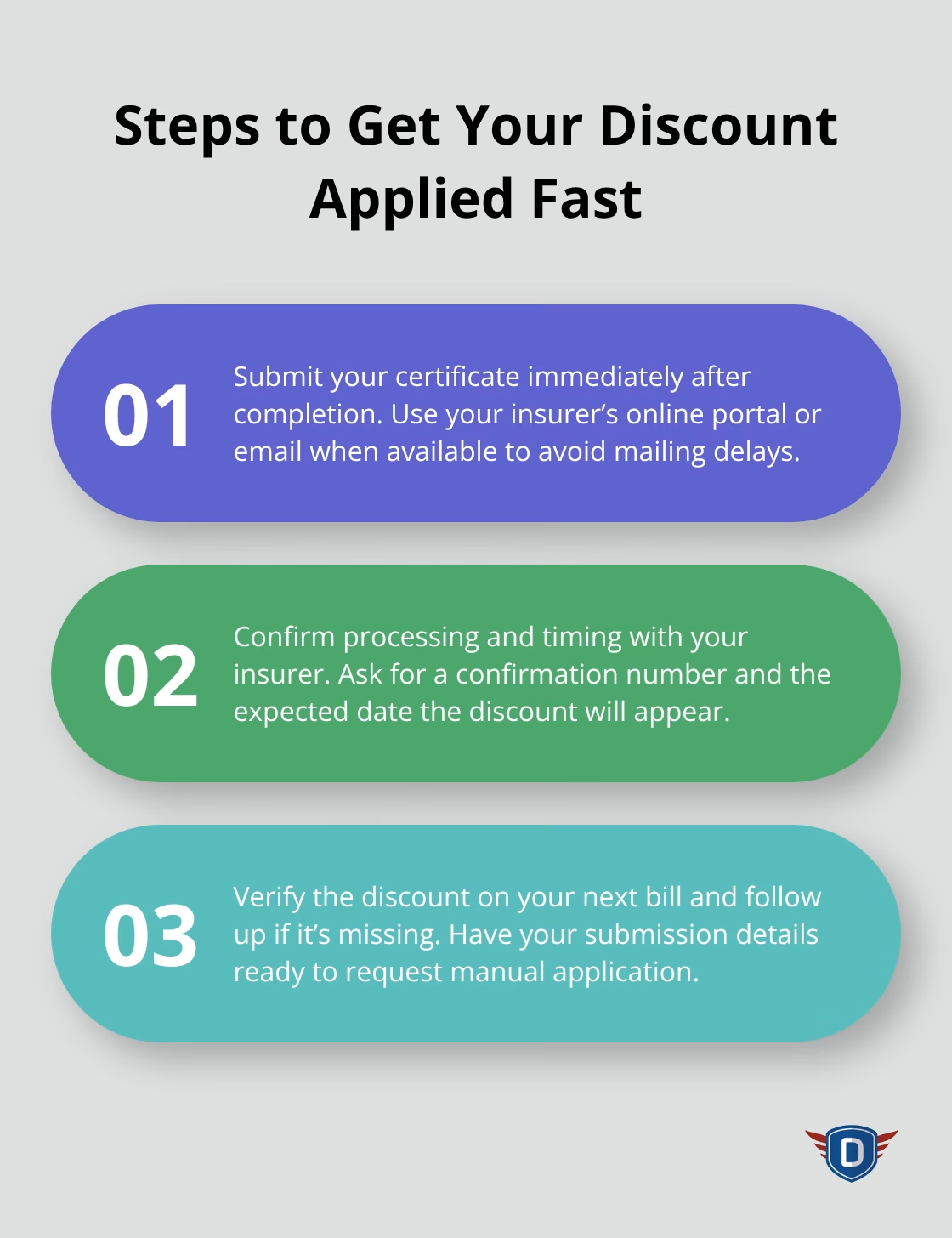
Your insurance company needs official documentation from the course provider or your personal submission within 30-60 days of finishing. Contact your insurer’s customer service line and ask exactly where to send your certificate and whether they accept electronic or mailed copies. Many insurers now process digital submissions through their online portals or email faster than paper mail.
The AARP Smart Driver course issues downloadable certificates within five minutes of completion in most states, allowing you to submit documentation the same day you finish. National Safety Council and American Safety Council programs work similarly, though some in-person classroom providers mail certificates within 5-10 business days. Proactive submission prevents delays and ensures your discount applies at your next renewal or policy update.
Understand When Your Insurer Applies the Discount
Insurance companies typically apply your discount within 30-60 days of receiving verified completion documentation, though timing varies based on your policy renewal date. If you complete your course during mid-policy, some insurers hold the discount until your renewal date rather than issuing a mid-term adjustment. Others apply the reduction immediately upon verification. Call your insurer after submitting your certificate and request a confirmation number and expected application date rather than assuming it will appear automatically. Check your next billing statement to confirm the discount applied correctly. Document this conversation with the date, representative name, and confirmation details in case discrepancies arise later.
Stack Your Defensive Driving Discount with Other Credits
Some insurers combine defensive driving discounts with other available credits like bundling discounts, safety feature discounts, or low-mileage discounts, potentially increasing your total savings beyond the defensive driving percentage alone. Ask your agent specifically which other discounts apply to your policy and whether they combine with your defensive driving credit or replace existing discounts. The AARP Smart Driver program offers multi-year discounts on your auto insurance, meaning your total savings compound significantly compared to single-year reductions.
Calculate Your Actual Financial Benefit
Multiply the percentage discount by your annual premium amount, then multiply by the number of years the discount applies (this shows whether completing the course makes financial sense for your specific situation). A driver paying $1,200 annually in Florida receives $120 per year with a 10% discount, totaling $360 over three years if the discount applies that long. Compare this against the course cost (typically $20-50) to determine your net savings. Some drivers with lower premiums or shorter discount periods may save less than $200 total, while others with multi-year discounts save $500 or more. Your specific numbers determine whether the time investment pays off financially.
Track Your Discount Application Through Renewal
Your next policy renewal statement shows whether your insurer applied the discount correctly. Review your renewal documents carefully and compare the premium to your previous rate, looking specifically for the defensive driving discount line item. If your renewal doesn’t reflect the discount, contact your insurer immediately with your certificate submission confirmation number and request manual application. Some insurers require you to mention the discount during renewal conversations rather than applying it automatically, so proactive communication prevents missed savings.
Final Thoughts
State-approved defensive driving courses lower your premiums when you select programs your insurance company recognizes. The courses that deliver real savings share three characteristics: state DMV certification, curriculum meeting insurer standards, and completion documentation your carrier accepts. Florida drivers qualify for up to 10% discounts through programs like those offered at floridadetscourse.com, while Arkansas and Delaware drivers can save up to 15%.
Your insurance discount qualification starts the moment you submit your completion certificate to your insurance company. Contact your insurer before you enroll to confirm which courses they accept and what discount percentage applies to your policy, then submit your certificate immediately after you finish. Most insurers process discounts within 30-60 days of receiving official documentation, and you should check your next billing statement to verify the discount applied correctly.
Long-term savings compound significantly when your discount applies for multiple years rather than a single year (a driver paying $1,200 annually in Florida saves $120 per year with a 10% discount, totaling $360 over three years). Calculate your specific financial benefit by multiplying your annual premium by the discount percentage and the number of years the discount applies. If your total savings exceed the course cost by at least $100, the program makes financial sense for your situation.