Florida’s substance abuse testing laws affect every driver on the road. Whether you’re pulled over for a traffic violation or face a routine checkpoint, knowing your rights and responsibilities can make a significant difference in your future.
At floridadetscourse.com, we believe substance education importance starts with understanding what the law actually requires. This guide breaks down the testing requirements, consequences, and practical steps to stay compliant with Florida’s traffic laws.
What Tests Law Enforcement Uses to Detect Impairment
Three Primary Chemical Tests
Florida law enforcement uses three primary chemical tests to measure impairment: breath tests, blood tests, and urine tests. Breath tests represent the most common roadside tool, measuring blood alcohol concentration through a breathalyzer device. Blood tests provide the gold standard for accuracy and can detect both alcohol and drugs, though a medical professional must draw blood. Urine tests detect metabolites of drugs but lack precision for alcohol measurement and typically appear when breath or blood tests aren’t available.
Legal Alcohol Limits Across Driver Categories
Under Florida Statutes 316.193, any driver with a blood alcohol concentration of 0.08% or higher faces legal impairment charges, regardless of how they feel or perform on field sobriety tests. Drivers under 21 face a lower threshold of 0.02%, while commercial drivers must stay under 0.04%. Law enforcement can request these tests during a traffic stop, and your response carries serious legal consequences.
How Implied Consent Works in Florida
Florida’s implied consent law means that when you obtain a driver’s license, you automatically consent to chemical testing if arrested for DUI. This isn’t optional. Refusing a breath, blood, or urine test triggers automatic penalties through the Florida Department of Highway Safety and Motor Vehicles, separate from any criminal conviction. Refusal often results in a suspension period longer than that of a first-time DUI conviction.
Why Refusing Tests Backfires
If you refuse and later face conviction, courts can use your refusal as evidence of guilt. Many drivers mistakenly believe refusing protects them, but it typically worsens outcomes. The arrest hold rules in Florida also matter: law enforcement can hold you until you’re no longer impaired, your blood alcohol drops below 0.05%, or eight hours pass. During this time, you cannot drive home or leave the facility.
Your Real Choice Happens Before Police Arrive
Your only real choice is how you drive before police ever approach your vehicle. Understanding these testing requirements and your legal obligations sets the foundation for recognizing what happens when drivers fail or refuse these tests, which carries consequences that extend far beyond the initial traffic stop.
What Happens When You Fail or Refuse a Test
Administrative Consequences of Test Failure
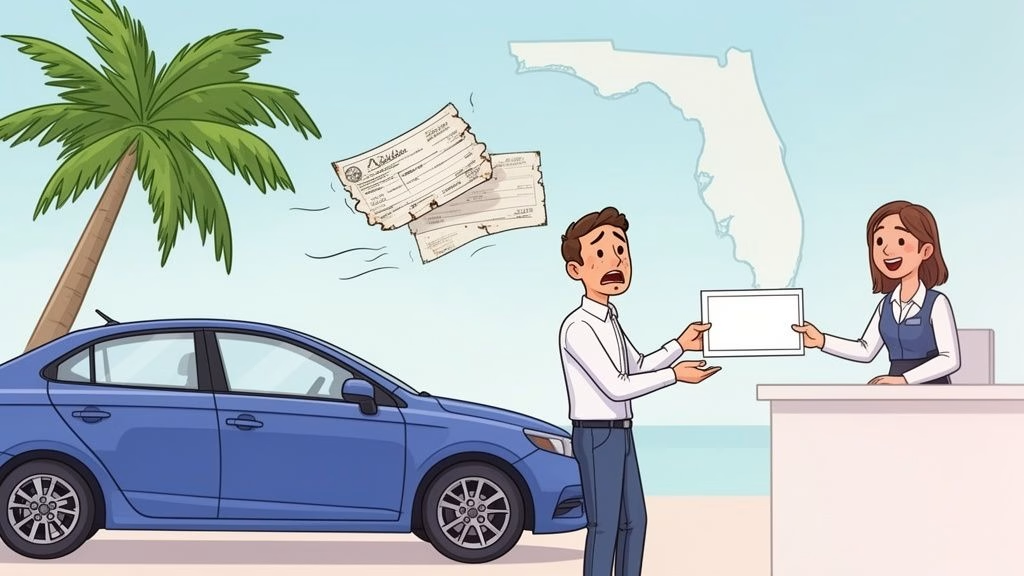
Failing a chemical test in Florida creates immediate administrative consequences that operate independently from any criminal case. Under Florida Statutes 316.193, a first-time test failure with a blood alcohol concentration below 0.15% results in a license suspension lasting 180 days to one year, vehicle impoundment for ten days, and fines between $500 and $1,000. If your BAC was 0.15% or higher, the fine jumps to $1,000�$2,000, and an ignition interlock device becomes mandatory for at least six months on any vehicle you own or operate. A second offense within five years escalates dramatically: your license faces a minimum five-year revocation, the vehicle gets impounded for thirty days, and ignition interlock extends to one year. A third DUI within ten years triggers a felony charge with a minimum ten-year license revocation and a ninety-day vehicle impound.
The Real Financial Impact Beyond Fines
These penalties directly affect your ability to work, transport family members, and maintain independence. The financial toll extends far beyond fines. You pay for ignition interlock device installation and monthly monitoring fees, court costs, substance abuse evaluation expenses, and mandatory DUI school programs. Hidden costs add up quickly: towing fees when your vehicle gets impounded, alternative transportation while suspended, and the expense of attending required treatment programs at your own cost.
Why Refusal Creates Worse Outcomes
Refusing a test produces worse outcomes than failing one. Florida’s implied consent law means refusal triggers an automatic one-year license suspension on a first refusal, with no hardship license available during the first few months. A second refusal within ten years extends the suspension to eighteen months. Courts can use your refusal as evidence of consciousness of guilt in criminal proceedings, essentially working against you twice. If you face later conviction of DUI despite refusing, the judge considers your refusal when determining sentencing length and conditions.
Long-Term Consequences on Your Record and Employment
Insurance companies penalize refusal more severely than test failures because refusal suggests you knew you were impaired and tried to hide evidence. Your rates won’t just increase-many insurers will drop you entirely, forcing you into high-risk pools where premiums triple or quadruple. A DUI conviction stays on your driving record for seventy-five years in Florida, affecting employment opportunities, professional licensing, housing applications, and loan eligibility. Employers conducting background checks see the conviction permanently. Some professions (commercial driving, healthcare, education, law enforcement) face automatic disqualification or license suspension.
Understanding Your Path Forward
The cumulative effect means a single test failure or refusal can reshape your financial situation for years. This reality makes understanding your rights during traffic stops and knowing what resources exist to prevent impaired driving the next critical step in protecting your future on Florida’s roads.
How to Protect Your License and Stay Compliant
Your Rights During a Traffic Stop
Your best defense against substance abuse testing happens long before flashing lights appear in your mirror. The decision to never drive impaired eliminates the entire chain of consequences outlined in the previous section. During a traffic stop, you have the right to remain silent beyond providing your driver’s license, vehicle registration, and proof of insurance. Law enforcement can request a breath test or field sobriety tests, but your response matters legally. Refusing a roadside breath test (the preliminary breath test or PBT) carries less severe consequences than refusing a chemical test after arrest, though refusing both creates the worst outcome.
Never volunteer information about where you’ve been, what you’ve consumed, or how much you’ve had to drink. Keep your hands visible, stay calm, and avoid sudden movements. If arrested, invoke your right to an attorney immediately and stop answering questions. The Florida Department of Highway Safety and Motor Vehicles emphasizes that cooperation during the arrest process differs from cooperation during questioning-you can be polite without incriminating yourself. Many drivers worsen their situation by talking to officers, believing honesty helps them. It rarely does. Your words become evidence used against you in criminal proceedings and administrative license suspension hearings.
Substance Abuse Education Programs
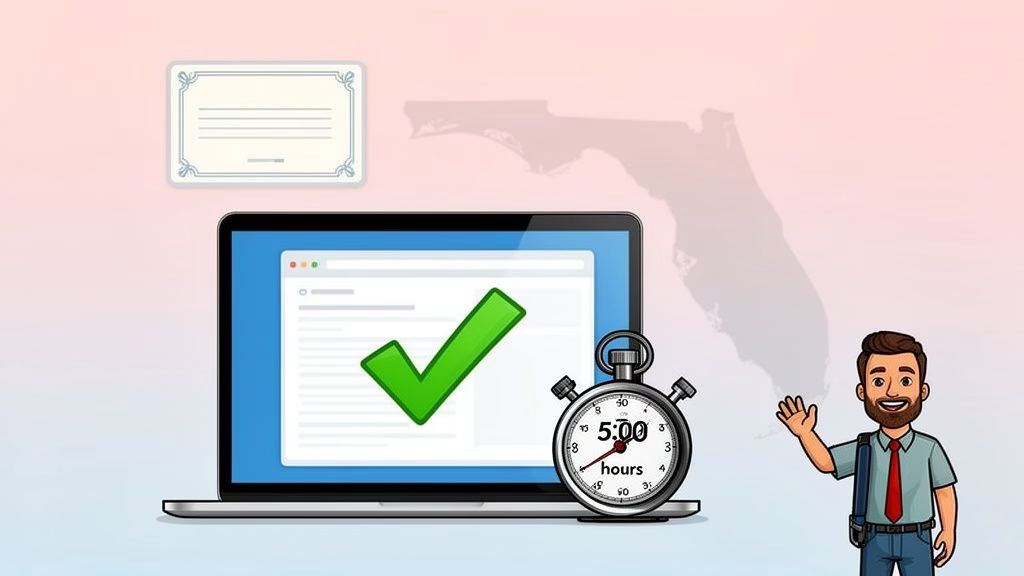
Substance abuse education programs interrupt the cycle that leads to impaired driving. Florida requires DUI offenders to complete a substance abuse evaluation and education program, with evaluation costs starting at $75. However, taking these courses voluntarily before any incident demonstrates responsibility. Online programs offered through Florida Department of Highway Safety and Motor Vehicles approved providers cover alcohol metabolism, drug effects on driving ability, and decision-making under impairment. Completion certificates help when negotiating with insurance companies or when facing court proceedings after a violation. Some insurance companies offer premium discounts specifically for drivers who complete these courses voluntarily.
Defensive Driving Courses and Their Impact
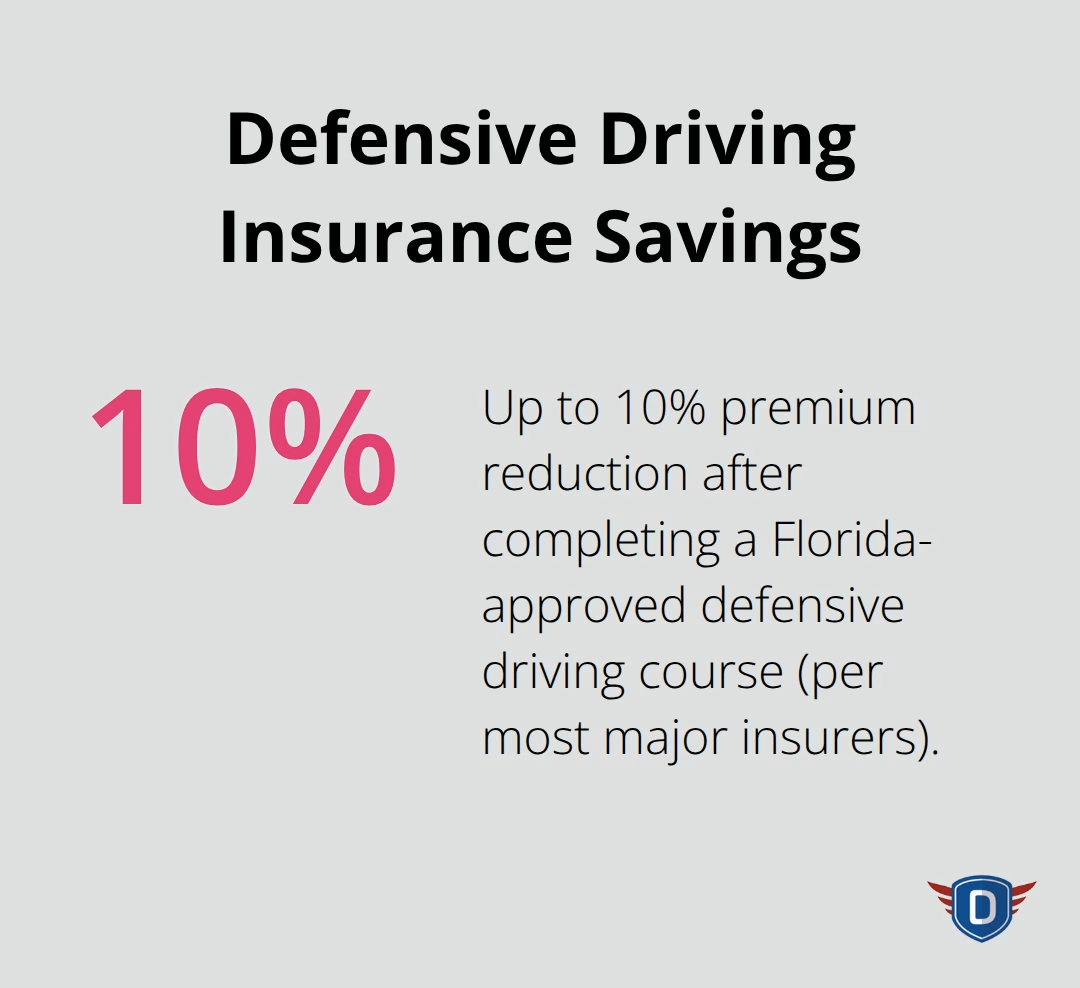
Defensive driving courses teach crash avoidance, proper following distances, and how to recognize dangerous driving situations before they escalate. A four-hour basic course costs between $20 and $40 online, while eight-hour intermediate courses run $40 to $75. Completing one of these courses can reduce points on your driving record, lower insurance premiums by up to 10 percent according to most major insurers, and most importantly, fundamentally change how you react on the road.
Final Thoughts
Florida’s substance abuse testing laws create a clear framework that affects every driver on the road. Understanding these requirements protects your license, your finances, and your future-the legal limits are straightforward at 0.08% for standard drivers, 0.02% for those under 21, and 0.04% for commercial operators. Implied consent means refusing a test carries penalties as severe as failing one, with license suspensions ranging from 180 days to permanent revocation and fines reaching thousands of dollars.
Your decisions behind the wheel determine whether you ever face these consequences. The single most effective strategy remains never driving impaired, and substance education importance cannot be overstated when you consider that a DUI conviction stays on your driving record for seventy-five years in Florida. Knowing your rights during traffic stops, understanding what happens if you face arrest, and recognizing the long-term impact on employment and insurance rates all matter significantly.
We at floridadetscourse.com offer Florida-approved traffic school programs designed to help you become a safer, more responsible driver. Our courses cover defensive driving techniques, impaired driving prevention, and current Florida traffic laws, with self-paced online instruction that fits your schedule. Visit floridadetscourse.com to explore how our programs can help you protect your license and make Florida’s roads safer.