Traffic laws aren’t optional-they’re the foundation of safe roads for everyone. Whether you’re a new driver or brushing up on the rules, understanding traffic law basics is non-negotiable.
We at floridadetscourse.com have created this overview to walk you through the essential rules you need to know. From signs and right-of-way to speed limits and safe distances, we’ll cover what actually matters on the road.
What Traffic Signs Actually Tell You
Traffic signs are commands, not suggestions. Knowing exactly what each type demands from you eliminates confusion at critical moments.
Understanding Regulatory Signs
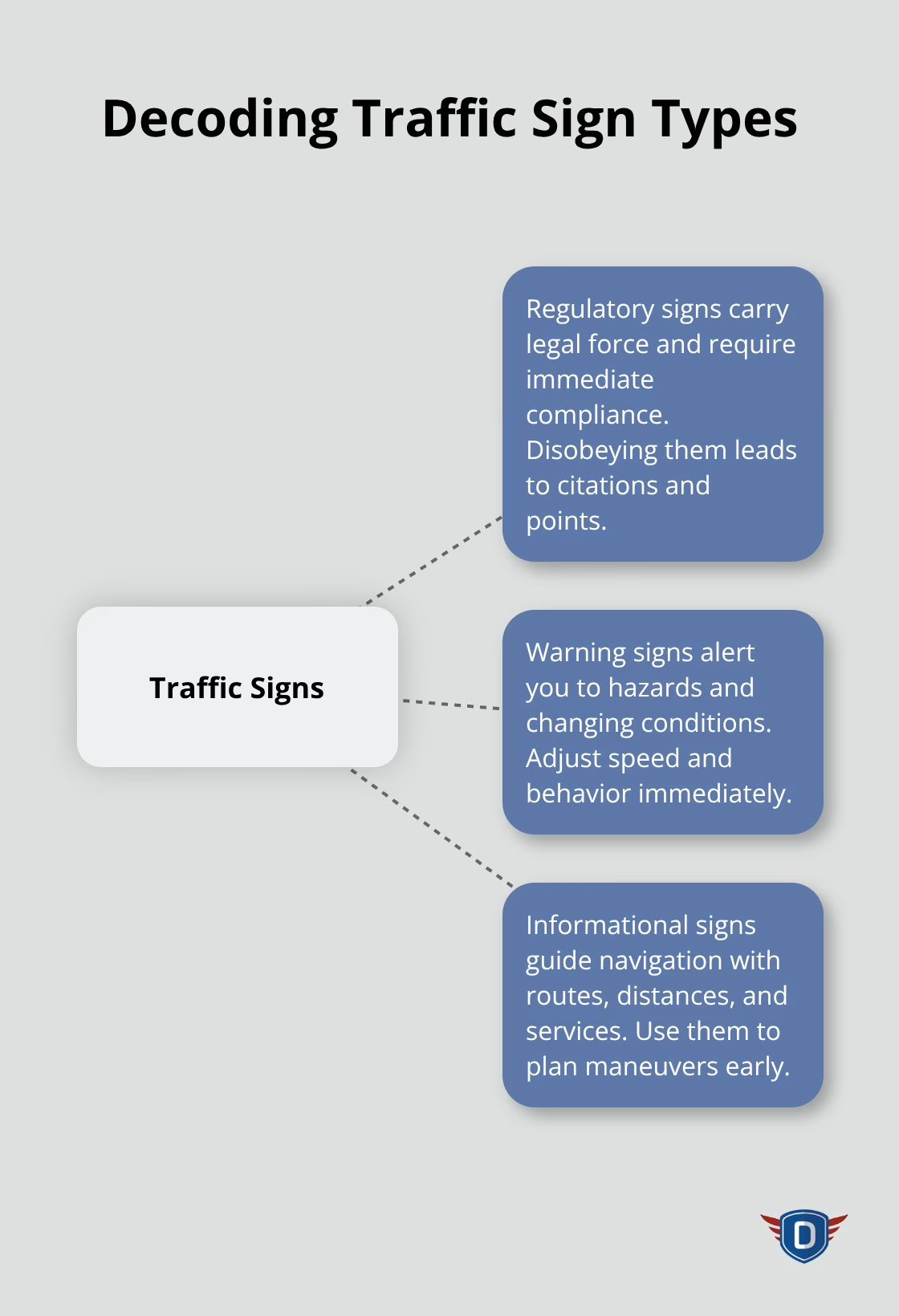
Regulatory signs carry legal weight-ignoring them results in citations and points on your license. A complete stop at a stop sign means your vehicle must fully pause; rolling stops violate traffic law and cost drivers real money through fines ranging from $150 to $1,000 depending on circumstances and driving record.
Yield signs require you to give the right-of-way to other traffic before proceeding, but many drivers misunderstand this as optional. Speed limit signs set the legal maximum for ideal conditions, though you must adjust speed downward in rain, snow, or heavy traffic regardless of what the sign says.
One-way signs, no-turn signs, and do-not-enter signs are absolute-violating them puts you in direct conflict with oncoming traffic and creates serious collision risk.
Recognizing Warning Signs
Warning signs use diamond shapes and yellow backgrounds to alert you to hazards ahead, such as curves, pedestrian zones, or railroad crossings. They alert you to changing road conditions, hazards, or upcoming situations that require a change in speed or driving behavior.
A curve warning means you reduce speed before entering, not after. Pedestrian crossing signs appear near schools and residential areas where foot traffic is unpredictable, requiring heightened attention and reduced speed.
Construction zone signs indicate reduced speed limits and potential hazards from equipment or workers. Fines for speeding in construction zones typically double compared to regular roads.
Identifying Informational Signs
Informational signs in rectangular shapes provide navigation details like route numbers, distance markers, and service locations. Exit signs on highways tell you exactly when to leave, and missing one means driving past your destination or taking the wrong ramp.
Why Sign Types Matter
Regulatory signs demand immediate compliance, warning signs demand immediate adjustment of your driving, and informational signs guide your navigation. Learning to read signs quickly and react correctly is non-negotiable for passing your road test and avoiding violations that increase insurance costs.
Understanding these three categories prepares you to handle the next critical element of traffic law: knowing who has the right-of-way and how to navigate intersections safely.
FAQ
What happens if I run a stop sign?
Running a stop sign typically results in a citation, points on your driving record, and a fine. Accumulating points can lead to license suspension and higher insurance premiums.
What’s the difference between a stop sign and a yield sign?
A stop sign requires a complete halt; a yield sign requires you to slow down and give the right-of-way to other traffic but allows you to proceed if the path is clear.
Do I have to follow posted speed limits in bad weather?
No; speed limits are the maximum for ideal conditions. You must adjust your speed lower during rain, snow, fog, or heavy traffic to maintain safe control.
What do yellow diamond signs mean?
Yellow diamond signs are warning signs that alert you to changing road conditions, hazards, or upcoming situations requiring reduced speed or caution.
Right-of-Way Rules and Priority on the Road
Right-of-way rules determine who moves first at intersections, and getting them wrong creates collisions. Understanding these rules prevents crashes and keeps traffic flowing safely.
Intersection Rules and Four-Way Stops
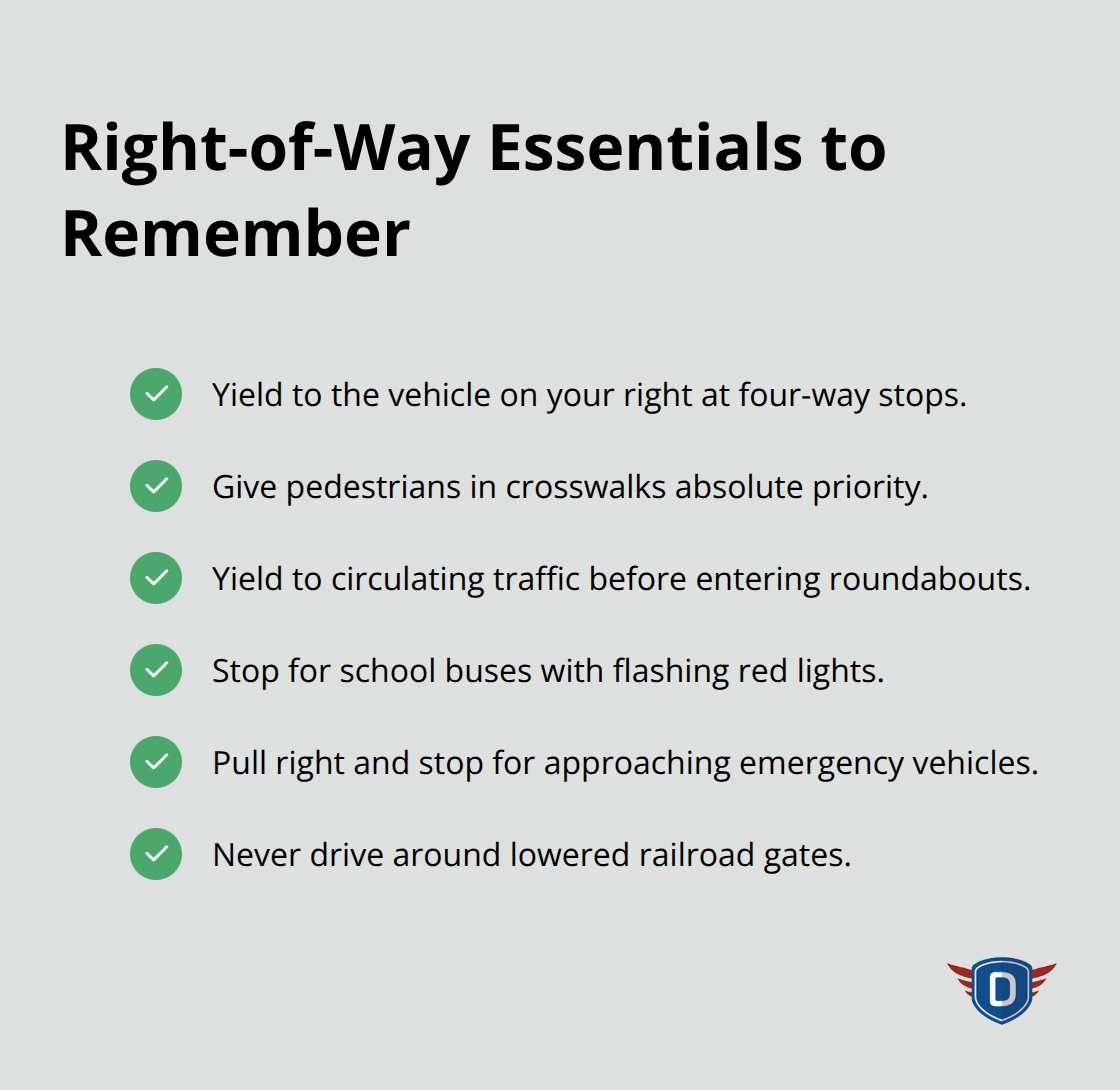
At a four-way stop where all vehicles arrive simultaneously, the vehicle on your right has priority, and you yield first. If two vehicles arrive at the same time from opposite directions and both want to turn left, the oncoming vehicle going straight has the right-of-way over your left turn.
Many drivers misunderstand this rule and proceed anyway, causing T-bone crashes at intersections. At intersections controlled by traffic lights, a green light means you have the right-of-way over pedestrians and cross traffic, but you still must verify the intersection is clear before entering because oncoming drivers may run the red light.
Pedestrians and Cyclists on the Road
Pedestrians always have the right-of-way in marked crosswalks, even if the traffic signal favors your direction, and the law requires you to come to a complete stop if a pedestrian is in or approaching your path. Cyclists operating in bike lanes or on roadways have the same right-of-way protections as vehicles, meaning you cannot cut them off or force them into the shoulder.
Navigating Roundabouts Safely
Roundabouts operate on a yield-on-entry principle: vehicles already in the circle have the right-of-way, and you must wait for a gap before entering. Do not treat roundabouts like four-way stops where you take turns; instead, yield to all traffic moving counterclockwise around the circle until you find a safe opening.
Most drivers entering a roundabout fail to yield properly and either collide with circulating traffic or block the flow by waiting for a perfectly clear path that never comes. Enter the roundabout only when you can proceed without forcing other vehicles to brake, then exit at your designated street by signaling right as you approach your exit.
Special Situations Requiring Immediate Action
School buses stopped with red lights flashing demand a complete stop from both directions; passing a stopped school bus with lights activated can result in significant fines and license suspension in many states. When an emergency vehicle approaches with lights and sirens, pull to the right edge of the road and stop completely, staying stopped until the vehicle passes.
At railroad crossings, never attempt to go around lowered crossing gates or drive around them; the train has absolute right-of-way and will not stop. These specific scenarios (school buses, emergency vehicles, and railroad crossings) demand immediate compliance to protect lives and avoid serious violations.
Understanding right-of-way rules prepares you for the next critical element of safe driving: controlling your speed and maintaining safe distances from other vehicles.
FAQ
What do I do at a four-way stop if two cars arrive at the same time?
The vehicle on your right has the right-of-way; yield to them. If you are directly across from another vehicle and both want to go straight, you can proceed simultaneously without conflict.
Can pedestrians cross against the traffic signal?
Pedestrians crossing against the signal are jaywalking and violate traffic law, but you must still avoid hitting them. Your legal duty is to prevent a collision whenever possible.
What is the correct way to enter a roundabout?
Yield to all vehicles already in the roundabout moving counterclockwise. Enter only when you have a clear gap and can proceed without forcing other traffic to brake.
Do cyclists have the same right-of-way as cars?
Yes, cyclists operating legally in bike lanes or on roadways have equal right-of-way protections. You cannot cut them off or force them aside.
When must I stop for a school bus?
Stop completely when a school bus displays red flashing lights, regardless of direction. Violations can result in significant fines and license suspension.
What should I do if an emergency vehicle approaches?
Pull to the right edge of the road and stop completely. Remain stopped until the emergency vehicle passes, then proceed when it is safe.
Speed Limits, Following Distance, and Safe Driving Distances
Speed limits reflect the maximum safe speed under ideal conditions with dry pavement, clear visibility, and light traffic. The moment conditions change-rain, snow, fog, or heavy congestion-the posted limit becomes irrelevant, and you must drive slower to maintain control. School zones demand particular attention because children are unpredictable; most states enforce double fines for speeding in school zones, ranging from $250 to $500 depending on violation severity and your state. Fines double again if a crash occurs in a school zone, making these areas non-negotiable for speed compliance.
Many drivers treat school zone speed limits as suggestions, but a single incident with a child carries both legal and emotional consequences that no time savings justifies. Start adjusting your speed before entering a school zone, not after spotting the warning sign, because reaction time at highway speeds leaves you insufficient distance to brake.
Posted Speed Limits and School Zones
School zones operate on specific time windows printed on the sign, typically 7 to 9 a.m. and 2 to 4 p.m. on school days. Speed limits in these zones typically drop to 15 or 20 mph, and cameras or police enforcement is common in many jurisdictions. Construction zones carry double-fined speeding violations in most states because workers are present and visibility is reduced; treat construction zone speed limits as absolute, not flexible.
Many construction zones use variable speed limit signs that change based on traffic conditions; obey the posted limit at that moment, not the permanent sign you saw yesterday. Heavy rain demands immediate speed reduction because tire traction decreases sharply when water sits between the tire and pavement. In heavy rain, average freeway speeds can decline by 3 to 16 percent, so reduce speed accordingly before conditions deteriorate.
The Three-Second Rule for Safe Following Distance
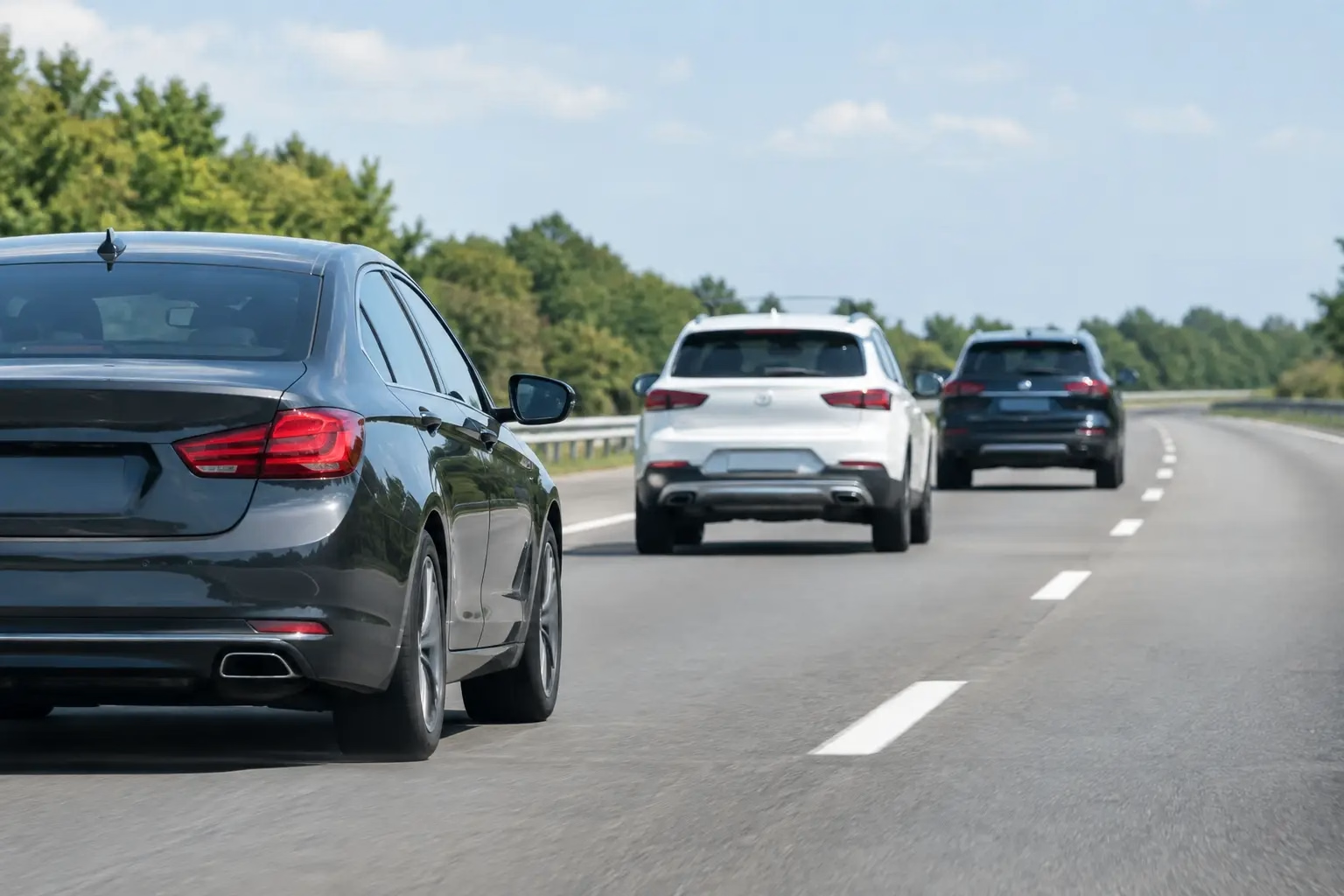
Following distance directly determines whether you can stop without hitting the vehicle ahead. The three-second rule is recommended for passenger vehicles during ideal road and weather conditions. In rain, increase this to four seconds; in snow or ice, jump to five or six seconds because your tires have significantly less grip.
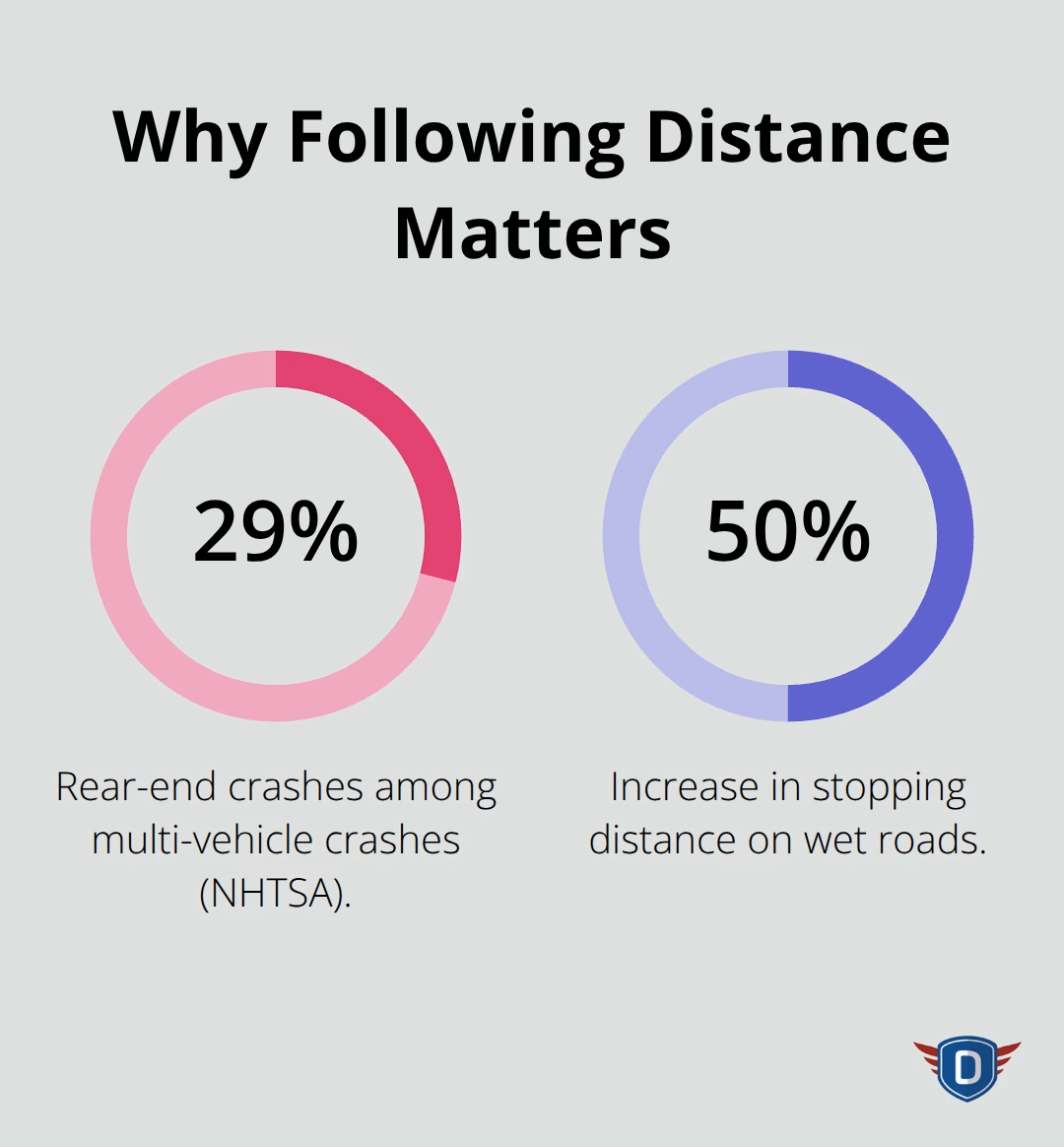
Tailgating-following within one second-is aggressive driving and eliminates your safety margin entirely; one sudden stop from the vehicle ahead and a collision becomes inevitable. Real-world data shows that rear-end crashes account for roughly 29 percent of all multi-vehicle crashes according to NHTSA research, and most occur because drivers follow too closely.
Adjusting Speed for Weather and Road Conditions
Weather changes stopping distance dramatically: wet roads increase stopping distance by 50 percent, while snow or ice can triple it, yet most drivers maintain the same following distance regardless of conditions. Adjust your speed and distance proportionally when visibility drops below 100 feet or when the road surface changes from dry to wet. Night driving requires extra caution because your headlights illuminate only about 350 feet ahead at 55 mph, limiting your ability to detect hazards early enough to stop safely.
Fog reduces visibility to dangerous levels instantly; if you cannot see more than a few car lengths ahead, slow down significantly and use low-beam headlights to improve visibility for oncoming drivers. High winds, particularly in open areas or when passing large trucks, can push your vehicle sideways; reduce speed and grip the steering wheel firmly to maintain lane position. Gravel or loose pavement reduces traction similar to light snow, requiring slower speeds and longer following distances until you return to solid asphalt.
FAQ
How do I know if I am following too closely?
If you cannot count three full seconds between when the car ahead passes a fixed object and when you reach that same object, you are too close. Increase your distance immediately.
Does the posted speed limit mean I can always drive that speed?
No, speed limits are maximums for ideal conditions only. Rain, snow, fog, heavy traffic, and night driving all require lower speeds regardless of the posted sign.
What is the difference between the three-second rule and safe following distance?
The three-second rule is a method to measure safe following distance. Safe following distance is the actual space you maintain, which changes based on weather and road conditions.
Why do school zones have double fines?
School zones have double fines because children are unpredictable and present. The higher penalty encourages drivers to slow down in areas where vulnerable road users are present.
How much should I reduce speed in heavy rain?
Reduce speed by 20 to 30 percent in heavy rain because tire traction decreases significantly. Increase your following distance to four or five seconds.
What should I do if fog suddenly appears while I am driving?
Reduce speed immediately, turn on low-beam headlights, and increase your following distance. If visibility is extremely limited, consider pulling over safely until conditions improve.
Final Thoughts
Traffic law basics form the foundation of safe driving, and mastering them protects you, your passengers, and everyone sharing the road. The rules you’ve learned here-from regulatory signs to right-of-way priorities to speed adjustments-aren’t arbitrary restrictions; they’re proven methods to prevent crashes and save lives. Violations accumulate points on your driving record, increase insurance premiums, and can lead to license suspension if you collect too many infractions.
Real compliance requires consistent practice and ongoing education beyond your initial driver education course. Traffic laws evolve, and your skills need regular reinforcement to stay sharp and current with new regulations. We at floridadetscourse.com offer approved traffic school programs designed to deepen your understanding of current traffic laws and defensive driving techniques, whether you’re completing a court requirement, seeking an insurance discount, or simply wanting to become a safer driver.
Treat every drive as an opportunity to reinforce these rules and build habits that protect your life and the lives of others on the road. Your commitment to understanding this traffic law basics overview translates directly into safer decisions at every intersection, every school zone, and every moment behind the wheel. The road demands your full attention and your respect for the laws that govern it.
FAQ
What happens if I accumulate too many traffic violations?
Accumulating points can lead to license suspension, higher insurance premiums, and mandatory traffic school enrollment depending on your state’s point system.
How often should I refresh my knowledge of traffic laws?
Traffic laws change periodically, so reviewing them annually or whenever you move to a new state helps you stay current and compliant.
Can traffic school help me avoid points on my license?
Yes, completing an approved traffic school course can reduce or eliminate points from certain violations, depending on your state’s requirements and your driving record.
Where can I find current traffic laws for my state?
Your state’s Department of Motor Vehicles website provides official traffic laws, regulations, and updates specific to your jurisdiction.