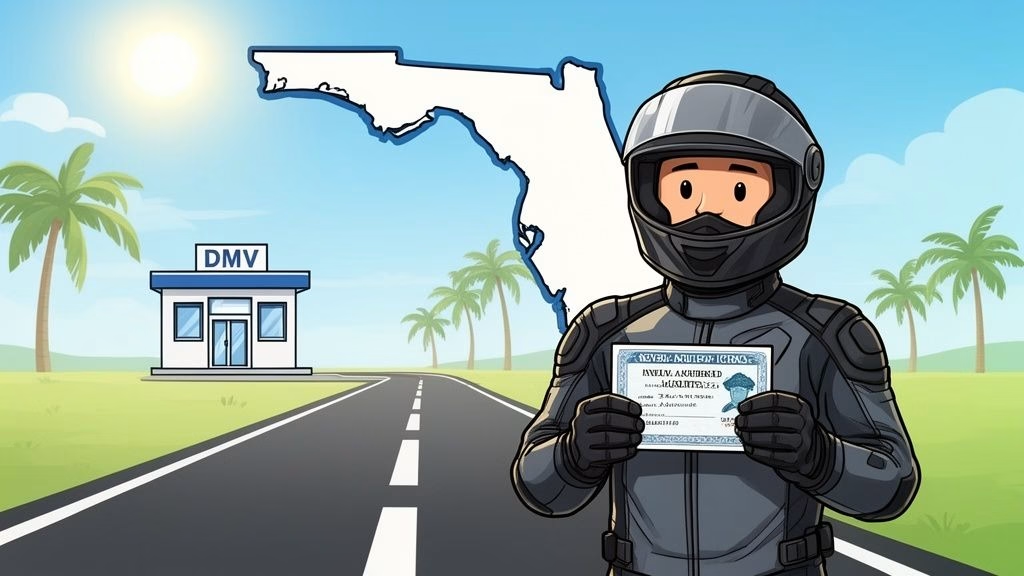
So, you're ready to feel the Florida sunshine and open road from the seat of a motorcycle. Getting your license is the first, most important step on that journey. It's not just about a piece of plastic in your wallet; it�s about proving you have the essential skills and knowledge to ride safely.
You can get a standalone license just for your bike or add a motorcycle endorsement to your current driver's license. We�ll walk through it all.
Your Guide to Riding Legally in the Sunshine State

There's nothing quite like riding in Florida, with its endless coastline and amazing weather. But let's be real�our state's popularity with riders comes with a serious downside. Florida is often cited as one of the most dangerous places for motorcyclists, which makes getting the right training and license an absolute must.
This guide will cut through the clutter and give you a clear, straightforward path. We're going to break down the entire process, from the first piece of paperwork to your final trip to the Florida Highway Safety and Motor Vehicles (FLHSMV) office.
Two Paths to Your Florida Motorcycle License
When it comes to getting legal on two wheels in Florida, you have a couple of options. The best one for you really just depends on whether you also plan on driving a car.
Motorcycle Endorsement: This is what most people do. If you already have a standard Florida Class E driver's license, you can simply add a motorcycle endorsement to it. Think of it as a special certification on your existing license that says you're qualified to operate a motorcycle.
Motorcycle-Only License: Don't have a driver's license and have no plans to get one? No problem. Florida offers a motorcycle-only license for riders who plan to stick exclusively to two wheels. It�s less common, but it's the perfect fit if a bike is your only ride.
Key Takeaway: Both options require you to demonstrate that you can handle a bike safely. An endorsement is an add-on to your driver's license, while a motorcycle-only license is a standalone document.
No matter which route you take, the end goal is the same: making sure you're a safe and responsible rider. Before the state gives you the green light, you�ll need to prove you can manage the machine and understand the specific rules of the road for motorcycles.
More Than Just a License�It's About Safety
Try to think of the licensing process less as a bureaucratic chore and more as the first and most important piece of safety gear you'll ever own. The required training courses, which we�ll get into later, teach you life-saving skills like evasive maneuvers, emergency braking, and how to spot hazards you might not notice otherwise.
Once you�ve earned that license, the next step is protecting yourself and your investment. Getting familiar with the state's minimum insurance requirements is crucial. You can start by researching the typical motorcycle insurance costs in Florida to get a handle on your budget.
Confirming Your Eligibility for a Florida Motorcycle License
Before you even start dreaming about open roads, let's talk about what it takes to get legal. Showing up at the Florida Highway Safety and Motor Vehicles (FLHSMV) office unprepared is a classic rookie mistake, and there's nothing more frustrating than waiting in line just to be sent home. You need to make sure you tick all the right boxes first.
The state�s rules are there for a reason. Riding in Florida is incredible, but it's not without its risks. Our year-round riding weather and roads packed with tourists make it one of the more dangerous states for motorcyclists. The sobering statistics from 2022 showed 668 motorcycle fatalities, a stark reminder of why getting properly licensed and trained isn't just red tape�it's critical for your safety.
Age and License Requirements
First things first, Florida has different paths to getting your license depending on your age.
If you�re 18 or older, the process is straightforward. The main requirement is that you already have a standard Class E driver's license. This is the starting point for most adults who decide they're ready to add two wheels to their driving privileges.
Now, for aspiring riders who are 16 or 17 years old, the state puts a few more hurdles in place to ensure you have enough experience. You can't just walk in and get your endorsement. You must:
- Hold a Class E learner's permit for at least one full year.
- Have zero traffic convictions during that entire 12-month period.
This rule makes sure younger riders get comfortable behind the wheel of a car before taking on the unique challenges of a motorcycle. If you're just starting out, you might find our general guide on what age you can get your license in Florida helpful.
A Word of Warning: If you're under 18 and get a ticket for a moving violation, the clock on your learner's permit resets. You�ll have to go another full year with a clean record before you can even think about that motorcycle endorsement.
Essential Documents for Your FLHSMV Visit
Once you've confirmed you meet the age and license requirements, it's time to gather your paperwork. The FLHSMV is notoriously strict about documentation, and this is where many people get tripped up.
You'll need to bring original or certified copies�photocopies are an absolute no-go. The goal is to prove your identity, your Social Security number, and that you actually live in Florida.
Required Documentation Checklist:
- Proof of Identity (Primary): You'll need one primary document. Most people use a U.S. Birth Certificate, a valid U.S. Passport, or a Certificate of Naturalization.
- Proof of Social Security Number: Bring your Social Security card. If you can't find it, a W-2 form or a pay stub showing your full name and SSN will also work.
- Proof of Residential Address (Two Documents): You need two separate items to prove you live where you say you do. Things like a recent utility bill, a bank statement, or your apartment lease agreement are perfect. Just make sure the name and address on both documents match each other exactly.
Think of it like this: you could walk in with your passport, your Social Security card, your latest power bill, and your signed lease. Get these items together in a folder ahead of time, and your trip to the service center will be much smoother.
Why the Basic RiderCourse Is Your Smartest Path
If you're looking to get your motorcycle license in Florida, let me give you the single best piece of advice you'll hear: take the Basic RiderCourse (BRC). For almost everyone starting out, this isn't just a good idea�it's the most straightforward, confidence-boosting way to get legal and get riding safely.
What makes the BRC a no-brainer is that successfully completing an authorized course lets you completely waive both the written knowledge test and the on-cycle skills test at the local driver license office.
Think about that for a second. No high-pressure exam trying to perform tight maneuvers for a state examiner. Instead, you'll learn and demonstrate your skills in a relaxed, supportive environment with certified instructors.
What's the Course Actually Like?
The BRC is built from the ground up for total beginners. You don't need to have ever even sat on a motorcycle to sign up. Most schools provide the training bike and a helmet, which is a huge hurdle cleared right from the start.
The course typically runs over a weekend and is broken into two main parts:
- In the Classroom: You'll spend about 5 hours covering the essential theory. This isn't just a boring lecture; it�s about learning how to think like a rider. You'll cover Florida traffic laws, effective defensive riding techniques, and how to spot hazards before they become a problem.
- On the Range: This is where the fun starts. For about 10 hours, you'll be on a bike in a large, controlled parking lot. Instructors will guide you step-by-step, starting with the absolute basics like getting a feel for the clutch and throttle. You�ll gradually build up to crucial skills like turning, shifting, swerving, and quick stops.
The goal of the BRC isn't to make you an expert overnight. It�s to give you a solid foundation of control and judgment. These are the skills that will get you safely through your first few thousand miles on the road, which are statistically the most critical for any new rider.
Finding an Authorized BRC Provider
The Florida Highway Safety and Motor Vehicles (FLHSMV) doesn't teach these courses itself. Instead, it certifies a network of independent riding schools across the state. You can easily find a full, up-to-date list of approved schools on the official FLHSMV website.
When you're picking a school, look past the price tag. Check recent reviews, ask about the class size (smaller is often better for one-on-one coaching), and see what kind of bikes they use for training.
For anyone just starting their driving journey, it's helpful to see how the motorcycle endorsement fits into the bigger picture of getting licensed. You can learn more about the initial steps in our complete guide to Florida's drivers education course.
The chart below lays out the basic eligibility path for a standard license, which is the first step you need to complete before adding a motorcycle endorsement.

As you can see, getting your "Motorcycle Also" endorsement is a process that builds on the standard Class E license requirements.
Two Paths to Your Florida Motorcycle License
So, you have two options: the structured BRC path or the old-school FLHSMV test path. While you can technically challenge the state tests directly, it's rarely the better choice. Let's break down why.
| Requirement | Basic RiderCourse (BRC) Path | Traditional FLHSMV Test Path |
|---|---|---|
| Testing | Pass low-pressure knowledge and skills tests within the course. | Must pass separate written and on-cycle skills tests at the FLHSMV. |
| Equipment | The school provides the motorcycle and helmet. | You must provide your own street-legal, registered, and insured motorcycle. |
| Learning | 15+ hours of structured, professional instruction. | You're on your own. Self-taught or learning from friends. |
| Confidence | Builds foundational skills and confidence in a controlled, safe environment. | High-pressure, one-shot test with no room for error or feedback. |
| Outcome | Course completion certificate lets you waive FLHSMV tests. | Passing earns the endorsement; failing means scheduling (and paying for) a retest. |
The traditional test route creates a frustrating catch-22 for new riders: you need a motorcycle to take the road test, but you can't legally ride it to the test center without an endorsement. This means trailering your bike or having a licensed friend ride it there for you.
The BRC path completely sidesteps this logistical nightmare, giving you the training, the test waiver, and a potential insurance discount all in one go.
Alright, you've conquered the Basic RiderCourse (BRC) and have the completion card to prove it. That little piece of paper is your key to skipping the hassle of taking the state's knowledge and on-cycle skills tests. Now it's time for the final, official step: a trip to the Florida Highway Safety and Motor Vehicles (FLHSMV) service center.
This is where everything becomes real. You'll walk in with your course certificate and walk out with a new license sporting that coveted motorcycle endorsement. But don't just show up and hope for the best. A little prep work will make the difference between a quick, painless visit and a frustrating afternoon.
First things first, get online and book an appointment. While most centers accept walk-ins, you're gambling with your time. I've seen riders wait for hours. Scheduling an appointment gets you in the express lane and makes the whole process much smoother.

Gathering Your Paperwork for the FLHSMV
Showing up without the right documents is a surefire way to get sent home empty-handed. The FLHSMV is strict about what they'll accept, so get your folder organized before you leave the house.
Here�s exactly what you need to bring:
- BRC Completion Card: This is your proof. Remember, it�s only valid for one year from the date you finished the course. If it expires, you�re back to square one.
- Your Current Florida Driver's License: The endorsement gets added directly to this. If you�re getting a motorcycle-only license, you'll need a full round of primary ID documents.
- Proof of Identity, SSN, and Residence: If you�re a new Florida resident or getting your first REAL ID-compliant license, you may need to bring all your documents again (birth certificate, social security card, two proofs of address). Always double-check the FLHSMV's "What to Bring" requirements online before your appointment.
A Word of Advice: Bring the originals. The FLHSMV will not accept photocopies for official processing. I always suggest making copies for your own records, but the certified originals are what they need to see.
The Cost of Making It Official
Now for the less exciting part�the fees. Thankfully, it's not too expensive, but it's good to know the cost upfront so there are no surprises at the counter.
As of 2026, adding the motorcycle endorsement costs $7.00. If your license is up for renewal or you need a replacement card printed, you'll have to pay those standard fees as well. A typical replacement for a Class E license, for example, runs $25.00.
Most FLHSMV locations take credit cards, but it never hurts to have cash or a check as a backup. You never know when a card reader might be down.
Completing this process makes you part of a massive community, but it also underscores the importance of the training you just did. Florida has a booming rider culture, with 668,046 registered motorcycles in 2023�second only to California in the U.S. Unfortunately, with more bikes comes more risk. In 2022, the state recorded 8,930 motorcycle crashes. That's a sobering reminder of why proper licensing and training are so critical.
What if You Want to Test Out Directly?
The BRC is the most common path, but it's not the only one. If you�re an experienced rider and feel confident in your abilities, you can opt to take the tests directly at the FLHSMV.
This route requires you to pass two separate exams:
- The Knowledge Test: This written test covers motorcycle-specific traffic laws, safe riding practices, and road signs. To get a feel for what's on it, studying the official Florida Drivers Manual is your best bet.
- The On-Cycle Skills Test: This is where the rubber meets the road. You�ll perform a series of controlled maneuvers for an examiner, like sharp turns, quick stops, and swerves. The biggest hurdle here? You must provide your own street-legal motorcycle that is properly registered and insured for the test.
Passing both tests gets you the same result, but the BRC waiver saves a lot of potential time and stress. After passing the state-administered tests, your final steps�visiting the service center with your documents and paying the fees�are exactly the same.
Keeping Your Motorcycle Endorsement Current
Getting your motorcycle endorsement is a huge accomplishment, but the journey doesn't end there. Think of it less like a one-time trophy and more like a living document that needs a little attention now and then�especially if you move, your wallet goes missing, or it's time to renew. Staying on top of it is key to staying legal on two wheels in the Sunshine State.
For riders coming from out of state, one of the first hurdles is figuring out how to handle your existing credentials. The good news is Florida makes it pretty painless to get experienced riders on the road without making you jump through all the beginner hoops again.
Transferring Your Out-of-State Motorcycle Endorsement
Welcome to Florida! If you're moving here with a valid motorcycle license or endorsement from another state, you're in luck. Thanks to reciprocity, Florida recognizes other states' licensing standards, which means you can typically transfer your endorsement directly. No re-taking the knowledge test, and no dreaded riding skills test.
To get it done, you'll need to head to a driver license service center to get your new Florida driver's license. You�ll surrender your old license, and they'll carry your motorcycle endorsement right over to your new Florida one.
Just make sure you have your ducks in a row. You�ll need to bring:
- Your current, valid out-of-state driver's license that clearly shows your motorcycle endorsement.
- The required original documents to prove your identity, Social Security number, and two proofs of Florida residency.
A Word of Warning for Newbies: You are required to get your Florida driver�s license within 30 days of becoming a resident. Don't procrastinate on this. Riding on your old license after that 30-day grace period can land you a citation.
Renewing Your Florida Motorcycle Endorsement
This is the easiest part. Your motorcycle endorsement isn�t a separate entity with its own renewal schedule. It's directly tied to your primary driver's license.
When your Class E license is up for renewal�usually every eight years�your motorcycle endorsement renews automatically with it. You'll get a notice from the FLHSMV when it�s time, and you can usually renew online, by mail, or in person. There are no extra hoops to jump through or separate fees just for the endorsement.
It�s a simple system that makes it easy to keep your riding privileges active. Just be sure to handle your driver's license renewal on time, and you're all set. This is also the perfect time to double-check that your address on file is correct so you don't miss future notices.
Replacing a Lost or Stolen Motorcycle License
There's nothing quite like that sinking feeling when you realize your wallet is gone. But don't panic�replacing your license is straightforward. If your Florida driver's license with its motorcycle endorsement has been lost, stolen, or destroyed, you need to get a duplicate right away. Remember, you can be cited for riding without your license on you.
You have a couple of options for getting a replacement:
- Go Online: This is the fastest route. If you have a REAL ID-compliant license and your personal info is all the same, you can usually order a replacement through the MyDMV Portal on the FLHSMV website.
- Visit a Service Center: If you can't do it online, you'll have to make an appointment at a driver license service center. You'll need to prove your identity again and pay the $25.00 replacement fee.
While you're managing your license, it's a good idea to stay sharp on all vehicle laws. For instance, if you also ride a smaller scooter, knowing the specific Florida laws on mopeds is crucial, as their rules are quite different from a motorcycle's. Always report a lost or stolen license immediately to protect yourself from identity theft and get back on the road legally.
Common Questions About Florida Motorcycle Licenses
Even with the process laid out, you probably still have a few practical questions. That�s completely normal. Let's run through some of the most common things people ask when they're getting ready to ride in Florida.
How Much Does a Motorcycle License Cost in Florida?
This is usually the first question on everyone's mind. While the state fees themselves are pretty small, your main investment will be in proper training.
Here�s a realistic breakdown of what you can expect to pay:
- Basic RiderCourse (BRC) Fee: This is the biggest piece of the puzzle. Most approved third-party riding schools charge somewhere between $250 and $400. The good news is this usually covers the use of a training bike and helmet.
- Endorsement Fee: Once you pass your course, the state charges a simple $7.00 fee to add the motorcycle endorsement to your driver's license.
- License Replacement/Renewal Fee: If you�re getting the endorsement added at a time that isn't your normal renewal, you'll also pay the standard $25.00 for a new, updated license card.
So, all told, a new rider taking the recommended BRC route is typically looking at a total cost of around $300 to $450.
An Insider's Tip: Don't just look at the BRC as a cost. Think of it as an investment. Completing the course almost always qualifies you for a decent discount on your motorcycle insurance. Over a few years, that discount can easily pay for the course itself.
Do I Need a Motorcycle Endorsement for a Scooter?
This is a huge point of confusion, and getting it wrong can get you in trouble. The answer all comes down to one number: 50cc.
Florida law is very clear here. If your scooter's engine is 50cc or less and it can't top 30 mph on flat ground, it's considered a "moped." All you need to ride a moped is your standard Class E driver's license. No endorsement required.
But, the second that engine size ticks over 50cc, the state legally classifies it as a motorcycle. In that case, you absolutely need a full motorcycle endorsement or a motorcycle-only license to ride it. Always check the engine displacement before you buy or ride.
What Gear Do I Need for the Basic RiderCourse?
Safety is non-negotiable at any reputable riding school. While they usually provide the helmet, you�ll be responsible for bringing the rest of the required gear. You will be sent home if you show up unprepared.
Here�s what you absolutely must have for the on-bike training portion:
- Sturdy, Over-the-Ankle Footwear: Think work boots or dedicated riding boots. Sneakers or canvas shoes won't cut it�they offer zero ankle protection.
- Long Pants: A solid pair of jeans or Carhartts is perfect. No shorts, and definitely no sweatpants or leggings.
- Long-Sleeved Shirt or Jacket: Your arms have to be fully covered to protect against scrapes.
- Full-Fingered Gloves: Basic leather work gloves will do in a pinch, but motorcycle-specific gloves are even better.
- Eye Protection: If the helmet you're using doesn't have a face shield, you need to bring your own sunglasses, regular glasses, or goggles.
This isn't just a dress code; it's the bare minimum equipment needed to keep you safe while you learn.
Ready to take the next step toward becoming a safe, confident driver? BDISchool offers Florida-approved courses designed to equip you with the knowledge and skills you need. Whether you're looking to complete a Basic Driver Improvement course to handle a traffic ticket or refresh your knowledge of state laws, we can help. Learn more about our easy, online programs at https://bdischool.com.