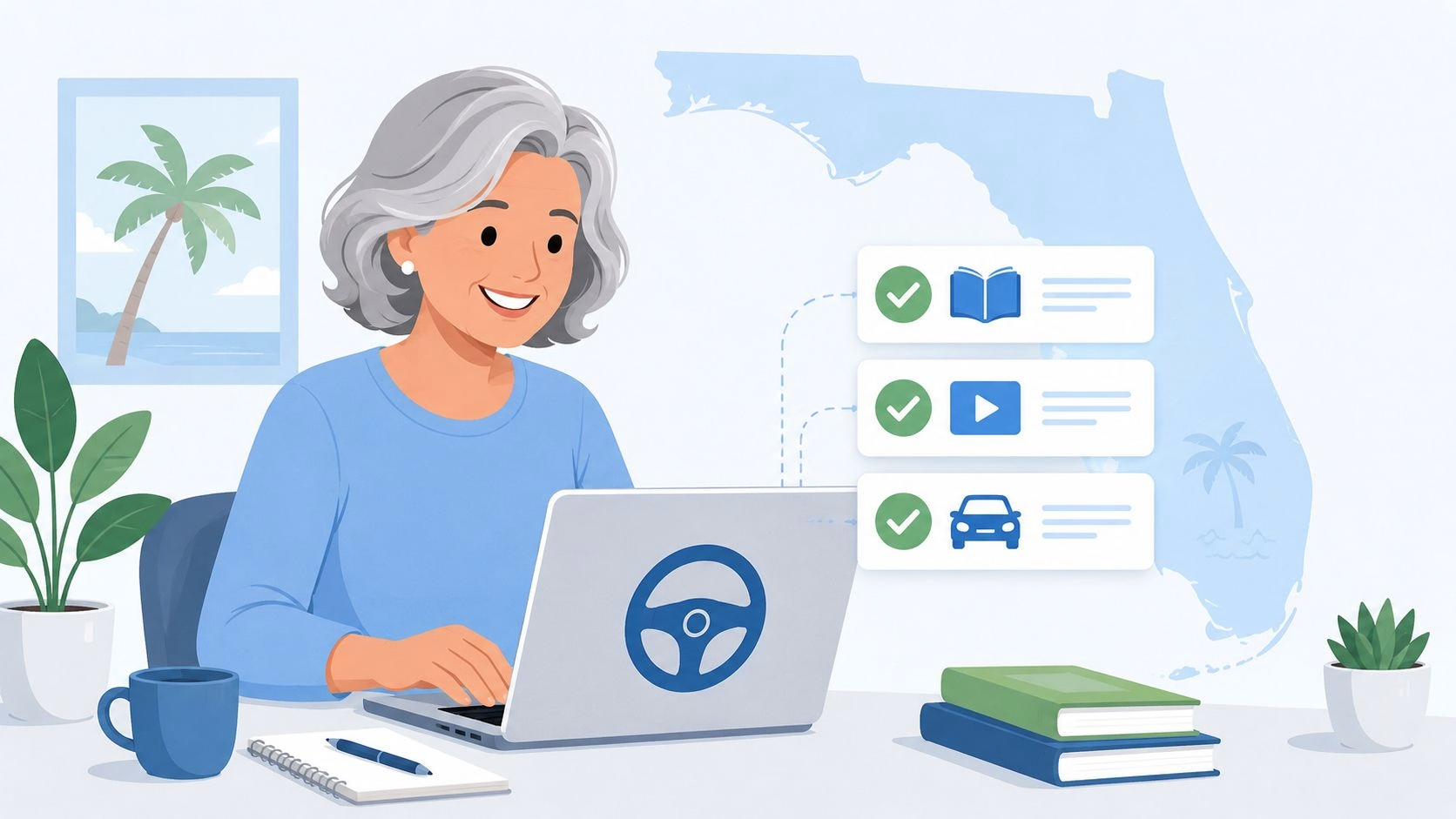

A letter from your insurer, a court notice, or a personal decision to refresh your skills can all lead to the same question: mature driver course versus defensive driving – which course do you actually need? The right answer depends less on the course name and more on who requires it, why you are taking it, and whether the provider is approved for your state or insurer.
Both courses can improve driving knowledge and encourage safer habits. They are not always interchangeable, however. Enrolling in the wrong course may mean missing an insurance discount, failing to meet a court requirement, or having to complete another program later.
Mature Driver Course Versus Defensive Driving: The Main Difference
A mature driver course is generally designed for older licensed drivers, often age 50 or 55 and above, who want to refresh their driving knowledge and may qualify for an auto insurance discount. The curriculum commonly addresses age-related changes in vision, hearing, reaction time, medication use, and driving strategies for busy roads, night travel, and difficult weather.
Defensive driving is a broader safety course focused on preventing crashes through awareness, space management, hazard recognition, speed control, and sound decision-making. Depending on the state and course approval, it may be taken voluntarily, assigned after a traffic citation, required by a court, or accepted for an insurance benefit.
The overlap is real. Both may cover traffic laws, safe following distance, distracted driving, impaired driving, and crash avoidance. The distinction is the course purpose and the approval attached to it. A mature driver course is usually built around the needs and benefits of experienced older drivers. A defensive driving course may serve drivers of many ages and may carry a specific court, DMV, employer, or insurance designation.
Start With the Requirement, Not the Course Title
If you received a court order, citation notice, DMV letter, or instruction from your insurance company, read it closely before enrolling. These documents often identify the required course type, number of hours, provider approval, completion deadline, and where the certificate must be sent.
For example, a court may require a state-approved defensive driving or driver improvement course after a violation. A mature driver course certificate might not satisfy that order, even if it includes defensive driving techniques. Similarly, an insurer may offer a discount only for a specifically approved mature driver program. A general defensive driving completion certificate may not qualify.
When the requirement is unclear, contact the court clerk, DMV, licensing agency, employer, or insurance carrier that issued it. Ask one direct question: �Will this exact course type and provider meet my requirement?� Getting confirmation before starting protects your time and money.
When a mature driver course is usually the better fit
Choose a mature driver course when your goal is an available insurance discount for experienced drivers or a practical refresher tailored to later-life driving. Some states require insurers to offer discounts after approved mature driver training, while other states leave discount availability and eligibility to each carrier.
The age threshold, discount amount, renewal period, and acceptable course providers vary. Do not assume that a course is accepted simply because it is online or marketed to senior drivers. Confirm eligibility with your insurer first, including whether the discount applies to all listed drivers or only the person who completed the course.
This training can also be a strong choice for drivers who have not had a recent violation but want to assess changing driving needs. Topics such as safely adjusting mirrors, managing glare, planning longer trips, and recognizing medication side effects can be especially useful.
When defensive driving is usually the better fit
Choose defensive driving when a court, traffic school program, employer, or insurer specifically requests it. It may also be appropriate if your primary goal is reducing risky driving behaviors after a citation or sharpening crash-prevention skills regardless of age.
A defensive driving course often gives more attention to active risk management. That can include scanning ahead, identifying escape routes, managing following distance, responding to aggressive drivers, and reducing distractions from phones or vehicle technology.
Some states allow eligible drivers to use an approved defensive driving course for ticket dismissal, point reduction, or a license-related requirement. Eligibility is never automatic. Prior violations, offense type, deadlines, commercial license status, and local court rules can affect whether the course is accepted.
Compare Approval, Delivery, and Reporting
Course content matters, but approval is what makes a certificate usable for a specific purpose. Before enrolling, verify that the provider is approved by the relevant authority. That may be a state licensing agency, court, insurer, or employer program.
For an online course, also check the completion process. Some programs use identity verification, timed sections, knowledge checks, final exams, or required seat time because state rules require them. These steps are not necessarily a sign that the course is difficult. They help support compliance and protect the validity of the completion certificate.
Ask how your completion will be handled. In some cases, you download or print a certificate and submit it yourself. In others, the course provider reports completion electronically to the state, court, or insurer. Know which party is responsible, and keep a copy of your certificate for your records.
Convenience should be part of the decision as well. A legitimate online course should clearly explain its price, state approval, device compatibility, access period, customer support options, and refund policy before you enroll. Self-paced access can make it easier to complete required education around work, appointments, and family responsibilities, but you must still finish by any stated deadline.
Do Not Assume One Course Covers Every Need
A driver may benefit from both types of training at different times. For instance, an older driver might complete a mature driver course for an insurance discount and later be assigned defensive driving after an eligible traffic citation. The first certificate does not automatically replace the second requirement.
The reverse can also be true. Completing defensive driving after a ticket does not guarantee a mature driver discount. Insurance companies may require a particular course category, a current completion date, and an approved provider.
If you need multiple outcomes, address each one separately. Confirm whether one approved course can satisfy more than one purpose before relying on it. Written confirmation from the organization setting the requirement is the safest option.
A Practical Way to Choose
First, identify your primary reason for taking the course. If it is a citation, court order, DMV condition, or employer rule, follow that exact requirement. Or If it is an insurance discount, verify the insurer’s age, provider, and renewal rules. Also, If it is personal safety, select the course whose audience and lessons best match your driving situation.
Next, verify approval before paying. Look for clear information about the state or organization that recognizes the program, not vague claims that a course is �accepted everywhere.� Driver education requirements are state-specific, and insurers can set their own qualification standards.
Finally, choose a format you can realistically complete. An approved, self-paced course with mobile access and transparent completion instructions can reduce unnecessary stress.�Providers such as floridadetscourse.com help drivers complete applicable online education conveniently, but drivers still need to choose a course that meets the requirement they need to satisfy.
FAQs
Is a mature driver course the same as defensive driving?
No.�A mature driver course typically helps older drivers qualify for insurance discounts, while defensive driving provides broader crash-prevention training that may meet court or traffic-school requirements.
Will a mature driver course lower my insurance rate?
It may. Insurance discounts depend on your state, age, carrier, policy, and completion of a course your insurer accepts.
Can defensive driving dismiss a ticket?
Sometimes. Ticket dismissal depends on the court, the violation, your driving history, and whether you complete an approved course before the deadline.
What age qualifies for a mature driver course?
The qualifying age varies. Many programs and insurers use age 50 or 55, but you should confirm the rule with your insurance carrier.
Can I take either course online?
Often, yes. Online availability depends on state approval and the organization requiring the course, so verify acceptance before enrollment.
Should I send my certificate to my insurer or the court?
Follow the instructions for your specific requirement. Some providers report electronically, while other programs require you to submit the certificate yourself.
The best course is the one that clearly fulfills your stated requirement and gives you practical skills you can use on the road. Confirm acceptance first, complete the program on time, and keep your certificate where you can find it when you need it.