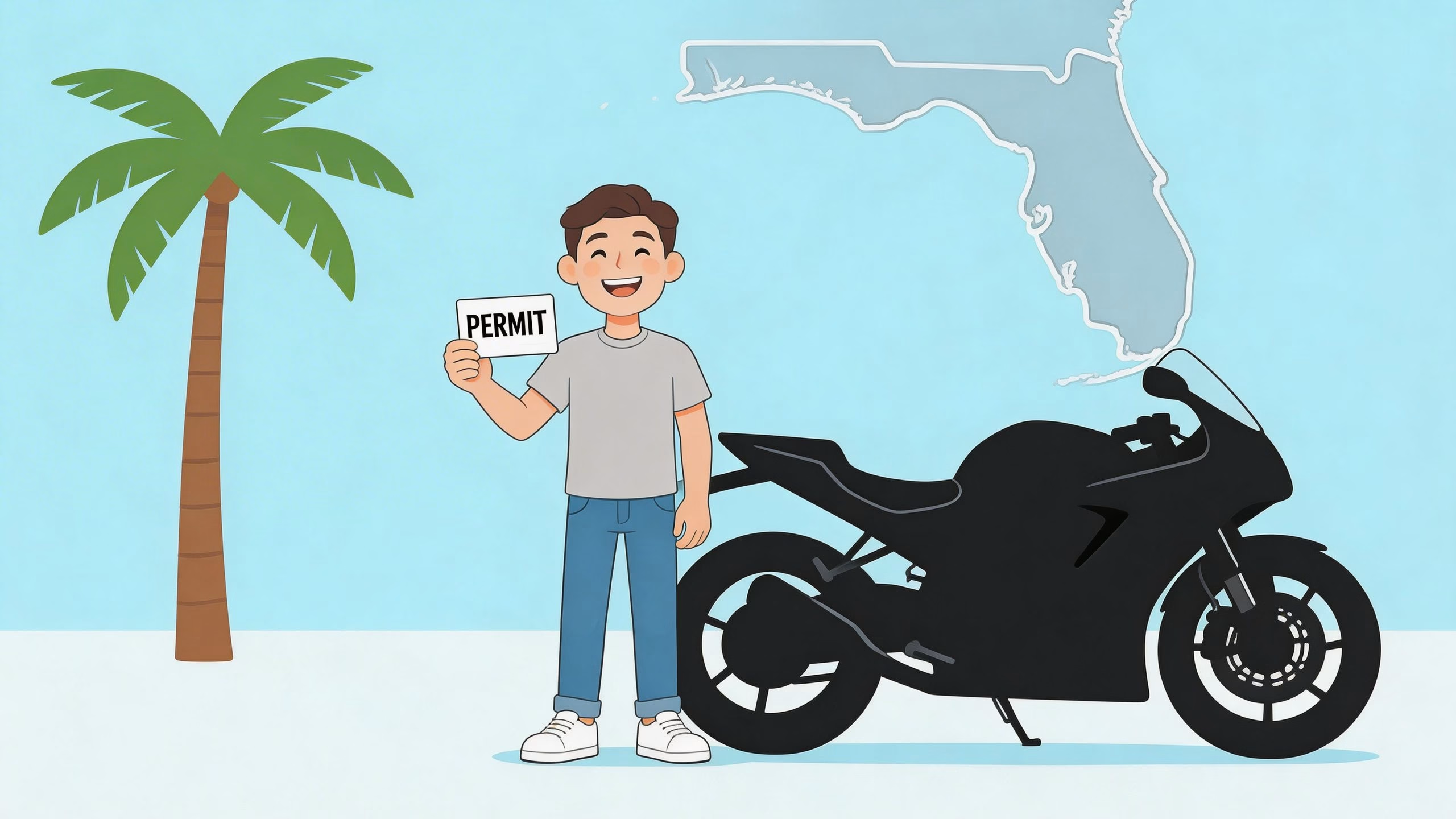
You�re probably reading this with two tabs open. One has the Florida licensing site. The other has a search for �how to get a motorcycle permit,� because the official language feels scattered and you don�t want to show up at an office missing one document.
That�s a smart instinct.
Most new riders don�t get stuck because riding is impossible. They get stuck because the process feels vague. They�re unsure whether they need a permit first, whether a safety course changes the steps, whether they should book an appointment before gathering paperwork, or whether Florida handles motorcycle licensing the same way as another state they�ve lived in before.
As an instructor, I�ve seen the same pattern over and over. Riders do best when they treat the permit process like pre-ride setup. Check the machine. Check your gear. Check the route. Then ride. The licensing process works the same way.
Understanding Your Path to a Motorcycle Permit
A lot of riders begin with excitement and a little anxiety. They�ve already picked out a helmet online, watched training videos, and imagined their first quiet morning ride. Then the practical questions hit. What do I bring? Where do I go? Do I need a car license first? Will Florida make me take a written test before anything else?
That uncertainty can cause wasted trips.
A better approach is to think in stages. First, confirm what Florida expects from you. Second, gather every document before you schedule anything. Third, prepare for the knowledge portion like you would prepare for a skills drill. Calmly and on purpose.
I like to compare it to a rider walking into a busy office lobby with a folder in hand. One person has screenshots, half-complete forms, and a phone battery at ten percent. Another person has identification ready, knows which service they need, and has already studied. The second rider usually has a smoother day.
Practical rule: Don�t start with the appointment. Start with clarity. The appointment only helps if your paperwork and preparation are already in order.
For younger applicants, it also helps to understand how motorcycle licensing fits into the broader path of driving privileges. If you�re helping a teen rider, or you�re a parent trying to understand staged licensing, BDISchool�s overview of https://bdischool.com/graduated-driver-licensing/ gives useful context for how structured licensing systems are designed to build skill over time.
The riders who make the process feel easy aren�t lucky. They�re organized.
That�s good news, because organization is learnable. If you can learn clutch control, you can learn this process.
Understanding Florida Motorcycle Permit Requirements
Florida has its own habits and quirks, and that�s where many guides become too generic. If you want to know how to get a motorcycle permit without extra frustration, start by treating Florida as its own system instead of assuming another state�s rules will transfer neatly.
What Florida applicants usually need to confirm first
In practical terms, most applicants should verify these basics before they ever leave home:
- Your age status matters. If you�re under legal adulthood, parental or guardian involvement may affect your path and your paperwork.
- Your identity documents must match. Small name differences across IDs can slow down processing.
- Your vision and medical readiness count. Even confident riders can get delayed by issues they didn�t think about ahead of time.
- Your current driving record can matter. If there are unresolved issues on your license status, handle those before planning your motorcycle step.
Florida riders often assume the motorcycle process stands alone. It usually doesn�t. Your existing driver status, identity record, and testing readiness all connect.
Why states build permit systems this way
The permit stage exists for a reason. It creates a buffer between wanting to ride and riding fully on your own. That�s not bureaucracy for its own sake. It�s safety structure.
A useful comparison comes from New Jersey�s motorcycle permit process. In that state, applicants must be at least 17 years old, riders under 18 need parental or guardian consent, and applicants must provide 6 Points of ID verification, pass a knowledge test and vision test, and pay a $5 fee. New Jersey also applies a 20-day minimum practice riding period with restrictions on night riding, passengers, and certain roads. The same source notes that motorcyclists are 28 times more likely to die and 5 times more likely to be injured than car occupants, which helps explain why states build formal permit steps before full riding privileges (New Jersey MVC motorcycle manual).
That comparison matters because it shows the pattern. States don�t create these rules randomly. They�re trying to slow down the jump from novice to unrestricted rider.
A permit is a training stage, not a prize. Riders who respect that stage usually build better habits.
A Florida-specific mindset that helps
When you deal with FLHSMV, think less about �beating the system� and more about �clearing checkpoints.� Florida offices can be busy. Appointment timing, document acceptance, and service availability can vary by location. That means your best advantage is showing up with a complete, orderly file and a realistic expectation of what can happen in one visit.
One related area that confuses new riders is the difference between a motorcycle, scooter, and moped. If you�re unsure where your vehicle falls, this guide to licensing and registration requirements for electric mopeds is worth reviewing because it helps clarify when a smaller two-wheeled vehicle may trigger different road-legal requirements than a motorcycle.
Gathering Required Documents for Your Permit Application
Most permit problems happen before the applicant reaches the counter. Not because the person is unqualified, but because one document is missing, expired, or inconsistent.
The fix is simple. Build a document packet before you schedule or travel.
Your core document checklist
Bring originals or accepted official versions whenever possible. Don�t rely on blurry phone photos or partial scans unless the office has clearly said they�re acceptable.
| Required Documents Checklist | Acceptable Examples |
|---|---|
| Document | Acceptable Examples |
| Proof of identity | Birth certificate, passport |
| Social Security verification | Social Security card, official record showing your Social Security number |
| Proof of residency | Mail, statement, or other official record showing your Florida residential address |
| Parental or guardian documentation if required | Consent-related paperwork or identification for the parent or guardian |
| Current license information if applicable | Existing driver license or identification card |
| Appointment and confirmation details | Printed confirmation or saved digital appointment details |
That table won�t replace checking FLHSMV�s current accepted-document list, but it gives you the structure you need.
For a broader DMV-prep reference, BDISchool�s guide on https://bdischool.com/what-to-bring-to-dmv/ is a helpful companion when you�re building your folder.
Small details that cause big delays
Riders often overlook the mismatch issues that office staff notice immediately.
- Name consistency: If your passport shows one version of your name and another document shows a different version, bring the legal bridge document that explains the change.
- Address freshness: If you�ve moved recently, older mail may not help you.
- Expired documents: A document that was acceptable last month may create a problem today.
- Unreadable copies: If a seal, date, or signature can�t be read, assume the office may reject it.
One missing detail can turn a permit day into a document-recovery day.
Build a folder like a rider builds a toolkit
Use a simple order so you aren�t searching while people wait behind you.
- Front pocket: Appointment confirmation, if you have one.
- Main section: Identity proof.
- Second section: Residency proof.
- Back section: Any consent or supporting paperwork.
- Phone backup: Digital copies for your own reference, even if the office needs originals.
This sounds basic, but it helps. A neat folder lowers stress because it removes decision-making in the moment.
Bring more support than you think you�ll need. The rider who carries one extra accepted document usually has an easier day than the rider who brings the exact minimum and hopes for the best.
If something is missing
Don�t panic and don�t improvise.
If you�ve lost a key document, pause and replace it properly rather than guessing with substitutes. Official agencies usually care less about your explanation than about whether the record in front of them meets their checklist. That�s frustrating, but it�s predictable. Predictability is useful.
A permit office visit goes much better when your only job is answering questions, not defending incomplete paperwork.
Scheduling and Acing the Knowledge Test at FLHSMV
Appointment timing matters more than most new riders expect. A good slot can mean a focused, smooth visit. A bad slot can mean crowds, delays, and rushing through questions when your energy is already dropping.
If you�re trying to learn how to get a motorcycle permit in Florida efficiently, treat scheduling as part of test prep.
Booking your visit the smart way
Start by checking whether your local office handles the service you need and whether it prefers appointments for testing. Don�t assume every office works the same way.
A few habits help:
- Choose a lower-friction time: Earlier appointments often feel calmer than late-day visits.
- Avoid stacking errands before the test: If you�ve already had a stressful morning, your reading accuracy can drop.
- Save everything twice: Keep the confirmation on your phone and in your email.
- Plan your route: Know parking, entrance location, and check-in procedure.
When riders say they �weren�t nervous until they got there,� it�s often because the day itself felt chaotic.

What the testing environment feels like
FLHSMV testing spaces can feel formal, even for confident people. That�s normal. The best response is familiarity.
Expect a structured process. You�ll check in, wait your turn, verify identity, and then complete the knowledge portion according to office procedure. Don�t count on being allowed to review notes in the testing room. Prepare as if your studying ends before you walk in.
A useful comparison comes from New Jersey�s written motorcycle test format. One verified source describes a 60-question test with 48 correct answers required for an 80% passing score, offered in English, Spanish, and Vietnamese, and taken without study materials in the exam room. The same source ties that rigor to crash severity and permit progression rules (New Jersey motorcycle written test overview). Florida riders can take a simple lesson from that. Motorcycle knowledge testing is built to check real reading and rule awareness, not lucky guessing.
How to study without wasting time
Don�t study everything with equal intensity. Put most of your energy into the questions new riders miss most often:
- Road signs and right of way
- Lane positioning concepts
- Protective gear basics
- Hazard awareness
- Motorcycle-specific operating rules
Read slowly enough to notice qualifying words. New riders often miss questions because they skim for familiar words and answer too fast.
Use practice materials that match the style of state testing. If you want a Florida-focused study resource, this https://bdischool.com/florida-dmv-permit-practice-test/ can help you rehearse the question style before test day.
Study advice: If two answers both sound safe, look for the one that matches the manual�s exact rule, not the one that matches your guess about �common sense.�
A simple day-of plan
Use a routine that keeps your brain clear.
- Before leaving home: Eat something light, bring water, and check your folder.
- When you arrive: Don�t scroll social media while waiting. Review only calm mental summaries.
- During the test: Read each question fully, eliminate obvious wrong answers, and don�t change an answer unless you can explain why.
- After submission: Stay focused on the next instruction. Passing the test is one step, not the whole process.
The riders who perform best usually aren�t the ones who studied the longest. They�re the ones who practiced under calm conditions and walked in already familiar with the rhythm.
Practicing Safely with Your Learner Permit
The permit is where your real education starts. Passing a knowledge test proves you can recognize rules. Practicing with a permit teaches your hands, eyes, and judgment to work together.
That�s a different skill.

Why permit restrictions matter
New riders sometimes resent restrictions because they feel limiting. In practice, those limits protect you from the situations most likely to overwhelm a beginner.
A good comparison comes from Pennsylvania. There, a motorcycle permit requires riders to pass a 60-question knowledge test with 48 correct answers for an 80% pass mark, and post-permit restrictions include daylight-only riding, no passengers except instructors, and supervision by a licensed Class M holder. That same overview explains that permit practice is meant to build skill before the rider takes the next licensing step (Pennsylvania permit process overview).
The lesson for Florida riders is straightforward. If your permit limits where, when, or how you can ride, those restrictions exist because beginner mistakes become more dangerous at night, at speed, and with added complexity.
A practice plan that builds confidence
Don�t make your first rides random. Structure them.
Week one
Stay in a parking lot or another low-pressure area. Work on starts, stops, clutch release, smooth braking, and looking through turns.
Your goal isn�t speed. It�s control.
Week two
Move to quiet neighborhood streets if your permit conditions allow it. Practice scanning driveways, maintaining lane position, and making simple turns from a stop.
Keep rides short. Fatigue shows up earlier than most new riders expect.
Week three
Add slightly more complex traffic patterns. Not busy chaos. Just enough movement that you must process cars, signs, and spacing while still staying calm.
Week four
Repeat the same routes and drills until your actions feel smooth rather than forced. Repetition is where confidence becomes reliable.
How to practice like a serious student
- Log what felt shaky: Tight turns, panic braking, or hill starts should go on your list for next session.
- Ride with a mentor mindset nearby: Even if they aren�t physically beside you at every moment, experienced input matters.
- Stop before frustration turns into sloppiness: The last ten tired minutes of practice often teach bad habits.
- Wear your full protective gear every time: Training rides count as real rides.
Smooth control at low speed tells me more about a new rider than confidence at higher speed ever will.
A permit period used well can turn a nervous beginner into a rider who�s ready for formal training or the next licensing step with much less stress.
Enrolling in a Motorcycle Safety Course and Next Steps
At some point, most riders face a choice. They can continue through the traditional route, or they can complete a formal rider course and use that training as the bridge to full endorsement.
From an instructor�s perspective, the course route is usually the cleaner path because it combines structure, coaching, and accountability in one place.

The traditional route versus the course route
The traditional route often works like this. You study, pass the knowledge portion, practice on your permit, schedule the skills step, and show up with the right bike, documents, and equipment.
The course route adds training before final licensing. That matters because many riders don�t need more motivation. They need feedback.
A verified nationwide summary describes two common pathways: the traditional route and an MSF Course route. That source says the course option is the preferred path with 85%+ success, involves a 15-20 hour Basic RiderCourse, waives DMV skills testing in 48 states including PA and FL, and shows a 95% permit-to-license conversion. It also states that DMV skills test failure rates run 20-30% versus 5-10% in the course path, and cites an MSF longitudinal figure of 32% lower post-course crash risk. The same source also notes potential 10-20% insurance discounts and describes Florida as following the same broad permit-to-endorsement pattern (nationwide motorcycle permit and course overview).
That�s the strongest case for formal training. Not speed alone. Better preparation.
What a good course actually gives you
A rider course does more than help you �pass.�
Coaching under observation
An instructor sees habits you can�t see from the seat. New riders commonly think they�re turning their head enough, braking smoothly enough, or looking far enough ahead. Then an instructor points out the gap.
A controlled place to make mistakes
That�s one of the biggest advantages. It�s better to stall, wobble, or overbrake in a supervised training environment than in mixed traffic.
A repeatable foundation
Courses usually teach a sequence. Mounting, controls, start-up habits, friction-zone work, braking technique, turning vision, and hazard response. Sequence matters because it gives your brain a pattern to return to under stress.
After you�ve done some self-study, this overview of the Florida motorcycle license path at https://bdischool.com/motorcycle-license-florida/ can help you compare your next options.
What to bring mentally and physically
Show up rested. Bring the riding gear the provider requires. Listen closely. Don�t arrive trying to prove you�re already advanced.
Most students who struggle in training aren�t lazy. They�re tense. They grip too hard, look down, and rush inputs. A course helps break that cycle because instructors can stop the pattern early.
Here�s a short visual explainer that pairs well with what you�ll practice on the range.
Why this step is often the smartest one
The permit teaches exposure. The course teaches method.
That difference matters. A rider can spend weeks practicing one mistake. In a class, that same mistake might get corrected in minutes. If your goal is not just getting legal, but becoming steady and predictable on the bike, formal training usually gives you a faster and safer progression.
Conclusion and Next Steps Towards Your Full License
The cleanest path is the one with the fewest surprises. Check your Florida requirements carefully. Gather your documents before booking anything. Study for the knowledge portion with purpose. Use your learner period to build low-speed control and decision-making, not just courage. Then choose your next step with intention.
For many riders, that next step is a safety course. It gives structure to the skills you�ve started building on your own. It can also simplify the jump from permit stage to full endorsement, which is why so many riders prefer it over trying to piece everything together alone.
One content gap in the broader motorcycle licensing space is practical discussion of course affordability, financing, and the value of flexible scheduling for working adults. That gap has been noted in coverage about motorcycle licensing and safety-course planning, especially for budget-conscious learners who want clearer guidance on payment flexibility and return on investment (discussion of the cost-benefit content gap for safety courses).
Keep your thinking long-term, too. Licensing is the beginning of ownership habits, not the end. Once you�re riding regularly, maintenance and protection become part of safety culture. If you plan to preserve your bike�s finish against weather and road grime, this guide to ceramic coating for motorcycles is a useful follow-up resource.
Your final checklist is simple:
- Confirm your eligibility
- Bring complete paperwork
- Pass the knowledge step
- Practice within permit limits
- Complete the training or testing needed for endorsement
- Keep learning after you�re licensed
A careful rider starts before the engine does. That�s true in the parking lot, and it�s true at the licensing office.
If you want a flexible way to build your knowledge of Florida road rules and safer driving habits, explore BDISchool. Their Florida-approved online courses are designed for busy drivers, available in English, Spanish, and Portuguese, and built to make state requirements easier to understand without the usual confusion.