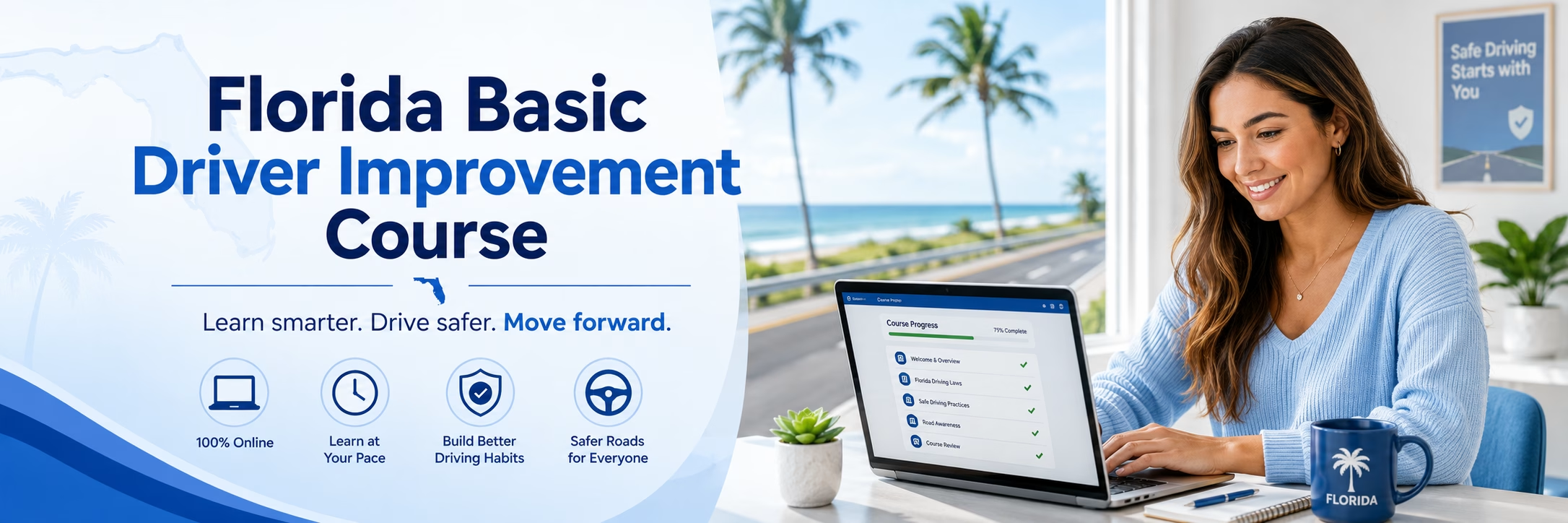

A traffic citation, court notice, insurance request, or licensing requirement can leave you with a short deadline and several unfamiliar course names. This guide to driving behavior programs explains what these programs cover, how to identify the right one, and what to do before you enroll so your completion is accepted.
Driving behavior programs are designed to address risky decisions behind the wheel. Depending on your state and the reason for enrollment, the course may be voluntary, required by a court, assigned by a licensing agency, or recommended by an insurer. The goal is practical: help drivers recognize unsafe patterns, follow traffic laws, and reduce the chance of another violation or crash.
What Is a Driving Behavior Program?
A driving behavior program is a driver education course focused on the choices that lead to unsafe driving. Lessons commonly address speeding, aggressive driving, distracted driving, right-of-way errors, following distance, alcohol and drug impairment, and how emotions affect judgment.
The name of the program can vary. A court may refer to driver improvement, defensive driving, aggressive driver education, traffic safety school, or a behavior modification course. Those labels are not always interchangeable. Each state, county, court, or insurer may have its own approved curriculum, length, and reporting process.
That distinction matters. Completing a general defensive driving course when your court ordered an aggressive driver program may not satisfy the requirement, even if both courses discuss safe driving. Always use the exact wording on your citation, court order, DMV letter, or insurance notice as your starting point.
When Drivers May Need a Program
Many people enroll after a moving violation, especially when the violation involved speeding, careless driving, following too closely, red-light violations, or unsafe lane changes. Some drivers are referred after accumulating points or receiving a license-related notice from their state.
Courts may order a driving behavior program as part of a case resolution, probation condition, or ticket dismissal option. In other cases, a driver chooses to take an approved course to pursue an insurance discount, refresh driving knowledge, or improve habits before problems become more serious.
Teens and first-time drivers may also encounter behavior-focused instruction as part of a broader driver education requirement. For them, the coursework can help connect traffic laws to real driving situations, including peer pressure, nighttime driving, phone use, and hazard awareness.
A course is not a substitute for legal advice or for paying fines, appearing in court, or completing other conditions listed in an order. It is one part of the process. Read every document carefully to understand the full requirement.
How to Choose the Right Driving Behavior Course
The fastest course is only helpful if the right agency accepts it. Before enrolling, confirm the approval and completion rules that apply to your situation.
Start with the issuing authority
Identify who required the course. That could be a court, state DMV, county clerk, traffic school administrator, employer, or insurance company. Look for the case number, due date, course title, required hours, and any reference to state approval.
If the paperwork is unclear, contact the issuing authority before enrolling. Ask whether the course must be approved for your state, whether online completion is allowed, and whether the provider reports completion directly or gives you a certificate to submit.
Match the course to the requirement
A basic driver improvement course may be appropriate for one type of citation, while an aggressive driver course may be required after a more serious pattern of unsafe conduct. A wireless communications device course is more specific and may be assigned after a phone-related violation.
Choose the course category listed in your paperwork, not simply the course with the shortest description. If no course type is listed, ask the court or agency what it will accept. This extra step can prevent a rejected certificate and a missed deadline.
Verify delivery, timing, and documentation
Online driver education can be a practical option for people balancing work, family, or court deadlines. A self-paced course lets you study from a computer, tablet, or mobile device when it fits your schedule. Still, some programs have timed modules, required identity checks, final exams, or state-specific minimum completion times.
Confirm how you will receive proof of completion. Some providers report electronically to an approved agency. Others issue a certificate for you to download, print, or submit. Save a copy of your certificate and any enrollment confirmation until your case or requirement is fully closed.
What You Will Learn in a Driving Behavior Program
Good programs do more than repeat traffic laws. They show how small decisions build into dangerous situations. A driver who regularly follows too closely, for example, has less time to respond when traffic slows. A driver who speeds while frustrated may misjudge gaps, ignore signs, and escalate a minor delay into a serious risk.
Most programs explore the connection between attitude, attention, and driving performance. You may learn how fatigue narrows awareness, how distractions delay reaction time, and how alcohol, drugs, and certain medications can impair judgment. Courses also cover practical actions, such as scanning ahead, creating space around your vehicle, planning for delays, and using a phone only when safely parked.
Aggressive-driving instruction often goes further into anger management and conflict avoidance. The purpose is not to excuse rude or dangerous behavior from other road users. It is to help you avoid turning another driver�s mistake into your own risky decision. Leaving space, refusing to retaliate, and choosing not to engage can prevent a situation from worsening.
How to Complete an Online Program Successfully
Treat the due date as the date the agency must receive or recognize your completion, not necessarily the date you plan to finish the last lesson. Some systems need time to process records, and a court may require you to submit your certificate before a hearing.
Set aside focused time to complete the course. Although online learning is flexible, rushing through lessons can make it harder to pass quizzes or retain the information that matters on the road. Use a quiet setting, keep your case information nearby, and complete each required module in order.
Before you submit anything, compare your certificate with the requirement. Check your full name, case number if required, course title, completion date, and provider information. If you must send the certificate yourself, follow the court or agency�s instructions exactly and keep proof of submission.
floridadetscourse.com offers online driver education and improvement courses built around convenience, clear pricing, and approved-course requirements. Availability and acceptance depend on the specific state and program, so confirm that the selected course matches your notice before enrollment.
Common Mistakes to Avoid
The most common mistake is assuming every traffic course serves the same purpose. Approval is often specific to the state, court, violation, and course category. A provider may offer several valid programs, but only one may fit your requirement.
Another problem is waiting until the last day. Technical issues, identity verification, an incomplete final exam, or a delay in certificate submission can create avoidable stress. Enroll early enough to finish carefully and resolve questions before your deadline.
Drivers should also avoid treating the program as a one-time administrative task. The certificate may satisfy a requirement, but the larger value comes from changing the habits that led to the citation or concern. A safer following distance, a calmer response to traffic, and a consistent no-phone rule can make a meaningful difference every day.
FAQs About Driving Behavior Programs
What is the purpose of a driving behavior program?
A driving behavior program teaches safer decision-making behind the wheel. It focuses on reducing risky behaviors such as speeding, distraction, aggression, and impaired driving.
Is a driving behavior program the same as defensive driving?
Not always. Defensive driving is a broad safety course, while a driving behavior program may be a specific court- or state-required course with different approval standards.
Can I take a driving behavior program online?
Often, yes. Online eligibility depends on your state, court, and the course requirement listed on your paperwork.
Will an online certificate be accepted by the court?
It may be accepted if the course is approved for your jurisdiction and requirement. Verify acceptance with the court or issuing authority before enrolling.
How long does a driving behavior program take?
Course length varies by state and program type. Your notice or the course description should state the required instructional time and completion rules.
Do I need to send my certificate after finishing?
It depends on the program. Some providers report completion electronically, while others require you to submit the certificate yourself.
The best time to improve driving behavior is before another close call, citation, or court notice makes the decision for you. Choose the course your requirement calls for, complete it with care, and carry the practical habits forward every time you start the car.