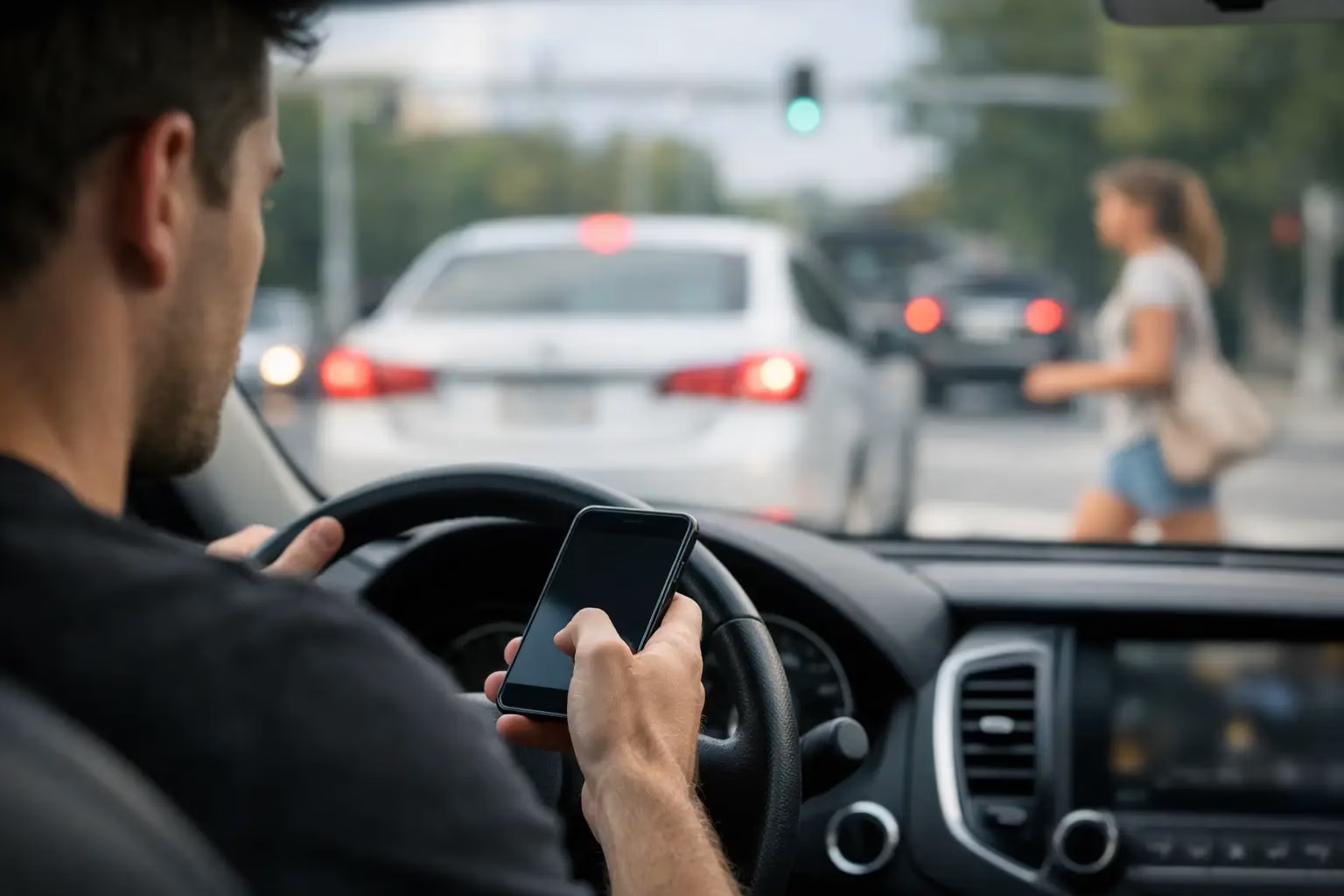
A distracted driving case example can show how quickly a routine glance at a phone becomes a citation, an insurance claim, or a serious injury case. The details matter: what the driver was doing, what the law prohibits in that state, whether a crash occurred, and what evidence is available.
This fictional example reflects common factors seen in distracted driving enforcement and civil claims. It is not legal advice, and state laws, court procedures, and course requirements vary.
The distracted driving case example
At 5:40 p.m., Jordan was driving home through a busy commercial corridor. Traffic was slowing near an intersection, and the vehicle ahead stopped for a red light. Jordan heard a notification, picked up a phone to read the message, and looked down for several seconds.
When Jordan looked back up, the vehicle ahead was stopped. Jordan braked hard but struck its rear bumper. No one needed emergency medical treatment at the scene, but both vehicles had damage. A responding officer documented Jordan’s statement that the phone had been in hand immediately before the collision.
Jordan received a citation under the state’s handheld wireless communications device law. The other driver later filed an insurance claim for vehicle repairs and reported neck pain after the crash. What began as a few seconds of phone use created separate issues: a traffic violation, possible court obligations, insurance consequences, and potential civil liability.
The central fact was not whether Jordan intended to cause a crash. It was whether Jordan operated the vehicle without reasonable attention and violated the state’s phone-use restriction. Distracted driving cases often turn on that practical question.
How fault may be established
An officer does not always need a video recording of the driver holding a phone. A case can be supported by several kinds of evidence, depending on the circumstances. In Jordan’s situation, the officer’s observations, Jordan’s admission, the crash damage, witness statements, and the location of the stopped vehicles all supported the conclusion that Jordan failed to react in time.
Phone records may also become relevant in a civil claim, although records do not automatically prove what a driver was doing at the exact moment of impact. A timestamp may show a call, text, or data activity near the crash, but the context still matters. The phone could have been used by a passenger, connected through hands-free technology, or active in the background.
Vehicle data can add context. Some newer vehicles record information such as speed, braking, steering input, and seat belt status before or during a collision. Nearby surveillance cameras, dash cameras, and intersection cameras may provide additional evidence. Each source has limits, which is why investigators and insurers compare the full picture rather than relying on a single fact.
In many rear-end crashes, the following driver is often presumed to have failed to leave enough stopping distance or pay sufficient attention. That does not mean fault is automatic in every situation. Sudden lane changes, defective brake lights, unsafe stops, road conditions, and other conduct may affect how responsibility is assigned.
Why a phone citation can have wider consequences
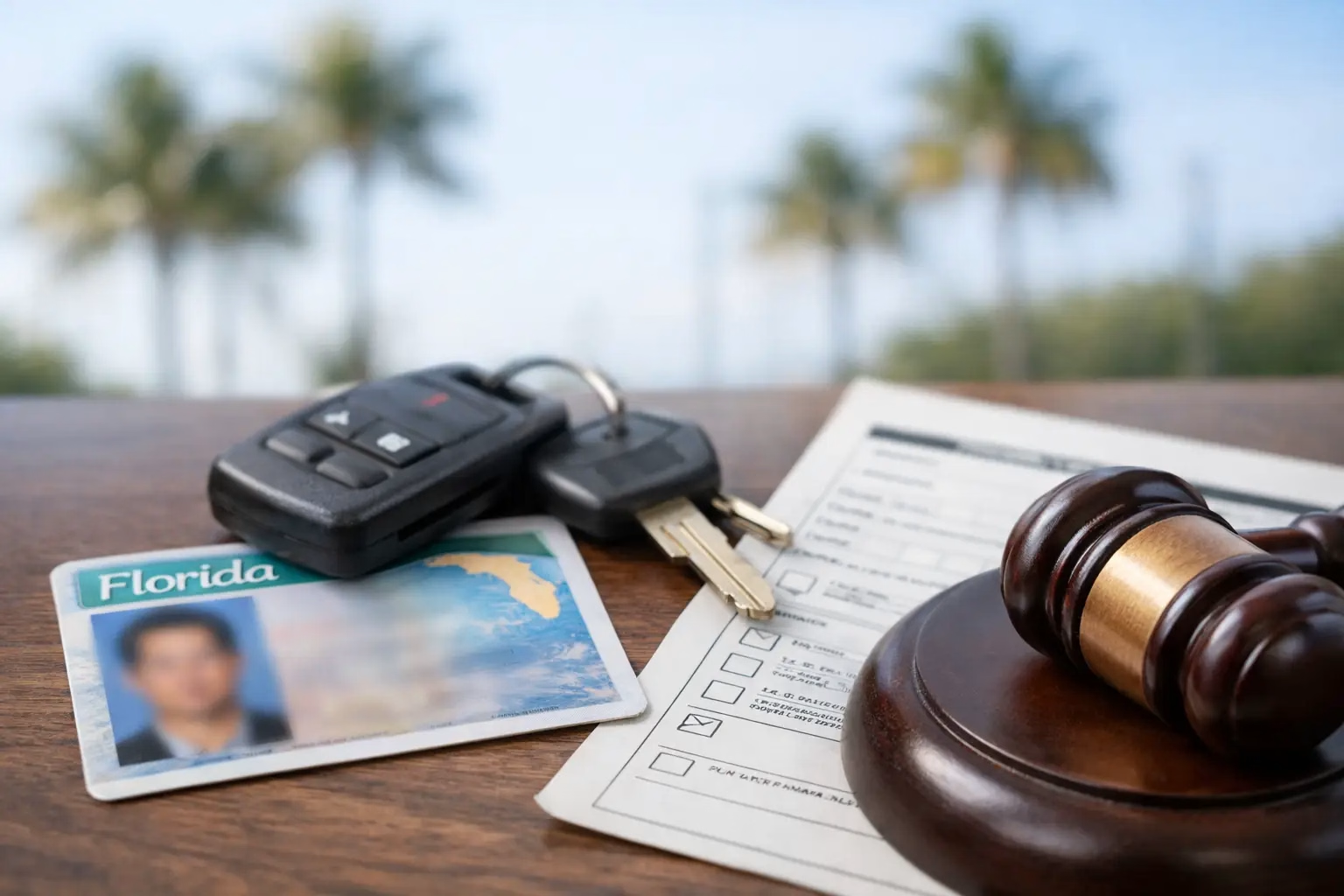
A distracted driving citation can bring more than a fine. Depending on state law and the driver’s record, consequences may include points, a court appearance, a required driver improvement course, increased insurance costs, or restrictions for a teen or newly licensed driver.
When a crash occurs, the financial impact can grow quickly. Property damage claims may involve repairs, rental transportation, and diminished value. Injury claims may involve medical expenses, lost income, and pain-related damages. A citation does not by itself decide every insurance or civil claim, but it can become meaningful evidence.
For commercial drivers, the stakes may be higher. Federal and employer rules can prohibit certain forms of mobile device use, and a violation may affect employment, company insurance, or a commercial driving record. Drivers should follow the rules that apply to their license type and the vehicle they operate.
What Jordan should do after the citation
The right response depends on the citation, the court notice, the state, and whether a crash caused injuries. Ignoring paperwork is usually the worst option. Deadlines can affect payment amounts, driving privileges, eligibility for a course option, or the ability to contest the charge.
Jordan should first read the citation and any court instructions carefully. The paperwork may state whether an appearance is required, when payment is due, and whether a driver education or traffic safety course is available. A course may be voluntary, court-ordered, or offered as part of a citation resolution program. Completion does not automatically dismiss every ticket, so drivers should confirm the requirement before enrolling.
Jordan should also report the collision to the insurer promptly and provide accurate information. Avoid guessing about injuries, damage, or fault. If there is a dispute, significant damage, injuries, or possible license consequences, speaking with a qualified attorney may be appropriate.
If a court or agency requires education, choose a provider and course that are approved for the specific purpose. The course name alone is not enough. Drivers should verify the state approval, court acceptance rules, completion deadline, and how the certificate will be submitted.
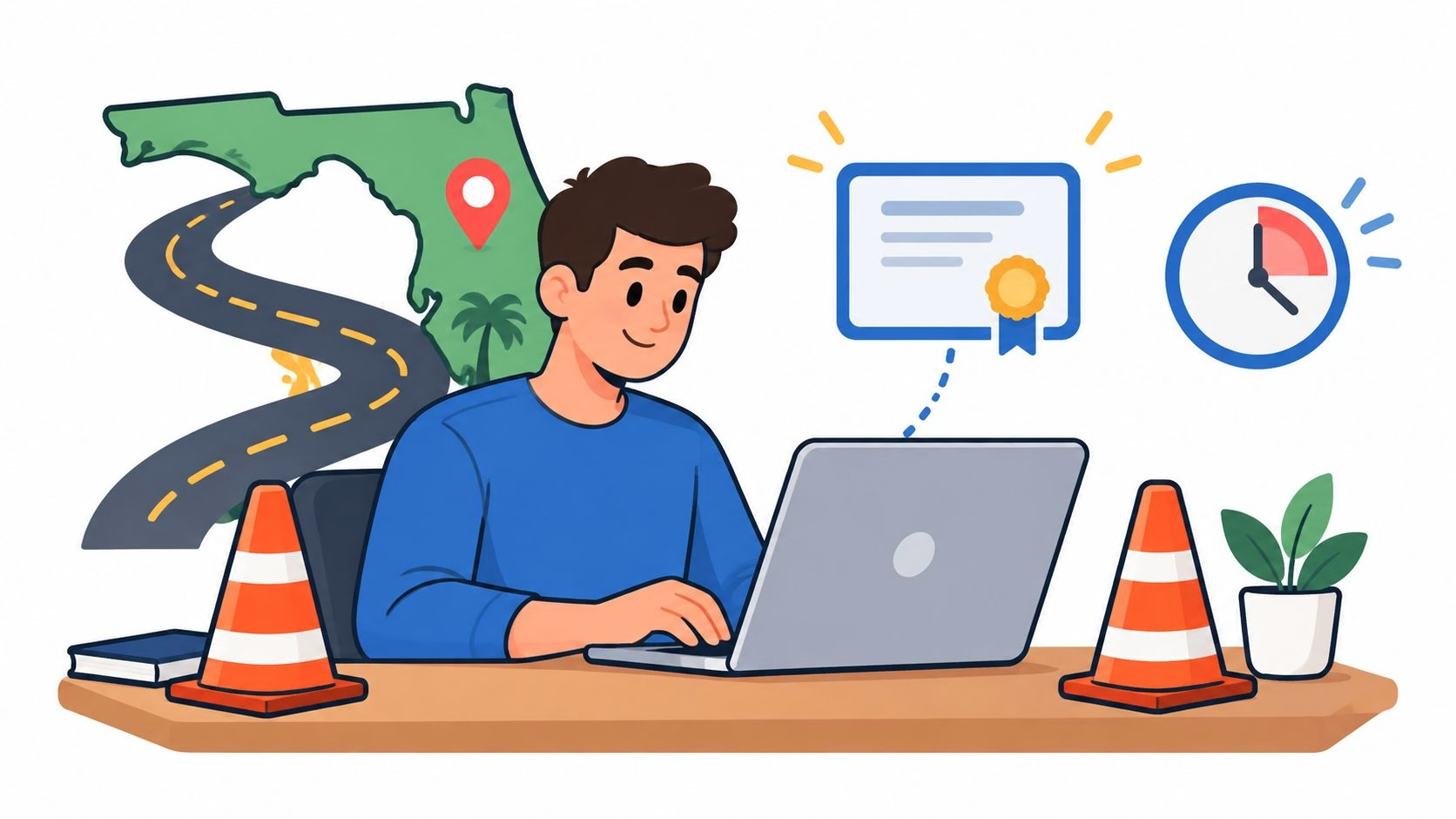
Online traffic safety education can be useful because it allows drivers to complete required learning around work and family schedules. floridadetscourse.com offers online course options designed for eligible licensing, court, and driver improvement needs. Availability and acceptance depend on the driver’s state and requirement.
The safety lesson behind the case
Jordan did not set out to drive recklessly. That is precisely why distracted driving is so common. A message, navigation adjustment, food wrapper, passenger conversation, or concern at work can seem manageable until traffic changes faster than the driver expects.
At 45 mph, a vehicle travels about 66 feet per second. Looking away for three seconds means traveling nearly 200 feet without fully watching the road. Even at lower speeds, a short lapse can remove the time needed to notice stopped traffic, a pedestrian, a cyclist, or a vehicle turning across the lane.
The most reliable prevention is to make decisions before the vehicle moves. Set navigation, adjust music, secure loose items, and place the phone where it will not invite a quick glance. If a call or message truly cannot wait, pull over at a safe location. Hands-free technology can reduce manual distraction, but it does not eliminate cognitive distraction. A difficult conversation can still take attention away from driving.
When the outcome may be different
Not every distracted driving case looks like Jordan’s. Some citations involve a driver observed holding a phone at a stoplight, with no crash. Other cases involve a driver who was using a device lawfully but was still driving carelessly. State laws may distinguish between holding a device, texting, using an app, talking on a phone, and using a device while stopped.
There are also special rules for school zones, work zones, novice drivers, bus drivers, and commercial operators in some jurisdictions. A driver should not assume that a rule from another state applies at home. Check the exact law and any instructions on the citation.
Frequently asked questions
Is distracted driving the same as texting while driving?
No. Texting while driving is one form of distracted driving. Distracted driving also includes visual, manual, and mental distractions such as adjusting a device, eating, or focusing on a conversation instead of traffic.
Can a distracted driving ticket affect insurance?
Yes, it can. Insurers may consider citations and crashes when setting rates, but the result depends on the insurer, state rules, driving history, and policy terms.
Can I take a driver improvement course for a distracted driving ticket?
Possibly. Eligibility depends on the court, state agency, violation type, and deadline. Confirm that a course is approved before you enroll.
Does hands-free phone use make driving safe?
No. Hands-free use may be legal in some situations, but it can still divide attention. Keep conversations brief and avoid calls that require concentration or emotional focus.
What should I do if I receive a distracted driving citation?
Read the citation immediately and follow its deadline and instructions. If you are unsure about court, insurance, or legal consequences, get guidance from the appropriate court, agency, insurer, or qualified attorney.
A safer driving habit often starts with one simple boundary: once the vehicle is moving, the phone can wait. That choice protects more than a driving record. It gives you the attention needed to respond when the road changes without warning.