
Getting a ticket or court order usually comes with a deadline, paperwork, and one big question: will this course actually count? If you need a court approved driving course online, the safest move is to verify exactly what your court, state, or county requires before you enroll. A course can be convenient and well-designed, but if it is not accepted for your case, convenience does not help.
For most drivers, the goal is simple. You want a legitimate online course that satisfies the requirement, fits your schedule, and does not create more problems later. That means looking past marketing claims and focusing on approval status, course type, reporting process, and timing.
What a court approved driving course online actually means
A court approved driving course online is a driver education or traffic safety program that has been accepted by a court, state agency, or another authorized body for a specific purpose. That purpose may be ticket dismissal, point reduction, sentence compliance, driver improvement, or another legal requirement tied to your case.
The key detail is that approval is rarely universal. A course may be approved in one state but not another. It may be accepted for basic driver improvement but not for aggressive driving, distracted driving, or first-time licensing requirements. In some situations, the court itself names the course category. In others, you are given broader permission to complete any approved provider’s program.
That is why the phrase court approved matters more than online. Online delivery gives you flexibility. Approval gives the course legal value.
Why courts approve some courses and reject others
Courts and state agencies do not approve courses just because they cover safe driving topics. They approve them because the provider meets formal standards. Those standards often include curriculum requirements, seat-time rules, identity verification, completion tracking, and certificate issuance procedures.
Some states also regulate how the provider reports your completion. In one state, you may need to submit your own certificate. In another, the school may report directly to the court or DMV. That difference matters if you are close to a deadline.
There is also a trade-off between speed and certainty. A fast sign-up process is helpful, but not if the course category is wrong for your violation. The best course for your situation is the one that matches the court order first and offers convenience second.
How to confirm a course will satisfy your requirement
Start with your ticket, court notice, or clerk instructions. Look for exact language such as driver improvement course, defensive driving course, traffic school, BDI, TLSAE, or another named program. If the order lists a required number of hours, that detail matters too.
Next, confirm whether your court accepts online completion. Many do, but not every jurisdiction handles every case the same way. If anything is unclear, contact the court clerk before enrolling. A two-minute verification can save you from paying for the wrong course.
Then check the provider’s approval information. A legitimate provider should clearly state where the course is approved, what requirement it satisfies, and how completion is documented. If those details are vague, treat that as a warning sign.
Choosing the right court approved driving course online
The right course depends on your reason for taking it. A teen meeting permit or license education requirements needs something different from an adult resolving a traffic citation. A mature driver seeking an insurance discount needs something different from a person ordered into an intermediate or aggressive driver program.
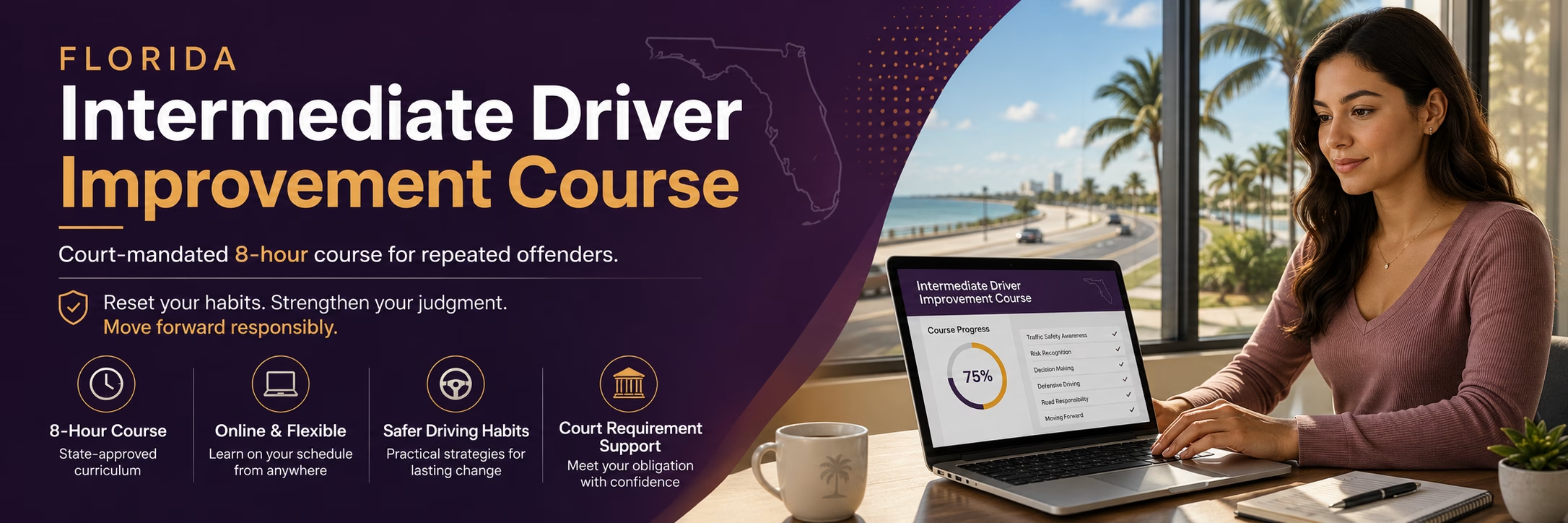
That is why broad course catalogs can be useful. If a provider offers multiple state- and court-approved options, it is easier to match the right program to the right requirement. floridadetscourse.com is one example of a provider built around that model, offering approved online courses for different compliance and safety needs instead of a one-size-fits-all class.
You should also look at format. Self-paced online courses are often the easiest option for working adults, parents, and students because they let you stop and start on your schedule. Mobile access matters too. If you can complete sections from your phone, tablet, or computer, it is easier to finish on time.
Pricing should be clear from the start. Hidden fees for certificates, processing, or reporting can turn a low advertised price into a frustrating purchase. Transparent pricing is not just a convenience issue. It is a trust issue.
Common mistakes that cause delays
The most common mistake is assuming all traffic courses are interchangeable. They are not. Defensive driving, basic driver improvement, substance abuse education, and court-ordered specialty programs may all sound similar, but they serve different legal and administrative purposes.
Another common mistake is waiting too long. Even when a course is online and self-paced, you still need time to complete it, receive proof, and make sure the court gets what it needs. If your deadline is near, verify how completion is reported and whether expedited certificate delivery is available.
A third issue is skipping the fine print. Some courts require completion before a hearing date. Others require approval from the judge before you enroll. It depends on the case. Reading the order closely is part of protecting yourself.
What to expect from the online course experience
Most approved online driving courses are designed to be straightforward. You register, confirm eligibility, complete the required lessons, and pass any quizzes or final assessment tied to the program. The structure varies by state and course type, but the overall process is usually manageable for people with no technical background.
A good online course should explain progress clearly and save your place automatically. That may sound small, but it makes a real difference when you are fitting coursework around work, family, and court deadlines. Convenience is not about cutting corners. It is about making compliance realistic.
Support also matters. If you are unsure whether a course matches your court order, responsive customer service can help prevent enrollment mistakes. For many drivers, that support is just as important as the course content itself.
When online may not be the right option
Online is often the most convenient choice, but not always. Some courts or specialty programs may still require in-person attendance. Certain cases involving repeat violations, severe offenses, or judicial discretion can come with tighter rules.
There are also situations where language access matters. If English is not your strongest language, check whether the course is available in a language you can comfortably use. Approval is essential, but so is your ability to understand and complete the material correctly.
FAQs about a court approved driving course online
What is a court approved driving course online?
It is an online driver education or traffic safety course accepted for a court, DMV, or legal requirement. Approval means it meets the standards tied to that specific use.
Will any online traffic school satisfy a court order?
No. Courts often require a specific course type or approved provider. Always match the course to your ticket, court notice, or clerk instructions.
How do I know if a course is approved in my state?
Check the provider’s approval details and your court paperwork. If anything is unclear, call the court clerk before enrolling.
Can I take the course on my phone?
Usually, yes. Many providers offer mobile-friendly access so you can work from a phone, tablet, or computer.
How long does a court approved driving course online take?
It depends on the requirement. Some courses have state-mandated hours, and some include quizzes or a final test.
Do I send the certificate to the court myself?
Sometimes. In some states or programs, the provider reports completion directly. In others, you must submit the certificate yourself.
What if I choose the wrong course?
You may have to retake a different one. That can cost more money and put your deadline at risk.
Are online court-approved courses easier than classroom courses?
They are usually more flexible, not necessarily easier. You still must complete the required material and meet the provider’s completion rules.
If you need a court approved driving course online, think of the process less as shopping for a class and more as confirming a legal match. The right course should be approved for your exact requirement, simple to complete, clearly priced, and easy to access on your schedule. When those pieces line up, meeting a court obligation becomes much more manageable.