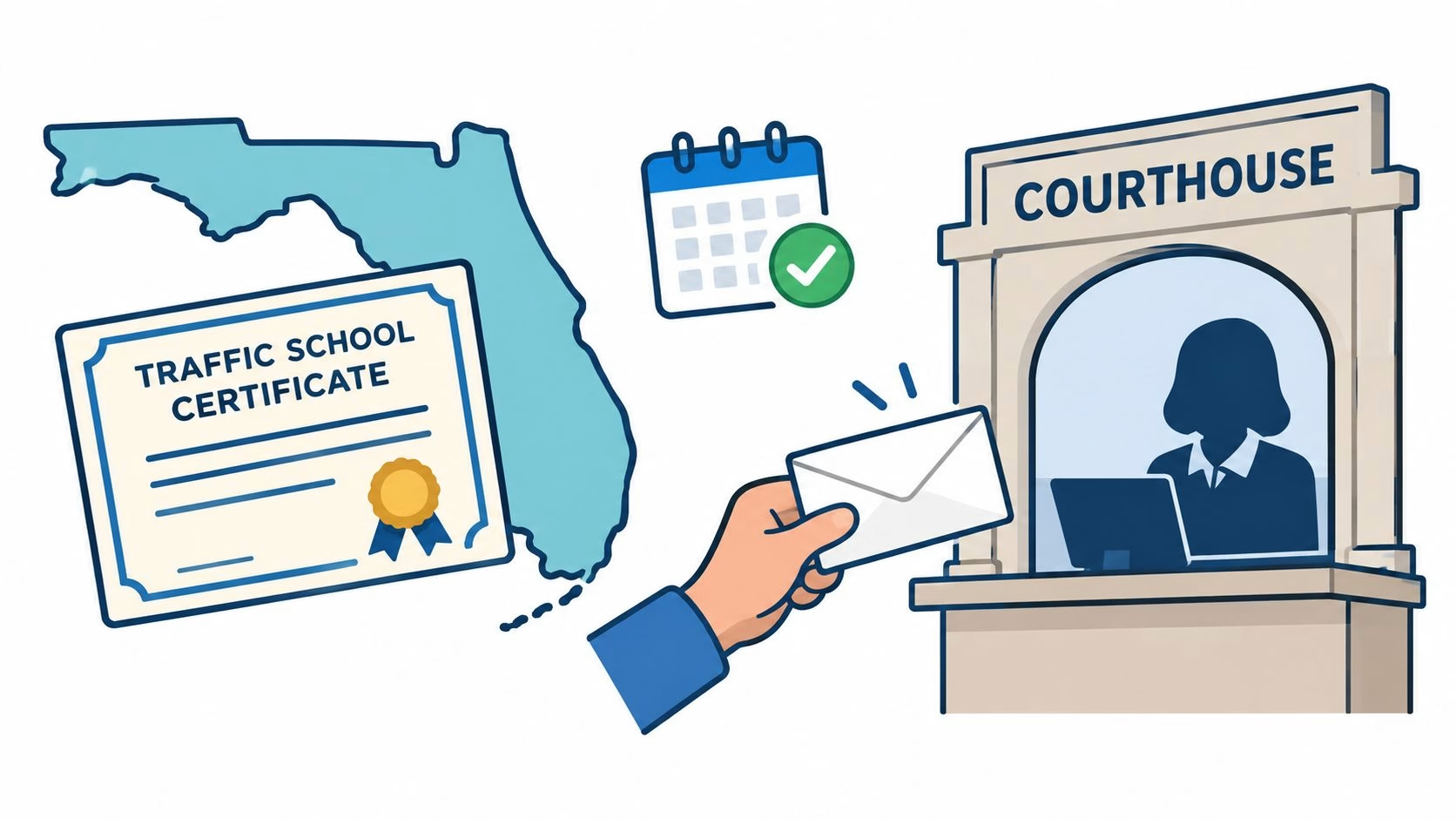
A court notice can make one task feel more complicated than it is: complete a court ordered course, prove you finished it, and do so before the deadline. The course itself may be straightforward. The details around approval, enrollment, and submitting your certificate are where costly mistakes happen.
The safest approach is to treat the court order as your instruction sheet. Read every line before registering, choose a course that matches the stated requirement, and keep records from enrollment through final submission. Online courses can make the process more convenient, but convenience only helps when the course is accepted for your case.
Start With the Exact Court Requirement
A court-ordered course is an education program required by a judge, court clerk, probation office, or another authorized agency after a traffic-related offense. Depending on the case, the requirement may be a basic driver improvement course, defensive driving program, aggressive driver course, traffic law and substance abuse course, or another approved traffic safety class.
Do not assume that any online driving course will satisfy the order. The wording may specify the number of course hours, the course type, the state approval needed, and the due date. It may also name a particular provider or say that the course must be approved by the court, county, state agency, or DMV.
Before you enroll, locate these details:
- Your case or citation number
- The court name and county
- The deadline for completion
- The exact course name or required number of hours
- Whether online instruction is allowed
- Where the completion certificate must be sent
If the order is unclear, contact the court clerk or the office listed on the paperwork. A course provider can explain its approval status, but the court is the final authority on what it will accept.
Choose an Approved Online Course
An approved course is one recognized by the agency or court connected to your requirement. Approval is not universal. A course approved for one state, county, court, or citation type may not be accepted for another.
Look for clear information about the course�s intended purpose and approval. You should be able to confirm the program length, the state or jurisdiction it serves, how completion is reported, and the total price before paying. Transparent pricing matters because court requirements can already come with fines, filing fees, or reinstatement costs.
Online learning is often a practical option for drivers balancing work, school, family, or transportation limitations. A self-paced course lets you sign in when you have time and continue from a phone, tablet, or computer. Still, self-paced does not mean deadline-free. Build in enough time for the course, final exam if required, certificate processing, and court delivery.
For example, a driver who has a deadline on Friday should not wait until Friday afternoon to start. Even when a certificate is available quickly, the court may need additional time to receive, review, and post completion to the case file.
Check Whether Your Court Needs a Certificate or Direct Reporting
Some course providers report completion directly to a court, DMV, or state agency. Others issue a certificate that you must submit yourself. In certain cases, both steps may be necessary.
Read the enrollment instructions and your court paperwork closely. If you are responsible for submitting the certificate, save a digital copy and follow the court�s stated delivery method, such as online filing, email, mail, or in-person submission. Keep confirmation that the document was received when possible.
Complete the Course Carefully
Once enrolled, use your legal name and accurate identifying information. A misspelled name, wrong citation number, or incorrect date of birth can delay matching your completion record to your case.
Most court-related driver education programs cover traffic laws, safe driving choices, impaired driving risks, distracted driving, speed management, crash prevention, and the consequences of unsafe behavior. The goal is not simply to check a box. Courts use these programs to address the decisions that led to a citation or offense and to reduce the risk of future violations.
Work through every required section. Do not skip identity verification prompts, quizzes, acknowledgments, or final examinations. These requirements help the provider verify that the enrolled person completed the course and can be especially important for court acceptance.
If you run into a technical issue, stop and contact support rather than creating a second account or guessing at a solution. Duplicate accounts and incomplete records can make certificate retrieval harder later.
Submit Proof Before the Deadline
Completing the coursework is only part of the requirement. Your case may remain open until the court receives and records proof of completion. This distinction matters when a deadline affects a fine, license status, probation condition, or eligibility for ticket dismissal.
After finishing, review your completion document for accuracy. Confirm your name, course title, completion date, provider information, and any case or citation number included on the certificate. If something is wrong, request a correction immediately.
Then submit the certificate exactly as directed. If the provider reports electronically, ask or verify when the record will be transmitted and whether you need to take any separate action. If you submit it yourself, retain the certificate and your delivery confirmation until the court confirms the matter is resolved.
A smart practice is to check your case status a few business days after submission. Do not assume that no news means the record was received. Court processing times vary, particularly around holidays, high-volume periods, or when documents are sent by mail.
Avoid Common Mistakes That Can Delay Compliance
The most common problem is enrolling in a course before confirming it meets the court order. The second is waiting too long. Both mistakes can lead to additional calls, fees, missed deadlines, or the need to take another course.
Another issue is confusing a court requirement with a DMV requirement. These agencies may be connected, but they do not always require the same action. A court may require a driver improvement course to resolve a citation, while the DMV may separately require a program for licensing, reinstatement, or point reduction. Follow each notice independently.
Also, do not discard your paperwork as soon as you finish. Keep your original court order, enrollment receipt, course certificate, and any confirmation of reporting or submission. If a record cannot be located later, these documents provide a clear trail of what you completed and when.
When an Online Course May Not Be the Right Choice
Online instruction is often accepted, but not always. Your order may require an in-person class, a live session, counseling, evaluation, community service, or a program from a court-approved local list. Some jurisdictions also have specific identity verification or attendance rules.
If your paperwork says �in person,� names a specific program, or does not mention online options, get clarification before registering. A quick call to the clerk can prevent spending time and money on a course the court will not accept.
floridadetscourse.com offers online traffic safety education designed to make eligible course requirements easier to complete on your schedule. As with any provider, confirm that the selected course matches your court, state, and case-specific instructions before enrollment.
Frequently Asked Questions
What does a court ordered course mean?
A court ordered course is a required educational program tied to a legal case or traffic citation. You must complete the specific program and provide proof by the court�s deadline.
Can I complete a court ordered course online?
Sometimes. Online completion is allowed only when your court or required program accepts an online provider.
How do I know which course to take?
Use the exact language in your court order. If the course type or approval requirement is unclear, ask the court clerk before enrolling.
What happens if I miss the deadline?
The result depends on the court and your case. Possible consequences can include additional fees, loss of a dismissal option, a compliance hearing, or other action on the case.
Do I need to send my certificate to the court?
It depends on the provider and court process. Some providers report completion directly, while others require you to submit the certificate yourself.
Should I keep my completion certificate?
Yes. Keep a digital and printed copy until the court confirms your requirement has been satisfied.
A court requirement has a finish line, but reaching it takes more than pressing �complete.� Confirm the right course, give yourself time, and keep proof of every step so you can move forward with confidence.