If you're aiming to get your first Florida driver's license, your journey starts with a mandatory first step: the 5-hour pre-licensing course. Officially, the state calls it the Traffic Law and Substance Abuse Education (TLSAE) course, and it's a non-negotiable requirement for every new driver.
This isn't just about checking a box. The course is your first real introduction to Florida's traffic laws and the serious dangers of driving under the influence.
What Is the Florida 5 Hour Pre-Licensing Course?

Think of the TLSAE course as the ground school for Florida drivers. Before a pilot ever steps into a cockpit, they have to master the theory of flight. Similarly, before you get behind the wheel, the state wants to ensure you have a solid grasp of the rules and risks involved.
This course builds that essential foundation, regardless of whether you're a teenager eager for a learner's permit or an adult getting your first license. Its main goal is to instill a deep understanding of road safety and the life-altering consequences of impaired driving before you even turn the key.
The Core Purpose of the TLSAE Course
Florida put this requirement in place for one simple reason: to make our roads safer. By making sure every new driver gets this education, the state is proactively working to prevent accidents before they happen.
The whole idea behind the TLSAE program is that an educated driver is a safer driver. It's all about prevention, focusing on traffic laws and the real-world effects of drugs and alcohol before bad habits can even start.
The curriculum isn't just a boring recital of the driver's handbook. Instead, it�s designed to be practical, using real-world examples to drive home the key safety messages.
To give you a quick snapshot, here are the essential details of the course.
Florida's TLSAE Course At a Glance
| Course Aspect | Requirement Details |
|---|---|
| Official Name | Traffic Law and Substance Abuse Education (TLSAE) |
| Course Length | 5 hours of instruction |
| Who Needs It | All first-time driver's license applicants in Florida |
| Main Goal | Educate on traffic laws and the dangers of impaired driving |
| Outcome | Fulfills a key requirement to apply for a learner's permit or license |
Completing this table's requirements is the first major milestone on your path to getting licensed in Florida.
What You Will Learn in the Course
Those five hours are packed with crucial information broken down into manageable topics. You won't just be memorizing facts; you'll be learning concepts that you will use every single day on the road.
Here�s a look at what you can expect to cover:
- Florida Traffic Laws: This goes beyond just speed limits. You�ll learn about right-of-way, how to interpret road signs and signals, and the specific rules for driving in the Sunshine State.
- Risks of Impaired Driving: This is a major focus. The course gets into the nitty-gritty of how alcohol and drugs impair your judgment, coordination, and reaction time, outlining the serious legal and personal consequences of a DUI.
- Defensive Driving Principles: You'll learn the core techniques for staying safe on the road, like how to anticipate what other drivers might do and create a "safety cushion" around your vehicle.
- Driver Attitudes and Behaviors: It also touches on the psychology of driving, covering important topics like managing stress, avoiding road rage, and the dangers of distracted driving.
Just as there are many specialized training programs, like a wholesaling real estate course, that prepare people for a specific career, the TLSAE course prepares you for the responsibility of driving. It provides the essential, foundational knowledge you need to navigate Florida�s busy roads with confidence and care from day one.
Why Florida Requires This Course for New Drivers
It's a fair question we hear all the time: "Why can't I just take the driving test? What's the point of this 5-hour course?" The State of Florida isn't just adding another bureaucratic step to your licensing journey. The Traffic Law and Substance Abuse Education (TLSAE) course is a deliberate, proactive measure designed with one critical mission in mind: making our roads safer for everyone.
Think of it like this. You wouldn't want a surgeon operating on you without them first having a deep understanding of anatomy. In the same way, Florida lawmakers decided that new drivers shouldn't be handed the keys to a two-ton vehicle without first understanding the fundamental rules, risks, and responsibilities that come with it. This course is that essential groundwork.
This requirement is a direct investment in public safety. By mandating the TLSAE, the state ensures every new driver starts with the same foundational knowledge of traffic laws and, more importantly, the life-altering consequences of driving under the influence.
A Proactive Approach to Accident Reduction
The primary goal here is to reduce the number of collisions, injuries, and fatalities on Florida's roads, particularly among new and younger drivers. Statistics don't lie�teenagers and first-time adult drivers are at a much higher risk of being involved in an accident. This course confronts that reality head-on by tackling high-risk behaviors from the start.
It�s all about building a foundation of responsible habits before you're driving alone. The curriculum is built on two main pillars:
- Traffic Law Education: This isn't just about memorizing speed limits. It�s about learning the "language" of the road�from understanding right-of-way rules to knowing what complex signs mean�which helps prevent confusion and dangerous mistakes.
- Substance Abuse Prevention: A significant part of the course is dedicated to the real-world effects of alcohol and drugs on your ability to drive. It drives home the unavoidable truth that impaired driving is a deadly, and entirely preventable, choice.
By instilling this knowledge early, the state aims to cultivate a generation of drivers who are more aware, cautious, and better prepared for the split-second decisions they'll face every time they get behind the wheel.
Part of a Larger Safety Ecosystem
Florida isn't going it alone. This strategy is a key component of a broader framework known as a Graduated Driver Licensing (GDL) system, which introduces driving privileges in stages to ease new drivers onto the road safely.
Other states with similar requirements have seen incredible results. For instance, New York's GDL program also mandates a 5-hour pre-licensing course, which has been a major factor in reducing accidents among its newest drivers. It�s a crucial step that provides the certificate needed to even schedule a road test, proving its value. You can read more about the positive impact of these courses and how they improve road safety.
The core principle is simple: An ounce of prevention is worth a pound of cure. Educating drivers on the front end is far more effective than trying to correct dangerous habits after a tragic accident has already occurred.
Ultimately, the 5-hour course is more than just a box to check. It's a shared commitment between you and the state to protect lives. It�s the first step in acknowledging that driving isn't a right, but a privilege that carries immense responsibility�to yourself, your passengers, and every other person on the road with you.
Is This Course Actually For You? Who Needs to Take It
So, who really needs to take this course? Let's cut through the confusion. The rule in Florida is simple: if you're applying for your very first driver's license in this state, you have to complete the Traffic Law and Substance Abuse Education (TLSAE) course.
This isn't about your age. It doesn't matter if you're a 16-year-old counting down the days to get your permit or a 40-year-old deciding it�s finally time to drive. The requirement is pinned to one thing: being a first-time driver in Florida. Think of it as the mandatory orientation for everyone starting their driving journey here.
Who Is Required to Take the Course
The 5-hour pre-licensing course is designed to make sure every new driver starts with the same foundational knowledge. To be perfectly clear, you must complete this course if you fit into one of these groups:
- Teens Aiming for a Learner's Permit: If you're a teenager applying for your first learner's permit, the TLSAE is non-negotiable. You can't even apply for the permit until you have proof of completion. We cover this process in more detail in our guide to getting a Florida learner's permit.
- Adults Who Have Never Been Licensed: Are you over 18 but have never held a driver's license in any state or country? If so, you'll need to pass the TLSAE before Florida will issue you your first license.
- New Residents from Other Countries: If you've moved to Florida from another country and have never been licensed in the U.S., the state considers you a brand-new driver. That means this course is required for you, too.
Basically, if the Florida Department of Highway Safety and Motor Vehicles (FLHSMV) looks you up and finds no record of you ever holding a license, you can bet you need to take this course.
Common Scenarios Where You Do Not Need the Course
Just as important is knowing when you don't need the course. The last thing you want is to waste time and money on a requirement that doesn't apply to you.
The real question is whether you are truly a first-time driver in the eyes of the state. If you have a legitimate driving history from another U.S. state, Florida usually honors that experience.
You are not required to take the TLSAE if:
- You Have a Valid License from Another State: Moving to Florida with a valid driver's license from another U.S. state? You can typically just exchange it for a Florida license without taking the TLSAE.
- Your Out-of-State License Recently Expired: Don't panic if your license from another state just expired. As long as you have proof of that prior license, you generally get a pass on the TLSAE course.
- You Are Renewing Your Florida License: The TLSAE is a one-and-done deal. Once you're in the system as a licensed Florida driver, you won't ever need to take this course again for renewals.
A Step-by-Step Walkthrough of the Course
So, you're ready to tackle the 5 hour pre licensing course but aren't quite sure where to start? Don't worry, it's a lot less complicated than it sounds. We've guided countless new drivers through this process, and we're here to walk you through it, step by step.
Think of it as four simple stages. From the moment you sign up to the second your completion is logged with the state, the process is designed to be smooth and straightforward. Let's get into what you can expect.
Step 1: Easy Online Enrollment
Your first move is just getting signed up, and honestly, it couldn't be easier these days. You can register for the entire course in just a few minutes right from your phone or computer. Forget about driving to an office or dealing with a mountain of paperwork.
You�ll just need to provide some basic info�your full name, date of birth, and contact details. This is just to create your secure account and make sure we can correctly report your course completion to the Florida Highway Safety and Motor Vehicles (FLHSMV) when you're done.
Step 2: Engaging Course Modules
Once you're enrolled, you get to the core of the course: the learning modules. If you're picturing a stuffy classroom and a boring lecture, think again. Modern online TLSAE courses are built to be self-paced and actually keep you interested.
The material is all broken down into easy-to-digest lessons that cover the essentials�things like Florida traffic laws, the real-world effects of driving impaired, and smart defensive driving techniques. Instead of just reading endless text, you'll find:
- Interactive Content: Short videos, quick quizzes, and practical scenarios help the information stick.
- Self-Paced Learning: You're in complete control. Log in and out whenever you have free time and work through the material at your own speed.
- Automatic Progress Tracking: The system always saves your spot, so you can pick up exactly where you left off without missing a beat.
This setup helps you absorb the critical safety information you need without it feeling like a chore. The content is laid out to build your knowledge logically, so you'll feel confident and prepared for the final test.
This course is a must-do for all new drivers in Florida, whether you're a teen, an adult getting your first license, or a new resident needing to get licensed here.

As you can see, the TLSAE is the starting line for just about every new driver in the state, regardless of age or background.
Step 3: Passing the Final Test
After you�ve worked through all the learning modules, it's time for the final assessment. This is just a multiple-choice test to check that you�ve grasped the main ideas from the course. Better yet, it�s an open-book exam, so there�s no need to stress about memorizing every little detail.
The whole point of the final test isn't to trip you up. It�s simply to make sure you've picked up the essential knowledge needed to be a safe, responsible driver on Florida's roads.
Most quality driving schools, including BDISchool, have a policy that takes all the pressure off. If you don't happen to pass on your first attempt, you get unlimited, free retakes. A single test score should never be a roadblock. You can simply review the course material and try again until you pass.
Step 4: Automatic Certificate Reporting
Here's the best part: once you pass the final test, your job is officially done.
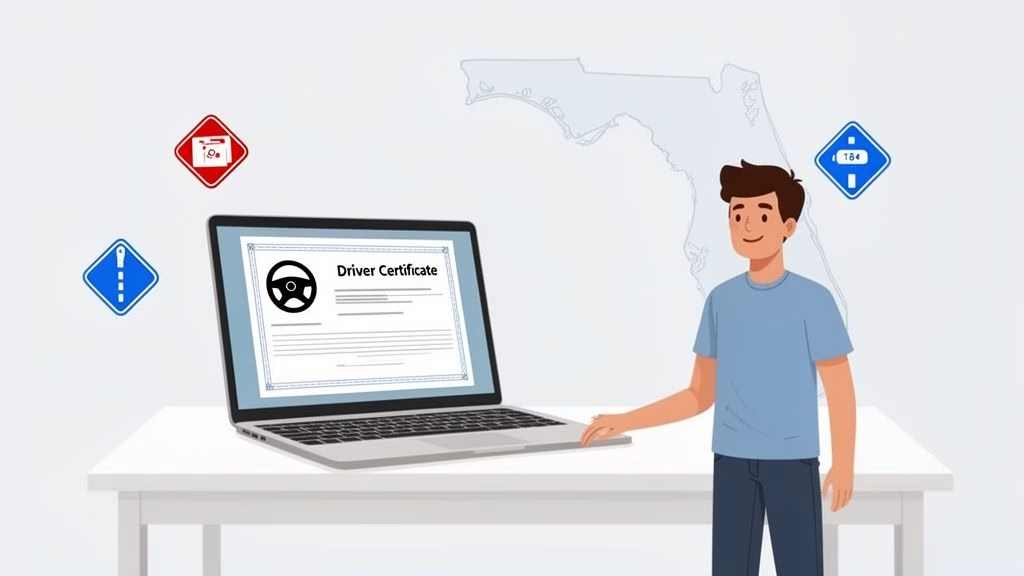
Your course completion is reported electronically and automatically right to the FLHSMV's database. You won't have to wait for a physical certificate in the mail or worry about losing it. This digital system is fast, efficient, and ties your completion directly to your name in the state's records.
When you show up at the driver license office, the clerk will pull up your record and see you've already checked this box. If you want to dive deeper into how different driving credentials work, you can learn more about getting an online driving certificate in our detailed guide.
Online vs. In-Person: Which Format Is Right for You?

So, you�re ready to tackle your Florida TLSAE course. Great! The first big decision you�ll make is how you want to take it. You�ve got two main routes: the modern online course or a traditional in-person class.
Both will get you the certificate you need, but the experience is completely different. The right choice really boils down to your schedule, how you learn best, and what you value most.
Some people thrive in a classic classroom. They like having a live instructor they can ask questions to on the spot and enjoy the energy of learning alongside other students. If you�re someone who needs that scheduled, face-to-face interaction to stay focused, an in-person class might be your speed. The main drawback? You have to show up at a specific place, at a specific time, which can be tough to juggle with school, work, or family.
That�s exactly why the 5 hour pre licensing course online has become the go-to choice for most new drivers. It puts you in the driver�s seat of your own learning, offering a level of convenience that a physical classroom just can�t match. You can complete the course material from your bedroom, a library, or your favorite coffee shop�all you need is an internet connection.
The Power of Flexibility and Pacing
Let�s be honest, life is busy. The biggest win for an online course is that it molds to your schedule, not the other way around. No need to clear your weekend or miss a practice.
You can chip away at the five hours of material whenever you have a spare moment. Squeeze in a module before school, do another during your lunch break, and wrap it up on a lazy Sunday. It�s entirely up to you.
- Learn Anytime: The course is always on and ready when you are, 24/7. No more trying to fit a rigid class time into your packed schedule.
- Set Your Own Pace: Fly through the topics you already know and take your time on the ones that are new to you. You can rewind and review sections as many times as you need without feeling like you're holding up the class.
This freedom takes the pressure off. You get to absorb the critical safety information in a relaxed, no-stress environment, which is often the best way to make it stick.
Comparing Online vs. In-Person Course Formats
To make the decision even clearer, let�s put the two formats head-to-head. This direct comparison will help you see exactly how an online course stacks up against an in-person class. Think of it as checking the specs before choosing a new car.
Here�s a simple breakdown of what to expect from each format:
Comparing Online vs In-Person Course Formats
| Feature | Online Course | In-Person Classroom |
|---|---|---|
| Schedule | Completely flexible, available 24/7 | Fixed date and time |
| Location | Study from anywhere you have internet access | Must travel to a physical classroom |
| Pacing | Self-paced; start, stop, and review as needed | Paced by the instructor for the entire group |
| Cost | Generally more affordable due to lower overhead | Often more expensive to cover facility and instructor costs |
Looking at the table, it�s easy to see why the vast majority of Florida teens and new drivers are choosing the online route.
An online driving course in Florida not only checks off all the state requirements for the 5 hour pre licensing course but does so in a way that respects your time and your budget. It�s the smarter, more modern way to get one step closer to earning your driver�s license.
What Happens After You Complete the Course
So, you've passed the final test for the 5-hour pre-licensing course�congratulations! That's a major milestone. The best part? We automatically report your completion to the Florida DMV, so that piece of paperwork is already handled for you.
You've officially checked the first big box on your journey to getting a driver's license. Think of the TLSAE course as the key that unlocks the next phase. Now, let's talk about what you need to do to get that learner's permit in your hands.
Your Immediate Next Steps
With your course completion on file with the state, your path forward is pretty straightforward. You just have two more essential tasks to tackle before you can head to the driver license office.
- Pass the Class E Knowledge Exam: This is the official "permit test." It consists of 50 multiple-choice questions pulled from the Florida driver's handbook, covering everything from road signs to traffic laws. To pass, you'll need to get at least 40 questions right, which is an 80% score.
- Gather Your Required Documents: Don't let paperwork trip you up at the last minute. The state needs to verify your identity and address, so you'll have to bring a specific set of documents with you. It�s always best to get these organized well in advance.
Completing these two steps is mandatory before the state will issue your permit. The good news is that Florida�s system is designed to be efficient. Our online TLSAE course is modeled after the lean approach of New York's 5-hour class, ensuring new drivers meet state requirements without unnecessary hassle. It's a far cry from places like Bahrain, which mandates a minimum of 22 hours of training. You can learn more about how different GDL programs impact driver safety outcomes if you're curious about the data behind it.
Visiting the Driver License Office
Once you�ve passed the knowledge exam and have your stack of documents ready to go, it's time for the final step: a trip to your local driver license office.
This is where all your hard work pays off. The digital records of your course completion and test scores become a real, physical learner's permit that you can hold.
At the office, you�ll knock out the last few items on the checklist:
- Take a vision and hearing test. These are quick and simple screenings to confirm you meet the state's basic physical standards for safe driving.
- Have your picture taken. Try to smile�this photo will be on your very first driving credential!
- Pay the required fees. You'll need to pay for the issuance of your permit, so be prepared with a payment method.
After an official verifies your documents and you complete these tasks, you'll walk out with your learner's permit. The entire process, from start to finish, is laid out in our complete guide on how to get a driver's permit.
Remember, getting your license is just the start. Being a responsible driver means being prepared for the road ahead, including the less exciting parts like insurance. It�s never too early to learn practical skills, like how to file an auto insurance claim, just in case you ever need to.
Your Questions About the Course, Answered
Getting your first driver's license can feel like navigating a maze of rules and requirements. To make things easier, we've put together answers to the most common questions we hear about the 5-hour pre-licensing course. Let's clear up any confusion so you can get on the road with confidence.
How Much Does the TLSAE Course Cost?
Let's talk about the bottom line. The cost of a driving course is often the first thing people ask about, and for good reason. While prices can differ from one school to another, you'll find that state-approved online courses are almost always the most budget-friendly choice. Brick-and-mortar classrooms have overhead costs that online providers just don't have.
You can typically expect an online course to run somewhere between $20 and $40. This makes it an incredibly affordable way to satisfy a state requirement, leaving you more money for other costs like your permit exam and the license fee itself. Think of it as a small, smart investment in your driving education.
How Long Is My Course Certificate Good For?
Timing is crucial when you're working toward your license. The good news is that once you pass the TLSAE course, the state gives you a pretty generous window to complete your next steps. Your completion is filed electronically with the Florida Department of Highway Safety and Motor Vehicles (FLHSMV) as soon as you pass.
Your course completion is valid for one full year from the date you pass the final exam.
This one-year timeframe is designed to take the pressure off. You'll have plenty of time to study for the Class E Knowledge Exam, get your documents in order, and visit the driver license office without worrying about your certificate expiring.
What Happens if I Fail the Final Exam?
Test anxiety is real, but you can set it aside for this course. We understand that the point of this course is for you to learn and become a safe driver, not to stress over a test. That's why any good, state-approved course is built with a student-first mindset.
If you don't pass the final exam on your first attempt, it�s truly no big deal. Our course, for example, comes with unlimited, free retakes. You can simply go back, review the material you struggled with, and try again whenever you feel ready. There are no extra fees and no limits on how many times you can take the exam. Your success is the only goal.
Can I Take the Course on My Phone?
Yes, you absolutely can! Flexibility is one of the best parts of taking the course online. A modern, state-approved 5-hour pre-licensing course is designed to work seamlessly on any device with an internet connection.
Whether you're using a laptop at home, a tablet on the couch, or your smartphone while waiting for the bus, the course material will adapt to your screen. This means you can chip away at your hours whenever you have a spare moment. Your driving education literally fits in your pocket.
Ready to check this requirement off your list? BDISchool offers a fully online, state-approved TLSAE course that�s affordable, flexible, and designed to get you passed. Enroll today and start your journey toward getting your Florida driver's license.